

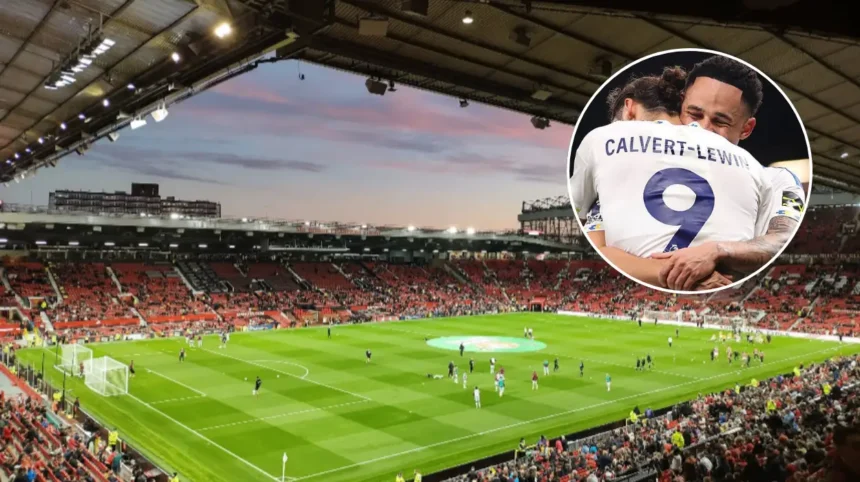
Key Points
- Leeds United won 2–1 at Old Trafford in a Premier League fixture on 13 April 2026, securing their first league victory at the stadium since February 1981, according to reports from Manchester United and several sports outlets.
- Switzerland international Noah Okafor scored both of Leeds’ goals in the first half, opening the scoring in the fifth minute and adding a second just before the half‑hour mark.
- Manchester United were reduced to 10 men in the second half when Lisandro Martínez was shown a straight red card for pulling the hair of Leeds striker Dominic Calvert‑Lewin, with VAR recommending the referee upgrade a yellow card to a red.
- Casemiro’s second‑half header briefly made the result tense, but Leeds withstood waves of late pressure to preserve their advantage.
- The result moved Leeds six points clear of the bottom three in the Premier League relegation battle, while it marked head coach Michael Carrick’s first home defeat in charge of Manchester United.
ManchesterUnitedLeeds (The Leeds Times) April 14, 2026 –Old Trafford, Manchester – How did Leeds United manage to end their 44‑year league hoodoo at Old Trafford and beat 10‑man Manchester United 2–1? The answer lies in a blistering first‑half display by Noah Okafor, a controversial red card for Lisandro Martínez, and a dogged defensive performance that preserved a landmark result for Leeds in the Premier League relegation fight.
Why was this match so unusual for Leeds at Old Trafford?
Leeds United’s 2–1 victory on 13 April 2026 was their first league win at Old Trafford since February 1981, bringing an end to a run of 18 league visits without a win (seven draws and 11 losses), according to beIN Sports match analysis.
The same report noted that it was also Leeds’ first league win over Manchester United since September 2002, underlining just how rare the outcome looked on paper.
As reported by Manchester United’s official match recap, the Reds had not suffered a home defeat in the Premier League under head coach Michael Carrick until this encounter, making the result a psychological blow for the Old Trafford side.
Equally, for Leeds manager Daniel Farke, the three points moved his team six points clear of the bottom three, easing relegation fears and giving his project a tangible morale boost.
How did Okafor’s brace set the tone?
The early momentum of the game was seized by Leeds through Noah Okafor. According to SocialNews.XYZ, the Switzerland forward opened the scoring in the fifth minute before doubling the lead just before the 30‑minute mark, a double that proved decisive in the final outcome.
beIN Sports added that Okafor’s individual goals formed the backbone of Leeds’ 2.37 expected goals (xG) from 15 shots, compared with Manchester United’s 1.31 xG from 20 efforts, suggesting that Leeds not only scored more but also created more threatening chances overall.
Further context was provided by Sky Sports football features writer Adam Bate, who described Okafor’s first‑half display as the foundation of “a more than deserved win” for Leeds.
Bate noted that late in the first half Ao Tanaka squandered a golden opportunity to make it 3–0, an instance of profligacy that could have compounded United’s misery had it been converted.
What happened with Lisandro Martínez’s red card?
The turning point of the contest came in the second half when defender Lisandro Martínez was sent off. As reported by Sky Sports, Martínez was adjudged to have pulled the hair of Leeds striker Dominic Calvert‑Lewin, prompting the referee to show a straight red card after the VAR recommended an upgrade from an initial yellow.
In his post‑match comments, Michael Carrick told the Manchester United media team that he regarded the decision as “one of the worst” he had seen, implying he felt the punishment was excessive for the incident.
Nonetheless, the official match report from the club confirmed that the VAR’s intervention led to the straight red, effectively leaving Manchester United to defend with 10 men for more than half an hour of the second half.
How did United respond and how did Leeds hold on?
Despite the man‑down, Manchester United briefly threatened to rescue the match. As outlined in the ESPN UK game summary, Casemiro’s header in the second half brought the score to 2–1, injecting anxiety into the closing phases and prompting a sustained wave of pressure on the Leeds back line. Footage and highlights reviewed by Sky Sports showed United throwing numbers forward in the final 15 minutes, repeatedly testing the visitors’ resolve.
However, Leeds’ organisation and discipline allowed them to weather the storm. SocialNews.XYZ wrote that the Whites were
“able to hold off a wave of pressure from the hosts in the closing stages”,
a point reinforced by the final scoreline and the fact that United could not level the tie. The beIN Sports post‑match analysis also noted that Leeds enjoyed a marginally higher xG than the hosts, underlining that they were not merely parking the bus but had also been the more effective attacking side on the night.
Background of the development
Leeds United’s 2–1 victory at Old Trafford on 13 April 2026 is statistically remarkable because it ended a 44‑year league win‑drought at the stadium for the Yorkshire club, as highlighted in beIN Sports’ data debrief and Manchester United’s own match report.
Prior to this result, Leeds had gone 18 league visits without a win at Old Trafford, compiling a record of seven draws and 11 defeats, which built a psychological barrier around the fixture for both sets of fans.
On the managerial side, the defeat was the first home loss for Michael Carrick as head coach of Manchester United in the Premier League, according to the club’s official coverage, contrasting with a home‑unbeat run that had stood until this April clash.
For Leeds, the win moved them six points clear of the bottom three, a significant buffer in a tightly contested relegation battle, as noted by SocialNews.XYZ and beIN Sports. This context makes the result not just a one‑off upset but a potential turning point in the respective trajectories of the two clubs in the 2025–26 season.
Prediction: How this development could affect key audiences
For Leeds United supporters, the first‑ever league win at Old Trafford in 44 years is likely to strengthen belief in Daniel Farke’s project and bolster match‑day atmospheres at Elland Road, especially if the club can consolidate their mid‑table escape over the remaining fixtures.
Conversely, Manchester United fans may view the result as a warning sign about the team’s inconsistency at home and the need for a squad reshuffle, particularly if the club remains in a borderline position in the table or fails to secure a Champions League berth.
From a commercial perspective, rare high‑profile away wins like this can boost sponsorship and broadcast interest in Leeds, as media outlets such as beIN Sports and ESPN UK emphasised the statistical novelty and narrative weight of the result. For Manchester United, the loss may prompt sharper scrutiny of Carrick’s tactical approach and in‑season recruitment, especially if the club’s performance against mid‑to‑lower‑tier sides continues to fluctuate.