Key Points
- Retaining Core Talent: Leeds United have commenced their summer strategy by securing captain Ethan Ampadu on a new four-year contract, signaling an intent to keep hold of pivotal squad members.
- Managerial Stability: Following recent discussions with chairman Paraag Marathe, there is strong internal positivity regarding manager Daniel Farke extending his tenure beyond the final year of his current contract.
- Key Recruitment Priorities: The club is prioritizing high-caliber signings over sheer volume, with the primary transfer targets identified as an elite goalkeeper, an additional centre-forward, and a creative number 10.
- Potential Outgoings for Financial Compliance: To assist with financial regulations, fringe players such as Willy Gnonto and Joel Piroe could be sold if acceptable offers arrive, while defender Pascal Struijk remains a highly valuable asset despite a desire to retain him.
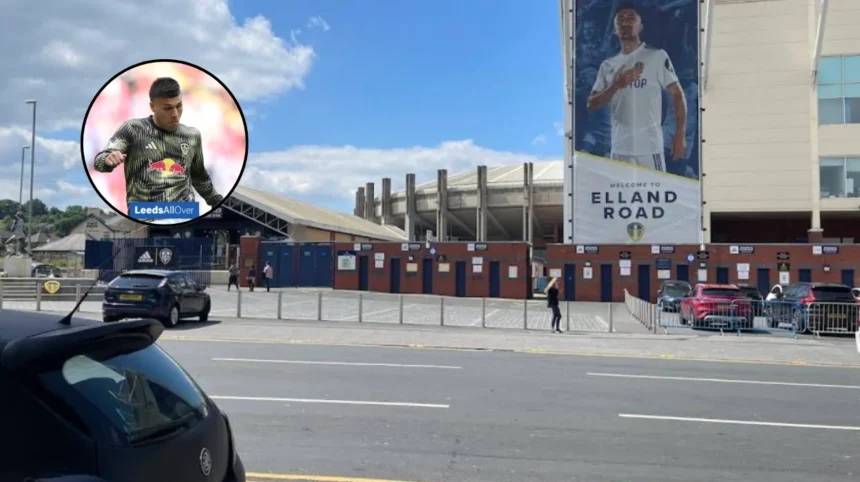
- Stadium Infrastructure Plans: The club continues to weigh the logistical and financial pros and cons of redeveloping Elland Road to expand capacity versus the immediate demands of squad investment.
Leeds (The Leeds Times) June 11, 2026 – The tactical and infrastructural future of Leeds United has come under intense scrutiny as the club prepares for a pivotal summer transfer window. With stringent financial regulations dictating the movement of English Football League and Premier League clubs alike, the Yorkshire outfit faces a delicate balancing act between upgrading Daniel Farke’s playing squad and progressing with the long-awaited redevelopment of their historic Elland Road stadium. Supporters have been submitting targeted inquiries regarding how the club will navigate these dual pressures without compromising its competitive ambitions on the pitch.
- Key Points
- What Is Leeds United’s Transfer Strategy for the Upcoming Summer Window?
- Which Positions Have Been Prioritised for Tactical Upgrades?
- Which Players Could Be Sold to Assist with Financial Regulations?
- Will Pascal Struijk Remain a Key Part of the Defensive Unit?
- What Is the Background of the Elland Road Redevelopment and Transfer Plans?
- How Will This Development Affect Leeds United Supporters?
What Is Leeds United’s Transfer Strategy for the Upcoming Summer Window?
In an extensive public question-and-answer session structured to address the immediate concerns of the fanbase, prominent sports journalist Adam Pope of BBC Radio Leeds provided a detailed breakdown of the internal dynamics currently shaping the club’s football operations. Responding directly to an inquiry from a supporter named Raj regarding where the West Yorkshire side will look to strengthen and who might be sacrificed to ensure regulatory compliance, the local broadcaster outlined a strategy focused primarily on stability and selective elite recruitment.
As reported by Adam Pope of BBC Radio Leeds, the club’s immediate priority is not a sweeping overhaul but rather the preservation of its existing football foundation. Pope stated that
“there will be an attempt to retain the key talent, which has started with captain Ethan Ampadu’s new four-year deal.”
This contract renewal is viewed internally as a statement of intent, anchoring the midfield and defensive sectors around a proven leader before external market pressures begin to mount.
Furthermore, operational continuity looks set to extend to the managerial office. According to the reporting of Adam Pope for BBC Radio Leeds, recent high-level discussions involving the club’s hierarchy have yielded optimistic results regarding the management structure. Pope noted that
“from the recent discussion with chairman Paraag Marathe, there seems a real positivity that manager Daniel Farke will be staying beyond the existing year of his contract.”
This potential extension indicates that the 49ers Enterprises ownership group wishes to maintain Farke’s tactical blueprint rather than risking the disruption of a managerial change.
Which Positions Have Been Prioritised for Tactical Upgrades?
When examining the specific personnel deficiencies within the current squad, the evaluation points toward targeted, high-end acquisitions rather than accumulating squad depth. The assessment originating from the BBC Radio Leeds sports desk suggests that the transfer budget will be deployed heavily on a small number of transformative players.
In his analysis of the squad’s tactical requirements, Adam Pope of BBC Radio Leeds stated that “an elite goalkeeper, another centre-forward and a creative number 10 are the priorities.” The identification of these specific roles suggests that the technical staff feels the spine of the team requires immediate elevation to compete at the highest level.
Pope further elaborated on the financial parameters governing these potential arrivals, indicating that the net spend may mirror previous windows unless significant capital is generated through player sales. Pope asserted that
“it will be a ‘quality over quantity’ summer, with a similar amount to a year ago being available, unless some players are sold.”
Which Players Could Be Sold to Assist with Financial Regulations?
The necessity of aligning with profit and sustainability rules means that Leeds United must remain open to market offers for players who do not fit seamlessly into the starting eleven or who command premium valuations in the market.
Speculation has naturally turned toward individuals who have struggled to secure consistent starting roles under Daniel Farke. As reported by Adam Pope of BBC Radio Leeds, two specific attackers are currently under scrutiny regarding their long-term futures at the club. Pope observed that
“Willy Gnonto and Joel Piroe have been on the periphery, so you do wonder if deals will be done if the right offers are received for them.”
Both players possess considerable market value and their departures could provide the necessary financial cushion to fund incoming priority targets.
Will Pascal Struijk Remain a Key Part of the Defensive Unit?
Beyond the peripheral members of the squad, certain indispensable first-team players are also drawing attention due to their high market ceilings. Central defender Pascal Struijk is one such individual whose future remains a subject of significant discussion among analysts and fans alike.
Addressing the potential financial impact of parting with the Dutch defender, Adam Pope of BBC Radio Leeds acknowledged the significant economic windfall such a transaction would guarantee, stating that
“Pascal Struijk would make a big return if sold.”
However, Pope strongly countered the idea that selling the defender would be organically beneficial to the team’s on-field performance. Pope added that
“ideally I would want to see him stay as he is a quality left-footed defender.”
The tactical justification for retaining Struijk extends to his compatibility with specific defensive configurations that Farke has experimented with. In his technical assessment for BBC Radio Leeds, Adam Pope remarked,
“I like the three-at-the-back system as it seems to bring the best out of him, Jaka Bijol and Joe Rodon.”
This tactical insight highlights the burgeoning defensive partnership between Struijk, Bijol, and Rodon, suggesting that breaking up this trio could fundamentally destabilize Leeds United’s defensive solidity.
What Is the Background of the Elland Road Redevelopment and Transfer Plans?
The current strategic dilemma at Leeds United is rooted in the club’s transition under the full ownership of 49ers Enterprises, who completed their takeover with a vision of modernizing both the playing squad and the club’s infrastructure.
Elland Road, the club’s home since 1919, has long been earmarked for a significant capacity expansion to over 50,000 seats to meet ticket demand and maximize matchday revenue. However, stadium expansion requires substantial capital expenditure that must be balanced alongside the immediate, short-term necessity of funding a competitive first-team squad capable of securing and maintaining top-flight status.
Simultaneously, English football’s financial landscape has become increasingly punitive. Clubs are forced to operate under strict financial fair play and profit and sustainability frameworks, where losses over a rolling three-year period are strictly capped. Consequently, major infrastructure projects can create cash-flow pressures that indirectly impact a club’s transfer market liquidity.
The retention of Ethan Ampadu and the focus on retaining Daniel Farke reflect an institutional desire to establish on-field stability, ensuring that any future stadium developments are supported by a robust, high-performing football operation.
How Will This Development Affect Leeds United Supporters?
The implementation of a “quality over quantity” transfer strategy combined with the ongoing deliberations surrounding Elland Road will directly influence Leeds United supporters in terms of matchday experience, ticket accessibility, and competitive expectations.
For the match-going fan base, the decision to prioritize squad stability and elite signings means they can expect a highly competitive team on the pitch in the immediate term.
Retaining core figures like Ethan Ampadu and potentially Pascal Struijk protects the emotional and tactical investment the fans have placed in the squad. Conversely, if peripheral figures like Willy Gnonto or Joel Piroe are sold, supporters must prepare for a leaner squad that relies heavily on the fitness and consistency of a select group of starting players.
In the longer term, how the hierarchy balances this transfer approach against the Elland Road redevelopment will dictate ticket availability for the thousands of supporters currently marooned on season-ticket waiting lists. A rapid progression of the stadium expansion would eventually allow a broader demographic of the local community to attend fixtures and boost the atmosphere at Elland Road.