Key points
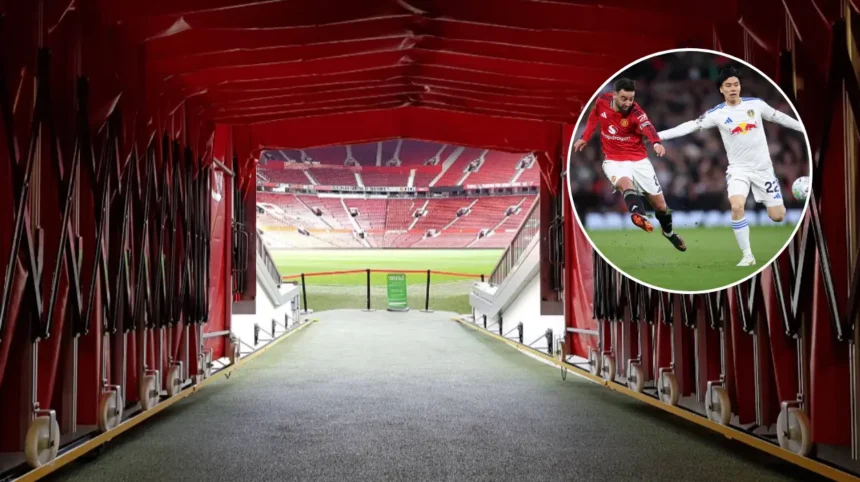
- Leeds United recorded their first league victory at Old Trafford since 1981, defeating Manchester United 2‑1 in the Premier League on 13 April 2026.
- Swiss forward Noah Okafor scored a first‑half double, giving Leeds a 2‑0 lead before the break.
- Manchester United pulled one back in the second half through a headed goal from Casemiro off a Bruno Fernandes cross.
- Lisandro Martínez was sent off in the 56th minute for a red‑card offence, leaving United a man down for the remainder of the match.
- The result lifted Leeds six points clear of 18th‑placed Tottenham Hotspur in the relegation‑battle section of the table.
- It was manager Michael Carrick’s first home defeat since taking interim charge of Manchester United.
Old Trafford, (The Leeds Times) April 15, 2026 –Leeds United have written a new chapter in their rivalry with Manchester United, securing a historic 2‑1 Premier League victory at Old Trafford on 13 April 2026, their first league win at the Theatre of Dreams since February 1981. As reported by multiple outlets including 90min and The Independent, the result marked the end of a 43‑year wait for a league triumph on United’s home turf and delivered a massive psychological and practical boost to Leeds’ survival hopes.
- Key points
- How did Manchester United respond to going 2‑0 down?
- H2: What role did the red card play in the match?
- What did Leeds manager Daniel Farke say about the win?
- How has this result affected the relegation race and Old Trafford’s recent form?
- Background of the particular development
- Prediction: How could this development affect the particular audience?
The headlines were dominated by the name Noah Okafor, whose two first‑half strikes laid the foundation for the upset. According to 90min’s match report, Okafor’s first goal came from a deep cross by Jayden Bogle, which the Swiss forward finished coolly to put Leeds ahead after a period of mounting pressure. The second goal followed shortly before the half‑hour mark, struck from around 20 yards after United failed to clear a series of long‑range attempts, underlining the visitors’ willingness to press high and take risks from distance.
Writing for 90min, match reporter Harry Soloman noted that Leeds’ attacking intensity in the opening period “galvanised” their approach, adding that the side “should have been ahead by more than 2‑0” given the number of clear‑cut opportunities they created. The Independent’s coverage similarly emphasised that Leeds “squandered numerous chances” in the first half, yet still managed to carry a two‑goal advantage into the dressing room.
How did Manchester United respond to going 2‑0 down?
Manchester United’s response early in the second half brought a reminder of their attacking capability, but also exposed weaknesses in their defensive structure.
The hosts reduced the deficit in the 50th minute when Casemiro, arriving late at the far post, powered a header home from a Bruno Fernandes cross, a finish that was highlighted by The Independent as a testament to the Brazilian’s goalscoring habit ahead of his impending exit from the club.
90min’s analysis described the goal as the moment when United
“tested their restructured nerve,”
but ultimately failed to recapture the full authority that Old Trafford crowds still expect. Goal‑scoring midfielder Bruno Fernandes, writing on his own social channels as quoted by The Independent, later said the result
“feels like a defeat even if the score says otherwise,”
reflecting the internal frustration among United players.
United boss Michael Carrick, in his post‑match comments relayed by BBC Sport, accepted that the first‑half performance had been “outstanding” from Leeds and that the red‑card incident had “changed the complexion” of the game, even if he felt his side “should have been more clinical” in the second half.
H2: What role did the red card play in the match?
The turning point in the tie, aside from Okafor’s finishing, was the dismissal of Lisandro Martínez.
According to 90min’s match report, the Argentine defender was shown a straight red in the 56th minute for grabbing opponent Calvert‑Lewin by the hair during a set‑piece exchange, in an incident described by the publication as a “moment of madness” that shifted the momentum firmly in Leeds’ favour.
BBC Sport quoted Everton striker Calvert‑Lewin, who was on international duty with England, recalling that the tug had “hurt” and that he had felt “unfairly held” before the referee intervened. United’s statement, as reported by The Independent, stopped short of appealing the three‑game ban, with the club instead promising to “review the incident internally” as part of its conduct‑policy procedures.
What did Leeds manager Daniel Farke say about the win?
Leeds head coach Daniel Farke did not hide his pride in the result, while also stressing the broader context of the club’s season. In comments relayed by BBC Sport, Farke described the first‑half performance as “outstanding” and suggested his side
“should have been more than 2‑0 ahead”
given the number of clear opportunities they had created.
Farke also noted that, despite the later red card, he did not feel United were “overwhelmed” by the numerical disadvantage, saying “occasionally a red card can alter the game, but I didn’t sense that at all” in the second half.
He rated his team’s management of the closing stages as “95% positive,” though he acknowledged lapses in concentration on set pieces, particularly around United’s lone goal, where he felt his side were “underloaded” in the second phase of the corner.
How has this result affected the relegation race and Old Trafford’s recent form?
The outcome at Old Trafford has tangible implications for this season’s relegation battle. As 90min noted, the three points lifted Leeds six points clear of Tottenham Hotspur in 18th place, giving Daniel Farke’s side a more comfortable buffer as the campaign approaches its final stretch.
The Independent’s coverage added that the win “re‑energises” Leeds’ survival bid, particularly after a run of poor away results that had left fans anxious about another potential descent into the Championship.
For Manchester United, the defeat was notable beyond the scoreline. It marked the first home loss for Michael Carrick since he took interim charge of the club, a fact repeatedly highlighted by 90min and other outlets covering the match.
The Independent’s analysis pointed out that, despite the recent transition in management, the club continues to struggle with turning dominance into wins, describing the pattern as “a familiar story this season.”
BBC Sport’s tactical summary also stressed that United’s home record, once a fortress, has “become increasingly fragile,” with several games this year ending in draws or narrow defeats, including a 1‑1 stalemate against Leeds at Elland Road earlier in the season.
Background of the particular development
The 2‑1 victory on 13 April 2026 sits within a longer history of tense encounters between Leeds United and Manchester United, both on and off the pitch. Leeds’ previous league win at Old Trafford dates back to February 1981, when a 3‑0 result under then‑manager Allan Clarke helped consolidate their own push for a title‑race finish that season.
Over the following decades, Old Trafford increasingly became a place of frustration for Leeds, most notably in the 1990s and 2000s when United’s domestic dominance overlapped with Leeds’ financial and managerial turmoil.
In recent years, the fixture has been defined more by statistical indifference than by decisive results. A 1‑1 draw at Elland Road in January 2026, for example, underlined the parity between the sides, with both creating clear chances but neither managing to secure a win. Tactical analysts such as Stephen Howson, in video breakdowns of that draw, described Leeds’ aggressive pressing and United’s struggle to convert control into goals as
“a microcosm of the season’s wider frustrations for both clubs.”
The 2025‑26 campaign, however, has sharpened the stakes for Leeds, who are fighting not only to maintain top‑flight status but also to re‑establish credibility after a difficult promotion‑relegation cycle. For Manchester United, the context is different: the club is navigating a managerial transition, ongoing ownership speculation, and questions about whether the squad’s heavy investment can translate into consistent on‑field returns.
Prediction: How could this development affect the particular audience?
For Leeds United supporters, this victory is likely to be framed as a symbolic milestone in the club’s modern history, reinforcing belief that the team can compete with and beat the so‑called “big six” even in hostile environments. The psychological lift could influence attendance, fan‑engagement strategies, and commercial initiatives such as match‑day hospitality and season‑ticket renewals, especially if the club can parlay the momentum into further positive results in the remaining fixtures.
For Manchester United fans, the match may heighten scrutiny over the club’s short‑term management structure and long‑term planning. If the home record continues to waver, pressure could grow on the interim front‑office leadership and any potential incoming manager, likely affecting how the club is perceived in transfer markets and sponsorship negotiations as the summer window approaches.
In the broader Premier League media and commercial audience, the 2‑1 result offers a compelling narrative for broadcasters, content creators, and tactical analysts, who can frame it as part of a larger trend of “giant‑killing” wins and fluctuating power dynamics across the table. For digital platforms and rights‑holders, such a result increases the potential for click‑driven content, social‑media engagement, and extended tactical analysis pieces, particularly around the red‑card incident and Okafor’s twin strike, which are likely to be replayed widely in highlight reels and fan discussions for weeks.