
Key points
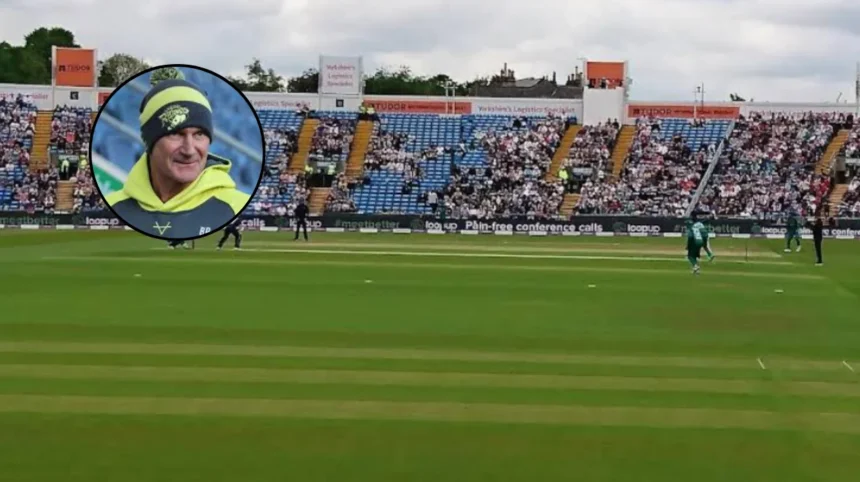
- Leeds Rhinos head coach Brad Arthur has admitted he has missed out on the England head‑coach job despite being interviewed for the vacancy.
- The Rugby Football League (RFL) is reported to be on the verge of appointing Brian McDermott as the new England men’s head coach ahead of the Rugby League World Cup in Australia later this year.
- Arthur described his interview as a “positive” experience and said he would have felt “honoured, privileged and grateful” if he had been chosen, because Leeds had put him in contention for the role.
- Leeds remains his primary focus, and he has reiterated that his intention is to continue developing the club’s squad while respecting the RFL’s decision‑making process.
- The RFL is understood to have interviewed a shortlist of high‑profile coaches, including Arthur, Sam Burgess, Paul Rowley, and McDermott, as part of its search to replace Shaun Wane.
- McDermott is expected to be formally announced as England head coach this week, with the RFL stating that he was judged the leading candidate to lead the national team through the World Cup cycle.
Leeds (The Leeds Times) April 21, 2026 Writing in an interview with All Out Rugby League, Arthur acknowledged that he took part in the RFL’s selection process earlier this month but is no longer in the running, with the governing body poised to appoint former Leeds, London Broncos, Toronto Wolfpack and Featherstone Rovers boss Brian McDermott as the new England men’s head coach.
As reported by Jon Wells of All Out Rugby League, Arthur told the publication that he had been interviewed for the England role on Monday and was expecting to hear a verdict from the appointment panel the following week; when that window passed without a positive outcome, he inferred that he had been unsuccessful. Similarly, in commentary gathered by TotalRL, Arthur described the interview itself as “positive” and said he would have felt “honoured and privileged” if selected, crediting Leeds Rhinos for giving him the platform to reach that level of consideration.
In those pieces, the Australian‑born coach also emphasised that Leeds remained his priority, noting that he had signed a contract extension with the club only last year and that his immediate focus was on continuing to evolve the Rhinos squad rather than pursuing dual roles.
How did the RFL’s selection process unfold?
According to Jonathan Power of The Guardian, the RFL began a formal process to replace Shaun Wane after the latter stepped down from the England role earlier in 2026.
The governing body interviewed five candidates, including Brad Arthur, Sam Burgess, Paul Rowley and Brian McDermott, with McDermott ultimately being judged the leading option to lead the national team through the upcoming World Cup in Australia.
In a behind‑the‑scenes account, Power notes that the RFL’s appointment panel, operating under chief executive Nigel Wood, was explicitly looking for a coach with extensive international and high‑pressure club experience, and that McDermott’s eight‑year spell at Leeds, where he won every domestic trophy including the historic treble in 2015, weighed heavily in his favour.
Power adds that McDermott has since coached the Toronto Wolfpack’s promotion‑winning campaign and had a brief stint with Featherstone Rovers, which the RFL saw as evidence of adaptability across different club environments.
Elsewhere, reports from Serious About Rugby League and All Out Rugby League highlight that Arthur had publicly confirmed his interest in the England job earlier in the year, but had made clear he did not want to be appointed as a future assistant or part‑time selector, instead seeking a full‑time role if chosen.
What did Brad Arthur say about missing the England role?
In his post‑interview comments, Arthur adopted a measured tone, striking a balance between personal disappointment and professional pragmatism. As captured by TotalRL’s piece on the matter, he stated that he would have been
“honoured, privileged and grateful to Leeds Rhinos”
if he had been appointed, because the club had given him the opportunity to coach in Super League and, in turn, made him a candidate for an international role.
That same report notes that Arthur described his interview with the RFL as “positive” and suggested that being considered for the England job was a sign of the progress Leeds had made under his leadership.
He also stressed that Leeds remained his primary commitment, repeating that his goal was to continue building the squad and stabilising the club’s position in Super League rather than pursuing national‑team duties that could dilute his attention.
In earlier remarks relayed by All Out Rugby League, Arthur had already indicated that he wanted “a proper conversation” about the England job, not a secondary or interim appointment, and that he saw the World Cup cycle as a natural career milestone if the right opportunity arose.
The reports suggest that, while he respected the RFL’s decision, he would not be applying for a similar role elsewhere in the near term, instead focusing on his contract with Leeds through the end of 2026.
How might this affect Leeds Rhinos internally?
For Leeds, the immediate consequence of Arthur’s non‑appointment appears to be a clarification of priorities rather than a major shake‑up.
In commentary cited by Serious About Rugby League, club insiders noted that Arthur’s continued presence at Headingley will allow the Rhinos to maintain continuity in their coaching group, especially as they work through a transitional phase following his initial appointment in 2024 and a subsequent contract extension.
The coverage also points out that Arthur’s brief candidacy for the England job briefly raised speculation about potential dual‑role arrangements or a temporary national‑team posting, but with the RFL now moving to appoint McDermott on a full‑time basis, those discussions around partial or shared roles have effectively ended.
Leeds’ official line, as outlined in supplementary material accompanying the TotalRL and All Out Rugby League reports, has been that the club is content with Arthur’s focus remaining on Super League and that his engagement with the RFL’s process has not disrupted internal planning.
From a player‑perspective angle, the same outlets observe that several senior Rhinos players have welcomed the stability of keeping Arthur fully committed to the club, particularly with the World Cup‑qualifier and Super League fixture lists overlapping later in the year.
Background: The context of England’s coach search
The England head‑coach vacancy emerged after Shaun Wane stood down from the role following the 2025–26 off‑season, a period in which the RFL decided to reassess its high‑performance model ahead of the Rugby League World Cup in Australia.
The governing body launched a formal appointment process, advertising the role to a circumscribed list of candidates with proven Super League, international, or NRL experience, with the aim of naming a successor before the summer training window.
According to The Guardian’s coverage, the RFL identified five candidates they considered strong enough to handle both Super League‑level pressure and the demands of a World Cup campaign, including Arthur, Burgess, Rowley, and McDermott.
McDermott, whose coaching CV includes prolonged success at Leeds and subsequent roles in North America and the Championship, was ultimately preferred on the basis of prior exposure to major tournaments and the ability to work with a mixed‑age England squad.
Brad Arthur’s inclusion on the short‑list reflected his decade‑long tenure at Parramatta Eels in the NRL and his rapid integration into Super League, where Leeds have gradually improved under his leadership since 2024.
Reports from All Out Rugby League and Serious About Rugby League note that his interview was framed as a test of his adaptability to an international environment, but that the RFL ultimately opted for McDermott’s broader track record.
What might this mean for fans and stakeholders?
For Leeds Rhinos fans, the clearest implication is that Brad Arthur will remain fully focused on the club through at least the end of 2026, which could support more consistent squad rotation and long‑term planning. Coverage from TotalRL and Serious About Rugby League suggests that supporters may view this as stabilising, particularly after earlier speculation about dual‑role appointments or half‑season national‑team commitments.