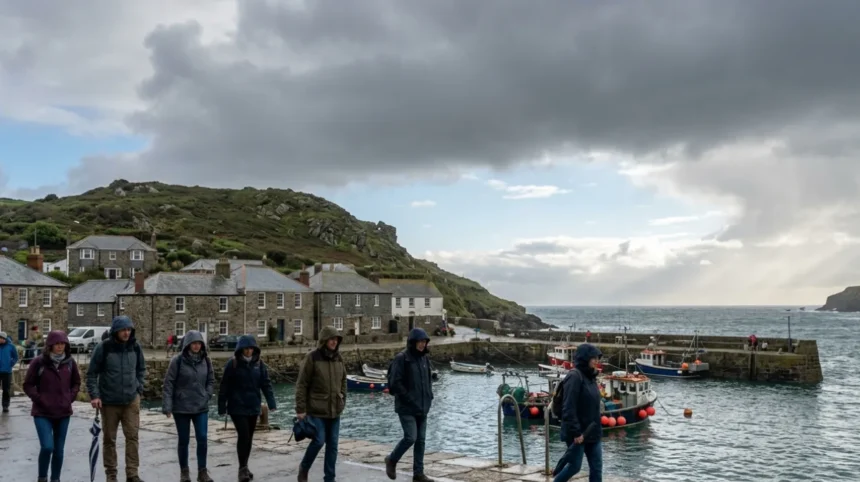
The United Kingdom experiences a temperate maritime climate characterised by cool winters, mild summers, frequent cloud cover, and changeable conditions. This climate is shaped by the country’s latitude, proximity to the Atlantic Ocean, and the influence of the Gulf Stream and prevailing south‑westerly winds.
- What is the UK’s climate?
- Key climate features
- Rainfall patterns
- How do seasons shape UK weather?
- Winter (December–February)
- Spring (March–May)
- Summer (June–August)
- Autumn (September–November)
- How does geography affect UK weather?
- West–east differences
- North–south differences
- Upland versus lowland
- What drives day‑to‑day UK weather?
- Atlantic depressions and fronts
- Role of the jet stream
- Local influences
- How do UK weather extremes compare?
- Heat and cold
- Wind and storms
- Heavy rain and flooding
- How does climate change affect UK weather?
- Rising temperatures
- Changing rainfall patterns
- Sea‑level rise and coastal impacts
- What should residents and planners know?
What is the UK’s climate?
The UK has a temperate maritime climate with no extreme temperatures, with average annual temperatures around 10°C and higher rainfall in the west and north than in the south‑east. This means winters are generally mild and summers are cool by global standards, allowing for rain at any time of year but rarely prolonged heatwaves or severe cold.
The UK lies in the mid‑latitudes between about 49°N and 61°N, on the western edge of Europe. Its position exposes it to moist air masses from the Atlantic and to the polar front jet stream, which steers low‑pressure systems across the country. These systems bring frequent frontal rain, cloud, and wind, especially in the autumn and winter months.
Coastal regions, such as London and the south coast, tend to be slightly warmer and drier than inland and upland areas. Upland regions in northern England, Scotland, Wales and Northern Ireland receive more rain and often lower temperatures, with increased snowfall in winter.
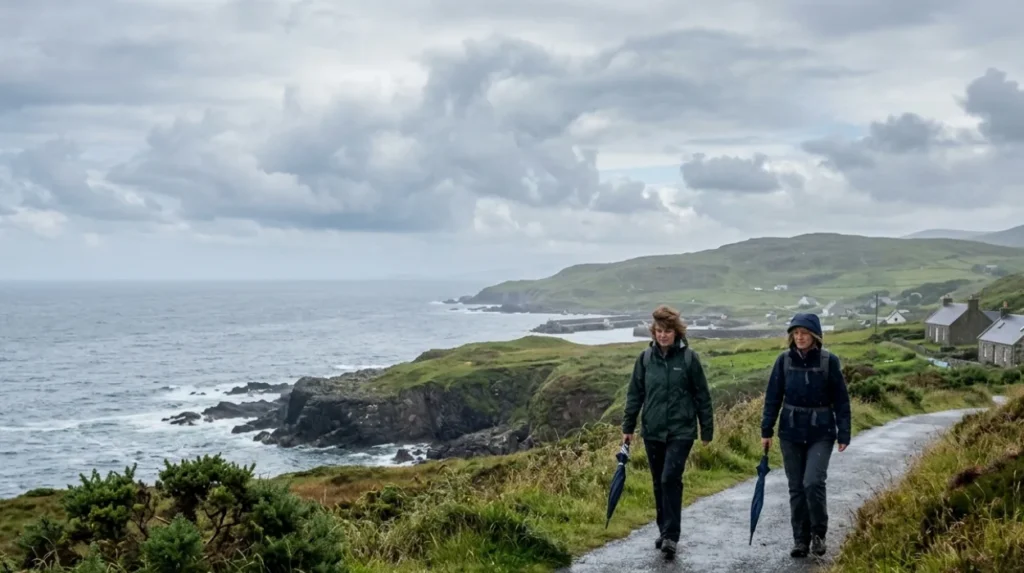
Key climate features
- Temperate means average temperatures above 0°C in winter and below 22°C in summer.
- Maritime means sea influence moderates temperature extremes, keeping winters milder and summers cooler than continental Europe at similar latitudes.
- Changeable implies that several weather types can occur in a single day, from bright sunshine to heavy rain.
Rainfall patterns
Annual rainfall ranges from under 600 mm in parts of eastern England to over 4,000 mm in some Scottish mountain areas. The west and north of the UK, including the Lake District and the Scottish Highlands, receive the highest totals because moist Atlantic air is forced to rise over hills, cooling and condensing into rain or snow.
Urban areas such as London and Leeds typically see about 550–700 mm of rain per year, spread across roughly 150–170 rain days. In contrast, upland regions such as the Peak District and Snowdonia can exceed 2,000 mm annually.
How do seasons shape UK weather?
UK seasons follow a regular pattern: mild, often wet winters, cool springs with fluctuating temperatures, warm but rarely hot summers, and damp, increasingly windy autumns. This four‑season cycle is less extreme than in continental climates, but outdoor activities and agriculture in the UK still closely align with seasonal shifts.
Winter (December–February)
Average winter temperatures across England are roughly 1–5°C, with higher lows in London and lower values in northern cities such as Leeds and Newcastle. Snowfall is occasional and often short‑lived in lowland areas, but more frequent in hills and mountains.
North‑west England, including Greater Manchester and parts of Yorkshire, experiences more frequent rain and gales in winter due to repeated Atlantic fronts. Southern England, such as London and the Home Counties, tends to be a few degrees warmer and slightly drier.
Spring (March–May)
Spring temperatures rise from around 6–8°C in March to about 12–15°C by May across many lowland areas. Frosts become less frequent but can still occur into April, especially in rural valleys.
Spring rainfall is moderate, with increasing sunshine hours as days lengthen. This season can still produce cold snaps and late frosts, which affect farming and gardening across Yorkshire and the Midlands.
Summer (June–August)
Summer averages in England cluster around 15–19°C, with London often at the upper end of that range and cooler upland and northern regions slightly lower. Daytime highs commonly reach 20–25°C, with occasional heatwaves pushing above 30°C in cities such as London and Birmingham.
Summer is the driest time of year in many areas, but convective afternoon showers and thunderstorms remain common. Southern and eastern England, including the Thames Valley, tend to be the sunniest and least wet.
Autumn (September–November)
Autumn temperatures fall from around 15–17°C in September to 6–9°C by November in many lowland regions. Rainfall increases as Atlantic fronts resume their regular passage, and wind speeds rise.
Leaves fall and daylight shortens, but the combination of mild air and moisture can still support late‑season crops and garden plants. Coastal and western regions again see the highest rainfall totals.
How does geography affect UK weather?
Geography drives major differences in UK weather, with the west and north wetter and cooler, the east and south‑east drier and warmer, and upland areas much colder and snowier. These contrasts mean that planning outdoor events, travel or farming in the UK often requires location‑specific expectations.
West–east differences
The west of the UK, including Wales, western Scotland and north‑west England, faces the Atlantic first. Moist air rising over mountains such as the Pennines and Cambrian Mountains produces higher rainfall and more frequent cloud cover.
Eastern regions, such as East Anglia and the south coast from London to Dover, lie in a “rain shadow,” where descending air behind hills dries out, leading to lower rainfall and more sunshine. This gradient creates a noticeable difference between, for example, wetter Leeds and comparatively drier coastal Kent.
North–south differences
Northern parts of the UK, including Scotland and northern England, are cooler year‑round than the south. In Scotland, average winter temperatures can be 1–3°C below those in south‑east England, and summer highs are typically 2–4°C lower.
The south of England, particularly London and the south coast, benefits from the full moderating effect of the English Channel and the Gulf Stream, raising average temperatures and reducing frost days. Extreme cold is rarer here than in northern and inland regions.
Upland versus lowland
Upland areas include the Scottish Highlands, the Lake District, the Pennines and Snowdonia. These regions experience higher rainfall, more frequent gales and more days with snow in winter, often several weeks of lying snow above about 600 m.
Lowland areas such as the Thames Valley, East Anglia and the south coast see fewer frost days and less snow, but they remain susceptible to frost and fog in winter. Inland valleys, such as those in the Midlands, can experience colder nights because cold air drains into them.
What drives day‑to‑day UK weather?
Day‑to‑day UK weather is dominated by Atlantic low‑pressure systems, frontal bands, the jet stream and local factors such as sea breezes and urban heat. These elements combine to create the “changeable” pattern for which the UK is famous, with rapid shifts from sun to rain within hours.
Atlantic depressions and fronts
Most UK weather is steered by low‑pressure centres developing over the North Atlantic and moving east or north‑east. These systems produce three main frontal zones: warm fronts, cold fronts and occluded fronts.
- Ahead of warm fronts, cloud thickens and drizzle becomes steady rain.
- Behind cold fronts, showery and often gusty conditions dominate.
- Occluded fronts mark a transition between the two, often with prolonged moderate rain.
Role of the jet stream
The polar front jet stream, a narrow band of fast‑moving air several kilometres above the surface, guides the track of these lows. When the jet stream lies over or just south of the UK, storms pass frequently and weather is unsettled.
When the jet stream shifts north, more stable high‑pressure systems can dominate, leading to drier and sunnier spells. In summer, displacement can even allow blocking anticyclones to bring heatwaves, such as those seen in 2003, 2006, 2018 and 2022.
Local influences
Local geography creates microclimates. Coastal cities such as London and Bristol see milder winters and cooler summers than nearby inland towns due to the sea’s thermal inertia.
Urban areas, including London and Leeds, experience the “urban heat island” effect, where buildings and roads retain heat, raising night‑time temperatures by around 1–2°C relative to rural surroundings. This can reduce frost frequency and slightly extend the growing season in cities.
How do UK weather extremes compare?
The UK rarely experiences truly extreme conditions, but it can record heatwaves above 35°C, cold spells below −15°C, gales over 100 mph, and hundreds of millimetres of rain in 24 hours. These extremes are becoming more frequent with climate change, but they remain uncommon compared with continental climates.
Heat and cold
Record highs in England have exceeded 38°C, with the national record above 40°C at sites including Lincolnshire and the south‑east. Heatwaves typically follow persistent high‑pressure systems and can stress health services, transport and agriculture.
Record lows in the UK fall below −25°C, occurring mainly in the Scottish Highlands and parts of Wales. Such cold spells are rare in lowland England, where −10°C is usually sufficient for widespread disruption.
Wind and storms
The UK’s strongest winds arise from deep Atlantic depressions, with gusts over 90 mph recorded in exposed upland and coastal areas. Notable storm seasons, such as those in 1987 and 1990, have produced severe gales and damage to infrastructure.
Coastal locations such as the west of Ireland and western Scotland are most exposed, while the lee of mountain ranges, such as eastern England, offers some protection.
Heavy rain and flooding
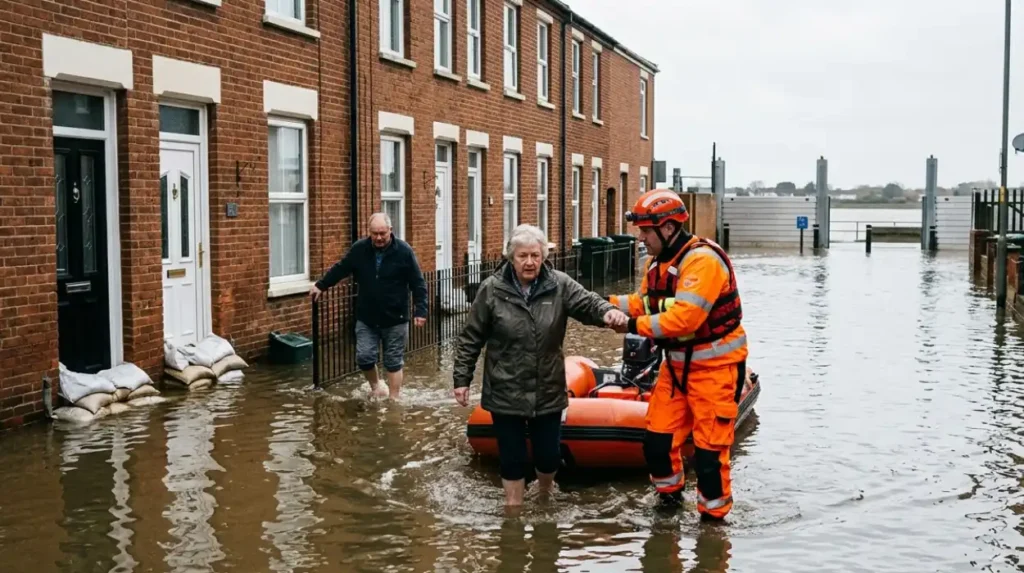
Flash‑flood events can bring over 100 mm of rain in a single day to parts of the south and west, overwhelming drainage systems. In upland catchments such as the Lake District, prolonged rainfall can lead to river flooding across lowland towns.
Recent decades have seen increased rainfall intensity in some regions, with more “one‑in‑a‑hundred‑year” flood events occurring within decades rather than centuries.
How does climate change affect UK weather?
Climate change is raising average UK temperatures by about 1–1.5°C since the late 20th century, increasing rainfall intensity in some regions and making heatwaves more likely. These shifts influence farming, energy demand, flood risk and public health, particularly in cities such as London and Leeds.
Rising temperatures
The UK has warmed at a rate comparable to the global average, with the latest decade’s mean temperatures about 1°C higher than the 1961–1990 baseline. Winter warming is often more pronounced than summer warming, reducing the number of frost days in many lowland areas.
Higher temperatures extend the growing season, allowing some crops and garden plants to be planted earlier. However, they also raise the risk of drought stress in dry summers and increase cooling demand in buildings.
Changing rainfall patterns
Overall UK annual rainfall has increased slightly, but the change is uneven. Western and northern regions show greater rises in heavy rainfall events, while some eastern and southern areas experience more frequent dry spells.
Intense rainfall is more likely to cause surface‑water flooding and overwhelm urban drains, especially in cities with hard‑surfaced roads and pavements.
Sea‑level rise and coastal impacts
Sea level around the UK has risen about 15–20 cm since the late 19th century, with further rises expected. Low‑lying coastal areas, particularly in eastern England, face increased risk of tidal flooding and erosion.
This trend affects flood‑defence planning, insurance premiums and decisions about coastal infrastructure and housing.
What should residents and planners know?
Residents and planners should expect variable conditions year‑round, prepare for wet winters, occasional heatwaves and more intense rainfall, and monitor local forecasts ahead of travel or outdoor work. Understanding these patterns helps individuals and organisations manage risk, energy use and event planning across the UK.
For example, lowland cities such as London and Leeds typically need to plan for winter rain, occasional snow, and growing summer heat stress on transport and health services. Upland and western regions must prioritise flood resilience, drainage upgrades and winter‑road safety.
In the long term, infrastructure projects, housing layouts and green‑space planning increasingly factor in higher temperatures and more frequent extreme‑weather events. This shift makes understanding UK weather patterns essential not just for daily comfort but for economic resilience and public‑sector planning.
What type of climate does the UK have?
The UK has a temperate maritime climate, meaning mild winters, cool summers, and frequent rainfall throughout the year.