Horsforth, a historic village 5 miles north-west of Leeds city centre, contains secluded attractions that weekend travellers often overlook. The hidden gems include the walled Japanese garden inside Horsforth Hall Park, the nature reserve at Hunger Hills Woods with panoramic city views, the grade II listed Newlay Weir on the River Aire, the volunteer-run Horsforth Village Museum on The Green, and the historic Old Kings Arms pub dating to 1749.
- What are the best hidden attractions in Horsforth for weekend travellers?
- Where is the hidden Japanese garden in Horsforth Hall Park?
- How do you access Hunger Hills Woods nature reserve for walking?
- What makes Newlay Weir on the River Aire worth visiting?
- What exhibits does Horsforth Village Museum display?
- Where is Horsforth’s oldest pub and what is its history?
- Which independent cafes in Horsforth suit digital nomads working remotely?
- How do you reach Horsforth from Leeds city centre?
What are the best hidden attractions in Horsforth for weekend travellers?
The top hidden attractions are Horsforth Hall Park’s Japanese garden, Hunger Hills Woods nature reserve, Newlay Weir on the River Aire, Horsforth Village Museum, and the Old Kings Arms pub. These sites offer peaceful walks, historical exhibits, and authentic village character away from Leeds city centre crowds.
Horsforth sits at postcode district LS18 and covers approximately 3.7 square miles. The town receives fewer than 10,000 annual tourist visits compared to Leeds city centre’s 6.5 million visitors, making it genuinely underexplored by short-break travellers. Weekend visitors typically arrive by train from Leeds station (10-minute journey) or by car via the A660.
The five hidden attractions listed above represent distinct categories: formal gardens, woodland nature reserve, riverside heritage feature, local history museum, and historic public house. Each site operates independently, has free entry (except museum donations), and remains accessible year-round with seasonal variations in opening hours.
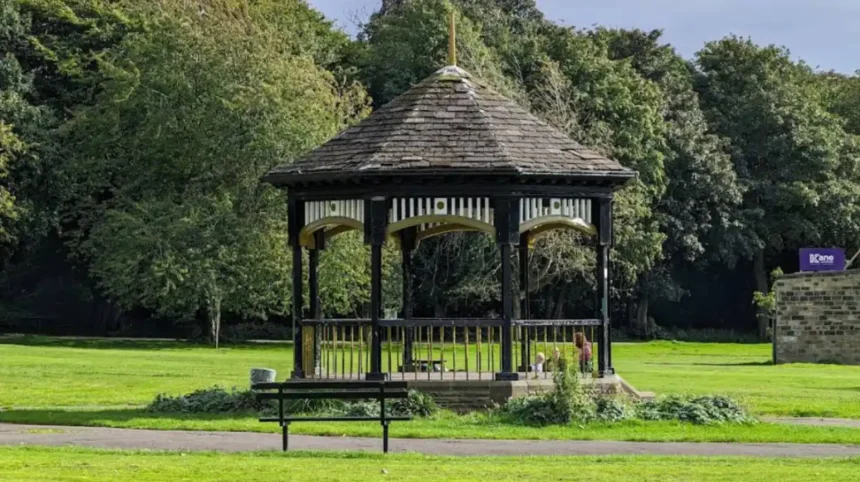
Where is the hidden Japanese garden in Horsforth Hall Park?
The Japanese garden is a walled garden located at the rear of Horsforth Hall Park on Hall Lane, LS18 5JE. It features a large pond with koi carp, a red arched bridge, raked gravel areas, bamboo, acers, camellias, and a circular red wooden bench. The garden spans approximately 0.2 hectares and sits higher up the park slope away from the main playground.
Horsforth Hall Park covers 16 hectares in total and opened as a public space in 1924. The Japanese garden was added later as a formal walled section and represents one of only 12 Japanese gardens in Yorkshire. The pond contains koi carp measuring up to 60 centimetres in length. Interpretation boards around the perimeter explain traditional Japanese garden design principles including the use of asymmetry, natural materials, and symbolic rock placements.
The garden remains peaceful during weekday mornings between 9:00 and 11:00 when school groups do not visit. Weekend afternoons see higher foot traffic from families using the adjacent playground and skate park. The café at the park’s lower end serves hot and cold refreshments with outdoor seating overlooking the cricket pitch.
Paths throughout Horsforth Hall Park suit wheelchair users, though the Japanese garden’s internal gravel paths may present difficulty for some mobility-impaired visitors. Disabled parking exists in the main car park off Hall Lane with two designated bays. No accessible toilets exist within the park, requiring visitors to use facilities at the café or nearby Gazis Indian restaurant car park.
How do you access Hunger Hills Woods nature reserve for walking?
Hunger Hills Woods (also called Hunger Hills Nature Reserve) is a mature deciduous woodland on the western side of Horsforth near Hall Lane, LS18 5JF. Park free next to Hall Park on Hall Lane and enter via the southern entrance opposite the playground. The woodland sits on a south-facing slope with three circular trail routes, dirt and rock underfoot, and panoramic views across Leeds extending for many miles.
The nature reserve covers approximately 4 hectares of naturally regenerating mature woodland. A small stream runs through the centre of the wooded hillside. TheFriends of Hunger Hills group regularly hosts family bat watches using super digital bat detectors, with families welcome to join walks, talks, and bat watching events.
Three trail routes intersect within the dense flora, mainly circular but without clear waymarking. The area sits on a hillside requiring up-and-down climbing. Underfoot conditions comprise mainly dirt and rock, necessitating solid footwear for comfortable walking. After rainfall, some areas become fairly steep and slippery. The trails are not accessible to wheelchair users and may prove difficult with pushchairs.
The best walking combination pairs Hunger Hills with Horsforth Hall Park for a full route clocking 2-3 miles. Runners should not attempt the trails alone due to intersecting paths and limited mobile signal in deeper woodland sections. The nearest toilet sits a 10-minute walk away at the Malt Brewhouse off Long Row. Several bins exist off the Hall Lane entrance for waste disposal.
Hunger Hills Woods forms the northern starting point of the proposed Horsforth Nature Recovery Corridor, a project by Horsforth Climate Action to create connected wildlife habitats running south past Horsforth School, St Margaret’s Church, across Long Row, onto Broadgate Lane, and terminating at Low Lane Recreation Ground. The group received funding in 2025 to research and develop this corridor.
What makes Newlay Weir on the River Aire worth visiting?
Newlay Weir is a grade II listed structure on the River Aire situated between Horsforth and Kirkstall Abbey. The weir has been a cherished feature of the River Aire for many years and provides scenic riverside walking access. Work started in 2020 to install fish passes at the site following partial collapse. The location offers DNAire trail walks from various points on the river.
The weir sits at grid reference SE2336 approximately 1.5 miles downstream from Horsforth town centre. Access points include walks from Newlay Bridge and paths connecting to Kirkstall Abbey. The River Aire here flows at approximately 3 metres per second during average conditions. The grade II listing dates from 1988, recognising the weir’s architectural and historical significance as a water management structure.
The partial collapse visible in 2021 photographs left sections of the weir derelict while maintaining water flow. The fish pass installation project aims to restore salmon and trout migration routes blocked since the weir’s construction. The DNAire project provides waymarked walking routes along both river banks with interpretation boards explaining river ecology and industrial heritage.
Weekend visitors can combine Newlay Weir with Kirkstall Abbey visits (1 mile downstream) for a 3-mile riverside walk. The path From Newlay Weir to Kirkstall Abbey passes through woodland and open grassland with multiple viewpoints. Dogs remain on leads near the river edge due to slippery banks after rainfall. Parking exists at Kirkstall Abbey car park with free entry to both the abbey ruins and riverside paths.
What exhibits does Horsforth Village Museum display?
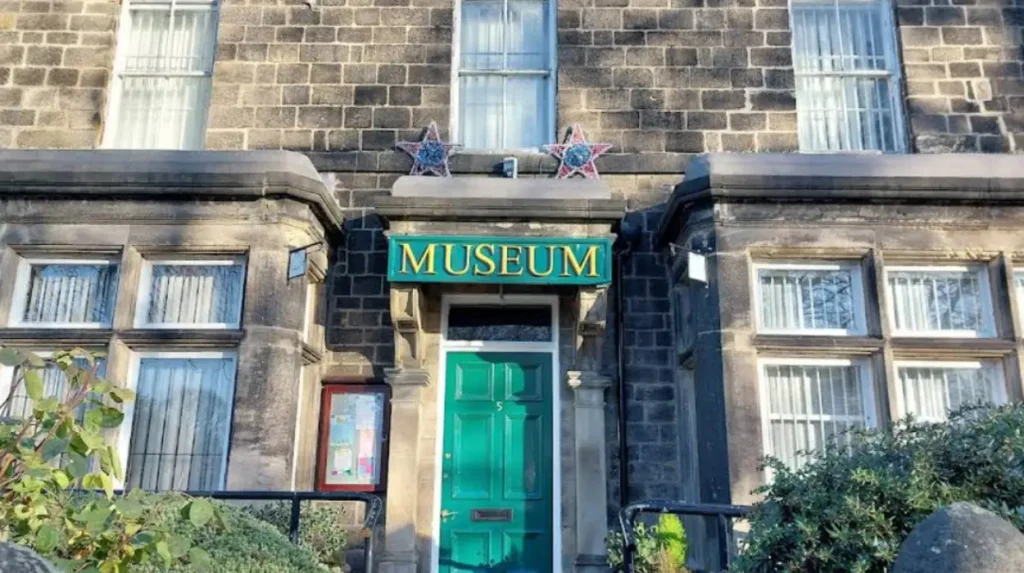
Horsforth Village Museum opened in 1988 on The Green at the heart of the old village. The entirely voluntary-run museum displays exhibits portraying all aspects of life in and around Horsforth, including nostalgia and educational items from local history. The museum is housed in the former council chambers and remains funded by donations, fundraising, and shop gifts.
Opening hours run from the last Saturday in March to the end of December: Saturdays 10:00-16:00 and Sundays 14:00-17:00. The museum remains closed Monday through Friday. Located at The Green, LS18 5HG, the museum sits within walking distance of Town Street’s independent shops and the Old Kings Arms pub.
Horsforth was once described as the largest village in England and has retained village identity despite absorption into Leeds urban sprawl. The museum’s exhibits include photographs, household items, agricultural tools, and documents from the 18th century onwards. The collection demonstrates the town’s transition from agricultural settlement to railway-connected suburb to modern residential area.
The museum atmosphere reflects commitment from local volunteers with friendliness characteristic of dedicated local history museums. Visitor donations directly fund acquisition of new exhibits and maintenance of existing collections. The shop sells gifts, books, and local history publications with proceeds supporting museum operations.
As you explore the modern village centre, you are crossing land with a deep heritage dating back to Anglo-Saxon settlers who named the place “hors ford” (horse crossing) on the River Aire for transporting woollen goods. Read about the full [Horsforth from Village to Suburb: Complete Historical Timeline] to understand its origins from medieval settlement through industrial revolution transformation to present-day residential community.
Where is Horsforth’s oldest pub and what is its history?
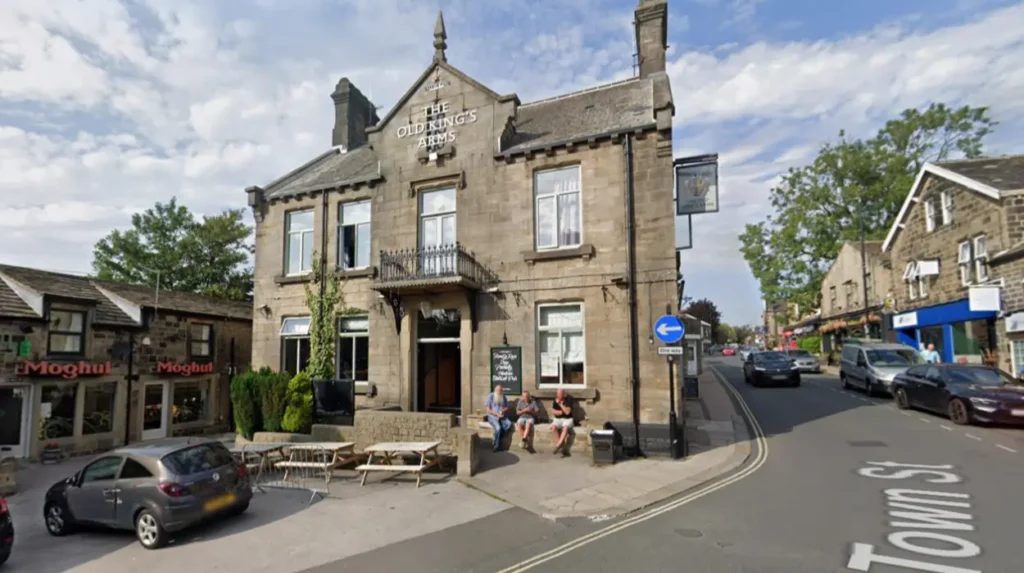
The Old Kings Arms on The Green is Horsforth’s oldest pub, referred to in a will dated 1749. The current building dates from 1878. The pub serves traditional food at reasonable prices and focuses on community spirit in the heart of Horsforth village. It sits within walking distance of Horsforth Village Museum and Town Street’s independent shops.
The pub’s history spans 276 years from first documentary mention in 1749. The 1878 building replaced earlier structures on the same site. The Old Kings Arms serves good, old-fashioned grub including Sunday roasts, pub classics, and locally sourced ingredients. Reasonable pricing maintains accessibility for local residents and visitors.
The pub recently underwent refurbishment emphasising community spirit with indoor and outdoor seating areas. Regular events include live music nights, quiz evenings, and community gatherings. The Old Kings Arms functions as a social hub for Horsforth residents and a stopping point for visitors exploring The Green and surrounding attractions.
Weekend travellers can combine pub visits with walks through Horsforth Hall Park (0.3 miles), the Japanese garden (0.4 miles), and Hunger Hills Woods (0.5 miles). The Green itself provides a peaceful seating area with benches overlooking the historic village centre. Independent shops on Town Street sit 200 metres from the pub.
Which independent cafes in Horsforth suit digital nomads working remotely?
Pooky’s Deli & Cafe on 92 New Road Side, LS18 4QB serves speciality coffee, freshly made food, and local produce with café seating upstairs and outdoor tables when sunny. Kitchen operates 8:00-1 Monday-Saturday and 9:00-2 Sunday. The venue doubles as an artisan deli selling charcuterie, cheese, and craft beers, providing work-friendly atmosphere for digital nomads.
New Road Side contains Horsforth’s second main cluster of cafes and restaurants alongside Town Street. Pooky’s represents an independent delicatessen producing high-quality food and drink with gifts, hampers, and cheeseboards available online. The upstairs seating area provides additional space when the ground floor fills with lunch customers.
Oakwood Cafe and Truly Scrummy on Town Street also serve coffee and lunch options suitable for remote working. The Courtyard Cafe provides quiet lunch spots away from office environments. Costa Coffee on Town Street offers chain reliability with Wi-Fi for laptop users needing consistent connectivity.
Digital nomads should note that Horsforth lacks dedicated co-working spaces but benefits from reliable mobile signal throughout the town. Leeds city centre sits 10 minutes away by train for those requiring formal office facilities. The Horsforth Climate Action hub occasionally hosts community events with open workspaces.
How do you reach Horsforth from Leeds city centre?
Horsforth sits 5 miles north-west of Leeds city centre, accessible by train in 10 minutes from Leeds station or by car via A660 in 15-20 minutes without traffic. Horsforth station provides direct services to Leeds, York, and Bradford. The town centre lies at postcode LS18 with parking available on Town Street and New Road Side.
Weekend travellers from outside Leeds reach Horsforth via M1 motorway (Junction 45) or A1(M) to Leeds, then follow signs for Horsforth/A660. Public transport from Leeds Airport requires 30 minutes by taxi or 45 minutes by bus to Horsforth town centre. National Express coaches stop at Leeds City Bus Station with 15-minute connections to Horsforth.
Accommodation options in Horsforth include bed and breakfast establishments on Hall Lane and New Road Side, with nearby hotels in Headingley (2 miles) and Leeds city centre (5 miles). The Malt Brewhouse on Long Row provides pub accommodation with rooms available for overnight stays.
What are the best hidden gems in Horsforth?
The best hidden gems in Horsforth include the Japanese garden in Hall Park, Hunger Hills Woods nature reserve, Newlay Weir on the River Aire, Horsforth Village Museum, and the historic Old Kings Arms pub.