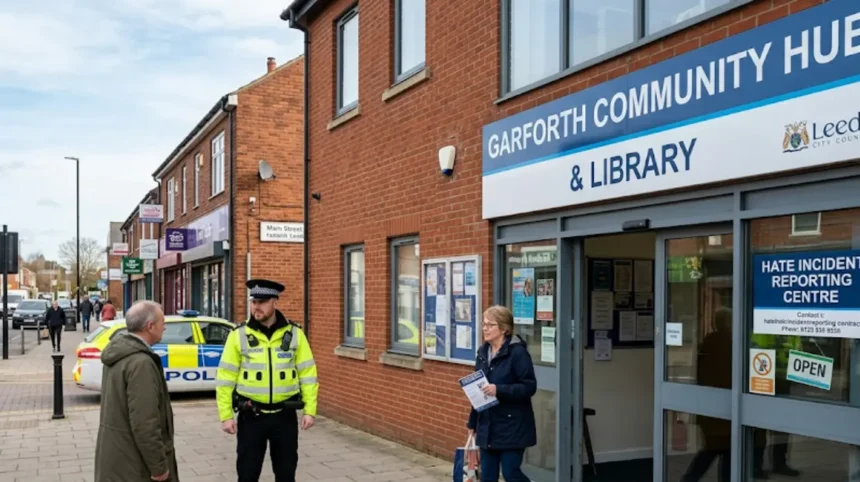
Anti-social behaviour in Garforth is reported through the right agency for the problem: Leeds City Council’s Anti-Social Behaviour Team, West Yorkshire Police, your landlord or housing provider, or the Leeds District Anti-social Behaviour Review process when a case stays unresolved. Garforth residents also have a local reporting route through Garforth Community Hub for hate incidents and related support services.
- What counts as anti-social behaviour in Garforth?
- Who should you report it to?
- How do you report it online or by phone?
- What details should you record?
- When should you call 999 or 101?
- What is the Leeds ASB review?
- How does reporting work for tenants?
- What happens after you report?
- What should Garforth residents do for hate incidents?
- What local context matters in Garforth?
- What is the best way to build a strong case?
- Why does timely reporting matter?
- Which contact routes matter most?
What counts as anti-social behaviour in Garforth?
Anti-social behaviour in Garforth includes nuisance, harassment, intimidation, vandalism, noise, verbal abuse, street drinking, repeated disturbance, and targeted behaviour that harms your peace or safety. The correct response depends on whether the issue is criminal, urgent, tenancy-related, hate-related, or a repeated community problem that needs council or police action.
Anti-social behaviour, often shortened to ASB, covers actions that cause alarm, distress, or nuisance to other people. In practice, that includes shouting late at night, threats, harassment, damage to property, repeated nuisance from neighbours, or behaviour linked to prejudice against a protected characteristic such as race, disability, religion, sexual orientation, or transgender identity.
In Garforth, the first step is to identify the type of incident. A one-off conflict, repeated neighbour nuisance, criminal damage, and hate-motivated abuse do not always follow the same reporting route. Correct classification matters because the council, police, and landlords each handle different parts of the problem.
Who should you report it to?
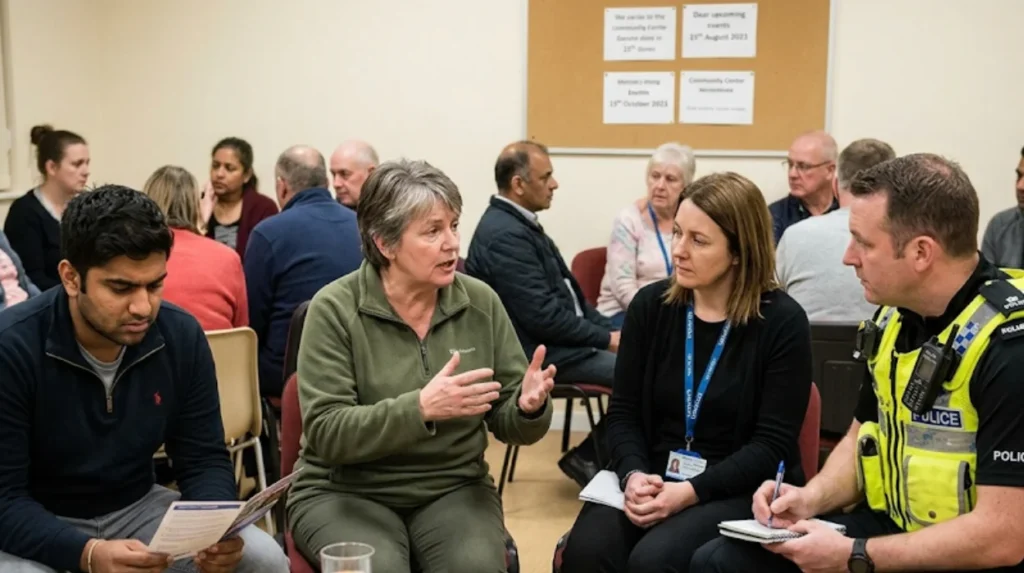
Report anti-social behaviour in Garforth to the police for crime or danger, to Leeds City Council for nuisance and hate incidents, to your landlord or housing provider if you rent, and to Leeds District ASB Review when three reports in six months have not resolved the issue. Each route serves a different purpose and using the right one speeds up action.
If someone is in immediate danger, violence is happening, or a crime is in progress, call 999. For non-emergency crime, harassment, or persistent anti-social behaviour that needs police attention, call 101 or use the police online reporting route.
If the issue is nuisance, community disruption, or a hate incident in Leeds district, Leeds City Council provides a reporting line on 0113 222 4402, Monday to Friday, 9am to 5pm, plus online and in-person reporting at community hubs and libraries. If you are a tenant, your landlord or housing provider also needs the report, because housing bodies can act on tenancy-related nuisance and tenancy breaches.
How do you report it online or by phone?
You report anti-social behaviour by choosing the correct channel, giving factual details, and keeping your own record of each incident. Leeds City Council offers phone reporting on 0113 222 4402, while West Yorkshire Police accepts 101 for non-emergencies and 999 for emergencies. Garforth residents can also report in person at Garforth Community Hub for hate incidents.
The council asks for clear incident details such as when the event happened, where it happened, who was involved, witness information, and anything that identifies the person responsible. That same fact pattern helps police and housing officers decide what action fits the case.
A strong report includes the exact location, the date, the time, the frequency, the behaviour, the people involved, and any effect on you or neighbours. The more specific the report, the easier it becomes to compare incidents and show a pattern.
For hate crime or hate incidents, Leeds City Council allows reporting by phone, online, and in person. Garforth Community Hub is listed as one of the city’s hate incident reporting centres. That makes it a practical local option for people who want face-to-face support.
What details should you record?
Keep a written log with dates, times, locations, witness names, what happened, and how often it happened. A good report is factual, specific, and repeated over time, because agencies use patterns of behaviour to decide enforcement, safeguarding, tenancy action, or multi-agency review.
Leeds housing and safety guidance stresses the value of recording incidents carefully. It recommends noting who was involved, what happened, when it happened, why it may be happening, and where it took place. This structure helps establish whether the issue belongs with police, the council, a landlord, or another service.
A useful log should include the exact words used in abuse, vehicle details if relevant, and whether cameras, phone recordings, or neighbours can support the account. Keep records even when the behaviour stops and starts, because intermittent nuisance still matters when it becomes a repeated pattern.
For anti-social behaviour cases, evidence often decides the response. That evidence can include diary sheets, screenshots, photos, call logs, and witness statements. The goal is not to exaggerate the problem but to show the impact clearly and consistently.
When should you call 999 or 101?
Call 999 when there is immediate danger, violence, an ongoing crime, or a serious threat to life or property. Call 101 for non-emergency crime, harassment, or anti-social behaviour that needs police attention but is not urgent. This split keeps emergency resources available for the most serious incidents.
West Yorkshire Police and Leeds City Council both direct people to 999 for emergencies. That includes attacks, threats with weapons, criminal damage in progress, or situations where you fear immediate harm.
Use 101 when the behaviour is serious but not happening right now. That includes repeated harassment, intimidation, criminal damage after the event, or neighbour disputes that need police record-keeping and follow-up. If the matter is not a police emergency but still needs action, the council ASB team is another route.
What is the Leeds ASB review?
The Leeds District Anti-social Behaviour Review is a formal multi-agency review for people who have made up to three reports in six months to the council, police, or a social landlord and still face unresolved anti-social behaviour. It is a review of action taken so far, not a complaint process, and it can trigger recommendations for better problem-solving.
West Yorkshire Police explains that the review exists to give victims and communities a right to request a case review when the issue continues after repeated reporting. A panel examines the circumstances, checks whether appropriate action is already underway, and can recommend improvements to the responsible organisation.
This route matters in Garforth because some ASB cases become long-running and cross agency boundaries. If police, council, and landlord responses have not resolved the problem, the review creates a joined-up process rather than forcing the resident to restart the case from scratch.
The review is not the same as complaining about poor service. If the problem is that an agency did not handle your report properly, use its complaint process instead. The review focuses on the ongoing anti-social behaviour itself and the response to it.
Explore More Help & Resources
How to find free adult learning courses near Yeadon
How to get a smart meter installed for free in Wetherby
How does reporting work for tenants?
Tenants should report anti-social behaviour to their landlord or housing provider first when the issue involves a tenancy, a neighbouring tenant, or estate nuisance. Landlords can investigate breaches, warn tenants, gather evidence, and coordinate with the council or police when the conduct crosses into crime or serious disruption.
Housing Ombudsman guidance says tenants should contact their landlord, keep a log of incidents, ask about the ASB policy, report crimes or threats to the police, and say if they need support. This is important because many neighbourhood disputes sit between housing management and law enforcement.
If the tenant is in social housing, the landlord often has direct powers to intervene through tenancy enforcement, mediation, warning letters, or nuisance action. If the issue includes threats, assault, drugs, or criminal damage, the police still need involvement.
Private tenants also need a route through their landlord or letting agent. That route does not replace police or council reporting, but it creates a property-level record that supports later action.
What happens after you report?
After you report anti-social behaviour, the agency records the details, checks whether there is an immediate risk, and decides whether police, council, housing, or a joint approach is needed. Repeated reports build a pattern, which supports intervention, case review, or enforcement based on evidence rather than single incidents.
For council and police reports, the first stage is usually triage. Officials assess whether the behaviour is criminal, hate-related, tenancy-related, or a civil nuisance. They then decide whether to contact you, request more information, refer the case, or open an investigation.
For the Leeds ASB Review, the trigger is based on repeated reporting over six months, not a single complaint. That threshold shows the issue has continued despite earlier contact with public services.
Good reporting improves outcomes because it helps agencies identify patterns, locations, repeat offenders, and escalation. It also reduces the chance that a serious problem gets treated as a one-off dispute.
What should Garforth residents do for hate incidents?
Garforth residents should report hate incidents to Leeds City Council, West Yorkshire Police, or a hate incident reporting centre such as Garforth Community Hub. A hate incident is behaviour targeted at someone because of race, disability, religion, sexual orientation, or transgender identity, and it can still be reported even when it is not a crime.
Leeds City Council defines hate crimes and incidents around protected characteristics and explains that the person targeted does not need to personally have that characteristic if the offender believed they did. That makes reporting relevant for bystanders, family members, and witnesses as well as direct victims.
The council asks for details of the incident, witnesses, identifying information, and whether the person targeted is under 18. These details help support both safeguarding and police action.
Because Garforth Community Hub appears on the council’s list of reporting centres, residents have a nearby in-person option in the town itself. That local access matters for people who prefer direct support over online forms.
What local context matters in Garforth?
Garforth sits within Leeds district, so residents use Leeds-based reporting routes for council services, police liaison, and community safety. Local access through Garforth Community Hub gives the town a practical entry point for hate incident reporting and support, while the wider Leeds system handles enforcement and review.
The key practical point is that Garforth is not handled in isolation. It sits inside the Leeds district structure, which means the same council and police reporting routes apply across the city area. That is useful for residents because it creates a single recognised system.
Local access matters when problems become persistent. A resident who reports through the right route can later use the Leeds District ASB Review if the behaviour continues after up to three reports within six months.
This structure gives Garforth residents a local reporting front end and a district-level escalation mechanism. That combination is what makes the process effective for long-running neighbourhood nuisance.
What is the best way to build a strong case?
The best case is built on consistency: report every incident, use the same description format, keep evidence, and match the route to the problem. A strong case shows frequency, impact, and pattern, which supports council intervention, police action, housing enforcement, or an ASB review.
Start with one clear log for all incidents. Add the date, time, place, what happened, who was there, and what evidence exists. If the behaviour involves noise, intimidation, parking abuse, drug-related nuisance, vandalism, or hate abuse, keep each category separate but connected by dates and details.
Report the same issue to the same agency when possible so the record stays complete. If the matter escalates, share the earlier report history when you contact police, the council, or the landlord. That background helps agencies understand why the problem needs stronger action.
A well-documented report also protects you from delay. It gives decision-makers enough information to assess whether the problem is a one-off disagreement or a wider anti-social behaviour pattern that needs intervention.
Why does timely reporting matter?
Timely reporting matters because anti-social behaviour becomes harder to solve when incidents are left unrecorded. Early reporting creates evidence, protects neighbours, supports safeguarding, and increases the chance of intervention before the behaviour becomes normalised or repeatedly disruptive.
Public agencies work from records. If no report exists, there is no formal pattern for them to assess. Early reporting helps show frequency, escalation, and impact, which are central to deciding what action fits the case.
Timely reporting also matters for victims of hate incidents and harassment. Leeds guidance states that victims, witnesses, and people targeted because of protected characteristics can all report incidents. That widens support and improves the chance that abuse is documented accurately.
In practical terms, the sooner Garforth residents report an issue, the sooner the relevant agency can decide whether the matter belongs to police, council, housing, or a formal case review.
Which contact routes matter most?
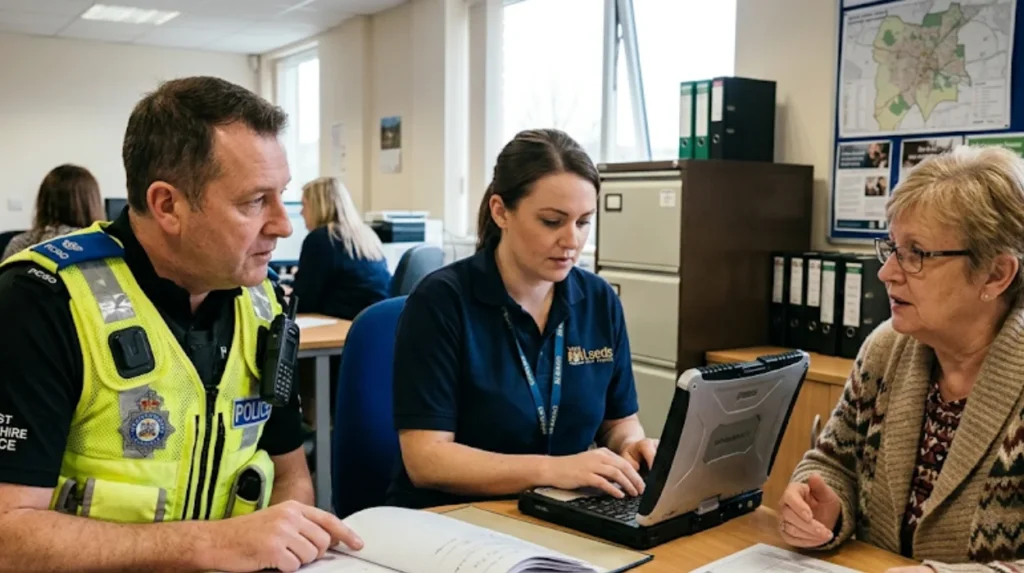
The main contact routes are 999 for emergencies, 101 for non-emergency police matters, Leeds City Council on 0113 222 4402 for ASB and hate incidents, and the Leeds District ASB Review on 0113 378 9669 when repeated reports have not resolved the issue. Garforth Community Hub also accepts in-person hate incident reports.
Those routes cover the full reporting pathway for Garforth residents. Emergency crime goes to 999, routine police matters go to 101, community nuisance and hate incidents go to the council, and unresolved repeat cases can move to the district review.
For tenants, the landlord route remains important because tenancy enforcement and estate management sit alongside council and police action. For hate incidents, the local hub route in Garforth provides a convenient community access point.
How do I report anti-social behaviour in Garforth?
You can report anti-social behaviour in Garforth to Leeds City Council, West Yorkshire Police, your landlord or housing provider, or through the Leeds District Anti-Social Behaviour Review process if the issue remains unresolved.