Key Points
- Leeds Central Library is hosting a special exhibition commemorating the 60th anniversary of England’s 1966 World Cup triumph.
- The display highlights local Leeds United legends Jack Charlton and Norman Hunter, who were part of the historic tournament squad.
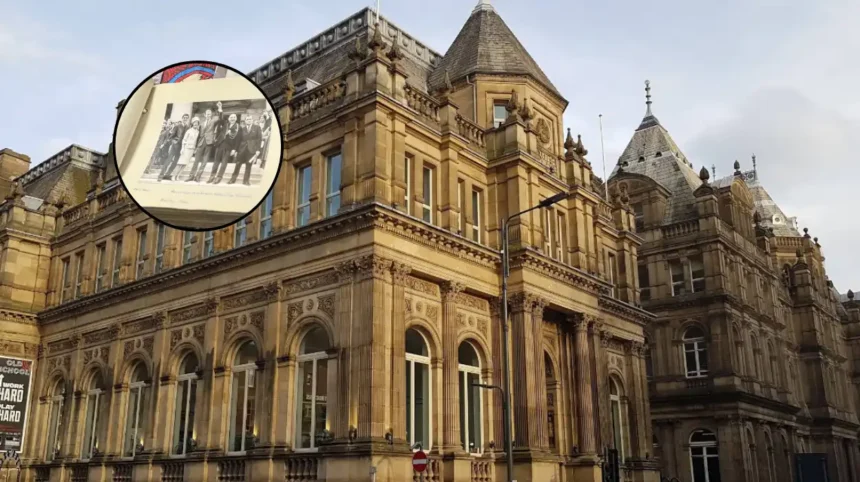
- Rare archival items on display include an original photograph of the players’ return to Leeds and a civic guestbook bearing their authentic signatures.
- The items trace back to a civic reception hosted on 3 August 1966 by the then Lord Mayor of Leeds, Alderman Joshua S. Walsh.
- Librarians aim to use the historical display to generate community excitement ahead of the upcoming summer football tournament.
Leeds (The Leeds Times) June 13, 2026 — Leeds Central Library has unveiled a commemorative public display featuring rare archival items to honor Leeds United’s 1966 World Cup heroes exactly sixty years after England’s historic football victory. The exhibition showcases a landmark photograph of the players being welcomed back to the city alongside an official civic book containing their original signatures. The initiative connects the region’s historic sporting achievements with the modern community, celebrating local figures who reached the absolute pinnacle of international football.
- Key Points
- Which Historical Artifacts Are Being Displayed at Leeds Central Library?
- How Does the Exhibition Intend to Influence the Community Ahead of This Summer’s Tournament?
- What Is the Historical Background of Leeds United’s Involvement in the 1966 World Cup?
- What Is the Prediction for How This Development Will Affect Local Residents and Football Supporters?
The collection centers on the contributions of iconic Leeds United defenders Jack Charlton and Norman Hunter, both of whom were integral members of Sir Alf Ramsey’s 1966 World Cup-winning squad.
Positioned within the library’s special collections department, the display makes these high-value pieces of local sports heritage accessible to the general public.
Curators designed the exhibition to serve both as an educational retrospective and a cultural focal point designed to bolster civic spirit.
The displayed artifacts originate from an official civic reception hosted at Leeds Civic Hall on 3 August 1966, just four days after England defeated West Germany 4–2 at Wembley Stadium. The event, led by the then Lord Mayor of Leeds, Alderman Joshua S. Walsh, marked the official return of the city’s sporting icons.
The library’s preservation of the signatures and visual records from that afternoon provides a direct, verifiable link to the formal celebrations that gripped West Yorkshire six decades ago.
Which Historical Artifacts Are Being Displayed at Leeds Central Library?
The exhibition centers on two primary historical artifacts that have been carefully preserved within the city’s municipal archives.
The first is a large-scale photograph capturing the arrival of the Leeds United players into the city center in August 1966, documenting the dense crowds and public enthusiasm of the era.
The second artifact is an official registry book from Leeds Civic Hall, which features the signatures penned by the players during their reception with local government officials.
As reported by the BBC, special collections librarian Antony Ramm stated that the victory of the players had brought “huge pride” to the municipality. Ramm emphasized the archival value of the items, noting that the city was
“lucky that this amazing moment was immortalised.”
The physical preservation of these items allows modern residents to interact directly with authentic, un-restored elements of the city’s mid-century sporting history.
How Does the Exhibition Intend to Influence the Community Ahead of This Summer’s Tournament?
Beyond its historical and archival merits, the library staff is utilizing the 1966 retrospective to build cultural momentum for contemporary sporting events.
The timing of the display intentionally coincides with the buildup to this year’s international football fixtures, leveraging nostalgia to foster a shared sense of community identity.
According to the account published by the BBC, Antony Ramm stated:
“Hopefully, reliving this historic moment at the library will help get everyone that bit more excited about this summer’s tournament too and we can see football come home again.”
Library organizers indicate that linking past achievements to modern athletic campaigns helps bridge generational divides among local football supporters.
What Is the Historical Background of Leeds United’s Involvement in the 1966 World Cup?
The 1966 World Cup victory remains a foundational pillar of English football history, and the city of Leeds held a highly distinct position during that tournament.
Under the managerial leadership of Don Revie, Leeds United had established itself as an aggressive, tactically formidable powerhouse in the English First Division. This club success translated directly to the international stage, where key defensive players were selected to represent the English national team.
Jack Charlton, a towering central defender who spent his entire professional club career at Leeds United, started every single match for England during the 1966 tournament. His defensive partnership with Bobby Moore formed the backbone of the national team’s strategy.
Norman Hunter, affectionately known as “Bites Yer Legs” due to his fierce tackling style, was also a vital member of the 22-man World Cup squad, representing the immense depth of talent present within the West Yorkshire club during the mid-1960s.
The civic reception on 3 August 1966 represented the intersection of sports and local governance. Alderman Joshua S. Walsh hosted the event to formally acknowledge how the international sporting success of these athletes elevated the global profile of the city of Leeds.
The gathering at Leeds Civic Hall was an elite municipal function that cemented the players’ status as permanent local heroes, an event now documented through the library’s current exhibition.
Explore More Local Leeds News
Leeds Housing Crisis: 26,000 Waiting List, 21 Kirkstall Flats Approved 2026
Troy Williamson vs Callum Simpson Rematch in Leeds 2026
What Is the Prediction for How This Development Will Affect Local Residents and Football Supporters?
This archival development is projected to have a quantifiable impact on local residents, school groups, and the broader community of West Yorkshire football supporters. By placing these rare artifacts in a free, public space like the Leeds Central Library, the city is democratizing access to sports history, which will likely see an increase in library foot traffic from demographics that do not traditionally frequent municipal archives.
For local older residents, the exhibition functions as a tangible touchpoint for shared memory, allowing those who witnessed the 1966 victory to pass oral histories down to younger generations.
For school groups and younger sports enthusiasts, the display provides historical context to the modern club they support, illustrating the deep-rooted heritage of Leeds United’s contribution to global football.