Key Points
- Vibrant Local Footfall: The establishment continues to attract substantial weekend crowds, reinforcing its status as a foundational pillar of the daytime and evening economy in the Pudsey suburb of Leeds.
- Diverse Beverage Portfolio: Industry data confirms a highly rotated selection of modern craft keg beers, alongside standard regional staples, a dedicated gin menu, and an array of signature cocktails.
- Nostalgic Atmosphere: Customers frequently cite the distinctive music policy, heavily featuring 1990s and 2000s indie, Britpop, and pop-punk classics, as a primary driver for patron retention. Yorkshire.com
- Space Management Dynamics: Due to the physical restrictions of its structural footprint, the intimate two-floor venue frequently operates at peak capacity, creating a bustling environment.
- Regulatory Compliance: Public records show that the venue maintains elite operational standards, backed by a maximum five-star food hygiene rating issued by Leeds City Council.
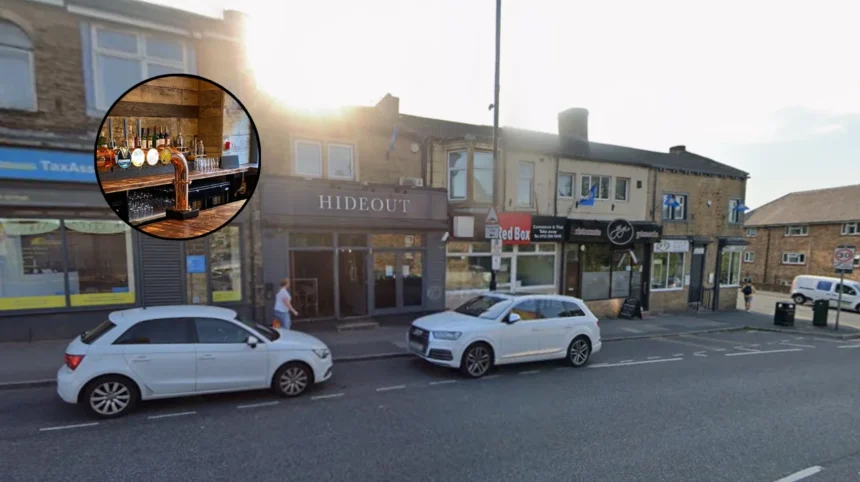
Pudsey (The Leeds Times) June 6, 2026 -The leisure and hospitality sector across West Yorkshire continues to witness a structural shift as community-focused hybrid venues attempt to bridge the gap between traditional drinking houses and contemporary craft beer outlets. Located at 57–59 Lidget Hill, Hideout Pudsey has emerged as a critical case study in this operational model. Positioned within the bustling Pudsey suburb of Leeds, the family-owned independent bar has drawn widespread local attention for its attempt to fuse a relaxed, dog-friendly pub atmosphere with a sophisticated, fast-rotating beverage menu that mirrors the trendy craft houses of Leeds city centre.
- Key Points
- What Can Patrons Expect from the Architectural Layout and Interior Design of the Venue?
- How Comprehensive is the Drinks Menu at Hideout Pudsey?
- What Kind of Atmosphere and Entertainment Vibe Defines the Guest Experience?
- How Do the Practical Limitations and Pricing Metrics Impact Regular Patrons?
- Background of Suburban Hospitality Regeneration in West Yorkshire
- Prediction: How This Ongoing Trend Will Affect Local Suburban Consumers
- Micro-Localization of Leisure Spending
- Increased Spatial Competition and Premium Booking Models
To evaluate how effectively this venue balances these competing identities, this comprehensive assessment examines the interior design, product diversity, pricing structure, and spatial constraints that define the daily customer experience.
What Can Patrons Expect from the Architectural Layout and Interior Design of the Venue?
According to historical commercial property logs held by the Leeds Branch of the Campaign for Real Ale (CAMRA), the premises originally operated under the title of Rudy’s Bar before undergoing a comprehensive aesthetic and structural transformation.
A design analysis published by local lifestyle chronicle Leeds-List details that the venue was taken over by three local couples who completely renovated the interior, replacing older, dated fixtures with an array of pale wood furnishings, clean lines, and an open, bright design scheme that deliberately distinguishes it from the more traditional, darker public houses situated nearby.
The ground floor layout features a compact, high-efficiency serving bar flanked by limited perimeter seating. This intimate structural arrangement is intentionally designed to cultivate immediate social interaction, mimicking the historic “snug” rooms of classic British taverns. However, independent hospitality reviews compiled via local commercial directories indicate that this compact footprint can lead to swift congestion during peak operational hours.
To mitigate these ground-floor limitations, the owners integrated an additional first-floor seating area. This upper room serves a dual purpose, functioning as an overflow space for weekend walk-ins and as a private hire suite dedicated to larger community events and organized social groups.
How Comprehensive is the Drinks Menu at Hideout Pudsey?
A review of the bar’s current inventory demonstrates a rigorous commitment to supporting both local independent breweries and international craft brands. As verified by beverage portfolio data published by Yorkshire.com, the bar maintains a frequently updated draft selection dominated by modern keg beers, balancing heavy, hop-forward IPAs with crisp, accessible lagers.
For patrons looking beyond the draft lines, the commercial refrigeration units house a curated collection of local regional legends.
Regular stock listings confirm cans and bottles sourced from prominent West Yorkshire producers, including Northern Monk Brewing Co. based in Holbeck, Vocation Brewery from Hebden Bridge, and Leeds’ own Wilde Child Brewing Co.
In addition to its malt-and-hop offerings, the venue has established a secondary reputation for its spirits and mixology programs. A breakdown of consumer feedback notes a robust selection of artisanal gins and a concise, high-execution cocktail list.
Long-term hospitality assessments published across regional review platforms explicitly highlight the skills of the bar staff, with multiple independent critics asserting that the venue produces one of the finest Old Fashioned cocktails in the North of England.
What Kind of Atmosphere and Entertainment Vibe Defines the Guest Experience?
The sensory environment inside 57 Lidget Hill is heavily dictated by a strict and highly specific music policy that acts as a major cultural draw for a distinct local demographic.
Consumer insights data collected from local patrons in their 30s and 40s indicate that the bar’s audio track relies heavily on nostalgia, spinning a continuous playlist of late-1990s and early-2000s secondary school classics, spanning the genres of American pop-punk, Seattle-era grunge, and classic British Britpop.
Furthermore, the venue balances its music-led identity with sports entertainment. The walls are fitted with several high-definition television screens configured to broadcast major live sporting events.
Rather than alienating non-sports fans, this inclusion is balanced by a strict community and family-first policy. Local operational guidelines confirm that the establishment remains fully dog-friendly and welcomes children during daytime hours, reinforcing the traditional neighborhood pub ethos within a modernized aesthetic framework.
How Do the Practical Limitations and Pricing Metrics Impact Regular Patrons?
While the venue boasts an average consumer rating of 4.8 out of 5 stars across multiple aggregated feedback platforms, an objective analysis requires assessing the operational frictions highlighted by visitors. The most prominent recurring critique focuses squarely on the physical dimensions of the building.
Because of the small square footage on both floors, the bar can feel overcrowded very quickly on Friday and Saturday nights. Independent reviewers have noted that large groups traveling together may find it incredibly difficult to secure adjacent seating without booking the upstairs room in advance.
Additionally, the pricing structure reflects the premium nature of its stock. Because the venue focuses on independent craft batches rather than mass-produced macro-commercial lagers, the cost per pint sits at a higher average tier than nearby traditional drinking spots.
Local commentators agree that while these prices are entirely justified by the rarity and quality of the craft beer selection, they may deter budget-conscious drinkers looking for a conventional pub pricing index.
It is also noted in public accessibility registers that the venue does not possess dedicated wheelchair-accessible parking spaces immediately on-site, a standard limitation among historic terraced suburban high streets in West Yorkshire.
Background of Suburban Hospitality Regeneration in West Yorkshire
The rise of venues like Hideout Pudsey must be analyzed within the broader context of suburban commercial shifts occurring across the City of Leeds metropolitan district over the last decade.
Historically, the night-time economy was heavily centralized within the Leeds city centre zone, forcing residents of outer suburbs like Pudsey, Farsley, and Horsforth to commute inward for premium drink and food experiences.
However, escalating commercial business rates in the city centre, combined with shifting commuting patterns following the rise of flexible working models, created an economic vacuum in residential outposts. Seizing this opportunity, local entrepreneurs began reclaiming empty suburban retail spaces and older, failing drinking establishments—such as the former Rudy’s Bar—and transforming them into high-density craft hubs.
This localized regeneration has transformed suburban high streets into self-sustaining entertainment zones, allowing smaller communities to retain local spending power while fostering an independent entrepreneurial ecosystem outside of the traditional urban core.
Prediction: How This Ongoing Trend Will Affect Local Suburban Consumers
The continued success and market entrenchment of boutique hybrid bars like Hideout Pudsey are projected to influence the local consumer base across several distinct vectors:
As independent craft venues capture a greater market share of middle-income professionals, traditional neighborhood pubs will face intense pressure to either modernize their offerings or lower their prices. Local consumers will likely see a widening division on the high street: one segment catered towards premium, experiential drinkers who prioritize product origin and music aesthetics, and another focused on budget-oriented, traditional social spaces.
Explore More Pudsey News
Leeds Man Wyatt Jailed 21 Yrs for Rapes in Chapeltown 2026
54 Affordable Homes Planned for Pudsey’s Owlcotes Road 2026
Micro-Localization of Leisure Spending
With premium cocktail and craft beer options firmly established on suburban high streets, the necessity for local residents to travel into central Leeds for a weekend night out will continue to diminish. For the local consumer, this translates to significant cost savings on city-bound transport and late-night taxi fares, effectively increasing their disposable income for direct leisure consumption within their immediate borough.
Increased Spatial Competition and Premium Booking Models
As demand for intimate, community-centric spaces outpaces the physical availability of small high-street properties, consumers should expect a shift in how these bars operate during peak times. Venues may increasingly adopt reservation-only models for secondary spaces or introduce timed seating windows on weekends to maximize financial yield per square foot.
This will require local patrons to plan their leisure time with greater precision, moving away from spontaneous, traditional walk-in pub crawls.