

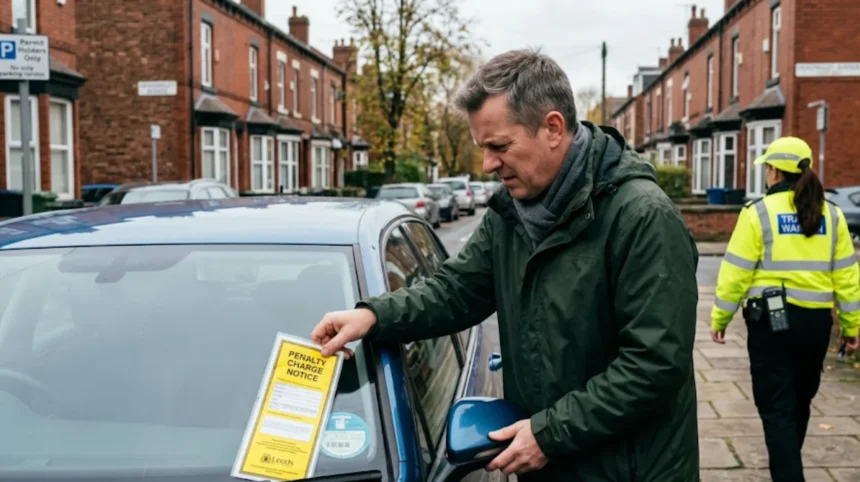
An unfair parking fine in Headingley is usually a Penalty Charge Notice, or PCN, issued by Leeds City Council or a private parking operator. The correct challenge depends on who issued it, the evidence on the notice, and the stage of enforcement.
- What is a parking fine in Headingley?
- How do you tell who issued it?
- What evidence should you collect?
- When should you challenge the PCN?
- What reasons win appeals?
- How do you write the challenge?
- What happens after you submit it?
- What if the deadline has passed?
- What are the common Headingley mistakes?
- How do council and private routes differ?
- What should you do next?
What is a parking fine in Headingley?
A parking fine in Headingley is usually a civil penalty for an alleged parking breach, not a criminal fine. In Leeds, council-issued notices are Penalty Charge Notices, while private car park tickets follow a separate contract-based process.
Headingley is a busy district of Leeds with residential streets, student housing, retail areas, and matchday traffic. That combination creates frequent parking enforcement issues, especially around restricted bays, yellow lines, dropped kerbs, and permit-only streets. Leeds City Council publishes parking ticket guidance and evidence-viewing options for PCNs, which is the starting point for council enforcement cases.
A parking notice is unfair when the location, signs, road markings, timing, or enforcement process do not support the allegation. The strongest challenges rely on evidence, not frustration. A clear timeline, photographs, and copies of notices create the basis for a formal challenge.
How do you tell who issued it?
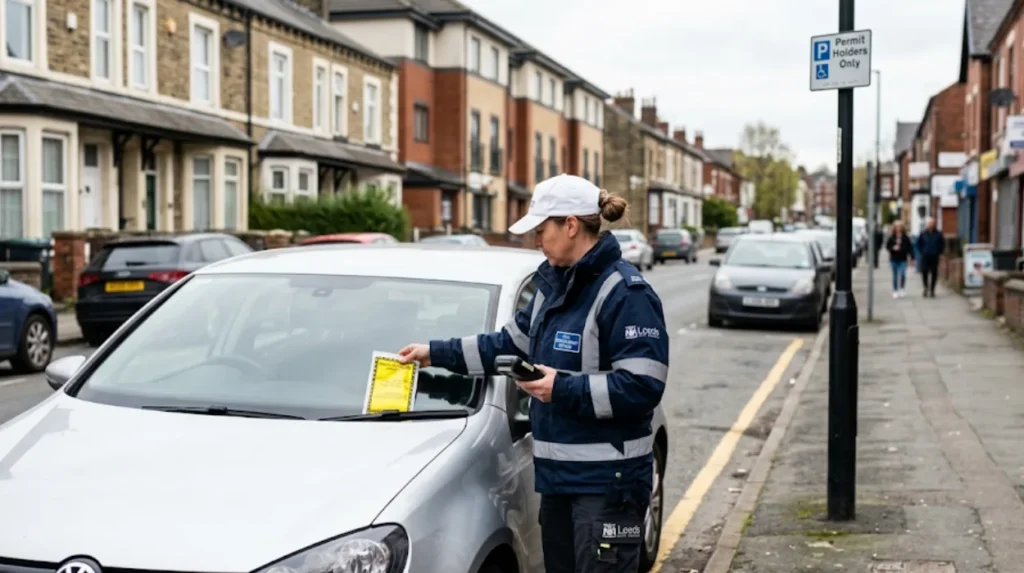
The issuing body decides the appeal route. A council PCN follows statutory challenge rules, while a private parking charge follows the operator’s process and any independent appeals scheme linked to that operator.
The notice itself normally shows the issuer name, vehicle registration, PCN number, date, location, and alleged contravention. If the notice mentions Leeds City Council or directs you to the council parking portal, treat it as a council PCN. If the notice comes from a private company, check the operator name and the appeal instructions printed on the ticket.
This distinction matters because the law, deadlines, and evidence standards differ. Council PCNs can progress through informal challenge, Notice to Owner, formal representations, Notice of Rejection, and then tribunal appeal. Private tickets usually start with an appeal to the operator and can move to an independent appeals service if the operator is in a recognised trade association.
What evidence should you collect?
Strong evidence includes date-stamped photographs, the full notice, the exact location, the sign position, the road markings, and any proof that your vehicle complied with the rules. The challenge succeeds when the facts show the penalty was issued incorrectly.
Photograph the bay, yellow lines, signs, and nearby landmarks from the driver’s eye view and from the pavement. Capture anything that blocks signs, damages markings, or creates confusing instructions. If the issue involves time restrictions, photograph the clock reading, pay-and-display ticket, mobile payment receipt, or permit display.
Keep all paperwork in one file. This includes the PCN, envelope if one arrived, correspondence, payment receipts, resident permits, Blue Badge documents, and screenshots of digital payment records. If the alleged event happened in Headingley near a boundary street, record the street name exactly, because location errors can matter in a challenge.
When should you challenge the PCN?
You should challenge the PCN as soon as possible. Council guidance allows a formal challenge after a Notice to Owner, and government guidance says the formal representation window is 28 days from that notice.
For council-issued PCNs, many motorists first make an informal challenge before the Notice to Owner stage. Leeds council’s parking pages provide a route to view evidence and appeal, and guidance from government states that once a Notice to Owner is served, you have 28 days to make formal representations.
The deadline matters because missing it changes the case path and can trigger higher enforcement costs. If you receive a Notice of Rejection, the next stage is appeal to the relevant independent tribunal within 28 days of receiving that notice. Outside London, that tribunal is the Traffic Penalty Tribunal for England and Wales.
What reasons win appeals?
The strongest appeal reasons are factual and provable: unclear signs, incorrect road markings, vehicle breakdown, valid payment, permit entitlement, loading activity, or a procedural error in the notice. Evidence decides the outcome.
A successful challenge often shows that the alleged contravention did not happen. For example, a sign may have been missing, obscured, or inconsistent with the bay markings. Another common issue is payment failure caused by a system error, where the driver paid but the app, machine, or council record did not show it correctly.
Procedural errors also matter. These include an incorrect location, wrong vehicle registration, a notice served outside the lawful process, or a failure by the council to consider evidence properly. Government guidance requires the motorist to explain the reasons in detail and attach supporting documents, so a thin complaint rarely succeeds.
How do you write the challenge?
A good challenge is short, direct, and evidence-led. State the notice number, the vehicle registration, the date, the location, the reason the ticket is wrong, and the documents that prove it.
Start with the facts. Say that you are challenging the PCN, identify the exact contravention code if shown, and explain what happened in chronological order. Keep each paragraph focused on one issue, such as signage, payment, permit display, or loading activity.
Then list the evidence you are supplying. Attach photographs, receipts, screenshots, and copies of permits or badges. If the notice contains an error, quote the exact error and explain why it makes the penalty unsafe. Government guidance says to provide as much detail as possible and copies of any evidence or documents that support your case.
A useful structure looks like this:
- The notice number and registration mark.
- The exact date, time, and street in Headingley.
- The reason the allegation is wrong.
- The evidence attached.
- A clear request to cancel the PCN.
This format helps the decision-maker see the issue quickly and reduces the chance of your challenge being missed in a long narrative.
What happens after you submit it?
The council or operator must consider your challenge and issue a decision. If it accepts the case, the PCN is cancelled. If it rejects the case, it must explain the next appeal stage and the deadline.
For council PCNs, the authority reviews the evidence and either cancels the notice or rejects the challenge. Citizens Advice explains that if the appeal is accepted, the penalty is cancelled, and if it is rejected, the council must send a Notice of Rejection with details of the further appeal route.
If the challenge is rejected, do not pay immediately unless you decide the case is weak. Re-check the photos, notice wording, and legal ground for appeal. If the case reaches the tribunal, the motorist can continue arguing that the PCN was issued incorrectly or that the council failed to follow the correct process.
What if the deadline has passed?
Missing a deadline does not end every case, but it reduces your options. Late action usually requires a procedural explanation, such as not receiving earlier notices, before the case can move back into the formal appeal process.
Council cases can escalate from PCN to Notice to Owner, then to Charge Certificate, and then to Order for Recovery if nothing is done. Government guidance explains that the formal appeal route runs through the notice and rejection stages, so ignoring letters creates serious enforcement risk.
If you genuinely did not receive a notice, the enforcement stage can sometimes be challenged with the correct statutory form, especially where the case has reached the Order for Recovery stage. The key point is to act immediately and preserve proof of what was and was not received.
What are the common Headingley mistakes?
Headingley cases often turn on street layout, crowded kerb space, permit zones, and temporary restrictions around busy routes. The most common mistakes are failing to read a sign, stopping in a suspended bay, or assuming a short stop is allowed.
Busy areas near student housing and matchday routes often contain layered restrictions. That means a single street can have resident permits, limited waiting, loading rules, and yellow-line restrictions that differ by time of day. If the driver relied on a nearby sign from another bay or read a different restriction from the wrong side of the street, the challenge should explain that confusion with photographs.
Another frequent error is parking near a junction, dropped kerb, or loading area while assuming a brief stop is acceptable. In enforcement terms, a short stop still counts if the restriction bans waiting at that time. The ticket is only unfair if the actual restriction did not exist, was badly signed, or was applied incorrectly.
Explore More Help & Resources
How to get a free home security check in Morley
How to find free warm spaces near Horsforth this winter
How do council and private routes differ?
Council PCNs use a formal legal process with set stages and tribunal appeal rights. Private parking tickets use the operator’s appeal system and, if available, an independent trade-association appeals route.
Leeds City Council PCNs are part of civil traffic enforcement. The notice, representations, rejection letter, and tribunal process follow statutory rules. Government guidance sets the main framework: challenge first, then appeal after rejection, with 28 days at the formal stages.
Private parking is different because the company is enforcing a contract term for land use. The ticket should identify the operator, and the challenge should go to that company first. If the operator rejects the case and belongs to an accredited trade association, the driver can use the independent appeal system linked to that association.
What should you do next?
Act on the notice type, build evidence, and challenge within the deadline. A well-documented appeal in Headingley has the best chance of success when the facts, signs, and paperwork are checked carefully.
If the notice is from Leeds City Council, use the council’s parking ticket route to view evidence and submit the challenge. If it is a private ticket, follow the operator’s instructions and keep every document and screenshot. In both cases, the strongest response is a clear factual explanation supported by photographs and records.
The practical goal is simple: show that the alleged contravention did not happen, or show that the enforcement process was wrong. That is the standard that decides most parking fine disputes, and it is the standard that gives a Headingley driver the best chance of cancellation.