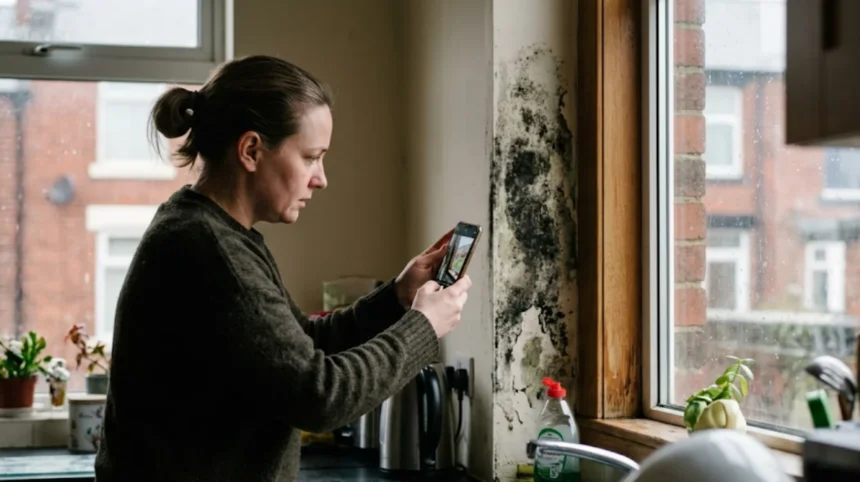
Damp and mould in Guiseley homes require immediate reporting to your landlord or Leeds City Council. Council tenants call 0800 188 4000 or email dandmteam@leeds.gov.uk. Private tenants must report to their landlord first, then contact Leeds Private Rented Housing team at 0113 378 4699 if unresolved. Document the problem with photographs before reporting.
- What is damp and mould and why does it appear in Guiseley homes?
- Who is responsible for fixing damp and mould in Guiseley properties?
- How do council tenants report damp and mould to Leeds City Council?
- How do private tenants report damp and mould to landlords in Guiseley?
- What information and evidence do I need before reporting damp and mould?
- How long does it take for landlords to fix reported damp and mould in Guiseley?
- What happens if my landlord refuses to fix damp and mould in Guiseley?
- How can I prevent damp and mould from returning after repairs in Guiseley?
- Where can I get additional help with damp and mould problems in Leeds?
- What are the health risks of living with untreated damp and mould in Guiseley?
Guiseley, a town in Leeds, West Yorkshire (postcode LS20), experiences damp and mould issues due to its climate and older housing stock. Nearly 40% of private rental properties in Yorkshire and Humber fail housing standards, according to People’s Health Trust. Leeds City Council received 311 damp/mould complaints from council tenants. Awaab’s Law, effective October 2025, mandates social landlords investigate significant damp and mould within 10 working days. This article provides complete, factual guidance for reporting damp and mould in Guiseley homes regardless of tenure type.
What is damp and mould and why does it appear in Guiseley homes?
Damp is excessive moisture in buildings; mould is black/green fungus growing on damp surfaces. Guiseley homes experience three types: penetrating damp from leaks, rising damp from failed damp-proof courses, and condensation mould from poor ventilation. West Yorkshire’s cool, wet climate accelerates growth in older LS20 properties.
Damp occurs when water enters or accumulates inside a building. Mould spores exist everywhere but grow rapidly on damp surfaces, producing black, green, or white patches. The Housing Ombudsman identifies damp and mould as dominating half of their casework.
The three main causes of damp and mould are penetrating damp, rising damp, and condensation. Penetrating damp enters through roof leaks, damaged window frames, or broken pipes. Rising damp occurs when the damp-proof course breaks down, allowing groundwater to rise through walls. Condensation forms when warm air meets cold surfaces, creating moisture that leads to mould growth.
Guiseley’s housing stock includes many Victorian and early 20th-century properties lacking modern insulation. A Yorkshire semi-detached house study found defective rainwater pipes discharging against walls caused living room damp patches. Another case showed lack of ventilation in a family home caused first-floor damp and condensation.
West Yorkshire receives approximately 850mm rainfall annually, with cloudy, cool conditions ideal for mould. The region has England’s poorest housing conditions, with nearly 40% of private rentals failing standards. Around 160,000 families in Yorkshire and Humber experience substandard housing similar to documented cases.
Who is responsible for fixing damp and mould in Guiseley properties?
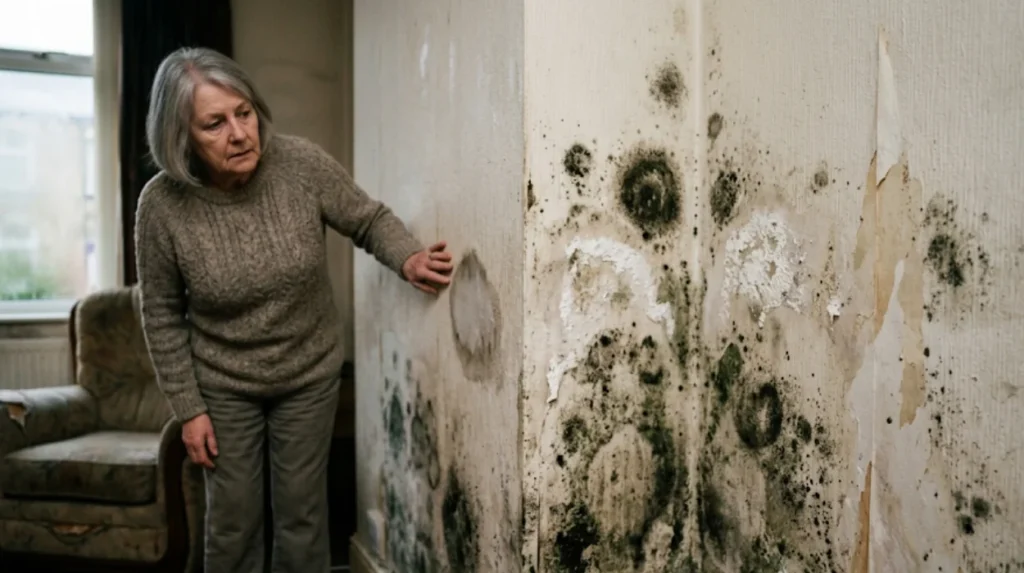
Landlords carry legal responsibility for fixing damp and mould in rented Guiseley homes. Council tenants report to Leeds City Council Housing. Private tenants report to landlords first. Housing association tenants contact their specific association. Owners of Guiseley homes must fix damp themselves. Awaab’s Law requires social landlords to act within 10 working days.
Landlord responsibility depends on tenure type. Council tenants live in properties owned by Leeds City Council. The council is legally responsible for repairs including damp and mould remediation. Council tenants report directly to Housing Leeds.
Private tenants rent from individual landlords or letting agents. Landlords must fix damp and mould caused by structural issues like leaks or inadequate ventilation. Tenants must report issues in writing and allow inspection access. Under Awaab’s Law, social landlords face stricter timelines than private landlords, though private tenants retain rights under the Renting Homes (Wales) Act framework extended to England.
Housing association tenants live in properties owned by organisations like Harewood Housing Society (Ghyll Royd, Guiseley, LS20 9LU) or Anchor’s The Laureates (Shakespeare Road, Guiseley, LS20 9BR). Each association has specific reporting procedures. Harewood Housing Society contact number is 0113 250 3750.
Homeowners owning Guiseley properties bear full responsibility for damp and mould repairs. No external organisation fixes owner-occupied property issues. Homeowners must hire contractors for remediation.
Leeds City Council’s Private Rented Housing team assists private tenants when landlords fail action. Contact them at 0113 378 4699 or email prs.housing@leeds.gov.uk. The team provides advice on evictions, harassment, and ensuring homes meet safety standards.
Awaab’s Law came into force in October 2025 for social housing. It requires social landlords to investigate significant damp and mould hazards within 10 working days and make them safe within 5 working days. Emergency hazards must be made safe within 24 hours.
How do council tenants report damp and mould to Leeds City Council?
Council tenants call 0800 188 4000, email dandmteam@leeds.gov.uk, or visit their community hub. Provide name, address, contact number, problem description, and photographs. Report immediately when noticing damp or mould. Housing Leeds investigates within 10 working days and sends written findings within 3 days after investigation ends.
Leeds City Council requires immediate reporting of damp, mould, or condensation problems. Three reporting methods exist: phone, email, or in-person visit.
Phone reporting uses number 0800 188 4000. The line operates Monday, Tuesday, Thursday, and Friday from 9am to 5pm; Wednesday from 10am to 5pm. This number is free from mobile and landline.
Email reporting sends to dandmteam@leeds.gov.uk. Include five required items: your name, your address, a contact number, a brief description of the problem, and photographs of the problem. Photographs must clearly show damp patches or mould growth locations.
In-person reporting visits your local community hub or housing office. Merrion House at Merrion Centre, Leeds serves as Housing Leeds’s main office. Tell staff which rooms are affected and if damp is spreading. Mention if anyone in your household is vulnerable or has health conditions.
After reporting, Housing Leeds follows a strict timeline. They investigate potential significant hazards within 10 working days of becoming aware. You receive a written summary of findings within 3 working days after investigation concludes. Safety work for significant hazards initiates within 5 working days of investigation. Emergency hazards become safe within 24 hours.
Homes with children, older people, or people with health conditions receive prioritised treatment. This prioritisation recognises that damp and mould disproportionately affect respiratory health in vulnerable populations.
Document all correspondence with Housing Leeds. Keep copies of emails, note phone call dates and times, and record staff names. This documentation supports potential Housing Ombudsman complaints if response is inadequate. Leeds City Council received 311 damp/mould complaints, indicating significant resident dissatisfaction.
How do private tenants report damp and mould to landlords in Guiseley?
Private tenants contact their landlord or letting agent immediately by email or letter. Describe affected rooms, problem duration, and health impacts. Include photographs. Request inspection within 28 days. If landlord refuses action, contact Leeds Private Rented Housing team at 0113 378 4699. Document all correspondence for potential legal action.
Private tenant reporting begins with landlord contact. Review your tenancy agreement for specified reporting methods, such as online portals. If no method is specified, use email or written letter.
Email reporting uses subject line “Damp and mould”. Include your address, description of where damp is located and any mould growth, and how this affects health and wellbeing. Mention if you have asthma or if belongings are damaged.
Shelter England provides a letter template for private tenants telling landlords about damp. Copy and paste the template into email format. The template requires details about problem location, duration, health impacts, and requested inspection.
Document everything after notifying your landlord. Maintain detailed records of all correspondence. Take photographs of mould for your records. Create written logs with dates of each communication.
Allow landlord inspection access. Landlords must visit to investigate the moisture source. Permit repairs attempts and ensure they revisit after six weeks to confirm mould hasn’t returned.
Landlords must take action within 28 days after tenant reports damp or mould. If landlords don’t take appropriate measures within 28 days, tenants may seek legal remedies through Leeds courts.
If your landlord is unresponsive or refuses action, request an environmental health inspection from Leeds City Council. Contact the Private Rented Housing team at 0113 378 4699 or email prs.housing@leeds.gov.uk.
Gather evidence thoroughly before escalating. Document signs of damp, mould, or structural damage through photos, videos, and written logs. Strong evidence supports council intervention or court proceedings.
Private rental properties in Yorkshire face significant standards issues. Nearly 40% fail established housing standards. Leeds City Council’s chief executive indicated the authority needs additional funding and powers to tackle private rental damp and mould effectively.
What information and evidence do I need before reporting damp and mould?
Before reporting, gather five items: photographs of all affected areas, written description of which rooms are affected, duration of the problem, any health conditions in your household, and evidence of previous reports if applicable. Photographs must show clear mould patches or damp stains. Write specific room names like “living room north wall” not just “living room”.
Photographs form the most critical evidence. Take multiple photos showing mould patches from different angles. Capture wide shots showing room context and close-ups revealing mould detail. Photograph damp stains, water marks, and peeling paint or wallpaper.
Photograph affected rooms comprehensively. Include images of windows, walls, ceilings, and corners where mould typically grows. Mould often appears behind furniture, under sinks, around window frames, and in bathroom corners.
Write a detailed description specifying which rooms are affected. Use precise language like “living room north wall below window” rather than vague “living room”. Note if damp is spreading to additional areas.
Document the problem duration. State when you first noticed damp or mould. Note if this is a new problem or one reported previously. Previous report history demonstrates ongoing landlord neglect.
Identify the building or repair cause if you know it. Mention if you think building defects or outstanding repairs cause the problem. Examples include leaking roofs, broken pipes, or defective rainwater downpipes.
Seek GP advice if feeling unwell from damp or mould exposure. Document any respiratory symptoms, asthma exacerbation, or other health impacts. Include this in your report to emphasise urgency.
Check household vulnerability status. Note if anyone is vulnerable or has health conditions. Vulnerable households receive prioritised treatment from council landlords.
Create a written log tracking all communications. Record dates, times, staff names, and responses from each contact attempt. This log supports complaints if landlords fail action.
Store evidence digitally and physically. Keep email copies, print letters, and save photographs on multiple devices. Backup evidence prevents loss if primary storage fails.
How long does it take for landlords to fix reported damp and mould in Guiseley?
Social landlords must investigate within 10 working days and fix significant hazards within 5 working days under Awaab’s Law. Emergency hazards become safe within 24 hours. Private landlords must act within 28 days. Leeds City Council investigates within 10 working days and provides written findings within 3 days after investigation ends.
Awaab’s Law establishes strict timelines for social housing landlords. The law came into force in October 2025 for the social housing sector. Significant damp and mould hazards require investigation within 10 working days.
Safety work for significant hazards initiates within 5 working days after investigation. Emergency hazards must be made safe within 24 hours. Very serious but non-emergency hazards must be fixed within 5 working days.
Leeds City Council follows Awaab’s Law timelines for council housing. They investigate potential significant hazards within 10 working days of becoming aware. Written summary of findings arrives within 3 working days after investigation concludes.
Private landlords face different requirements. The 28-day rule applies: landlords must take action within 28 days after tenant reports damp or mould. If landlords don’t take appropriate measures within 28 days, tenants may seek legal remedies through Leeds courts.
Some housing associations establish faster timelines. Livv Housing Group arranges urgent assessment appointments within 7 days after first contact about damp or mould. Rooftop Housing Group investigates as a matter of urgency when contacted about damp signs.
Housing Association tenants check specific organisational policies. Harewood Housing Society and other Guiseley associations may have different response timelines than council housing.
Delays beyond法定 timelines enable escalation. Contact Leeds Private Rented Housing team at 0113 378 4699 if private landlords exceed 28 days. Consider Housing Ombudsman complaints for social landlords exceeding Awaab’s Law deadlines.
Leeds City Council received 311 damp/mould complaints, suggesting many residents experienced delays or inadequate responses. Complaint volume indicates systemic response issues requiring attention.
What happens if my landlord refuses to fix damp and mould in Guiseley?
If landlords refuse action, contact Leeds City Council’s Private Rented Housing team at 0113 378 4699 for environmental health inspection. For social landlords, file Housing Ombudsman complaints. Document all refusal evidence. Tenants may seek legal remedies through Leeds courts after 28 days. Over 100 severe maladministration cases on damp and mould exist nationally.
Private tenant escalation begins with Leeds City Council intervention. Contact the Private Rented Housing team at 0113 378 4699 or email prs.housing@leeds.gov.uk. The team helps get repairs made and ensures homes remain safe.
Request an environmental health inspection from the council when landlords refuse action. Environmental health officers assess property conditions and can mandate repairs under housing legislation.
Document landlord refusal thoroughly. Save emails stating refusal, record phone call details where refusal occurred, and note dates when 28-day deadlines passed without action. Strong documentation supports legal proceedings.
After 28 days without appropriate measures, tenants may seek legal remedies through Leeds courts. Legal action can compel repairs and potentially recover costs for alternative accommodation if properties become uninhabitable.
The Housing Ombudsman handles social landlord complaints. Over 100 severe maladministration cases on damp and mould exist nationally, with the issue dominating half of their casework. Leeds City Council received 311 damp/mould complaints specifically.
File Housing Ombudsman complaints when council or housing association landlords fail Awaab’s Law timelines. Complaints can result in enforcement orders, compensation awards, and mandatory remediation plans.
Leeds City Council’s chief executive indicated the authority needs additional funding and powers to tackle private rental damp and mould effectively. This acknowledgment suggests systemic resource constraints affecting response quality.
Charities call for action on substandard private rented accommodation in Leeds where families’ health suffers. Around 160,000 families in Yorkshire and Humber experience similar situations.
Environmental health may issue Improvement Notices requiring landlords to complete repairs within specified timelines. Failure to comply enables council enforcement action including fines and prosecution.
Explore More Help & Resources
How to find a dentist taking NHS patients in Rothwell
How to get Universal Credit help in Pudsey
How can I prevent damp and mould from returning after repairs in Guiseley?
Prevent return by reducing condensation causes: ventilate rooms regularly, keep low background heat on all day, wipe down walls with fungicidal wash, and use fungicidal paint when redecorating. Keep ventilation where moisture exists. Treat mould immediately when noticed. Report repair causes of damp. Avoid brushing or vacuuming mould as this releases spores.
Condensation prevention requires three actions simultaneously: ventilation, heating, and moisture control. Keep rooms ventilated where moisture is present. Open windows daily, especially in bathrooms and kitchens after showering or cooking.
Keep low background heat on all day, even in bedrooms, kitchens, and bathrooms. Consistent heating prevents cold surfaces where condensation forms. Don’t heat rooms intermittently as temperature fluctuations encourage moisture accumulation.
Wipe down walls and window frames with soap and water or fungicidal wash. Dry areas thoroughly after cleaning. Do not brush or use vacuum cleaners as this disturbs mould spores and spreads them.
Redeclare using good quality fungicidal paint after treatment. Fungicidal paint prevents further mould growth but becomes ineffective if overlaid with ordinary paints or wallpaper. When wallpapering, use paste containing fungicide.
Dry-clean mildewed clothes and shampoo carpets immediately. Don’t delay cleaning as mould spreads rapidly on fabrics.
Take steps to reduce condensation causes consistently. Cover pots while cooking to reduce steam. Use extractor fans in bathrooms and kitchens. Avoid drying clothes indoors without ventilation.
Report repairs related to damp causes immediately. Leaking pipes, broken roof tiles, and defective window frames create penetrating damp that condensation control won’t fix.
Treat mould as soon as you notice it. Early treatment prevents extensive growth requiring professional remediation. Don’t wait for mould to spread to multiple walls.
Guiseley’s climate requires year-round prevention. West Yorkshire’s cool, wet conditions mean mould prevention continues through autumn and winter when heating becomes essential.
Where can I get additional help with damp and mould problems in Leeds?
Get help from Leeds City Council Private Rented Housing team (0113 378 4699), Shelter England (letter templates and advice), Housing Ombudsman (complaints against social landlords), and People’s Health Trust (Yorkshire housing standards data). GP advice recommended if feeling unwell. Leeds Federated Housing Association provides customer damp and mould guidance.
Leeds City Council’s Private Rented Housing team assists private tenants with landlord problems. Contact at 0113 378 4699 or email prs.housing@leeds.gov.uk. The team provides free advice about evictions, harassment, and ensuring homes meet safety standards.
Shelter England offers comprehensive housing advice including letter templates for reporting damp to private landlords. Their website provides investigation guidance for social landlords and tenant rights information.
The Housing Ombudsman handles complaints against social landlords including councils and housing associations. Their support guide helps residents report damp and mould to landlords. Over 100 severe maladministration cases exist nationally.
People’s Health Trust provides Yorkshire and Humber housing standards data. Their research shows nearly 40% of private rentals fail standards. Chief executive John Hume estimates 160,000 families experience substandard housing.
GPs should provide medical advice if damp and mould exposure causes illness. Seek GP advice when feeling unwell from exposure. Document medical consultations supporting tenant complaints about health impacts.
Leeds Federated Housing Association (Leeds Federated) provides customer guidance on dealing with damp and mould. Contact repairs at repairs@leedsfed.com or report repairs online. Their guidance covers landlord responsibilities and customer reporting procedures.
Leeds Directory offers advice and support for managing damp and mould risks at home. Their resources include condensation reduction steps and mould treatment guidance.
Local housing associations serve Guiseley residents. Harewood Housing Society (Ghyll Royd, Leeds, LS20 9LU) contacts at 0113 250 3750. Anchor runs The Laureates retirement housing (Shakespeare Road, Guiseley, LS20 9BR).
BBC News reported on Leeds damp, mould, and rats plaguing renters with families’ health suffering. Charities call for action on substandard conditions.

What are the health risks of living with untreated damp and mould in Guiseley?
Untreated damp and mould cause respiratory problems including asthma exacerbation, coughing, wheezing, and throat irritation. Children, older people, and those with health conditions face highest risks. Mould spores release when brushed or vacuumed, spreading airborne contamination. Yorkshire and Humber has England’s poorest housing conditions affecting 160,000 families.
Damp and mould exposure triggers respiratory symptoms. Mould spores irritate lungs, causing coughing, wheezing, and shortness of breath. People with asthma experience worsened symptoms from mould exposure.
Children face disproportionate risks from damp housing. Their developing lungs are more vulnerable to mould spore irritation. Homes with children receive prioritised treatment from Leeds City Council.
Older people experience heightened health impacts from damp and mould. Age-related immune system changes increase susceptibility to respiratory infections from mould exposure. Council prioritisation includes older household members.
People with pre-existing health conditions face severe risks. Respiratory conditions like asthma, COPD, and bronchitis worsen with mould exposure. Immunocompromised individuals risk fungal infections from extensive mould growth.
Mould spores become airborne when disturbed. Do not brush or vacuum mould as this releases spores into air. Professional remediation prevents airborne contamination during removal.
Yorkshire and Humber region has England’s poorest housing conditions. Nearly 40% of private rental properties fail established standards. Around 160,000 families experience substandard housing similar to documented Leeds cases.
BBC News documented families’ health suffering in substandard private rented accommodation in Leeds. Reports reveal damp and mould complaints from council tenants doubled by end of 2022.
Long-term exposure causes chronic respiratory issues. Persistent mould exposure may lead to developing asthma in previously unaffected individuals. Children exposed to damp housing show higher asthma prevalence rates.
Seek GP advice when feeling unwell from damp or mould exposure. Medical documentation supports tenant complaints about health impacts and strengthens demands for urgent remediation.
Leeds City Council received 311 damp/mould complaints indicating widespread resident health concerns. High complaint volume suggests many families experience health impacts from untreated damp and mould.
Who do I contact to report damp and mould in a Guiseley council house?
Council tenants should contact Leeds City Council by calling 0800 188 4000 or emailing dandmteam@leeds.gov.uk. Include your address, a description of the problem, and photographs.