

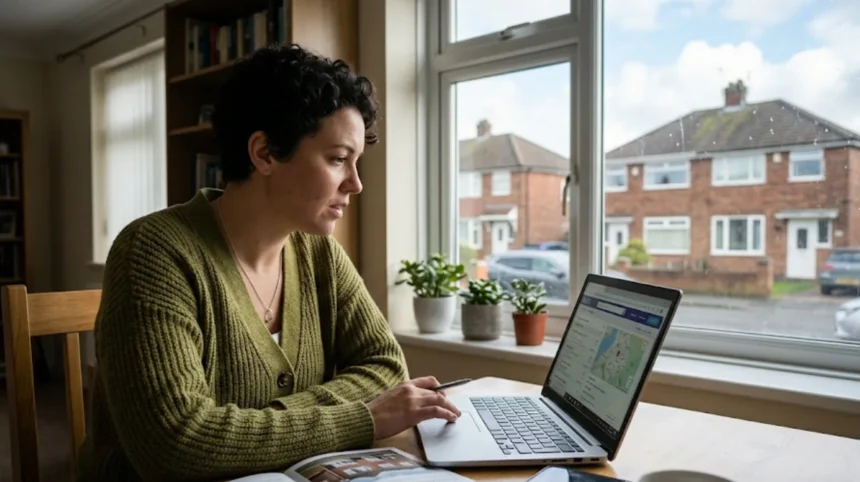
Affordable housing near Garforth means low-cost rented or shared housing in and around Garforth, Leeds, including council homes, housing association properties, shared rooms, and some new-build affordable schemes. The fastest route is to check Leeds Homes, registered providers, and local private-rent listings together.
- What counts as affordable housing near Garforth?
- Where do you start your search?
- How does Leeds Homes work?
- What options exist in Garforth itself?
- Which areas near Garforth are cheapest?
- What documents do you need?
- How do rents compare with local incomes?
- What role do council and housing associations play?
- How do you improve your chances now?
- What should you do first today?
What counts as affordable housing near Garforth?
Affordable housing near Garforth includes social rent, affordable rent, shared accommodation, supported housing, and some discounted new-build homes. In Leeds, this sits alongside a private rental market where average rent was £1,134 in May 2026 and one-bedroom homes averaged £774.
Affordable housing is a policy term, not a single housing type. In practice, it covers homes let below full market rent through Leeds City Council, housing associations, or specialist schemes. It also includes retirement and supported housing for older residents, plus some shared-room options for people who need a lower monthly cost.
Garforth sits within Leeds, a city where housing affordability remains a major issue. Leeds City Council’s 2026 to 2030 plan states that the city continues to face housing affordability pressure and links housing delivery to prevention of homelessness and wider social need.
Where do you start your search?
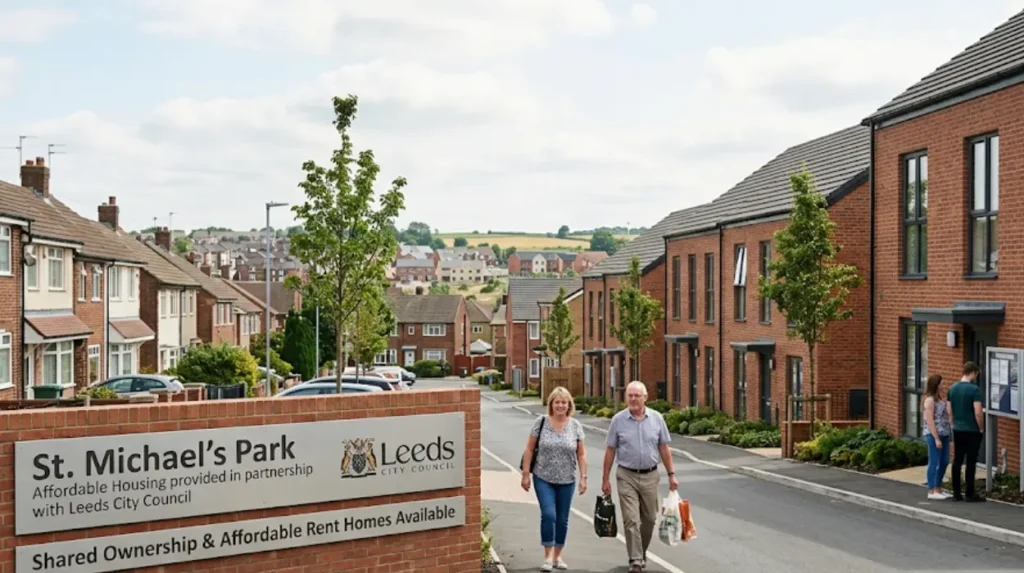
Start with Leeds Homes, then add housing association schemes, room listings, and new affordable developments in Garforth. Using several sources at once gives you the broadest view of what is available, because social rent, retirement homes, and private rooms all sit on different systems.
Leeds Homes is the main platform for social housing bidding in the city. The Garforth retirement schemes document states that all Retirement LIFE properties in the area are let through the Leeds Homes website, and that approved applicants can bid for council homes and housing association homes there.
A second route is to track new affordable developments. JRHT lists Selby Road, Garforth as a development with 17 affordable homes, showing that new supply appears in the area even when the wider market is tight.
A third route is shared housing and room lets. SpareRoom currently shows rooms for rent near Garforth, with examples around £475 to £650 pcm, which sits below the cost of a full one-bed private flat in many parts of Leeds.
How does Leeds Homes work?
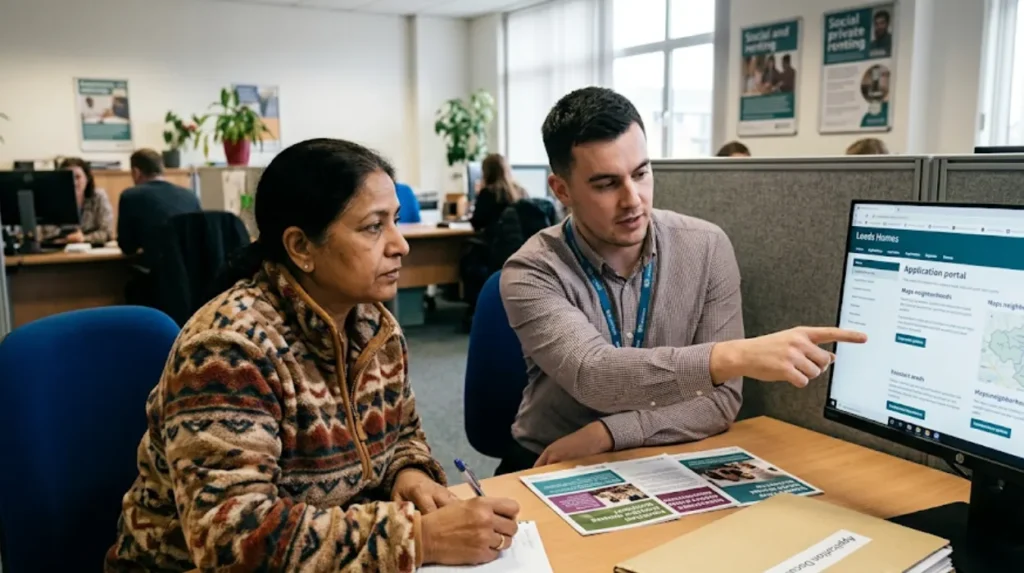
Leeds Homes is the city’s bidding system for council and housing association homes. You need an approved application before you can bid, and the system lists eligible properties, including retirement schemes and other social housing options in Garforth.
The process is straightforward. You apply, your housing need is assessed, and once approved you can bid on properties that match your household and priority band. The Garforth retirement housing guidance explains that Leeds Homes is used to bid on council and housing association homes across the city.
This matters because social housing does not work like a standard rental search. Properties are not first-come, first-served in the usual private-market sense. They are allocated through eligibility, waiting lists, and priority rules set by the local authority and its housing partners.
For older applicants, the Garforth Retirement LIFE schemes include one-bedroom flats, bungalows, and sheltered schemes such as Church Gardens, Halliday Court, The Crescent, Oak Road, and Westbourne Crescent/Westbourne Gardens. These schemes give a lower-cost route into specialist housing near Garforth.
What options exist in Garforth itself?
Garforth has a mix of social housing, retirement schemes, new affordable homes, and private rentals. The strongest low-cost options are council-linked housing, retirement LIFE schemes, shared rooms, and new affordable units such as the Selby Road development.
The Garforth retirement document lists several local schemes. Church Gardens has 26 one-bedroom flats, Halliday Court has 51 one-bed and one three-bedroom flat, The Crescent has 29 one-bedroom bungalows, and Oak Road offers 24 one- and two-bedroom bungalows spread over two streets.
New supply also matters. JRHT’s Selby Road project in Garforth includes 17 affordable homes as part of a wider 118-home development. That shows the local market still produces affordable stock, even if the pace remains slower than demand.
Private renting in Garforth remains more expensive than shared accommodation. A rent guide for Garforth reports an average rent of £875 in August 2024, with one-bed flats at £793, two-bed flats at £849, three-bed flats at £1,248, and four-bed flats at £1,497.
Which areas near Garforth are cheapest?
The cheapest nearby options are usually shared rooms, sheltered housing, and lower-rent properties in neighbouring parts of Leeds rather than central Garforth. Room listings near Garforth start around £475 pcm, while wider Leeds rent data show one-bed homes at £774 and flats at £896 on average.
If the goal is immediate affordability, shared housing is often the lowest-cost route. SpareRoom shows live room listings near Garforth from about £475 pcm up to around £650 pcm, which is far below the cost of renting an entire private flat.
For whole homes, Leeds-wide data give a clearer benchmark. ONS reports average rents in Leeds of £774 for one bedroom, £964 for two bedrooms, £1,125 for three bedrooms, and £1,677 for four or more bedrooms in May 2026.
For buyers, Leeds remains expensive relative to income. ONS reports the average house price in Leeds at £247,000 in April 2026, with flats and maisonettes averaging £151,000. That pushes many first-time buyers toward rental, shared ownership, or affordable housing routes rather than open-market purchase.
What documents do you need?
You usually need proof of identity, address, income, household members, and housing need. For social housing, you also need an approved Leeds Homes application, and for private renting you need references, affordability checks, and deposit money.
Social housing applications rely on evidence. Typical checks include benefit status, local connection, household size, medical need, and risk of homelessness. The exact evidence depends on the landlord and the applicant’s circumstances, but the principle is consistent: the housing need must be documented before allocation.
Private landlords ask different questions. They usually check employment, benefits, guarantors, credit history, and past tenancy behaviour. That makes it harder for some households to access the open market, especially where monthly rent exceeds disposable income.
Retirement LIFE schemes also have practical considerations. The Garforth document notes features such as communal heating, lift access in some schemes, and parking permits in certain locations, so applicants need to check both affordability and daily living costs.
How do rents compare with local incomes?
Leeds rents have risen, and that reduces the amount of income left after housing costs. ONS reports average Leeds private rent at £1,134 in May 2026, while one-bedroom homes averaged £774 and two-bedroom homes averaged £964.
That gap is central to the affordability problem. A household on a modest income faces a much higher risk of spending a large share of earnings on rent, especially if it needs a two- or three-bedroom property. This is why low-cost routes such as shared housing, social rent, and supported schemes remain important.
The city context also matters. Leeds Council states that it wants to grow social and affordable homes and strengthen rehousing pathways, because housing pressure affects homelessness prevention and wider public services.
For Garforth, the private market is not cheap. The local rent guide reports an average rent of £875 in August 2024, while one-bedroom flats averaged £793 and three-bedroom flats averaged £1,248. That means even smaller homes absorb a significant share of monthly income.
What role do council and housing associations play?
Council and housing associations supply the main non-market route into affordable housing near Garforth. Leeds City Council focuses on homelessness prevention and more affordable homes, while registered providers deliver local schemes such as Selby Road in Garforth.
Leeds City Council’s 2026 to 2030 plan says the authority will continue to focus on homelessness prevention, stronger rehousing pathways, and conditions for delivering affordable housing at scale. It also says the council plans to increase delivery of council homes and leased properties.
Housing associations fill the supply gap. JRHT’s Selby Road scheme is a direct example of registered-provider delivery in Garforth, with 17 affordable homes in the development. That type of scheme matters because it adds supply outside the council’s own stock.
For older residents, council-linked retirement housing also plays a big role. The Garforth Retirement LIFE document shows that several schemes are available locally and that they are let through Leeds Homes, which connects housing need with specialist accommodation.
Explore More Help & Resources
How to stop an eviction if you rent in Yeadon
How to find free food bank help near Wetherby fast
How do you improve your chances now?
Improve your chances by applying early, keeping documents ready, widening your search beyond Garforth, and checking both social and private options every week. The best results come from combining Leeds Homes bidding with room listings and registered-provider developments.
The first step is to get into the correct application system. Without a Leeds Homes approval, you cannot bid on the social and retirement properties listed through that route. The second step is consistency, because new lets and vacancies appear at different times across different landlords.
The third step is geographic flexibility. Garforth is one part of Leeds, but nearby areas can sometimes offer lower costs or faster availability. Leeds-wide rent data show clear differences by property type, so checking neighbouring districts often produces more options than focusing on one postcode alone.
The fourth step is to match household size to housing type. A one-bedroom flat, a shared room, and a two-bedroom bungalow sit in very different affordability bands. The more precisely you match your need, the better your odds of securing a home you can actually sustain month to month.
What should you do first today?
Begin with Leeds Homes registration, then check Garforth-specific retirement and affordable schemes, and finally compare room and private-rent listings. That sequence gives you the fastest route to available stock while keeping both social housing and low-cost private options open.
If you need immediate housing, shared rooms near Garforth offer the lowest cash entry point, with listings from about £475 pcm. If you need a whole home, the next most practical route is the Leeds Homes system and any live affordable developments in Garforth itself.
If you are older or need supported accommodation, the Garforth retirement schemes deserve priority because they are local, purpose-built, and directly linked to Leeds Homes bidding. That combination creates a clearer pathway than relying only on the private rental market.
If you are searching for a family home, keep an eye on affordable new-build supply and housing association releases. The Garforth market is tighter than the city’s room-share market, so persistence and broad search coverage matter more than a single listing site.
A practical first move is to set up a weekly search routine: Leeds Homes, JRHT or other housing association sites, and room listings near Garforth. That routine tracks the three channels most likely to produce an affordable result.
How can I apply for affordable housing near Garforth?
You can apply through Leeds Homes by creating an account, completing a housing application, and submitting the required documents. Once approved, you can bid on eligible council and housing association properties.