


Getting home care support for an elderly parent in Wetherby starts with a needs assessment and then a choice between council support, private care, or voluntary-sector help. The right route depends on the level of daily assistance needed, how quickly care must begin, and whether the family wants funded support or paid services.
What is home care in Wetherby?
Home care in Wetherby means support delivered in an older person’s own home for daily tasks, personal care, household help, and companionship. It keeps the person at home while giving the family structured help with routine needs.
Home care is also called care at home or domiciliary care. It covers anything from a short visit to help with meals and washing through to several visits a day for personal care. In more advanced cases, it can include live-in care, where a carer stays in the home for ongoing support.
The main purpose of home care is to help an older person stay safe, comfortable, and as independent as possible. It also reduces pressure on family carers who manage work, travel, and other responsibilities alongside care duties.

How do you start the process?
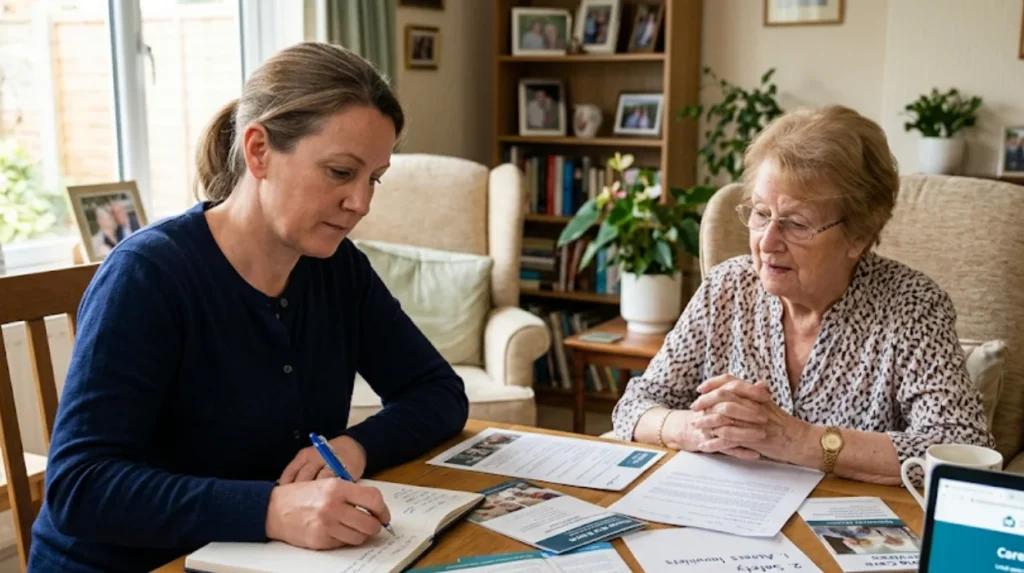
The first step is to record the parent’s daily care needs, then request a social care assessment or speak directly to a care provider. This creates a clear picture of support needs and shows which type of care fits best.
A good starting point is to note what your parent struggles with day to day. Common signs include missed medication, poor mobility, repeated falls, bathing difficulties, poor eating, confusion, loneliness, or trouble managing the home.
Once those needs are clear, the family can contact the local council for an assessment or approach private agencies for a quicker start. If the parent has health complications, a GP or hospital discharge team may also help guide the next steps.
Who can arrange the care?
Home care can be arranged through the council, through private providers, or through health services in more complex cases. Each route serves a different need, cost level, and speed of response.
Council-arranged care is usually the route for people who need an assessment first and may qualify for financial help. This route often takes longer because eligibility and funding checks come before support begins.
Private care is usually faster and gives families more choice over timing and service style. Voluntary-sector services often help with lighter tasks such as shopping, companionship, transport, light cleaning, and short-term wellbeing support.
What services are usually included?
Home care services often include personal care, meals, medication prompts, washing, dressing, cleaning, shopping, and companionship. More intensive care can also include overnight or live-in support.
Personal care covers tasks such as bathing, toileting, dressing, and mobility support. These services are important when an older person can no longer manage safely alone.
Practical household help covers laundry, preparing food, changing bedding, and keeping the home tidy. Companionship support is also valuable because isolation often affects wellbeing, appetite, and confidence.
How much does home care cost?
The cost depends on the type of support, how often visits happen, and whether care is arranged privately or through public support. Lighter help usually costs less than personal care or live-in care.
Short visits for help with shopping or housekeeping are usually the lowest-cost option. Personal care costs more because it requires trained staff and more detailed support planning.
Live-in care is the most expensive option because it provides continuous presence in the home. Families often choose it only when the parent needs round-the-clock supervision, frequent help, or support that cannot be delivered safely through visits alone.
How do you choose the right provider?
The right provider is one that matches the parent’s needs, can cover the Wetherby area reliably, and offers consistent carers, clear communication, and flexible visit times. Quality and fit matter as much as price.
Start by checking whether the provider delivers the exact type of support needed. A provider that handles light domestic help may not be suitable for personal care or dementia-related needs.
It also helps to ask about carer continuity, emergency cover, weekend support, and how the provider builds the care plan. Families often get a better experience when the same carers visit regularly, because routine builds trust and reduces distress.
When should you act quickly?
You should act quickly if the parent is falling, missing medication, losing weight, becoming confused, or struggling to wash, eat, or move safely. These signs show that home support is needed before a crisis develops.
Rapid action also matters after a hospital stay. Many older people need temporary support while recovering at home, especially after illness, surgery, or a fall.
If the parent is suddenly less steady, more forgetful, or unable to manage basic routines, the family should not wait for things to worsen. Early care often prevents avoidable emergencies and makes the transition into support much smoother.
Explore More Help & Resources
How to volunteer at a local charity in Morley
How to find free English classes near Horsforth
What should family carers do next?
Family carers should write down the parent’s care needs, ask for an assessment, compare local providers, and choose the fastest safe option. This gives the family a structured way to secure support without delay.
It helps to separate urgent needs from long-term needs. For example, a parent who needs meals, medication reminders, and companionship may only need a few visits a week, while someone with mobility problems may need several visits a day.
The best result usually comes from matching the level of need to the type of service. That keeps the parent safe at home while giving the family a realistic and manageable care plan.
Why does local support matter in Wetherby?
Local support matters because Wetherby families need carers who can reach the area reliably and understand local care pathways. Local knowledge improves response time, continuity, and practical planning.
A provider familiar with Wetherby is more likely to offer suitable visit times and realistic travel coverage. That matters when care must happen early in the morning, late at night, or several times a day.
Local services also help families combine formal care with practical community support. That can include wellbeing help, short-term support after illness, and lighter assistance while longer-term care is being arranged.
What is home care in Wetherby?
Home care in Wetherby means support provided in an elderly person’s own home to help with daily activities, personal care, household tasks, medication reminders, and companionship. It allows older people to remain independent while receiving the assistance they need.