
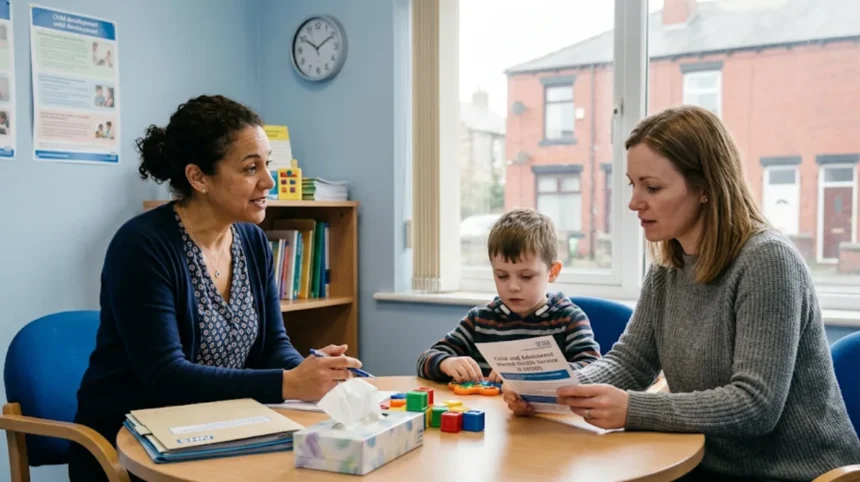
Guiseley families access autism assessments through Leeds’ NHS child services, not adult LADS. Parents of children under 18 in Guiseley must refer to Child and Adolescent Mental Health Service (CAMHS) via their GP or school, as the Leeds Autism Diagnostic Service (LADS) only serves adults over 18. The process involves triage through Mindmate SPA, developmental history collection, school information gathering, and a multi-disciplinary assessment by paediatricians, speech therapists, and psychologists. Current NHS waiting times exceed 27 months for referral to first appointment. Private assessments in West Yorkshire cost £1,800–£2,300 and offer faster access.
- What is autism and why does my child need an assessment?
- How do I start the process for my child’s autism assessment in Guiseley?
- What are the eligibility criteria for my child to receive an autism assessment?
- Which NHS service assesses children for autism in Guiseley and Leeds?
- What happens during the autism assessment for my child?
- How long does it take to get an autism assessment for my child in Leeds?
- Can I get a private autism assessment for my child instead of waiting for NHS?
- What support can I get while waiting for my child’s autism assessment?
- How do I prepare documentation for my child’s autism assessment referral?
- What happens after my child receives an autism diagnosis?
- What if my child doesn’t receive an autism diagnosis?
What is autism and why does my child need an assessment?
Autism Spectrum Disorder (ASD) is a neurodevelopmental condition affecting social communication, interaction, and behaviour. The NHS defines autism as involving differences in how people understand the world and communicate with others. Children show autism through delayed speech, repetitive behaviours, difficulty with social cues, and preference for predictable routines.
An autism assessment provides a formal diagnosis confirming whether your child meets clinical criteria. This diagnosis unlocks essential support: school accommodations under the Equality Act 2010, access to local authority special educational needs (SEN) services, and eligibility for therapy programmes. Without diagnosis, families cannot access these statutory supports.
The National Institute for Health and Care Excellence (NICE) sets clinical guidelines for autism assessment. NICE guidance requires multi-disciplinary teams using gold-standard tools like the Autism Diagnostic Observation Schedule (ADOS). Assessments must include observations across multiple settings, developmental history from parents, and information from schools.
Autism affects approximately 1 in 100 people in the UK, with diagnosis rates rising due to increased awareness. Between April 2021 and March 2022, NHS referrals for suspected autism increased by 40%, from 74,000 to 103,000 patients across England. Most waiting patients exceed the 3-month NICE recommendation for assessment timing.
How do I start the process for my child’s autism assessment in Guiseley?
Start by booking a GP appointment at your Guiseley doctor’s office to discuss your child’s symptoms and request a CAMHS referral. Your GP will assess whether your child meets referral criteria and complete the formal referral to Child and Adolescent Mental Health Service. Parents cannot self-refer children to CAMHS—only healthcare professionals, schools, or social workers can initiate referrals.
Alternative referral routes include contacting your child’s school directly. Teachers and SENCOs (Special Educational Needs Coordinators) can submit referrals to CAMHS alongside parental input. Schools complete SNAP forms documenting behavioural observations in classroom settings. This dual referral from both GP and school strengthens the case for assessment acceptance.
Guiseley residents fall under Leeds City Council and Leeds & York Partnership NHS Foundation Trust for health services. Your GP must confirm you’re registered with a Leeds GP practice, as CAMHS serves only Leeds-registered families. If you recently moved to Guiseley from outside Leeds, register with a local GP first before requesting referral.
Document your child’s symptoms before the GP appointment. Record specific examples: communication difficulties, social interaction problems, repetitive behaviours, and sensory sensitivities. Note when symptoms first appeared and how they impact daily life. Bring any previous medical reports, nursery observations, or educational assessments to support your referral request.
What are the eligibility criteria for my child to receive an autism assessment?
CAMHS accepts autism referrals for children aged 5–17 years who show clear social communication differences and behavioural traits meeting diagnostic thresholds. Children under 5 years follow a different pathway through Leeds Child Development Centres, which serve toddlers and preschoolers with development difficulties.
The Neurodevelopmental Screening questionnaire determines eligibility before full assessment. After referral submission, CAMHS sends screening questionnaires to parents and schools. These questionnaires assess the nature, duration, frequency, and impact of difficulties across environments. The neurodevelopmental team reviews completed questionnaires to decide if referral meets acceptance criteria.
Key eligibility requirements include: observable autism traits in multiple settings (home and school), significant impact on daily functioning, and traits present since early childhood. CAMHS rejects referrals where symptoms stem from anxiety, trauma, or other mental health conditions without autism features. The team distinguishes autism from Social Communication Disorder (SCD), which follows a separate assessment pathway.
Children with learning disabilities remain eligible for assessment. Leeds services are “all-ability,” accepting patients with any intellectual ability including those with moderate to severe learning disabilities. The assessment adapts tools and communication methods to match your child’s cognitive level.
Age thresholds are strict: children must be under 18 at referral time. CAMHS accepts referrals before the 18th birthday but does not assess individuals who turn 18 during waiting. If your child approaches 18, request urgent referral processing to avoid pathway transfer to adult LADS services.
Which NHS service assesses children for autism in Guiseley and Leeds?
Children in Guiseley access autism assessment through the Neurodevelopmental Assessment team within Child and Adolescent Mental Health Service (CAMHS), part of Leeds Community Healthcare NHS Trust. This specialist multi-disciplinary team follows NICE guidelines using clinic models to determine whether ADHD or autism diagnosis applies.
The Leeds Autism Diagnostic Service (LADS) does not assess children. LADS serves only adults over 18 registered with Leeds GPs. Parents confusingly searching for LADS for their children will find the service rejects under-18 referrals, directing them to CAMHS instead.
For children under 5 years, Leeds has three Child Development Centres serving different areas:
Wortley Beck Child Development Centre serves Guiseley families with children under 5. This centre provides assessment, diagnosis, and management for preschoolers with development difficulties including possible autism.
CAMHS Neurodevelopmental team operates through Mindmate SPA (Single Point of Access). Parents aged 13–17 or parents of children aged 5–17 can contact SPA directly at 0300 555 0324 during office hours or submit online self-referral. SPA triages referrals and determines appropriate service placement.
What happens during the autism assessment for my child?
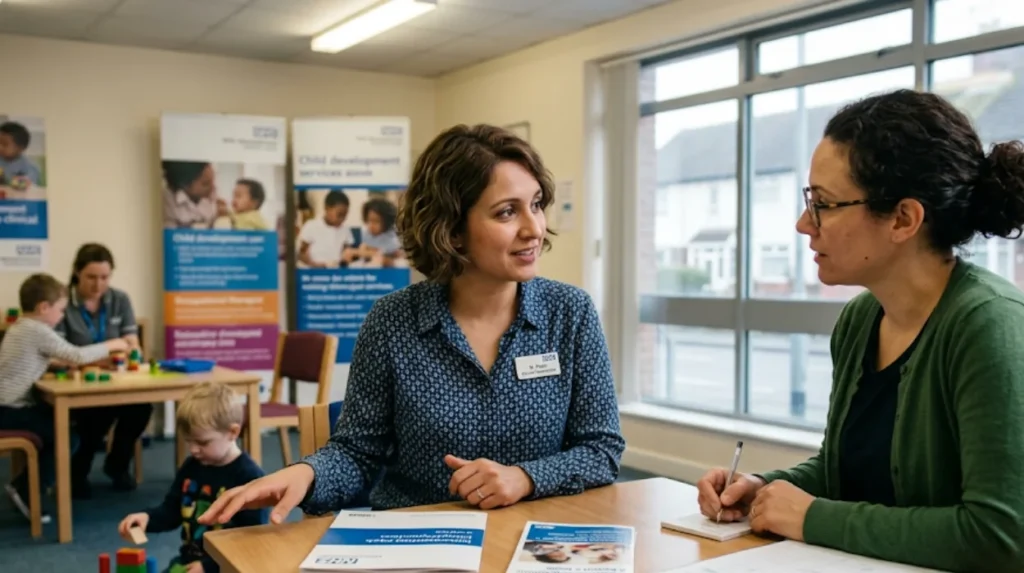
The assessment involves separate appointments with a community paediatrician, speech and language therapist (SALT), and clinical psychologist. The paediatrician brings findings together to inform the final diagnosis, so you’ll attend multiple appointments over time.
Assessment components include:
Developmental history collection: A team member interviews parents about when your child started talking, social development milestones, and early behavioural patterns. This includes completing formal “Developmental History” forms documenting childhood traits.
School observations: A team member visits your child’s school to observe them in class and at break time. The team collects reports from nursery, school, and any previous educational assessments.
Social communication assessment: Professionals use the Autism Diagnostic Observation Schedule (ADOS), a gold-standard tool measuring social interaction, communication, and behavioural features. Wait time for ADOS currently exceeds 18 months.
Cognitive and behavioural assessments: The team evaluates cognitive communication, behaviour patterns, and mental health. Adaptive functioning is measured using the Vineland scale.
Physical examination: A full physical examination occurs to rule out medical conditions. Tests for other conditions (auditory, genetic) happen when appropriate.
Parent-child interaction observation: Some assessments include MIM (an observational assessment of parent-child attachment).
The community paediatrician, SALT, and psychologist assess your child separately. Findings are brought together by the paediatrician to determine diagnosis. You’ll receive a written report by post after the final appointment confirming whether your child meets autism spectrum disorder criteria.
How long does it take to get an autism assessment for my child in Leeds?
Current waiting times for child autism assessment in Leeds exceed 27 months from referral to first appointment. After the initial assessment, the remaining process takes up to 3 months. Total waiting time from referral to diagnosis typically exceeds 2 years.
Specific wait times vary by assessment component:
| Service | Current Wait Time |
|---|---|
| Referral to first appointment | 27 months |
| Full assessment (after first appointment) | 3 months |
| ADOS assessment specifically | 18+ months |
| Overall referral to diagnosis | 27–30 months |
For adult assessments through LADS, waiting extends to 31 months from form submission to appointment booking. This demonstrates the severe capacity crisis across Leeds autism services.
NHS data shows 40% increase in suspected autism referrals between 2021–2022, with most patients waiting longer than 3 months. The majority exceed NICE’s 3-month recommendation for assessment timing.
Calderdale (neighbouring West Yorkshire area) aimed for 3–6 month waiting times in line with NICE guidance, but implementation pending waiting list clearance. Leeds faces similar capacity constraints with no announced improvement timeline.
Wait times reflect national trends: England’s autism assessment crisis affects 103,000 patients with open referrals as of 2022. Yorkshire services face identical pressures to London and southern regions.
Explore More Help & Resources
How to join a community group in Rothwell this month
How to find a food bank open near Pudsey
Can I get a private autism assessment for my child instead of waiting for NHS?
Yes, private autism assessments in West Yorkshire offer faster access than NHS pathways. Private providers follow the same clinical guidelines as NHS services, using gold-standard assessment tools and multi-disciplinary teams.
Private assessment costs for children in West Yorkshire:
Private autism assessment fees typically range £1,800–£3,800 depending on individual needs and assessment type. Combined autism and ADHD assessments cost more (£2,000–£2,995).
Private providers in West Yorkshire include:
- Aire Valley Psychology: Offers private assessments for children and adults following clinical guidelines, located in Keighley/Shipley area
- Mind Professionals – West Yorkshire: Provides Specialised Neurodevelopmental Diagnostic Assessments using gold-standard tools through blended face-to-face and remote sessions
- Oakdale Group: Children’s assessments for ages 2–18 years
- Melios: Child/young person assessments for ages 6–17
- The Toby Henderson Trust: Multi-disciplinary private assessments for children 5–18
Private assessments provide NHS-recognised diagnoses. Schools and local authorities accept private diagnoses for SEN support and accommodations. However, some therapies (like certain speech therapy programmes) may require NHS referral regardless of private diagnosis.
Private assessments typically schedule within weeks to months, compared to 27+ month NHS waits. This represents significant time savings for families needing urgent support.
What support can I get while waiting for my child’s autism assessment?
While waiting, access support through Guiseley and Leeds local services. Your child’s school provides immediate assistance through existing SEN frameworks. Request an Emergency SEN review with your child’s SENCO to implement classroom accommodations before diagnosis.
Leeds City Council offers the “Early Help Pathway” for children awaiting assessment. This pathway connects families with local support services including speech therapy waiting lists, parent training programmes, and mental health support. Contact your GP to request Early Help Pathway referral.
Mindwell-Leeds and Autism UK provide waiting support resources. Mindwell-Leeds participated in West Yorkshire’s “autism and ADHD deep dive” project exploring service improvements. These organisations offer parent groups, information sessions, and emotional support during waiting periods.
Schools can implement support without diagnosis using “SEN Support” funding. Teachers can adjust teaching methods, provide visual aids, create quiet work spaces, and establish predictable routines—all evidence-based autism strategies. Request a personalised learning plan addressing your child’s specific needs.
Local parent-carer forums connect families with similar experiences. Leeds Parent Carer Forum offers meetings, information sharing, and advocacy support. Contact via Leeds City Council’s disability services department.
Speech and Language Therapy (SALT) waiting lists operate separately from autism assessment. If your child has communication difficulties, request separate SALT referral through your GP. SALT wait times in Leeds also exceed 18 months, but early registration secures eventual placement.
How do I prepare documentation for my child’s autism assessment referral?
Complete the referral form fully with all relevant information. Incomplete forms or those missing criteria information get declined within 5 days. Gather these documents before submission:
Developmental history documentation: Record when your child started talking, walked, showed social interest, and developed friendships. Note any regression (losing skills previously had). Document sleep patterns, eating behaviours, and sensory sensitivities (noise, texture, light).
School/nursery reports: Collect written observations from teachers describing classroom behaviour, social interactions, learning patterns, and any concerns. Request the completed SNAP form from school if referring through CAMHS.
Medical records: Bring GP visit notes, previous developmental assessments, and any specialist reports. Include vaccination records if relevant to developmental timeline.
Video evidence: Record short clips showing specific behaviours (repetitive movements, social difficulties, communication challenges). Videos help assessors observe traits难以 capture in written descriptions.
Parent observation log: Create a daily/weekly log documenting specific incidents showing autism traits. Note date, time, setting, behaviour, and outcome for each entry.
Family input: Gather information from grandparents, siblings, or other relatives about your child’s development. Family history strengthens developmental timeline accuracy.
Email completed referral forms and supporting documents to referral.lypft@nhs.net for CAMHS, or follow your GP’s submission process. For CAMHS specifically, contact SPA at 0300 555 0324 for submission guidance.
Include contact details for all professionals involved (GP, school SENCO, therapists) so assessors can request additional information. Complete forms partially but submit quickly—better to submit with some missing information than delay indefinitely.
What happens after my child receives an autism diagnosis?
After diagnosis, you receive a written report by post confirming your child meets autism spectrum disorder criteria. This document serves as official proof for schools, local authorities, and healthcare services.
School accommodations: Present the diagnosis to your child’s school to request formal SEN support. Under the Equality Act 2010, schools must make “reasonable adjustments” including:
- Individualised learning plans
- Visual aids and communication supports
- Quiet work spaces for sensory needs
- Predictable routines and advance notice of changes
- Additional time for transitions between activities
Local authority support: Contact Leeds City Council’s Special Educational Needs team to request an Education, Health and Care Needs Assessment (EHNA). If approved, this leads to an Education, Health and Care Plan (EHCP) providing funded support up to £6,000 annually for school-based interventions.
Therapy access: NHS speech and language therapy, occupational therapy, and psychological services become accessible through GP referral. Note that therapy waiting lists also exceed 18 months, so register early.
Financial support: Apply for Disability Living Allowance (DLA) through Jobcentre Plus. Autism diagnosis qualifies children for DLA if symptoms cause “substantial disadvantage” requiring additional care. Amounts range £24.70–£70.50 weekly depending on care needs level.
Post-diagnosis support: Leeds Autism AIM (Autism Inclusion Movement) provides diagnosis support guides and local resources. They offer parent training, school advocacy, and community connection programmes.
Future planning: Discuss long-term support needs with your child’s school. Consider transition planning for secondary school, vocational training, and adult services as your child approaches 16–18 years.
What if my child doesn’t receive an autism diagnosis?
If the assessment concludes autism is unlikely, you receive written feedback explaining the reasoning. The team may suggest alternative explanations for your child’s difficulties or recommend different support pathways.
Request clarification: Ask the paediatrician to explain specific criteria your child didn’t meet. Understanding exact reasons helps you address remaining challenges through alternative support.
Alternative diagnoses: Children sometimes receive different diagnoses including Social Communication Disorder (SCD), anxiety disorders, attention difficulties, or developmental coordination disorder. Each diagnosis has corresponding support pathways.
Second opinion: You can request a second opinion if you disagree with the diagnosis. LADS offers second opinions only with “new and compelling information”—typically additional developmental history from mental health professionals or close relatives. For CAMHS assessments, contact SPA to discuss second opinion procedures.
Private assessment: Consider private assessment if you believe NHS assessment was incomplete or inaccurate. Private providers use identical clinical guidelines but may observe different behavioural patterns in new settings.
Continue support: Regardless of diagnosis, your child’s school must address identified needs through SEN Support. Request continued classroom accommodations based on observed difficulties, not requiring formal diagnosis.
Re-assessment option: Children’s developmental patterns change. Request re-assessment after 12–18 months if traits persist or intensify. Some children show clearer autism features as they age.
Parent support: Connect with Leeds Parent Carer Forum regardless of diagnosis outcome. These groups provide emotional support, practical advice, and advocacy training for all families facing developmental challenges.
Obtaining an autism assessment for your child in Guiseley requires navigating Leeds’ CAMHS pathway through GP or school referral. While NHS waiting times exceed 27 months, private options offer faster access at £1,800–£2,300. Document symptoms thoroughly, gather school input, and prepare for multi-disciplinary assessment involving paediatricians, speech therapists, and psychologists. Diagnosis unlocks essential school accommodations, local authority support, therapy access, and financial benefits through DLA.