

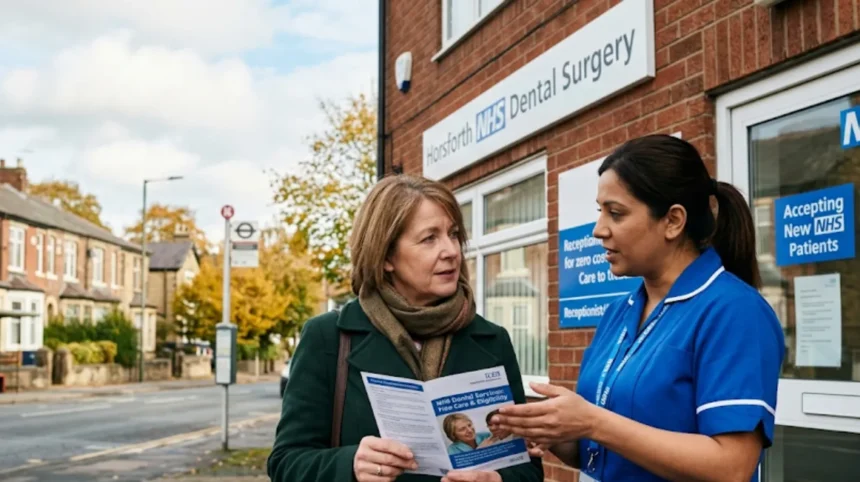
National Health Service dental care provides essential oral healthcare to residents across the United Kingdom. While standard primary dental care requires patient co-payments under a regulated three-tier structure, specific legal frameworks enable qualifying individuals to access these clinical services completely free of charge. For residents living in Horsforth, a suburban town and civil parish located within the City of Leeds metropolitan borough in West Yorkshire, navigating the localized healthcare geography and structural eligibility rules is essential to securing zero-cost dental treatments.
- What are the legal criteria for free NHS dental care in England?
- Which NHS dental practices operate near Horsforth?
- How do you find a local dentist accepting new NHS patients?
- What steps are required to claim free dental treatment?
- How do you access free urgent dental care in Leeds?
- What treatments are covered under free NHS dental care?
- What is the long-term outlook for NHS dentistry access in West Yorkshire?
What are the legal criteria for free NHS dental care in England?
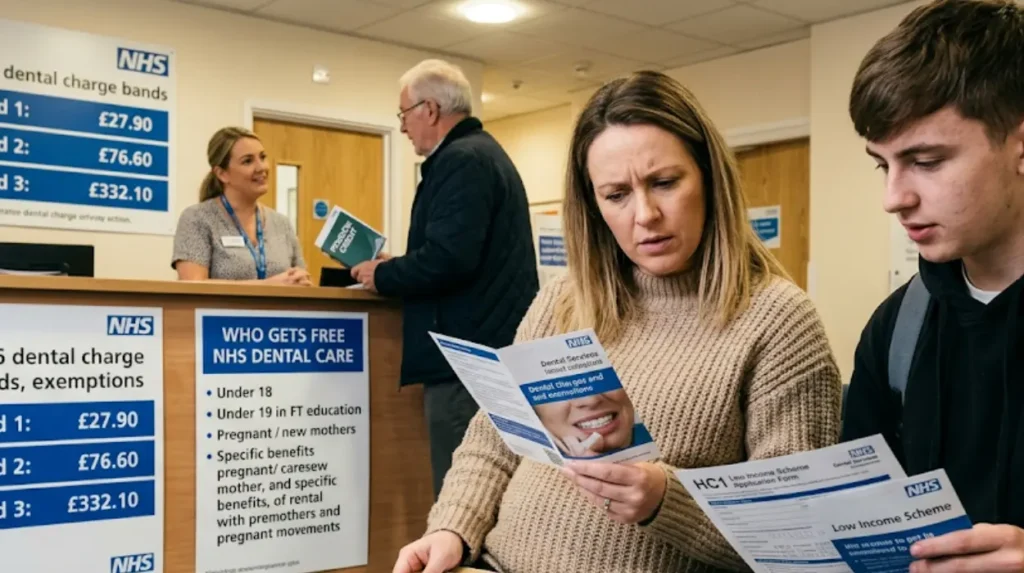
Free NHS dental care in England is strictly restricted to individuals meeting statutory exemption criteria on the date their treatment begins. Eligible groups include patients under eighteen, those under nineteen in full-time education, pregnant women, and mothers who gave birth within the previous twelve months.
The National Health Service (Primary Dental Services and Dental Charges) (Amendment) Regulations 2026 sets the legal foundation for patient exemptions. If an individual does not qualify through age or maternity status, they must hold a valid exemption via specific state benefits or income thresholds to avoid standard patient charges. For non-exempt adults, these statutory charges are divided into three standard tiers: Band 1 costs £27.90 for examinations and diagnostics, Band 2 costs £76.60 for extractions and fillings, and Band 3 costs £332.10 for complex restorative work such as crowns and dentures.
Age-Based Exemptions
The National Health Service provides automatic non-chargeable dental care to all children under the age of eighteen. This policy ensures that physical development and early oral health are monitored without financial barriers. For young adults, this exemption extends up to the age of nineteen, provided the individual remains registered in full-time education. Full-time education applies to individuals enrolled in school, community college, or vocational training programs that meet the legal definitions of secondary education. It excludes higher education programs, such as undergraduate university degrees.
Maternity Exemptions
Maternity exemptions protect maternal and infant health by covering all necessary dental procedures during vulnerable biological periods. A patient qualifies for free treatment if she is pregnant at the start of her dental care course or if she has given birth within the preceding twelve months. This regulation applies equally to mothers who experience a stillbirth, provided the event occurred within the past twelve months. To access zero-cost care, the patient must present an NHS Maternity Exemption Certificate, a MAT B1 form issued by a midwife, or the infant’s official birth certificate.
Income and Benefit-Based Exemptions
Low-income status grants zero-cost dental care through direct correlation with specific state welfare payments. Individuals qualify automatically if they receive Income Support, Income-based Jobseeker’s Allowance, or Income-related Employment and Support Allowance. Pensioners qualify if they receive the Guarantee Credit element of Pension Credit.
Universal Credit recipients face specific financial thresholds. A Universal Credit claimant qualifies for free dental care only if their net take-home pay in their last assessment period was £435.00 or less, or £935.00 or less if the claim includes an element for a child or limited capability for work. Individuals who do not receive these benefits but survive on a low income can apply to the NHS Low Income Scheme by submitting an HC1 form. If approved, the NHS Business Services Authority issues an HC2 certificate, which guarantees full financial remission for all dental tiers.
Which NHS dental practices operate near Horsforth?
Multiple General Dental Practices operate near Horsforth under standard General Dental Services contracts to deliver state-funded care. Key facilities serving the Leeds northwest corridor include Horsforth Dental Practice, Broadgate Lane Dental Care, and nearby community practices located within the Cookridge and Kirkstall electoral wards.
The availability of zero-cost treatment depends entirely on whether a practice maintains capacity under its current NHS contract. Dental practices are independent businesses contracted by NHS England to deliver a set number of Units of Dental Activity per fiscal year. Because capacity fluctuates, residents in the LS18 postcode zone frequently utilize dental practices across broader northwest Leeds neighborhoods to locate open registers.
Primary Horsforth Dental Providers
Within the immediate boundaries of Horsforth, primary dental options are concentrated around commercial centers. Horsforth Dental Practice, situated on Town Street, operates as a multi-surgery clinic delivering core health services. Broadgate Lane Dental Care serves the surrounding residential estates. These practices are legally required to treat exempt patients with identical clinical standards as paying patients, utilizing the standard FP17PR declaration form to verify exemption statuses before initiating clinical work.
Surrounding Northwest Leeds Providers
When immediate Horsforth practices reach maximum patient capacity, residents look toward adjacent suburbs within a three-mile radius. In the neighboring Cookridge area, providers like Silkstone Dental Care offer geographic proximity for northern Horsforth residents. To the south, Kirkstall Dental Centre and practices along the A65 commercial corridor provide alternative options. Accessing these surrounding facilities requires utilizing public transport links, such as the Northern Rail line from Horsforth Station to Leeds City Station or the 50A and 34 bus routes operated by First Leeds.
How do you find a local dentist accepting new NHS patients?
Finding a local dentist accepting new NHS patients requires utilizing official digital directories maintained by the National Health Service. The primary tool is the online NHS Find a Dentist search portal, supplemented by direct inquiries to Healthwatch Leeds and West Yorkshire Integrated Care Board.
The process of securing an active placement is highly timesensitive because patient registers change daily. General Dental Practices are not bound by geographical catchment areas in the same manner as General Practitioner medical surgeries. A resident of Horsforth possesses the legal right to apply for NHS treatment at any dental practice across West Yorkshire, provided the practice has unallocated capacity within its state-funded contract.
Utilizing the NHS Find a Dentist Digital Portal
The NHS Find a Dentist web tool serves as the official mechanism for locating active patient intake. Users enter the Horsforth postcode, LS18, to generate a distance-ordered list of nearby providers. The system updates practice statuses based on real-time data returns, categorizing clinics into three specific statuses: accepting adults, accepting children only, or accepting only patients referred for specialist care. When a practice displays an active intake status, patients must contact the clinic directly via telephone to complete their intake registration before scheduling a diagnostic appointment.
Engaging Local Healthcare Channels
If digital directories display no local openings, secondary communication channels provide localized tracking data. Healthwatch Leeds operates as an independent public watchdog monitoring dental capacity across the metropolitan district. They compile weekly updates on clinics possessing active capacity. Furthermore, the West Yorkshire Integrated Care Board holds the overarching statutory responsibility for commissioning primary dental services in Leeds. The board monitors contract compliance and can direct vulnerable patients to dedicated access slots when local capacity drops below critical thresholds.
What steps are required to claim free dental treatment?
Claiming free dental treatment requires completing the mandatory PR form at the practice reception before clinical examination occurs. The patient must select their specific exemption category and present physical or digital evidence to verify their legal entitlement to zero-cost National Health Service care.
The administrative process is governed strictly by the NHS Business Services Authority to mitigate fraudulent claims. Dental practices act as checking agents but do not make final legal determinations regarding exemption validity. The patient bears total legal responsibility for the accuracy of the declaration signed on the FP17PR document.
1.Verify Active Exemption Status:Prior to Appointment.
Confirm that the qualifying condition, such as an active Universal Credit award or a valid Maternity Exemption Certificate, is active on the exact calendar date of the scheduled dental appointment.
2.Present Official Documentation:At Practice Reception.
Provide physical or digital proof of exemption to the dental receptionist, such as an HC2 full-help certificate, a benefit award letter, or an official tax credit exemption card.
3.Complete the FP17PR Declaration Form:Before Clinical Assessment.
Read the exemption criteria listed on the official FP17PR form, tick the single box matching the current legal status, and sign the declaration to authorize state funding.
4.Undergo Clinical Examination:In the Surgery.
Receive the necessary dental treatments from the clinician, ensuring all procedures remain strictly within the agreed NHS treatment plan rather than private cosmetic options.
Consequences of Incorrect Exemption Claims
The NHS Business Services Authority runs routine retrospective checks matching dental claims against data held by the Department for Work and Pensions and HM Revenue and Customs. If an individual ticks an exemption box on the FP17PR form without a valid matching record on that date, the system triggers an automated enforcement action. The individual receives an NHS Penalty Charge Notice. This notice demands the full payment of the original dental treatment cost, plus an additional statutory penalty fee of five times the configuration cost, capped at a maximum fine of £100.00.
How do you access free urgent dental care in Leeds?
Accessing free urgent dental care in Leeds requires calling the NHS 111 triage service to secure an appointment at a designated Urgent Dental Care Centre. Triage clinicians assess urgent symptoms to allocate same-day slots, bypassing standard general practice waiting lists for qualifying individuals.
Urgent dental care is restricted to specific clinical emergencies that present immediate risks to health or severe functional impairment. These urgent conditions comprise three primary categories: severe dental agony that is uncontrollable by over-the-counter analgesics, rapid swelling of the facial tissues or oral mucosa, and continuous post-extraction bleeding. Standard practices or emergency centers will not treat routine aesthetic issues, minor chips, or missing fillings through emergency pathways.
The NHS 111 Triage Mechanism
The entry point for emergency oral healthcare throughout West Yorkshire is the free-to-call NHS 111 telephone service. The system utilizes structured clinical assessment software to evaluate the severity of the patient’s condition. If the caller meets the safety thresholds for urgent intervention, the operator issues a unique electronic referral to an Urgent Dental Care Centre within the Leeds metropolitan district. For Horsforth residents, these emergency appointments are typically allocated at centralized hubs, including the Leeds Dental Institute located at the Clarendon Wing of the Leeds General Infirmary, or localized community clinics.
Financial Remission for Emergency Interventions
Urgent dental courses of treatment carry a flat statutory fee of £27.90 for non-exempt individuals. However, if a patient meets any of the statutory exemption criteria outlined in the National Health Service regulations, this emergency cost is reduced to zero. The patient must complete an emergency variant of the standard declaration form upon arrival at the urgent care hub. Accessing emergency care through the NHS 111 pathway does not register the patient with a general dental practitioner for long-term routine checkups, meaning the patient must still seek standard registration for continuous oral health maintenance.
Explore More Help & Resources
How to join a volunteer group near Wetherby this month
How to report a broken street light in Rothwell
What treatments are covered under free NHS dental care?
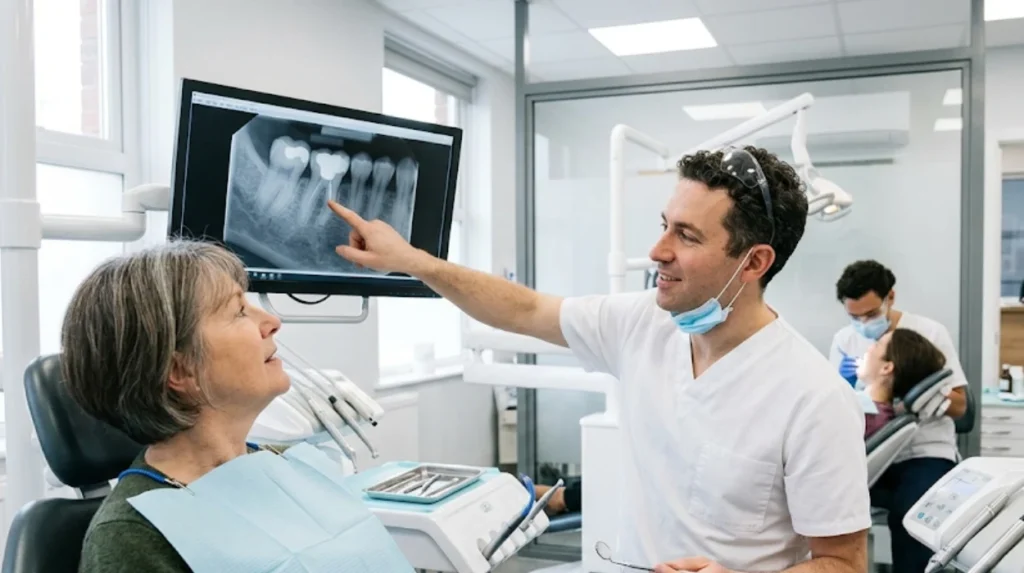
Treatments covered under free NHS dental care encompass all clinical procedures necessary to maintain oral health, eliminate active disease, and restore basic masticatory function. Covered options include diagnostic radiographs, routine scaling, structural restorations, root canal therapies, extractions, and non-cosmetic prosthetics.
The scope of state-funded dentistry is strictly clinical. Section 3 of the National Health Service Act 2006 dictates that the health service must provide dental facilities to the extent necessary to meet all reasonable clinical requirements. This mandate excludes any intervention performed purely for aesthetic enhancement.
| Treatment Band | Included Clinical Interventions | Clinical Purpose |
| Band 1 | Clinical exams, X-rays, fluoride varnish, scale and polish | Preventive care and diagnostics |
| Band 2 | Fillings, root canal treatments, tooth extractions | Active disease control |
| Band 3 | Bridges, crowns, complete or partial dentures | Structural restoration of function |
Permissible Restorative and Surgical Interventions
When an exempt patient requires therapeutic work, the clinician performs treatments under Band 2 or Band 3 protocols at zero cost. Band 2 treatments focus on resolving active dental decay and infection. This includes amalgam or composite structural fillings to repair cavities, root canal therapy to clear infected pulpal tissue, and surgical extractions of non-viable teeth. Band 3 treatments resolve extensive structural damage through the fabrication of external dental appliances. Dentists can install laboratory-created crowns, permanent dental bridges, or acrylic dentures to replace missing teeth, provided these appliances are clinically required to allow proper chewing or speech.
Exclusions and Private Treatment Limits
Cosmetic procedures are completely unavailable under NHS funding schemes, regardless of patient exemptions. These exclusions include tooth whitening therapies, cosmetic porcelain veneers, and dental implants designed for purely aesthetic improvement. White composite fillings are standard on front teeth where visibility affects basic social function, but the NHS restricts posterior molar restorations to silver amalgam unless specific clinical allergies are documented. If an exempt patient requests cosmetic alterations, the clinician must draft a separate private treatment contract, and the patient must pay full commercial rates for those specific non-essential procedures.
What is the long-term outlook for NHS dentistry access in West Yorkshire?
The long-term outlook for NHS dentistry access in West Yorkshire depends heavily on ongoing contractual reforms implemented by Integrated Care Boards and national workforce retention strategies. Current initiatives focus on targeted funding allocations to eliminate regional access disparities.
Historical spending patterns show that the national NHS dental budget remained largely static in cash terms for over a decade, which caused many General Dental Practices to reduce their state-funded patient quotas in favor of private cosmetic care. In response, the West Yorkshire Integrated Care Board has introduced localized initiatives designed to stabilize the dental market across Leeds and its outer suburbs like Horsforth.
Local Dental Network Strategies
The West Yorkshire Local Dental Network works directly with the British Dental Association to pilot alternative commissioning models. These models aim to replace the historic system of Units of Dental Activity with a capitation-based model that rewards dentists for the number of individual patients they look after over a sustained period. In addition, new dental access schemes offer financial incentives to practices that actively open their registers to high-needs patients or individuals who have not seen a dentist in the past two years, helping to reduce the overall volume of unmet need across West Yorkshire.
Projected Impact on Horsforth Residents
For residents near Horsforth, these structural adjustments mean that locating an open NHS register should become more predictable over the next few financial years. The introduction of the dental recovery plan supports mobile dental clinics and creates dedicated oral health programs within local primary schools across Leeds. While these contract changes take effect, individuals qualifying for free care must remain proactive, utilize official digital tracking systems, and ensure their exemption paperwork is fully updated to preserve their access to zero-cost oral healthcare.