
Key Points
- Historic England has rejected an application to list the former Pudsey Town Hall, clearing a major obstacle to a possible sale.
- The organisation said the building does not meet the criteria for statutory protection because it has been too altered over time.
- Leeds City Council voted in January to proceed with the sale despite local opposition and a petition with more than 1,000 signatures.
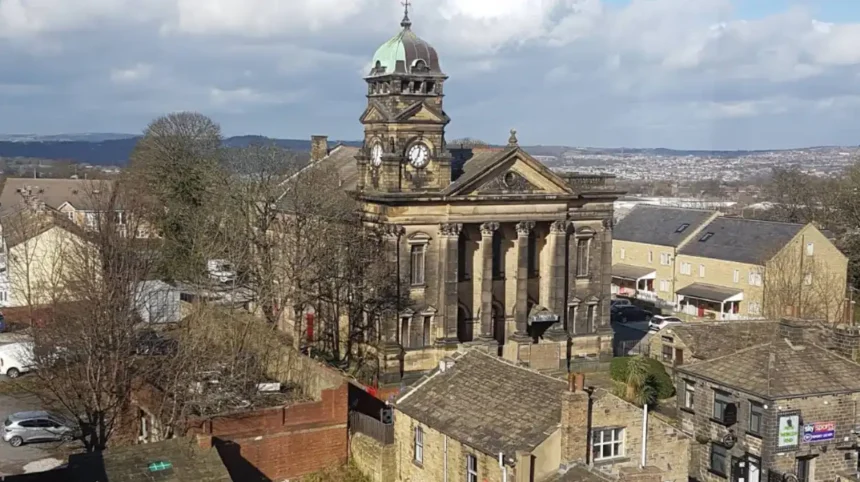
- The four-storey Victorian building dates from around 1890 and has not been open to the public since 2016.
- An earlier attempt to secure Asset of Community Value status also failed, which means campaigners have already lost one route to delay a sale.
Pudsey (The Leeds Times) July 7, 2026 – Historic England rejected the bid to list the former Pudsey Town Hall after reviewing its historical records and architectural significance, saying the criteria for statutory protection were not met. As reported by the available source, the organisation concluded that the building, while a good local building, had been altered too much overall to qualify for listing.
The report said:
“After examining all the records and other relevant information, and having carefully considered the architectural and historic interest of this case, the criteria for listing are not fulfilled and Pudsey Town Hall is not recommended for listing.”
The decision is significant because listed status can make redevelopment or sale more difficult by imposing stricter controls on what can be changed. In this case, rejection removes one of the most important barriers that campaigners had hoped would slow or stop the disposal of the building.
Why was the application made?
The listing application followed Leeds City Council’s decision earlier this year to put the former town hall on the market. Residents opposed the move, and a petition gathered more than 1,000 signatures before councillors voted in January to proceed with the sale.
Campaigners had hoped that Historic England would recognise the property’s heritage value and protect it from sale or unwanted change. The building’s age, around 1890, and its place in Pudsey’s civic history formed the basis of that argument.
However, Historic England’s assessment focused not only on the building’s age and local importance, but also on how much of its original fabric had survived. The authority said the extent of alterations reduced its eligibility for national protection.
What is the building’s history?
The former town hall is a four-storey Victorian building dating back to around 1890. It has not been open to the public since 2016, although parts of it have more recently been used by the Pudsey and District Civic Society.
That use kept the building in some form of community presence, but it did not change its underlying status or the council’s intention to sell it. The council has argued that maintaining the property had become too expensive, which is why it moved towards placing it on the market.
The town hall’s history has clearly made it an emotionally significant site for local residents. But Historic England’s role is to assess whether a building meets national criteria for listing, not whether it is locally valued.
How did campaigners respond?
The report indicates that campaigners had already pursued another route to protect the building before this decision.
An earlier attempt to have it recognised as an Asset of Community Value failed, and that meant community groups could not use that designation to pause a sale and prepare a bid.
That earlier loss mattered because ACV status can buy time for local groups to organise a purchase or campaign for an alternative use.
Without it, and now without listing protection, the practical options for opponents of the sale have narrowed considerably.
The source material does not provide direct reaction quotes from campaigners after the latest ruling. Even so, the sequence of events shows a long-running attempt to keep the building in public or community use.
What does the council say?
Leeds City Council previously argued that the cost of maintaining the former town hall had become too high. That financial pressure was a key reason behind the decision to sell.
The council’s January vote to move ahead with the sale came despite public objection and the petition from residents.
The recent rejection by Historic England means the council now faces fewer legal or procedural barriers to selling the property.
For the council, the decision strengthens its position that the building can be marketed without national heritage status limiting what a future buyer may do. For campaigners, it makes the path to preserving the building much harder.
Why does the decision matter?
This development matters because heritage status can shape both the future use of a historic building and the level of public influence over that future. Without listing, the property is less protected from significant alteration, subject to normal planning controls rather than heritage restrictions.
It also matters because the building has already been closed to the public for years. That means the debate is not only about preservation, but also about whether there is a realistic community, commercial, or civic use that could justify keeping it.
The rejection does not force an immediate sale, but it does remove one of the biggest legal arguments against disposal.
In practice, that is likely to influence how quickly the council can market the building and how much leverage opponents still have.
What happens next?
The available source says the rejection means there are now fewer obstacles to a potential sale. The next stage is likely to be the council’s formal handling of the marketing or disposal process.
What remains unclear from the source is whether any new campaign, appeal, or alternative community bid will emerge.
But with both listing and ACV routes already unsuccessful, any future challenge would need a different basis.
Explore More Pudsey News
Police Appeal After High-Value Asian Gold Stolen: Pudsey 2026
Future of Pudsey Market in Doubt Amid Declining Trade, Leeds 2026
Background of the development
Pudsey Town Hall has been part of local civic life for more than a century. Built around 1890, it reflects the Victorian period in which many town halls were constructed as symbols of local administration and public identity.
In recent years, however, the building’s function has changed markedly. Its closure to the public in 2016 and the reported use of parts of the property by the Pudsey and District Civic Society show that it has become more of a contested heritage asset than an active civic building.
The current dispute sits within a wider pattern seen in many towns and cities, where councils face rising maintenance costs for older public buildings.
When that happens, local authorities often weigh preservation against financial sustainability, while residents and heritage campaigners push for continued public or community ownership.
Prediction
For local residents and heritage campaigners in Pudsey, this decision is likely to mean a sharper focus on the sale process itself rather than on preservation through statutory protection.
If the council moves ahead quickly, opponents may have less time and fewer formal tools to intervene.
For the wider community, the most likely impact is that the building’s future use may shift further away from civic or community functions unless a buyer proposes a publicly welcomed plan.
The outcome will therefore affect not only the building’s appearance, but also how much influence local people still have over one of Pudsey’s best-known historic landmarks.