
Key Points
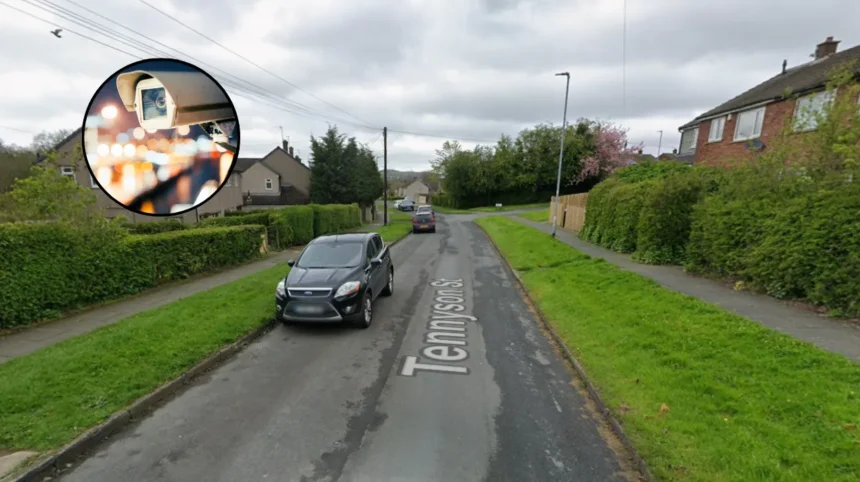
- Location of Initiative: New closed-circuit television (CCTV) security systems have been successfully placed on Queensway and Tennyson Street in Guiseley town centre.
- Funding Mechanism: The security installation was fully funded through the collaborative efforts of local representatives who successfully applied for support via Leeds City Council’s Outer North West Community Committee.
- Operational Duration: The newly deployed surveillance camera framework has been officially approved for an initial operation timeline spanning twelve months.
- Primary Objective: This proactive safety measure is a direct structural response to ongoing complaints filed by local residents alongside consistent advisory feedback provided by the West Yorkshire Police regarding localized anti-social behaviour.
- Integration with Infrastructure: The structural cameras are directly wired and linked into the LeedsWatch centralized server grid, which secures continuous, round-the-clock protection monitoring for urban safety.
- Evidentiary Protocol: Local householders and commuters are actively requested to forward precise occurrence details to officers to assist municipal analysts in locating, verifying, and distributing video evidence for legal proceedings.
Guiseley (The Leeds Times) July 8, 2026 —Residents and commuters passing through the heart of Guiseley town centre are set to experience a heightened layer of public safety following the successful positioning and integration of brand-new closed-circuit television (CCTV) security cameras along key stretches of Queensway and Tennyson Street. The specialized municipal development has materialized through the collective initiative of local ward politicians who successfully navigated local authority structures to extract explicit funding allocations. Supported extensively by analytical reporting from regional law enforcement regarding patterns of public disruption, the newly mounted monitoring infrastructure aims to curb continuous disturbances while providing a verifiable mechanism for gathering judicial evidence against local offenders.
- Key Points
- Why Were New CCTV Systems Deployed on Queensway and Tennyson Street?
- How Was the Funding for the New Surveillance Grid Secured?
- What Is the Operational Term and Monitoring Framework for These Cameras?
- How Can Local Residents Help Optimize the Effectiveness of the New System?
- What Do Local Ward Representatives Say About This Safety Initiative?
- Background of the Public Safety Initiatives in Guiseley
- Prediction on How This Development Will Affect Local Residents and Businesses
Why Were New CCTV Systems Deployed on Queensway and Tennyson Street?
As detailed in a public safety briefing compiled by News Editor Claire Lomax of the Bradford Telegraph and Argus, the implementation of the comprehensive tracking network is intended to provide immediate relief to neighbourhoods that have experienced an escalation in public nuisance incidents.
The strategic selection of Queensway and Tennyson Street follows an extended period of communication between property owners, business managers, and the police.
According to regional police dispatches, these specific thoroughfares had seen an incremental rise in localized minor crimes, loitering, and general rowdiness, prompting demands from property occupants for administrative intervention.
Rather than deploying short-term active patrols that only scatter crowds temporarily, local authorities concluded that permanent physical surveillance infrastructure would provide a continuous, stabilizing presence in the commercial and residential corridors of the town.
How Was the Funding for the New Surveillance Grid Secured?
The capital and deployment expenditure required to introduce the modern monitoring equipment did not rely on standard emergency police budgets but was instead carved out of local authority frameworks through targeted political advocacy.
As reported by Claire Lomax of the Bradford Telegraph and Argus, the security cameras have been fully financed following the dedicated efforts of Guiseley and Rawdon ward councillors Oliver Edwards, Sonia Leighton, and Eleanor Thomson.
The three civic representatives worked collectively to compile a robust community safety business case, which they subsequently presented before the Leeds City Council’s Outer North West Community Committee. By demonstrating the explicit overlap between public fear of crime and objective police feedback, the ward councillors successfully secured the necessary capital grants to cover the physical hardware procurement, electrical mounting, and data link routing required to make the system fully functional.
What Is the Operational Term and Monitoring Framework for These Cameras?
According to structural documentation released by Leeds City Council, the surveillance network has been formally cleared for an initial operational testing window lasting precisely one year.
During this twelve-month timeframe, the system’s overall effectiveness, reliability, and impact on local crime numbers will be carefully tracked by municipal statisticians to evaluate whether the infrastructure warrants permanent funding.
In terms of functional infrastructure, the cameras do not merely record local data onto isolated internal drives; they are fully integrated into a wider, highly sophisticated metropolitan network.
As reported by Claire Lomax of the Bradford Telegraph and Argus, the newly installed system is directly linked to Leeds City Council’s dedicated LeedsWatch service.
This centralized public security wing provides uninterrupted, 24-hour live CCTV tracking and comprehensive security coverage across the entirety of the metropolitan district, ensuring that any escalating incident can be spotted in real time by trained terminal controllers.
How Can Local Residents Help Optimize the Effectiveness of the New System?
To ensure that the newly deployed cameras achieve their maximum protective potential, municipal administrators and local police are calling for active participation from the general public.
Authorities emphasize that the LeedsWatch framework operates at its highest efficiency when combined with swift, detailed grassroots reporting from individuals on the ground.
As reported by Claire Lomax of the Bradford Telegraph and Argus, local residents are being strongly encouraged to report any witnessed instances of criminality or anti-social behaviour directly to West Yorkshire Police personnel as soon as physically possible.
Law enforcement officials have noted that these citizen notifications must include the exact calendar date, the precise hour of occurrence, and the specific street location of the incident.
Once these parameters are submitted to the police, analysts can immediately cross-reference the data with the LeedsWatch archive, enabling controllers to swiftly isolate, review, and export the relevant video footage to serve as binding evidence in formal prosecutions.
What Do Local Ward Representatives Say About This Safety Initiative?
The political figures responsible for pushing the funding through the council chambers have expressed significant satisfaction with the rapid deployment of the hardware, framing it as a direct demonstration of responsive local governance. In a joint public statement obtained by Claire Lomax of the Bradford Telegraph and Argus, Councillors Oliver Edwards, Sonia Leighton, and Eleanor Thomson jointly affirmed:
“We listen to our community, and we know that cutting down on anti-social behaviour on Queensway is a massive priority for local residents. These new cameras are a major win for community safety. They will give West Yorkshire Police a vital tool to track down offenders and keep our neighbourhoods peaceful.”
The three elected officials further added a direct appeal to the civilian populace regarding civic responsibility, stating:
“We strongly urge anyone who witnesses criminal activity or anti-social behaviour to report it immediately to the police. Together, we can keep Guiseley safe.”
Furthermore, the ward representatives noted that immediate public reporting protocols do not merely help in catching individual lawbreakers after the fact; they also serve a broader diagnostic purpose.
They explained that rapid reporting structures will directly assist the technicians at LeedsWatch in identifying broader recurring patterns of illicit behaviour, thereby allowing security teams to dynamically focus their live monitoring efforts on the specific times and hotspots where surveillance is most critically required.
Background of the Public Safety Initiatives in Guiseley
The installation of closed-circuit television infrastructure along Queensway and Tennyson Street represents the latest chapter in an ongoing, multi-year effort by Leeds City Council and West Yorkshire Police to address shifting crime patterns within the outer northwest suburbs of Leeds.
Historically, Guiseley has maintained a reputation as a relatively peaceful, prosperous market town. However, as the regional evening economy expanded and transport links between Guiseley, Leeds, and Bradford grew busier, certain central sectors began experiencing an increase in youth-related gatherings, late-night noise complaints, and minor property damage.
Prior to this installation, the Outer North West Community Committee had received multiple feedback reports indicating that older, existing public cameras in adjacent shopping districts were failing to capture activities spilling over into the surrounding residential corridors.
Over the last three municipal budget cycles, local ward councillors have systematically lobbied for localized tech upgrades, pointing out that gaps in coverage on secondary avenues like Tennyson Street allowed perpetrators to operate out of sight of standard police patrols.
The creation of the LeedsWatch centralized monitoring service in its modern form provided the administrative backbone needed to support these local expansions, allowing individual neighborhoods to plug localized cameras into a highly professional, 24/7 security center without needing to build independent monitoring facilities.
Explore More Guiseley News
Marks & Spencer Plans Major Store Extension at Guiseley Retail Park 2026
New Evri Parcel Locker Launches in Guiseley – 2026
Prediction on How This Development Will Affect Local Residents and Businesses
The structural introduction of 24-hour monitored CCTV cameras is expected to quickly change the day-to-day environment for several key groups within the Guiseley community.
For the immediate residents living on Queensway and Tennyson Street, the most direct impact will likely be a noticeable drop in late-night street disturbances and minor property crimes like vandalism or littering.
Empirical crime data across West Yorkshire indicates that the presence of high-definition, council-linked camera housing serves as a strong psychological deterrent, causing casual offenders to shift their activities away from monitored areas. This should lead to quieter, more predictable evenings for local families and property owners.
For local business operators in the town centre, the surveillance grid offers an extra layer of commercial security. It reduces the risk of overnight shopfront damage and provides greater safety for staff leaving work late at night.
Additionally, because the cameras feed directly into the LeedsWatch database, business owners will spend less time dealing with independent security issues and enjoy faster police response times when incidents do occur.
However, this deployment may also lead to a phenomenon known as “crime displacement.” Because the current funding package only covers a one-year period and focuses strictly on these two avenues, there is a distinct possibility that individuals who previously gathered on Queensway and Tennyson Street will simply move their activities to nearby unmonitored backstreets or adjacent parks.
Consequently, while residents in the immediate area will experience improved security, communities in surrounding sectors may need to monitor local activity closely to ensure that anti-social behaviour does not simply shift to their doorsteps.