Key Points
- Installation of Security Measures: Leeds City Council is moving forward with plans to install 125 sandstone boulders, bollards, earth mounds, and vehicle access barriers around vulnerable sections of Roundhay Park.
- Targeting Anti-Social Behaviour: The scheme aims to prevent unauthorized vehicular access, nuisance driving, illegal encampments, and illegal fly-tipping on parkland.
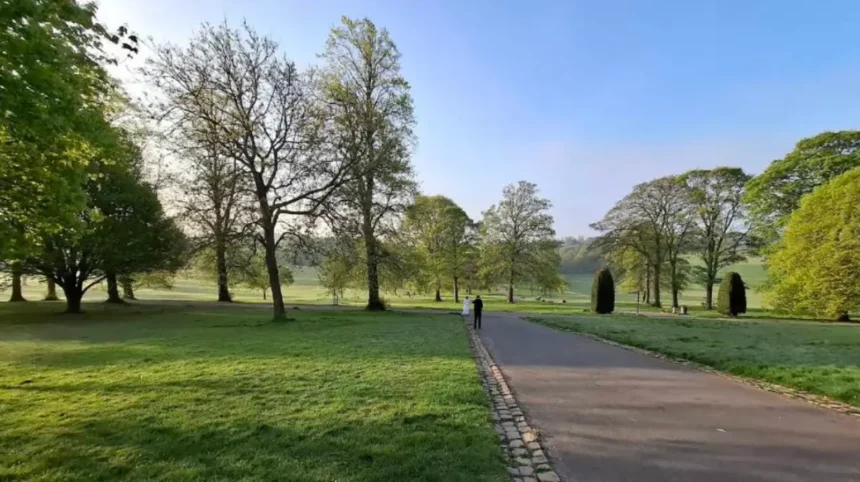
- Focus on Key Playing Fields: The physical security measures are specifically designated for Soldiers Field and Connaught Field within the Grade II-listed park.
- Environmentally Integrated Design: Boulders will be locally sourced, and earth mounds will be seeded with grass and wildflowers to ensure the barriers blend into the natural landscape.
- Protection of Heritage and Nature: Construction works will be strictly controlled to prevent damage to mature trees, root systems, and the historic landscape character of the conservation area.
Leeds (The Leeds Times) August 8, 2026 – Leeds City Council has approved planning permission to install a comprehensive network of 125 physical barriers—including sandstone boulders, bollards, earth mounds, and gates—to curb nuisance drivers and protect open spaces across Roundhay Park. The strategic scheme focuses on vulnerable areas such as Soldiers Field and Connaught Field, which have suffered from recurring incidents of unauthorized vehicle access, reckless driving, fly-tipping, and illegal encampments.
- Key Points
- What measures are being installed at Roundhay Park?
- Why is Leeds City Council introducing these anti-social behaviour barriers?
- How will the installation protect Roundhay Park’s natural environment and trees?
- What is the background to this development?
- How will this development affect local residents and park visitors?
What measures are being installed at Roundhay Park?
The approved protection scheme introduces a multi-layered boundary strategy designed to block vehicle entry points without impacting pedestrian mobility or visually degrading the landscape.
The main components of the installation plan include:
- Locally Sourced Sandstone Boulders: Around the perimeter boundaries, heavy sandstone boulders will be strategically placed near mature tree lines to form an informal, rustic barrier that restricts vehicle entry while maintaining a natural appearance.
- Landscape-Integrated Earth Mounds: Low-impact earth bunds will be built along open edges. These mounds will be seeded with grass and native wildflowers, turning security infrastructure into ecological features.
- Bollards and Access Gates: High-durability bollards and demountable vehicle access barriers will be positioned at formal entry points to allow authorized maintenance and emergency vehicles through while keeping unauthorized traffic out.
Why is Leeds City Council introducing these anti-social behaviour barriers?
As one of Europe’s largest urban parks, Roundhay Park covers over 700 acres of parkland, lakes, woodland, and formal gardens. Due to its open boundaries and vast unfenced expanses, areas like Soldiers Field have increasingly become targets for anti-social vehicular activity.
According to reports submitted to the planning authority, uncontrolled vehicle access has caused severe turf damage, deep tire rutting, and safety hazards for park visitors, sports teams, and dog walkers. In addition, unauthorized access has repeatedly led to incidents of illegal waste dumping (fly-tipping) and temporary vehicle encampments, incurring significant maintenance and legal cleanup costs for the local authority.
How will the installation protect Roundhay Park’s natural environment and trees?
Because Roundhay Park holds Grade II-listed status on the Historic England register and lies within a protected Conservation Area, any physical alterations are subject to strict heritage and environmental oversight.
The project has been planned to prevent root compaction or damage to existing mature trees. Earthworks and boulder placements will be executed under arboricultural supervision, ensuring that heavy machinery avoids root protection zones.
By utilizing natural stone and wildflower-seeded bunds rather than continuous steel fencing or high concrete walls, the project preserves the open vistas and historic aesthetic that define the estate.
Explore More Local Leeds News
Ironman Triathlon Brings Major Road Closures and Bus Diversions: North Leeds 2026
Ebony Stead Returns for Leeds Rhinos vs York Valkyrie Headingley 2026
What is the background to this development?
Roundhay Park has served as a central public recreation space in Leeds for over 150 years. Originally established as an 11th-century hunting park by the de Lacy family, the land was developed into a private estate in the early 19th century by Thomas Nicholson, who created Waterloo Lake and constructed The Mansion.
In 1872, Sir John Barran, then Mayor of Leeds, spearheaded the municipal purchase of the 774-acre estate for £139,000, dedicating it as a permanent public park for the people of Leeds.
Soldiers Field, located on the park’s western side, gained its name during the late 19th and early 20th centuries when it was regularly utilized for military drills, parades, and large public gatherings.
In recent decades, urban growth and rising traffic levels across North Leeds have intensified pressure on the park’s perimeter. While the open layout historically reflected Victorian landscape design principles, modern challenges involving motorbikes, quad bikes, and off-road vehicles have necessitated physical containment measures to safeguard public safety and municipal assets.
How will this development affect local residents and park visitors?
The deployment of 125 barriers and boulders will directly impact several key user groups across the Roundhay and wider Leeds community:
- Local Residents: Homeowners surrounding Princes Avenue, Oakwood, and Roundhay will experience a reduction in late-night engine noise, dangerous driving, and anti-social vehicle gatherings. Reduced instances of illegal fly-tipping will also help maintain neighborhood cleanliness and property values.
- Pedestrians, Families, and Park Users: Visitors utilizing Soldiers Field and Connaught Field for walking, sports, and picnics will benefit from safer, vehicle-free green spaces. Pedestrian access points will remain entirely open, ensuring full accessibility for pushchairs, wheelchairs, and mobility scooters.
- Community Sports Clubs: Local football, rugby, and recreational sports leagues that regularly use the playing fields will see improved pitch conditions, free from deep tire grooves and vehicle-inflicted surface disruption.
- Taxpayers and Council Resources: While the installation requires upfront capital expenditure, preventing vehicle trespass and fly-tipping will reduce recurring council expenditures on turf restoration, debris clearance, and legal eviction proceedings.