
Key Points:
- A new planning application submitted to Leeds City Council proposes converting the former Revolution bar unit at The Electric Press into a multi-use entertainment hub.
- The proposed scheme features ground and lower ground floor bar spaces, dedicated live music facilities for evening performances, and space for six independent food vendors.
- The application has been submitted by Calveley Mcveigh, with architectural and design support provided by BHB Architects.
- The Grade II-listed Electric Press building was brought to the market last year by Stockford Anderson on behalf of DTZ Investors with an asking price of £10.1m.
- The historic site was previously converted in 2000 by Asda St James to include the 350-seat Carriageworks Theatre (opened 2005) alongside a recent office refurbishment delivering 16,405 sq ft of Grade A space.
Leeds (The Leeds Times) August 28, 2026 — Calveley Mcveigh, supported by BHB Architects, has submitted a planning application to Leeds City Council seeking permission for the change of use of the former Revolution bar unit within The Electric Press landmark building.
- Key Points:
- What are the main features of the proposed Electric Press redevelopment?
- How does this application fit into the recent history of The Electric Press site?
- What is the structural and historical context of the landmark property?
- Background of the particular development
- Prediction: How will this development affect local visitors, independent businesses, and the Leeds night-time economy?
What are the main features of the proposed Electric Press redevelopment?
The newly submitted planning application outlines a major transformation of the former nightspot unit into a vibrant, multi-functional hospitality space. Under the details set out in the proposal submitted to local authority planners, the development will establish substantial bar areas across the ground and lower ground floors.
In addition to dedicated drink service areas, the plans specify that the lower ground and ground floors are set to be utilised as a venue for live music performances during the evening. To complement the entertainment offering, the internal floor plan has been configured to create space for six independent food vendors, establishing a new indoor food hall concept within the city centre.
How does this application fit into the recent history of The Electric Press site?
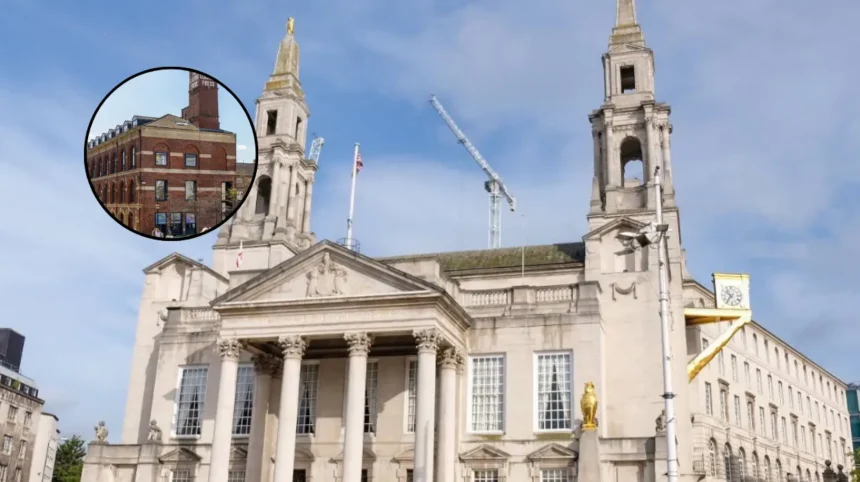
The submission marks the latest chapter for the prominent Grade II-listed property situated in the heart of the city’s Civic Quarter overlooking Millennium Square.
Last year, property agent Stockford Anderson, acting on behalf of investment firm DTZ Investors, brought The Electric Press building to the commercial property market with a guide asking price of £10.1m. The building retains a rich industrial heritage, having originally functioned as a print works and carriage factory prior to its contemporary redevelopment.
What is the structural and historical context of the landmark property?
The Electric Press underwent a comprehensive structural refurbishment and spatial reimagining in 2000, led by developers Asda St James. That major scheme integrated modern commercial leisure facilities within the historic fabric of the listed structure and incorporated a brand-new civic cultural facility, The Carriageworks Theatre, which officially opened to the public in 2005.
More recently, the property received further capital investment to modernize its upper floor workspace offerings. A comprehensive refurbishment of the complex’s office section was undertaken to deliver 16,405 sq ft of Grade A commercial workspace.
Explore More Local Leeds News
Icon Cancer Centre Approved at AMT Headingley Stadium, Leeds 2026
Leeds Bradford Airport Submits Modernisation Proposals for Night Operations Yeadon 2026
Background of the particular development
The Electric Press building stands as one of the most recognizable historic structures in central Leeds. Constructed in the 19th century, the site originally housed cabinet manufacturers Roodhouse & Sons, alongside Chorley and Pickersgill’s print works and the West Riding Carriageworks. Its modern conversion in the early 2000s turned the historic brick edifice into a centerpiece of the Millennium Square development, creating a mixed-use destination blending civic, cultural, and night-time economy uses.
The specific unit highlighted in the new planning submission was occupied for over two decades by national chain Revolution Bars. However, shifting consumer habits and broader restructuring across the UK night-time economy sector led to changes in occupancy, leaving the substantial leisure unit vacant and prompting site owners and prospective operators to re-evaluate the spatial usage of the venue.
Prediction: How will this development affect local visitors, independent businesses, and the Leeds night-time economy?
If approved by Leeds City Council, this development will significantly alter the commercial landscape for city centre leisure goers, local food operators, and the broader regional music ecosystem.
For consumers and local visitors, the transition from a single-brand vodka bar to a multi-vendor food hall and live music space reflects growing demand for experiential dining and diverse evening entertainment. The inclusion of six distinct food stalls creates an incubator environment for small-to-medium independent culinary businesses, offering local food vendors access to high-footfall space without the prohibitive overheads of taking on full-sized independent leaseholds.
Furthermore, for the Leeds night-time economy and local music scene, the addition of a mid-sized live performance space inside a landmark location directly addresses national concerns regarding the closure of grassroots music venues. By pairing food and drink revenues with evening live entertainment, the model provides financial resilience for the venue while bolstering the city’s cultural infrastructure in the Civic Quarter.