

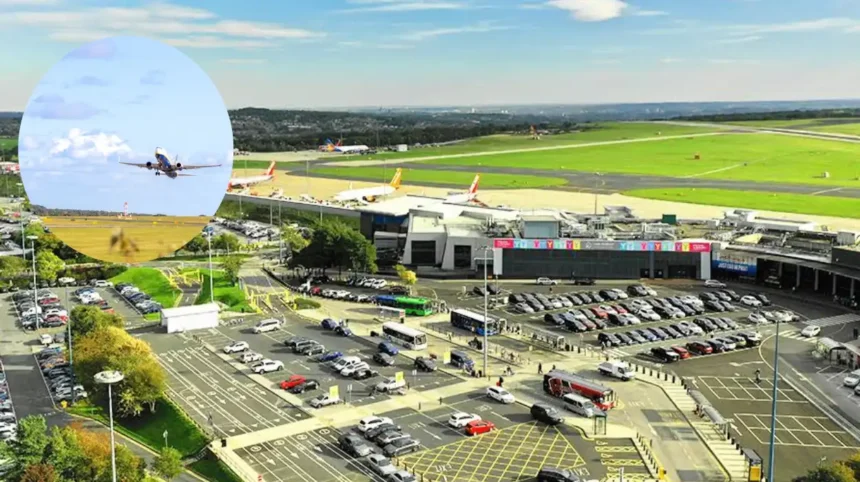
- Planning Submission: Leeds Bradford Airport (LBA) has submitted formal proposals to Leeds City Council to update its night-time operational planning conditions.
- Transition to Quota Count System: The proposals aim to replace the existing 30-year-old Air Traffic Movement (ATM) caps with a modern Quota Count System (QCS) based on aircraft noise.
- Operational Hours Alignment: Night-time hours are proposed to be condensed to 23:30–05:59, aligning LBA with European flight patterns and other UK regional hub standards.
- Night Noise Insulation Scheme: A new mitigation package is proposed to grant funding for double glazing, ventilation, and a first-of-its-kind UK airport grant for bedroom air conditioning in eligible local homes.
- Sustainability & Investment: The submission integrates into the £200 million LBA:REGEN programme following a major terminal extension in 2025 and ongoing target dates to hit Net Zero Scopes 1 and 2 emissions by 2030.
- Executive Stance: LBA Chief Executive Vincent Hodder maintains the shift will match existing overall noise footprints whilst giving airlines direct operational incentives to fly quieter, cleaner aircraft.
Yeadon (The Leeds Times) August 25, 2026 — Leeds Bradford Airport (LBA) has formally submitted statutory planning applications to Leeds City Council seeking a major overhaul of its night-time flight operating conditions. The proposals request the replacement of a decades-old movement-based operational cap with a modern noise-indexed Quota Count System (QCS), bringing the Yorkshire gateway into alignment with standards utilised across most major UK regional airports. In conjunction with operational adjustments, airport management has put forward an enhanced local support framework, featuring a Night Noise Insulation Scheme (NNIS) that includes first-of-its-kind financial assistance for bedroom air conditioning installations in affected neighbouring properties.
- What Are the Core Changes Proposed for Leeds Bradford Airport’s Operating Framework?
- How Does the Submission Align with LBA’s Broader Investment and Net Zero Targets?
- What Has Leeds Bradford Airport Leadership Stated Regarding the Proposals?
- Background of the Development
- Prediction: How This Development May Affect Key Stakeholders
What Are the Core Changes Proposed for Leeds Bradford Airport’s Operating Framework?
As reported by Airport Industry-News editorial staff, the submitted planning documentation outlines three fundamental adjustments to the operational controls governing night movements at the Yeadon facility:
- Conversion of Movement Limits to Quota Count System: LBA intends to transition away from numerical Air Traffic Movement (ATM) restrictions to a QCS framework. Under this model, each aircraft movement consumes a fraction of an allocated seasonal noise quota based on its certified decibel rating. Aircraft generating lower sound signatures consume less quota, thereby creating financial and operational incentives for airlines to deploy modern, quieter fleets.
- Condensation of Night-Time Hours: The airport proposes redefining its designated operational night period to 23:30–05:59. Management states this condensation normalises operational hours in accordance with broader UK regional airport practice and standard European airline scheduling patterns.
- Introduction of the Night Noise Insulation Scheme (NNIS): To address local environmental impacts, LBA has designed a community mitigation package offering grant incentives for property improvements, including enhanced glazing, acoustic ventilation, and grants for bedroom air conditioning systems.
According to documentation released by LBA, the updated framework will maintain existing limits on the airport’s total overall noise footprint, reallocating those noise allowances to reward quieter and more fuel-efficient aircraft models.
How Does the Submission Align with LBA’s Broader Investment and Net Zero Targets?
As highlighted by aviation journalists covering the LBA:REGEN masterplan, the application represents the next phase of a long-term £200 million infrastructure transformation scheme. The airport celebrated the opening of a major terminal expansion in 2025, with comprehensive internal refurbishments scheduled to continue across the site through 2027.
Alongside physical terminal developments, LBA was among the first UK airfields to commit to achieving Net Zero carbon emissions from its direct operations (Scopes 1 and 2) by 2030. Current environmental milestones achieved by the airport include:
- Airport Carbon Accreditation Level 4: Official recognition for aligning carbon reduction trajectories with the goals of the Paris Agreement and actively collaborating with third-party supply chains.
- Electrification of Ground Operations: Complete phase-out of gas heating systems across terminal operations, alongside the ongoing conversion of the airside light vehicle fleet to fully electric powertrains.
Airport executives state that changing to a noise-based QCS structure reinforces these carbon reduction targets by encouraging carrier partners to introduce next-generation narrowbody aircraft—such as the Airbus A320neo and Boeing 737 MAX families—which deliver up to 20 per cent lower fuel consumption and significantly reduced noise footprints compared to older aircraft variants.
What Has Leeds Bradford Airport Leadership Stated Regarding the Proposals?
As detailed by industry correspondents, Vincent Hodder, Chief Executive Officer of Leeds Bradford Airport, stated that the regional hub is actively transforming its role within the regional transport network:
“Leeds Bradford Airport is transforming into a modern gateway for Yorkshire and a catalyst for regional growth. Through significant private investment, industry-leading sustainability initiatives and a commitment to supporting local communities, we are building an airport that is fit for the future.
“Today we support thousands of jobs and generate hundreds of millions of pounds for the regional economy. As we deliver our Vision 2030 strategy and LBA:REGEN, that contribution will grow significantly, helping connect Yorkshire’s businesses, people and communities to opportunities across the UK and around the world.
“Modernising operating conditions that were introduced more than three decades ago is an important part of that journey. It enables us to encourage quieter, cleaner aircraft while maintaining robust environmental controls and providing meaningful support for our neighbours.
“This is about creating a stronger, more sustainable and better-connected Yorkshire for the decades ahead, this is not the ‘thousands more night flights’ some would claim. The QCS LBA is applying for is set to match the existing noise footprint. The same noise limits, allocated differently.”
Explore More Yeadon News
Leeds Bradford Airport Proposes Air Con Grants for Night Flights: Yeadon 2026
Council Locks Yeadon Cemetery Gate Following Threatening Behaviour Yeadon 2026
Background of the Development
The submission to alter night-flying regulations follows years of procedural scrutiny and technical debates surrounding flight movements at the Yeadon airfield. Under planning conditions dating back over thirty years, LBA operated under strict seasonal caps on night aircraft movements.
Between 2022 and 2025, local community groups, including the Group for Action on Leeds Bradford Airport (GALBA), asserted that the airport had exceeded its permitted summer night flight movement limits. In response, LBA sought legal clarification through a Certificate of Lawfulness of Existing Use or Development (CLEUD) application.
In May 2026, Leeds City Council confirmed that certain modern, ultra-quiet aircraft producing sound levels below 87 Effective Perceived Noise Decibels (EPNdB) operated within lawful parameters without counting toward the historical movement cap under national legal frameworks.
This decision formally established that LBA had operated within its legal movement parameters during the 2023, 2024, and 2025 summer seasons.
Despite the ruling, local campaigners have continued to raise concerns regarding sound impacts on surrounding residents.
The current proposal to move to a Quota Count System represents LBA’s attempt to standardise its regulatory framework with national civil aviation practices, removing ambiguity over movement counting by replacing pure movement counts with an overarching decibel quota.
Prediction: How This Development May Affect Key Stakeholders
Should Leeds City Council grant approval for the proposed operational changes, the outcomes will directly influence three main stakeholder groups across Yorkshire:
For residents living beneath flight paths in Yeadon, Horsforth, and the wider Aire Valley, the implementation of a Quota Count System creates a direct structural incentive for airlines to phase out older, louder aircraft. While overall night noise ceilings remain fixed, the condensation of operational hours into a 23:30–05:59 window aims to standardise late-night disturbance.
Furthermore, eligible householders stand to benefit financially from the updated Night Noise Insulation Scheme, receiving direct grants to install advanced acoustic glazing, mechanical ventilation, and bedroom air conditioning units.
Airlines operating out of LBA will face a restructured operational environment. Carriers utilising modern fleets—such as Jet2.com, Ryanair, and incoming international partners—will benefit from the flexibility of the QCS, as quieter aircraft consume less quota per flight.
Conversely, airlines operating legacy aircraft with higher sound ratings may incur higher operational quota costs, encouraging fleet renewal and capital investment toward quieter, lower-emission aircraft.
For Yorkshire’s broader commercial ecosystem, standardising LBA’s night operations in line with other UK regional hubs enhances global connectivity. Increased operational efficiency supports international trade routes, corporate travel links, and tourism revenue tied to the £200 million LBA:REGEN masterplan.
The region stands to see expanded direct employment across airport operations, logistics, and allied hospitality sectors as infrastructure capabilities expand toward 2030 targets.