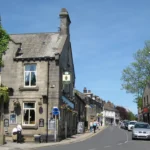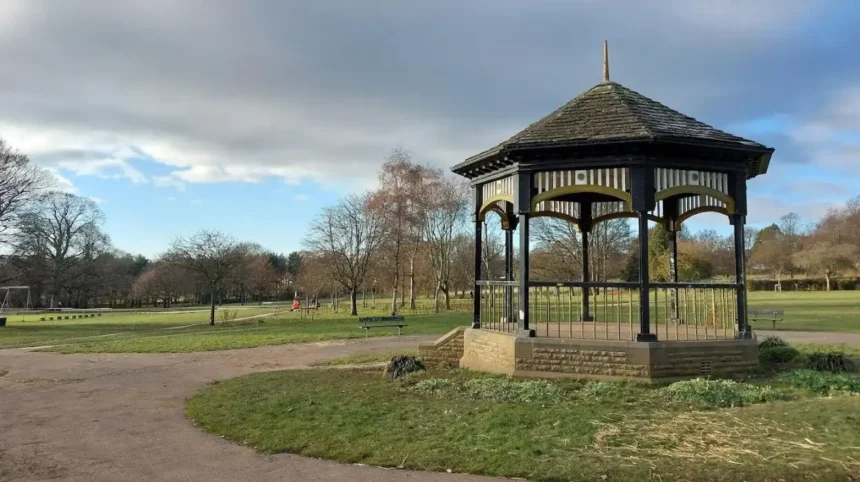
Horsforth is a town and civil parish in north-west Leeds, West Yorkshire, with a strong village character, established green spaces, historic buildings, local walking routes and community facilities. Its combination of parks, woodland, heritage and accessible public spaces makes it suitable for a simple digital detox day without leaving the Leeds area. Horsforth Town Council describes the area as an ancient town listed in the Domesday Book, while Visit Leeds places it roughly five to six miles from Leeds city centre.
- What makes Horsforth suitable for a digital detox day?
- Why is Horsforth Hall Park one of the best places to start?
- How can The Green and Horsforth Village Museum create a slower heritage experience?
- Why is St Margaret’s Church suitable for quiet reflection and architectural observation?
- Which Horsforth walking routes work best without a smartphone?
- Can woodland around Horsforth provide a deeper break from screens?
- How can a library visit support a screen-free afternoon?
- What screen-free activities can visitors combine into one Horsforth day?
- How should visitors prepare for a digital detox day in Horsforth?
- Does a digital detox require switching off a phone completely?
- What does research say about the benefits of spending time away from screens?
- How can tourists, residents and business travellers use Horsforth differently for a digital detox?
- Is Horsforth a good place for a full digital detox day?
A digital detox day means deliberately reducing or stopping non-essential use of smartphones, social media, email, streaming services and other digital entertainment for a defined period. It does not require complete isolation. A visitor can keep a phone switched off or on silent for emergencies while using printed directions, books, conversation, walking and observation as the main activities.
Research on digital disconnection remains mixed. A 2022 systematic review examined 21 studies involving 3,625 participants and found that outcomes varied between interventions. A 2025 meta-analysis of 10 studies involving 4,674 participants found no significant overall effects from social-media abstinence on positive affect, negative affect or life satisfaction.
The strongest practical reason to choose Horsforth is therefore not a claim that a particular location guarantees better wellbeing. It is the area’s ability to support activities that naturally reduce screen use. Parks, woodland, heritage sites, walking routes, libraries and community spaces provide structured alternatives to constant digital stimulation.
What makes Horsforth suitable for a digital detox day?
Horsforth combines community parks, woodland, historic streets, heritage buildings, walking routes and quiet public spaces within a compact part of north-west Leeds, allowing visitors to spend a day outdoors and offline without needing complicated travel or digital entertainment.
Horsforth has several characteristics that suit a screen-free itinerary. Leeds City Council lists Horsforth Hall Park as a community park and records several other local green spaces, including The Green, Hall Lane, Newlay Public Open Space, Woodside Recreation Ground and King George’s Playing Fields.
The area also has a strong historic identity. Horsforth Town Council states that the town is listed in the Domesday Book and retains a distinctly village-like character. The town has three busy high streets, local businesses, community events and the volunteer-run Horsforth Village Museum.
That combination creates different forms of screen-free activity. A visitor can walk through a park, read a physical book, explore local history, sit quietly, sketch buildings, talk with companions or follow a printed route.
Transport access also supports a short-break format. Visit Leeds identifies Horsforth station and regular bus services connecting the area with Leeds city centre.
For a digital detox, convenience matters because excessive planning itself can become screen-heavy. Horsforth allows the day to centre on a small number of physical locations rather than requiring a long itinerary.
Why is Horsforth Hall Park one of the best places to start?
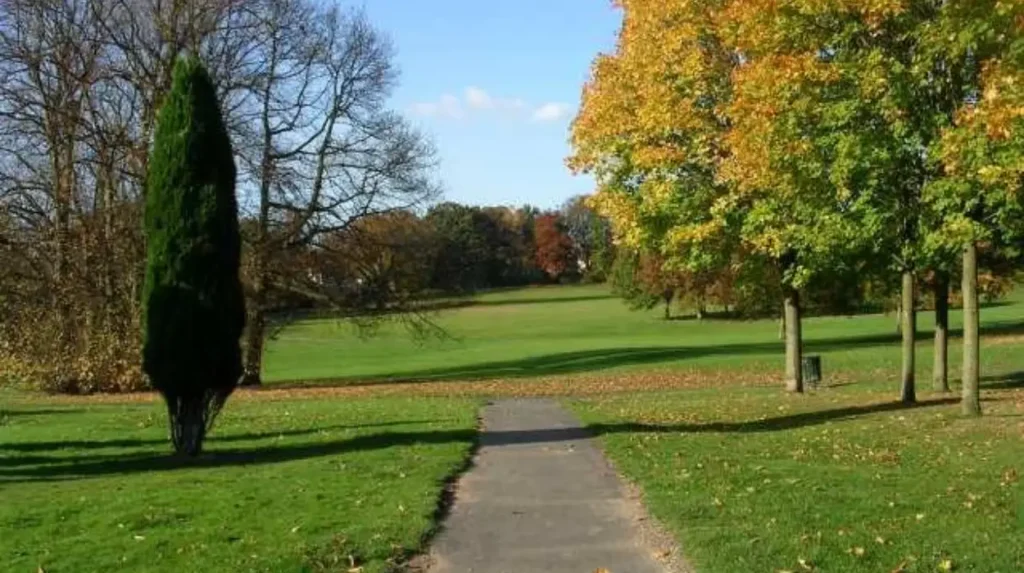
Horsforth Hall Park provides a practical starting point because it combines open lawns, walking paths, gardens, a playground and recreational facilities within an established community park, giving visitors several screen-free activities in one accessible location.
Horsforth Hall Park is formally recognised by Leeds City Council as a community park. The council’s park listings also identify Horsforth Hall Playground and Horsforth Hall Skateboard Park within the same wider park setting.
The park is particularly useful for a digital detox because it does not depend on a single attraction. A visitor can simply walk without a destination. This removes the need to photograph every stop or continuously check opening times.
The Japanese garden provides a more contemplative section of the park. The wider area includes paths and recreational facilities, making it possible to adjust the pace of the day according to personal preference. Visit Leeds specifically highlights the park’s scenic walks, playground, Japanese garden and skate park.
A simple screen-free routine starts with a slow circuit. Leave the phone switched off. Observe trees, paths, buildings and other park users. Continue with ten to fifteen minutes sitting in a quiet area.
The park also works well for a physical activity break. Walking requires no digital entertainment. A paper notebook can be used to record observations, draw the landscape or write a short journal entry.
For visitors travelling with children, the playground provides an obvious non-screen activity. For adults, the walking paths and garden offer a quieter alternative.
The key principle is deliberate simplicity. The park does not need to be treated as a tourist attraction that requires constant documentation. It works better as a place to spend time without an online agenda.
How can The Green and Horsforth Village Museum create a slower heritage experience?
The Green and Horsforth Village Museum provide a heritage-focused alternative to screen entertainment, allowing visitors to explore local identity through physical surroundings, historic interpretation and community collections rather than relying on digital attractions or online information.
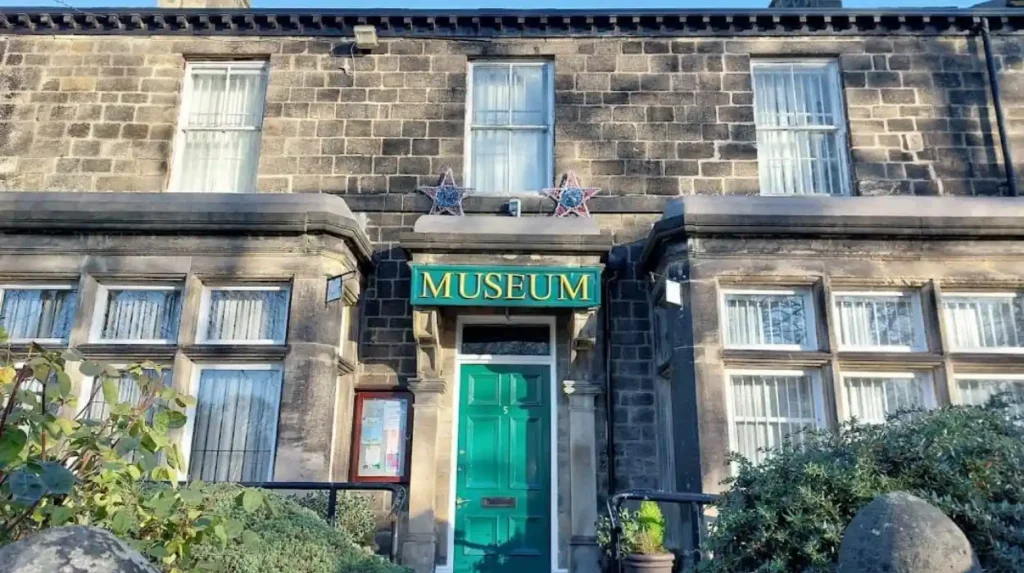
The Green forms part of Horsforth’s historic village environment. Horsforth Village Museum opened in 1988 and is located on The Green in the centre of the old village. The museum is entirely volunteer-run and focuses on preserving Horsforth’s history.
The museum offers an important digital-detox advantage. Physical museum exhibits encourage visitors to concentrate on objects, photographs, documents and local stories in a defined environment.
Instead of searching for information on a smartphone, visitors can focus on the material presented by the museum. This creates a different type of attention. The objective is not speed. It is observation.
The museum also provides historical context for the surrounding streets. Horsforth developed from an established settlement into a larger residential and commercial community. The survival of the old village core provides a physical connection between present-day Horsforth and its earlier development.
As you explore the modern town, you are crossing land with a deep heritage. Read about the full to understand its origins.
The best approach is to combine the museum with a slow walk around The Green. Look at building materials, street layouts, architectural details and civic spaces. A paper notebook can record dates, names and observations without requiring a phone.
Museum opening arrangements can change, so visitors should check official information before leaving home. Once inside, the purpose of the visit is to engage with the physical collection rather than continually searching for supplementary information.
Why is St Margaret’s Church suitable for quiet reflection and architectural observation?
St Margaret’s Church provides a distinctive heritage setting for a digital detox because its historic architecture, churchyard and location on Church Lane create an opportunity for quiet observation, architectural study and reflection away from commercial screens and high-volume digital activity.
St Margaret’s Church is a Grade II listed building on Church Lane. Historic England records the building as dating from 1877–83, with the spire completed in 1902. The church was designed by architect J. L. Pearson, with later work by J. B. Frazer.
The building is an example of Early English architectural design. Historic England records features including sandstone construction, a slate roof, lancet windows, a nave, aisles, transepts, chancel and tower.
These details provide a ready-made screen-free observation exercise. Visitors can study the proportions of the building, window shapes, stonework and surrounding landscape.
The site also connects modern Horsforth with its nineteenth-century expansion. The church became an important architectural landmark as the settlement grew.
Visitors should respect the site’s religious purpose. Quiet behaviour is appropriate, particularly when services or other activities are taking place.
The surrounding Church Lane area can form part of a heritage walk. A printed map is sufficient for navigating between the church, The Green and other central locations.
This activity is especially suitable for visitors who want their digital detox to include learning rather than simply inactivity.
Which Horsforth walking routes work best without a smartphone?
Short local walks around Horsforth work well for digital detox days because the area includes parks, woodland, becks, public rights of way and connections towards the River Aire and canal, allowing visitors to replace screen time with sustained physical movement.
Walking is one of the simplest digital-detox activities because it requires very little equipment. Leeds City Council maintains information on public rights of way and recreational routes across the district. Its Horsforth neighbourhood planning material identifies routes associated with Scotland Beck, Old Mill Beck and Oil Mill Beck, alongside links towards the River Aire and Kirkstall.
Horsforth Beck is also known as Oil Mill Beck. Local walking-route information identifies the watercourse as part of woodland and waterside routes around Horsforth.
For a screen-free walk, print the route before leaving. Carry a physical map if necessary. Keep the phone available only for emergencies.
A short walk is preferable for a first digital detox day. A visitor can begin around Horsforth Hall Park and gradually extend towards quieter paths. Longer walking options require more preparation because weather, daylight, terrain and navigation become increasingly important.
The Leeds Country Way is a 62-mile circular walking route around Leeds. It is therefore better treated as a wider walking resource rather than a single-day Horsforth attraction. Leeds City Council also lists the seven-mile Meanwood Valley Trail as a shorter recreational route.
The important distinction is between walking for distance and walking for disconnection. A digital detox does not require a demanding hike. A slow two-hour walk with no social-media checking fulfils the basic purpose more effectively than an ambitious route accompanied by constant phone use.
Can woodland around Horsforth provide a deeper break from screens?
Woodland areas around Horsforth provide natural settings for a stronger digital break because trees, uneven paths, wildlife and changing terrain encourage visual attention to the physical environment instead of continuous interaction with phones, apps and online content.
Moseley Woods is one local woodland option near Horsforth. Discover Leeds describes woodland paths, meadows, a beck and Moseley Pond, while noting that some routes use a railway footbridge and include uneven terrain.
Hunger Hills Woods is another outdoor option on the western side of Horsforth. Local information describes three mainly circular trails with sections of dirt and rock and some climbing.
These locations require sensible preparation. Woodland paths can become muddy. Uneven surfaces require appropriate footwear. Visitors should remain on appropriate public routes and avoid entering private land.
A woodland detox works best when activities are deliberately simple. Walk slowly. Listen to birds and running water. Observe tree species and seasonal changes. Sit for several minutes without reading notifications.
Nature exposure also has a research basis that is more specific than broad claims about digital detox. A 2025 systematic review and meta-analysis examined 80 studies and 273 individual outcomes. It found that nature exposure was associated with greater cognitive restoration than non-nature exposure, with the largest difference appearing around 30 minutes, although effects were small and heterogeneous.
That evidence supports using a woodland walk as part of a digital detox, but it does not prove that a specific Horsforth woodland produces a particular psychological outcome.
The practical benefit is straightforward. Woodland creates fewer reasons to use a phone. There is no need to scroll while walking through trees.
How can a library visit support a screen-free afternoon?
Horsforth Community Hub and Library provides an indoor alternative for visitors who want a digital detox without spending the entire day outdoors, offering access to physical books and a quiet public environment in the centre of the town.
Horsforth Library is located on Town Street within the Horsforth Community Hub and Library at LS18 5BL. Leeds Libraries provides book browsing and borrowing services alongside public facilities.
The library is particularly useful in poor weather. A digital detox does not have to mean an outdoor day. A visitor can choose a physical book, sit quietly and spend an hour reading without using a phone.
The library also provides computers and free Wi-Fi, so visitors undertaking a genuine detox should deliberately avoid those facilities during their break. Their presence does not undermine the location. The important factor is how the visitor uses the space.
A physical book offers a direct replacement for digital reading. Fiction, local history, travel writing and nature books all work well.
Visitors should check current opening hours before travelling because library schedules change. Leeds Libraries currently lists weekday and Saturday opening times and states that the library is closed on Sundays.
For a balanced itinerary, a library session fits well after a morning walk. It provides a transition from physical activity to quiet concentration.
What screen-free activities can visitors combine into one Horsforth day?
A practical Horsforth digital detox day combines a park walk, heritage visit, quiet reading period, local food stop and woodland or waterside walk, creating a varied itinerary that replaces scrolling with movement, observation, learning and face-to-face interaction.
A structured itinerary prevents boredom from becoming a reason to return to the phone.
Start the morning at Horsforth Hall Park. Spend approximately 45 minutes walking through the park and Japanese garden. Avoid taking photographs unless they are genuinely necessary for practical reasons.
Continue towards the central village area. Walk around The Green and explore the physical surroundings. If the museum is open, dedicate time to its local-history collections.
A heritage stop can then lead towards St Margaret’s Church on Church Lane. Spend time examining the architecture and surrounding streets.
After lunch, use Horsforth Library as a quiet indoor activity when opening hours allow. Read a physical book for at least 30 minutes.
Finish with a longer walk. Choose a suitable local route towards woodland, Horsforth Beck, Newlay or the wider River Aire corridor. Leeds’ public-rights-of-way information provides the official framework for recreational walking across the district.
This itinerary does not require every attraction to be visited. The purpose is to create periods when the phone has no role.
A useful rule is to separate navigation from entertainment. Use a phone before the walk to check practical information. Then switch it off. Carry a printed route or written directions.
How should visitors prepare for a digital detox day in Horsforth?
Preparation should focus on navigation, safety, opening hours, weather, food, footwear and emergency arrangements, allowing visitors to switch off non-essential digital functions without creating avoidable problems during the day.
Preparation starts before leaving accommodation.
Download or print essential information in advance. Record the address of the first destination. Check transport arrangements before departure. Note the opening times of any museum or library visit.
Take a small bag containing water, food or snacks, suitable clothing, comfortable footwear, a notebook and a pen.
A power bank is unnecessary if the phone remains switched off, but carrying a charged phone for emergencies is sensible. Digital detox means reducing non-essential use rather than creating a safety risk.
Weather is especially important for woodland and waterside walks. Waterproof footwear is useful after wet conditions. Daylight hours also affect longer routes.
Visitors should also consider accessibility. Leeds City Council states that some woodland paths around Meanwood Park are uneven, while the main path through Meanwood Park is suitable for disabled users.
The same principle applies around Horsforth. Visitors should check the physical characteristics of their chosen route rather than assuming every footpath is suitable for every mobility level.
Does a digital detox require switching off a phone completely?
A digital detox does not require complete phone removal; the practical objective is to stop non-essential digital activity, while retaining emergency access and essential travel information so the day remains safe, manageable and genuinely restorative.
Research does not provide one universally accepted definition of digital detox. A 2024 review noted that definitions and intervention methods vary, while a 2022 systematic review identified significant differences between digital-detox studies.
A visitor can therefore choose the level of disconnection that fits the day.
A strict approach means switching the phone off after arrival. A moderate approach means activating flight mode and allowing emergency calls. Another approach removes social-media apps from the home screen while keeping essential communication available.
The most important restriction is recreational use. Scrolling social media, watching short videos, checking news feeds and repeatedly opening email all undermine the purpose.
Navigation is different. Checking a route before departure is practical. Constantly checking the route during a straightforward walk is unnecessary when a printed map is available.
The same distinction applies to photography. Taking one occasional photograph is different from documenting every part of the day for social media.
The goal is intentional use rather than technological perfection.
What does research say about the benefits of spending time away from screens?
Research supports a cautious approach: digital-disconnection studies show mixed wellbeing outcomes, while recent nature research finds evidence for modest cognitive restoration, so a Horsforth detox should be treated as a practical lifestyle break rather than a guaranteed health intervention.
Evidence on digital detox remains inconsistent.
A 2022 systematic review analysed 21 intervention studies involving 3,625 participants. Twelve were randomised controlled trials. The results varied across wellbeing, social relationships, self-control and performance.
A 2024 systematic review and meta-analysis covering 26 eligible studies and 8,147 participants reported positive effects for subjective and psychological wellbeing, but also found substantial variation between studies.
A separate 2025 systematic review and meta-analysis produced a different conclusion for social-media abstinence. It examined 10 studies involving 4,674 participants and found no significant effects on positive affect, negative affect or life satisfaction.
These differences are important for accurate SEO content because claims such as “one day without your phone improves mental health” are stronger than the evidence supports.
Nature exposure has a clearer but still limited research signal. The 2025 meta-analysis found nature exposure more cognitively restorative than non-nature exposure overall, particularly for working memory and attentional control, with the strongest average difference around 30 minutes. The authors also reported small effects and substantial heterogeneity.
For Horsforth visitors, the practical conclusion is simple. Combine reduced screen use with walking, nature, reading and physical observation. Do not treat the experience as medical treatment.
Explore More Area Guide
Horsforth Historic Streets & Heritage Guide Leeds 2026
Horsforth Heritage Sites and Stories to Explore Leeds 2026
How can tourists, residents and business travellers use Horsforth differently for a digital detox?
Tourists can combine heritage and parks, residents can create regular screen-free routines, digital nomads can use a planned offline break between work sessions, and business travellers can use Horsforth’s green spaces to structure downtime away from work devices.
Tourists benefit from Horsforth’s combination of heritage and local character. The museum, The Green, St Margaret’s Church and Hall Park provide a compact introduction to the town without requiring a large sightseeing itinerary.
Residents can make the digital detox routine repeatable. A weekly walk through Hall Park, a library reading session or a woodland visit provides a simple recurring structure.
Digital nomads have a different requirement. The objective is not necessarily an entire day offline. A two-hour screen break between work blocks can provide a clear boundary between professional and personal time.
Domestic business travellers can use a similar approach. After meetings, a park walk provides a straightforward activity that does not require booking or extensive planning.
The flexibility of Horsforth is therefore central to its appeal. A digital detox can last 30 minutes, two hours or an entire day.
The best duration is the one that can be maintained without turning the activity into another productivity task.
Is Horsforth a good place for a full digital detox day?
Horsforth is well suited to a full digital detox because its parks, heritage sites, library, village centre and surrounding walking routes support an entire day of offline activities without requiring continuous screen-based entertainment or complicated travel.
The town provides enough variety to prevent a full-day break from becoming repetitive. Hall Park supplies green space. The Green and Horsforth Village Museum provide heritage. St Margaret’s Church adds architectural interest. Horsforth Library provides indoor reading. Woodland and waterside routes provide longer outdoor activity.
The wider Leeds area also provides extensive recreational infrastructure. Leeds City Council records 65 community parks across the city, demonstrating the scale of the district’s public green-space network.
Horsforth itself remains particularly practical because these activities sit within a well-connected urban environment.
A successful digital detox does not require an isolated retreat. It requires deliberate periods without unnecessary digital stimulation.
That makes Horsforth suitable for visitors who want a simple, accessible and low-cost day away from screens. The strongest itinerary combines physical movement, heritage, nature, reading and quiet time.
The result is a day structured around places rather than notifications.
What is a digital detox day in Horsforth?
A digital detox day in Horsforth means spending several hours reducing non-essential phone, social media and screen use while focusing on walking, nature, heritage, reading and quiet activities.