
Horsforth is a well-connected suburban area in north-west Leeds, West Yorkshire, with a distinctive historic core, local shops, community facilities, green spaces and access to rail and bus services. Its compact character makes it suitable for visitors who want to explore locally while reducing unnecessary car journeys.
- Why is Horsforth suitable for a sustainable local visit?
- How should you plan a sustainable journey to Horsforth?
- What is the best way to explore Horsforth on foot?
- Which Horsforth green spaces are useful for a lower-impact itinerary?
- How does Horsforth’s history shape a sustainable visit?
- How should visitors use Horsforth Station sustainably?
- How can cycling fit into a sustainable Horsforth itinerary?
- What role does public transport play in reducing car dependence?
- How can visitors support Horsforth’s local economy responsibly?
- How should visitors behave in Horsforth’s parks and public spaces?
- How can digital nomads and business travellers make a sustainable Horsforth visit?
- What should a sustainable one-day Horsforth itinerary look like?
- How can visitors reduce the environmental impact of a Horsforth trip?
- What should visitors check before travelling to Horsforth?
- What is the long-term relevance of sustainable tourism in Horsforth?
A sustainable visit to Horsforth focuses on practical travel choices. Walking works well for exploring the historic centre, parks, cafés and local services. Cycling provides another option for short journeys and connections with neighbouring areas. Public transport provides direct links with Leeds and other destinations across West Yorkshire.
Horsforth also has a strong heritage identity. Leeds City Council identifies Horsforth as a historic settlement with Anglo-Saxon connections, medieval street patterns and a conservation area. The settlement developed through agriculture, the wool trade, transport improvements and later suburban growth.
Sustainable tourism therefore involves more than choosing a train instead of a car. It includes walking between nearby attractions, using local businesses, respecting parks, reducing waste, following public-space regulations and planning journeys around existing transport networks.
For visitors, this approach creates a practical way to experience Horsforth without treating it simply as a base for travelling elsewhere in Leeds.
Why is Horsforth suitable for a sustainable local visit?
Horsforth combines a historic centre, community facilities, green spaces, rail connections and bus services within a well-established Leeds suburb, allowing visitors to organise many activities around walking, cycling and public transport rather than relying entirely on private cars.
Horsforth has several characteristics that support lower-impact travel. The area contains a recognisable historic core around The Green and Town Street, while Horsforth Hall Park provides an important local green space. Leeds City Council lists Horsforth Hall Park among the city’s community parks.
The railway station provides an important connection with the wider region. Northern lists Horsforth on the Harrogate Line between York, Harrogate and Leeds. The current published timetable covers services from 17 May to 12 December 2026.
The area also benefits from Leeds’ wider sustainable transport policy. Leeds City Council defines sustainable travel modes as walking, cycling, wheeling, public transport and car sharing.
This makes Horsforth suitable for a visit built around several short journeys rather than one long car-dependent itinerary.
How should you plan a sustainable journey to Horsforth?
Start by identifying the nearest railway or bus connection, then organise attractions into walkable groups. Check current services before departure, allow time for walking between stops, and choose public transport for longer journeys while keeping local activities concentrated within Horsforth.
Horsforth Station is the most important rail access point for visitors arriving by train. Northern records 68 station car-parking spaces and 14 bicycle spaces, including cycle lockers and stands. The station has step-free access to both platforms through a road bridge and ramp.
Visitors arriving from Leeds should check the current Northern timetable before travelling. Journey information changes according to the operating timetable, engineering work and service conditions, so current departure information should always take priority over an older itinerary.
Bus travel provides another sustainable option. Leeds City Council directs passengers towards West Yorkshire journey-planning and timetable information for bus and train services. MetroLine also provides journey information and travel advice.
A useful planning method is to divide the visit into three stages: arrival, local exploration and departure.
The arrival stage covers the journey from home or accommodation to Horsforth. The exploration stage focuses on walking between nearby destinations. The departure stage returns to the railway station or a suitable bus connection.
This structure reduces unnecessary backtracking and keeps the local itinerary efficient.
What is the best way to explore Horsforth on foot?
Walking is one of the most practical ways to explore Horsforth because its historic core, local facilities, green spaces and residential streets form a connected urban environment. Plan a route around several nearby destinations instead of making repeated separate journeys.
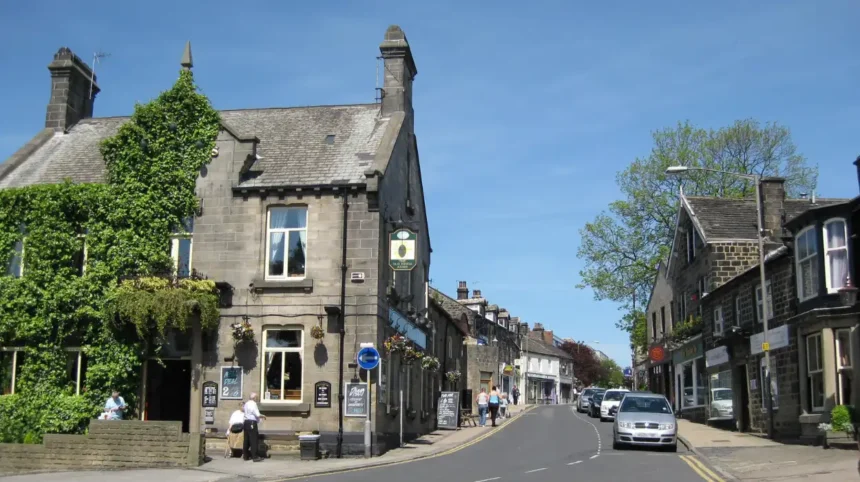
Walking gives visitors direct access to the character of Horsforth. The historic core around The Green and Town Street contains evidence of the area’s long development.
Leeds City Council’s conservation-area documentation identifies medieval street patterns around The Green and the southern end of Town Street. It also describes Horsforth’s development along the slope above the Aire Valley.
A walking itinerary can therefore combine heritage observation with everyday local activity. Visitors can walk through the historic centre, continue towards local shops and cafés, then use a green space as part of the same route.
Walking also supports a slower travel pattern without requiring specialist equipment. Comfortable footwear, weather-appropriate clothing and a charged mobile phone are practical essentials.
The terrain should also influence planning. Horsforth developed on a slope, so some routes involve changes in elevation. Visitors who use mobility aids should check the precise route, pavement conditions and accessibility information before setting out.
A sustainable itinerary should prioritise direct routes and avoid unnecessary crossings or detours.
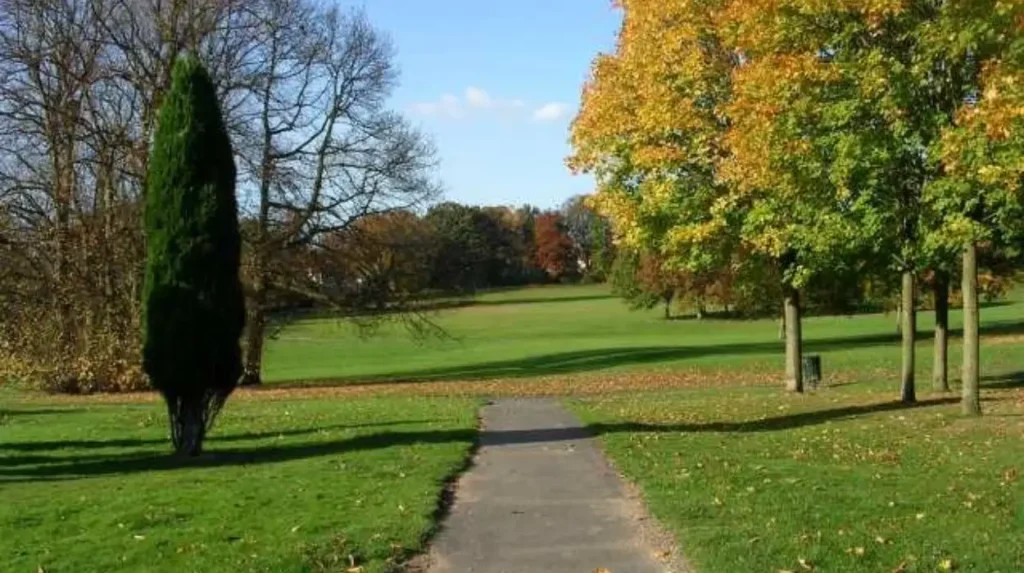
Which Horsforth green spaces are useful for a lower-impact itinerary?
Horsforth Hall Park is the principal community park to include in a local itinerary, while other local green spaces provide additional opportunities for walking and recreation. Leeds City Council manages Horsforth parks under its wider parks and countryside framework.
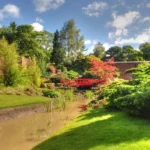
Horsforth Hall Park is an established community park with recreational and green-space value. Leeds City Council identifies it as one of Leeds’ community parks and includes facilities such as walking routes, gardens and recreational areas within its wider description of community parks.
Leeds manages around 4,000 hectares of green space across the city. Its parks and countryside network includes parks, nature reserves, public rights of way, woodlands and other green areas.
The council’s parks byelaw information also identifies numerous Horsforth sites, including Horsforth Hall Park, The Green, Hall Lane, Leeds Road, Woodside Park Avenue, Woodside Recreation Ground, Cragg Hill Recreation Ground, King George’s Playing Fields and Stanhope Recreation Ground.
These spaces should not be treated as interchangeable attractions. Their facilities, paths, access arrangements and local regulations differ.
For a visitor itinerary, Horsforth Hall Park provides the strongest combination of green space and established visitor facilities. Smaller recreation grounds work better as incidental stops during a neighbourhood walk.
Visitors should stay on appropriate paths, dispose of waste responsibly and respect restrictions displayed at individual sites.
How does Horsforth’s history shape a sustainable visit?
Horsforth’s historical development explains its compact streets, village character, transport links and distinctive landscape. Understanding this background helps visitors interpret modern Horsforth while encouraging exploration of existing heritage rather than creating unnecessary travel between disconnected attractions.
Horsforth has a long settlement history. Leeds City Council’s conservation appraisal records links reaching into the Anglo-Saxon period and identifies medieval characteristics around The Green and Town Street.
The area also appears in the Domesday Book of 1086. Leeds’ Horsforth Design Statement records three references to Horsforth and describes its historic development around agriculture, religious ownership and later industrial activity.
The wool trade became important during the eighteenth and nineteenth centuries. The Design Statement records substantial involvement in cloth weaving and later industrial activity associated with tanning, corn grinding, soap making, silk spinning and wool and cloth processing.
Transport transformed the settlement. The Leeds and Bradford railway opened in 1846, while the Leeds to Harrogate railway followed in 1848 with a station at Troy, the location associated with modern Horsforth Station. Trams reached Horsforth in 1906.
As you explore the modern streets, you are crossing land shaped by centuries of settlement and transport change. Read about the full to understand its origins.
This historical context strengthens sustainable tourism because visitors can explore the area’s existing cultural landscape rather than treating Horsforth only as a transport stop.
How should visitors use Horsforth Station sustainably?
Horsforth Station provides a practical rail gateway for lower-impact travel, with services on the Harrogate Line, cycle facilities, accessible platform arrangements and links towards Leeds, Harrogate and York. Always check the current timetable before making a planned connection.
Horsforth Station is operated by Northern. The station sits on the route connecting York, Harrogate and Leeds. Northern’s published information lists 14 bicycle spaces, including four cycle lockers and ten cycle stands, with additional cycle racks in the car park.
The station also has several accessibility features. Northern records ramps for train access, accessible ticket machines, an induction loop and step-free access to both platforms.
Visitors using wheelchairs, mobility aids or pushchairs should still check the latest accessibility information before travel because station conditions and services can change.
Cyclists should use the designated cycle facilities and secure bicycles appropriately. The availability of cycle lockers provides a useful option for visitors combining cycling with rail travel.
The station’s lack of refreshment facilities also means visitors should plan food and drink before arrival or use facilities elsewhere in Horsforth.
For sustainable travel, the station works best as part of a complete journey rather than simply as a parking alternative. Arriving by train and continuing on foot creates a straightforward car-light itinerary.
How can cycling fit into a sustainable Horsforth itinerary?
Cycling works best for visitors travelling between Horsforth and nearby areas or connecting cycling with rail. Use designated facilities, plan the safest route before departure and secure bicycles properly at the station or another authorised location.
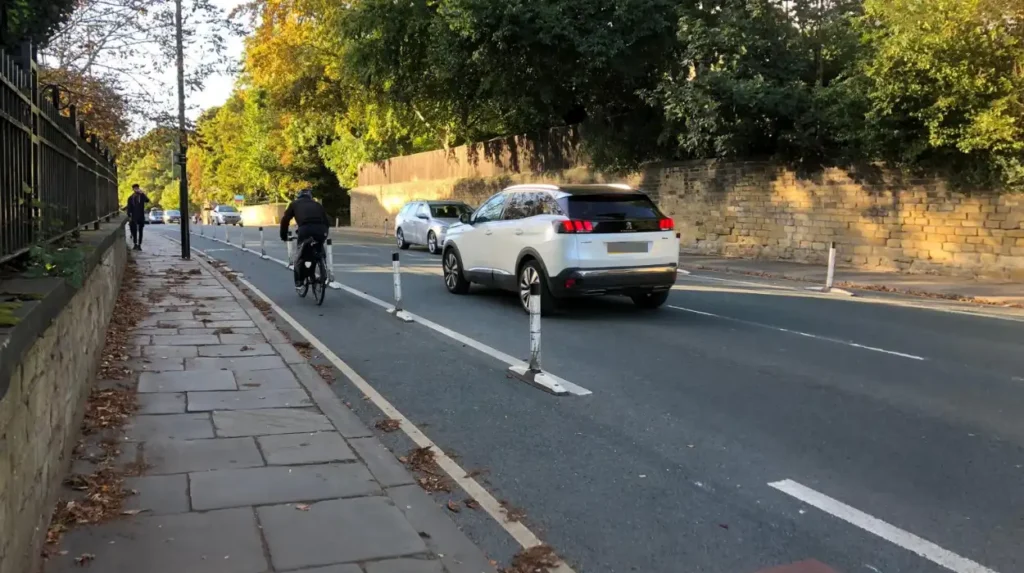
Leeds has invested in transport improvements designed to increase walking and cycling. A Leeds City Council update on the Horsforth-to-Pudsey A6120 improvement scheme states that the project aimed to improve road safety, increase walking and cycling, separate pedestrians and cyclists from other road users and reduce emissions.
Cycling therefore forms part of a wider regional transport strategy rather than functioning as an isolated leisure activity.
Visitors should distinguish between recreational cycling and everyday cycling. A leisure cyclist planning a short local route requires different preparation from a commuter travelling through Horsforth.
For rail users, Horsforth Station provides cycle facilities. This creates a practical combined mode: cycle for the local section and use rail for the longer regional journey.
Cyclists should follow current highway rules, use appropriate lighting in poor visibility and select routes that match their experience and equipment.
A sustainable cycling itinerary should also avoid leaving bicycles unsecured in public areas or obstructing pedestrian routes.
What role does public transport play in reducing car dependence?
Public transport connects Horsforth with the wider Leeds and West Yorkshire network, making it practical to separate regional travel from local exploration. Rail and bus services provide the main alternatives to driving for visitors arriving from surrounding communities.
Leeds City Council’s sustainable travel guidance specifically promotes public transport for longer journeys and walking or cycling for shorter trips. The council also directs passengers towards West Yorkshire bus and train journey information.
This creates a simple transport hierarchy for a Horsforth visit.
Use rail or bus for the regional journey. Walk between nearby Horsforth destinations. Use cycling where the route and conditions are appropriate. Consider car sharing when public transport does not provide a suitable connection.
Leeds City Council also advises residents to leave the car at home for short journeys and use walking, cycling or scooting where practical. For longer journeys, it recommends bus or train planning.
This approach also supports visitors who are staying elsewhere in Leeds. Instead of driving into Horsforth, visitors can travel to an appropriate transport interchange and complete the local section by public transport or on foot.
Transport planning should always account for actual service times. A sustainable journey remains practical only when connections, walking time and opening hours are considered together.
How can visitors support Horsforth’s local economy responsibly?
Visitors support sustainable local tourism by spending within the neighbourhood, choosing independent businesses where appropriate, reducing unnecessary packaging and using nearby services instead of travelling elsewhere for basic needs during a local visit.
Local spending is an important part of place-based tourism. A visitor who arrives by train and spends several hours in Horsforth creates economic activity without requiring a separate car journey for every part of the day.
The most sustainable approach is straightforward. Eat locally, use local shops, visit community facilities and combine several activities into one visit.
Visitors should also avoid unnecessary disposable items. Carrying a reusable bottle and choosing products with less packaging reduces waste during the day.
Waste management remains important in parks and public areas. Visitors should use available bins or take waste with them where suitable facilities are unavailable.
Local businesses also provide practical support for visitors. Food, drinks and everyday services reduce the need to leave Horsforth simply to meet basic requirements.
This model benefits both the visitor and the destination. Visitors spend more time understanding the neighbourhood, while local businesses receive direct economic activity.
How should visitors behave in Horsforth’s parks and public spaces?
Responsible behaviour protects Horsforth’s green spaces and keeps them enjoyable for residents and visitors. Follow posted rules, use designated paths, control dogs where required, avoid littering and respect residential areas throughout the visit.
Leeds City Council has specific rules for Horsforth public spaces. At Horsforth Hall Park’s Japanese Garden, dogs are required to remain on leads. The council also identifies dog exclusion areas at playgrounds including HIPPO Horsforth Playground and Horsforth Hall Playground.
These restrictions illustrate why sustainable tourism includes responsible behaviour, not simply low-carbon transport.
Visitors should check signs at individual locations because rules differ between spaces. A general assumption about park access is not sufficient.
Noise also matters in residential neighbourhoods. Horsforth is a living community rather than a dedicated tourist district. Visitors should keep noise at reasonable levels, avoid blocking entrances and respect residents’ privacy.
Photography should also remain considerate. Public views and streets are suitable for sightseeing, but private homes and gardens should not be treated as attractions.
Responsible behaviour protects the physical environment and the relationship between visitors and the local community.
How can digital nomads and business travellers make a sustainable Horsforth visit?
Digital nomads and business travellers can reduce travel impact by combining work with local walking, using public transport for regional meetings and planning downtime around Horsforth’s parks, cafés, shops and heritage areas rather than travelling into central Leeds for every activity.
Horsforth’s transport position makes it useful for visitors who combine work and leisure. Rail connections link the area with Leeds and destinations along the Harrogate Line. Local streets, green spaces and community facilities provide opportunities for breaks without requiring additional regional travel.
A work-focused itinerary should separate essential travel from optional travel.
For example, a business traveller can travel by train for a meeting in Leeds, return to Horsforth and complete the evening locally. A remote worker staying in the area can use local cafés or suitable work-friendly facilities, then walk to a park or historic area during downtime.
Reliable connectivity, seating, opening hours and workspace policies differ between individual venues. Visitors should check current arrangements directly before relying on a specific location for professional work.
The sustainability benefit comes from reducing repeated journeys. Combining work, food, recreation and accommodation within the same neighbourhood creates a more efficient travel pattern.
What should a sustainable one-day Horsforth itinerary look like?
A sustainable one-day itinerary should use public transport for arrival, walking for local exploration, Horsforth Hall Park for green space, the historic centre for heritage and local businesses for food and refreshments before returning by rail or bus.
Begin the day by travelling to Horsforth using rail or bus. Visitors arriving by train should check the current timetable and allow sufficient time for walking from the station.
Continue towards the historic centre and explore the area around The Green and Town Street. The streets reflect the settlement’s long development and provide a useful introduction to Horsforth’s heritage.
Use a local café or food business for refreshments rather than travelling elsewhere for breakfast or lunch.
Continue to Horsforth Hall Park for a green-space break. The park forms part of Leeds’ network of community parks and provides a change from the built environment.
Spend the afternoon exploring additional local streets, shops or community destinations within walking distance.
Return towards the station or an appropriate bus stop before the evening peak becomes a constraint. Check the return service in advance.
This itinerary keeps the main activities within Horsforth and limits transport to the journeys that provide the greatest practical value.
How can visitors reduce the environmental impact of a Horsforth trip?
Reducing travel emissions starts with choosing the lowest-impact practical mode for each journey. Walk short distances, cycle where appropriate, use rail or buses for longer connections, avoid unnecessary idling and combine multiple activities into one local itinerary.
Leeds City Council specifically recommends walking, cycling or scooting for short journeys and bus or train travel for longer trips. It also advises drivers not to leave engines running unnecessarily when stationary.
For visitors, the biggest practical improvement is reducing unnecessary vehicle kilometres.
A visitor travelling from Leeds city centre does not need to drive between every Horsforth destination. A train journey followed by walking separates the regional journey from local exploration.
Car users who require a vehicle should still plan efficiently. Combining several activities into one trip avoids repeated journeys. Car sharing also forms part of Leeds City Council’s definition of sustainable travel.
Electric vehicles provide another option for drivers, although vehicle choice does not remove the benefits of walking and public transport for short journeys.
Sustainable travel is therefore a process of matching transport to distance and purpose rather than following one transport mode for every situation.
Explore More Area Guide
Horsforth Places for an Unhurried Weekend Morning | Leeds 2026
Horsforth Adult Recreation Guide: Leisure in Leeds
What should visitors check before travelling to Horsforth?
Check current rail and bus timetables, accessibility information, park rules, weather conditions and destination opening arrangements before departure. Transport services and local facilities change, so current official information should take priority over older travel guides.
Northern provides current information for Horsforth Station, including services, facilities and accessibility details. Its published timetable identifies the Harrogate Line service period for 2026.
Leeds City Council provides sustainable travel guidance and directs visitors towards West Yorkshire public transport information.
Park conditions and regulations should also be checked. Leeds City Council publishes information covering Horsforth Hall Park and other local green spaces, including dog restrictions and public-space rules.
Weather preparation is particularly relevant for walking and cycling. Waterproof clothing, suitable footwear and route planning improve the practicality of outdoor travel.
Visitors should also check the opening times of any specific attraction or business before building the itinerary around it.
The most reliable sustainable travel plan is therefore flexible within a clear structure. Fix the arrival and departure transport first, then arrange local activities around those connections.
What is the long-term relevance of sustainable tourism in Horsforth?
Sustainable tourism supports Horsforth’s long-term role as a connected Leeds neighbourhood by encouraging public transport, active travel, local spending, responsible use of green spaces and appreciation of heritage without creating unnecessary pressure from car-based visitor travel.
Leeds’ transport strategy increasingly emphasises walking, cycling, public transport and lower-emission travel. The Horsforth-to-Pudsey transport improvement scheme specifically identified increased walking and cycling, improved access to leisure and greenspace, reduced emissions and better public transport journey times as objectives.
Horsforth’s existing characteristics support this direction. The area has a railway station, local bus connections, established walking routes, parks, a historic core and community facilities.
Its heritage also provides a strong reason for visitors to explore locally. The settlement’s historic development, transport history and conservation areas remain visible within the modern neighbourhood. Leeds City Council continues to recognise Horsforth and Horsforth Cragg Hill within its conservation-area framework.
The future relevance of sustainable tourism therefore rests on using what already exists efficiently.
Visitors do not need to avoid travel completely. They need to make better transport choices, reduce unnecessary journeys, respect local spaces and spend time within the communities they visit.
For Horsforth, that approach creates a practical visitor model: arrive sustainably, explore on foot, use public transport for longer connections, enjoy green spaces responsibly and engage with the area’s historic and contemporary local character.
Horsforth is therefore well suited to a lower-impact local visit. Its railway connection provides regional access, its streets support walking, its parks provide green space, and its historic environment adds cultural depth. A carefully planned itinerary allows visitors to experience these elements without depending on private car travel throughout the day.
What is the best way to visit Horsforth sustainably?
The best approach is to travel to Horsforth by train or bus, then explore the area on foot. Cycling also works for suitable journeys. Walking between local attractions reduces unnecessary car travel.