
Garforth, in east Leeds, offers a practical mix of community parks, recreation grounds, woodland and local green spaces for a quiet start to the day. Its position on the eastern edge of Leeds also gives visitors access to open landscapes beyond the built-up centre.
- Why is Garforth suitable for a peaceful morning outdoors?
- Which Garforth parks are best for a quiet morning?
- What makes Hollinhurst Wood suitable for an early walk?
- Which smaller green spaces are worth exploring in Garforth?
- How can Garforth’s history add interest to a morning walk?
- Where can visitors combine walking with Garforth’s historic streets?
- What outdoor activities work best during a quiet Garforth morning?
- Which Garforth locations are best for different types of visitors?
- How should visitors plan a peaceful morning in Garforth?
- How does Garforth’s green space fit into the wider Leeds landscape?
- What should visitors remember when choosing a peaceful outdoor place in Garforth?
The best places for a peaceful morning are not necessarily the largest recreational destinations. Smaller green spaces often provide a calmer setting for walking, sitting, reading, photography or taking a short break before the day becomes busy.
Leeds City Council records Barley Hill Park as a community park and identifies sites including Firthfield Public Open Space, The Chase, Hollinhurst Wood, Aberford Road/Brierlands and Glebelands Recreation Ground within the Garforth and Swillington area.
For visitors, this creates several types of outdoor experience within and around Garforth. A morning can begin with a short park walk, continue through woodland or open grassland, and finish near the town centre.
Why is Garforth suitable for a peaceful morning outdoors?
Garforth suits peaceful morning visits because it combines parks, recreation grounds, woodland and smaller green spaces with established walking routes and residential areas. Several sites are officially protected or managed as public green space, giving visitors varied settings close to the town.
Garforth is a settlement in the City of Leeds, positioned east of Leeds city centre. Its landscape reflects both agricultural and industrial history. The Leeds City Council Garforth Neighbourhood Plan records evidence of early settlement, medieval farming and later coal mining activity.
The surrounding landscape is particularly relevant to a morning outdoor visit. Garforth stands on a high ridge between the rivers Aire and Wharfe, according to local historical research. The wider area contains remnants of agricultural land use, former industrial landscapes and established woodland.
This combination creates a useful distinction between a conventional park visit and a local landscape walk. Visitors can choose managed recreational spaces or quieter natural areas depending on the purpose of the morning.
The area also benefits from transport connections. Garforth railway station has served the settlement since the nineteenth century, with the station first opening in 1834. The present station buildings date from 1872.
That makes Garforth practical for visitors who want to begin an outdoor morning without relying entirely on a car.
Which Garforth parks are best for a quiet morning?
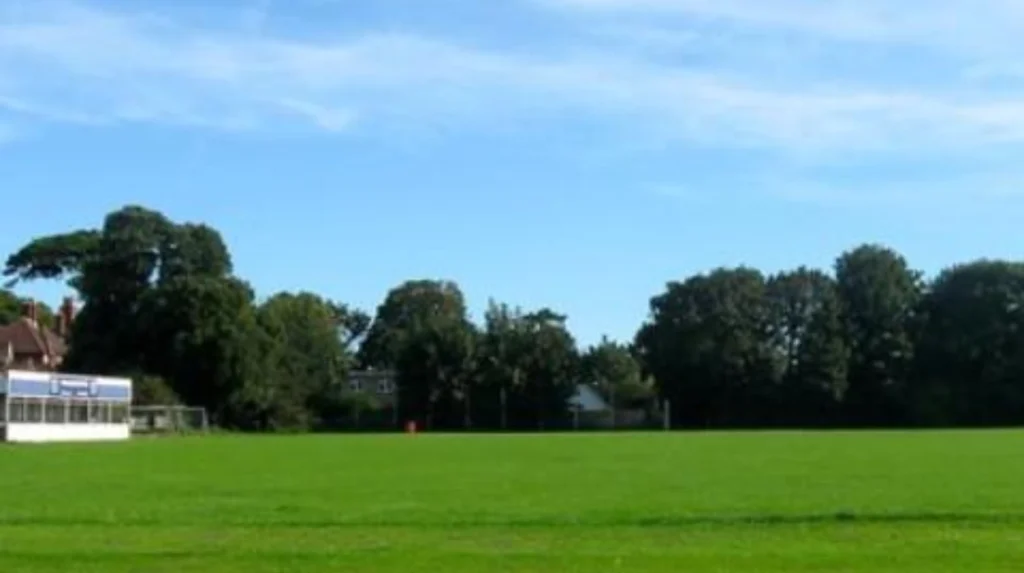
Barley Hill Park, Glebelands Recreation Ground and Firthfield Public Open Space provide three established Garforth green spaces for a morning outdoors. Their different layouts support short walks, quiet sitting, open-air exercise and relaxed local recreation without requiring a long journey.
Barley Hill Park is one of Garforth’s principal community parks. Leeds City Council classifies it as a community park and lists it among the city’s community park network.
The park also has a formal play area. Leeds City Council’s Public Spaces Protection Order identifies the Barley Hill Park playground separately from the wider park. Visitors seeking quiet should therefore choose the wider open areas rather than the busiest children’s facilities.
Glebelands Recreation Ground is another important green space. Leeds planning documentation records it as a 4.245-hectare site within the Garforth and Swillington ward. The same assessment identifies Glebelands as one of the area’s established green spaces with play provision.
Firthfield Public Open Space provides another local option. Leeds City Council records Firthfield POS as a local green space, while planning documentation identifies it as one of three established Garforth sites with children’s play facilities.
These sites are useful for visitors who prefer convenience. They are particularly appropriate for a short morning walk rather than a full countryside excursion.
What makes Hollinhurst Wood suitable for an early walk?
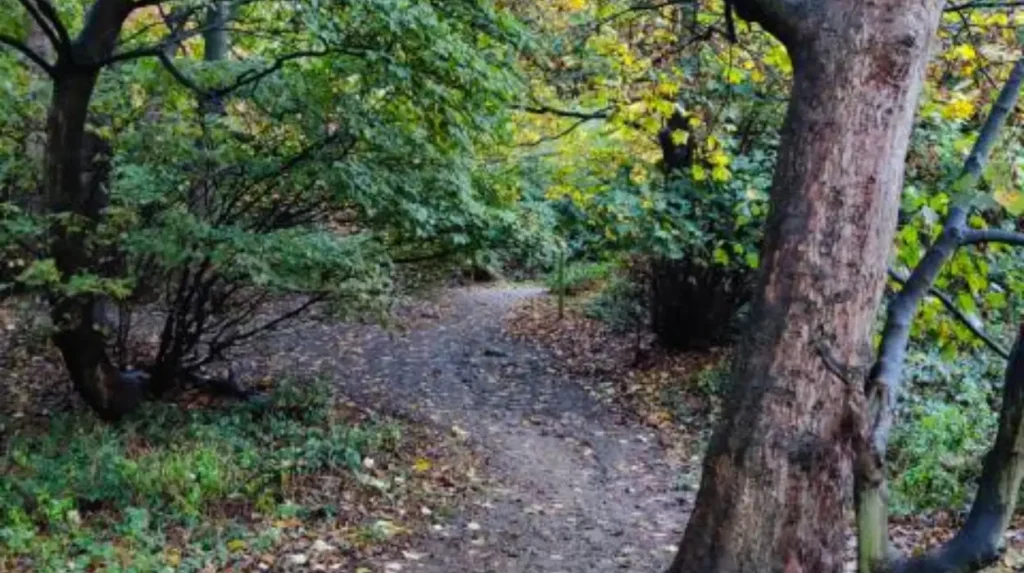
Hollinhurst Wood is one of the most substantial natural green spaces associated with Garforth and Swillington. Its woodland setting provides a different morning environment from formal parks, with tree cover, natural vegetation and a quieter landscape for walking and observation.
Hollinhurst Wood is officially recorded by Leeds City Council as a woodland area. An earlier Leeds open-space assessment measured the site at approximately 11.93 hectares, while later planning material records the natural greenspace at about 13.118 hectares. The differing figures reflect different assessment dates and methodologies.
The woodland is therefore substantially different in character from Barley Hill Park or Glebelands Recreation Ground.
An early visit provides a natural setting for walking without the formal sports infrastructure associated with recreation grounds. Woodland also changes noticeably through the year. Spring brings fresh foliage and flowering plants. Summer provides dense tree cover. Autumn produces changing leaf colour and ground cover. Winter creates more open views through bare branches.
Visitors should remain on established paths where available and avoid damaging vegetation. Woodland environments are habitats rather than simply recreational surfaces.
Hollinhurst Wood also demonstrates the wider importance of natural greenspace within the Garforth landscape. Leeds planning documents identify natural greenspace as a distinct category alongside parks, recreation grounds and other open spaces.
For a visitor specifically searching for a peaceful morning, the woodland category is particularly relevant because it offers a stronger separation from formal play and sports activity.
Which smaller green spaces are worth exploring in Garforth?
Smaller Garforth green spaces include The Chase, Aberford Road/Brierlands, Glencoe Estate, Goosefields, Longmeadows, Primrose Hill Drive and White House Lane. These sites offer local outdoor settings where visitors can combine short walks with residential neighbourhood exploration.
Leeds City Council’s parks byelaws schedule provides an official record of these locations. It classifies The Chase as a local green space and lists Aberford Road/Brierlands, Firthfield, Glencoe Estate, Goosefields, Hanbury Place, Longmeadows, Primrose Hill Drive and White House Lane within the Garforth and Swillington area.
These smaller sites are important because peaceful outdoor experiences do not always require a large park.
The Chase, for example, is formally recognised as a local green space. It provides an option for visitors who want to stay within the Garforth residential landscape rather than travel towards a larger countryside destination.
Aberford Road/Brierlands is another designated local green space. Its position connects the concept of green space with Garforth’s historical transport and industrial landscape.
Goosefields and Longmeadows illustrate how open land can be incorporated into residential areas. These spaces are more appropriate for short local walks than for visitors seeking a major nature reserve.
The best approach is to treat these places as components of a wider morning route. A visitor can combine a smaller green space with a walk through nearby streets before continuing towards a park or woodland.
How can Garforth’s history add interest to a morning walk?
Garforth’s outdoor landscape reflects centuries of farming, transport and coal mining. Historic routes, older buildings, former industrial areas and surviving open land provide context for today’s parks and green spaces, showing how the settlement developed from a rural community into an expanding Leeds suburb.
Garforth’s history extends well beyond its modern residential development. The Leeds City Council Neighbourhood Plan records the settlement in the Domesday Survey of 1086. It describes a manor measuring about 1.5 miles by 1.5 miles, with a church, priest, four villagers and one smallholder recorded in the survey.
The population figures in Domesday represent heads of households rather than every resident. They therefore understate the total population.
Agriculture shaped the landscape before industrialisation. The local area contains evidence of medieval field systems, including ridge-and-furrow features recorded in grassed areas such as Garforth Golf Course.
Coal mining later transformed Garforth. Local historical records identify coal extraction as early as 1262, while nineteenth-century mining expanded following the Enclosure Act of 1810 and the development of industrial workings.
Railways also changed the settlement. The Leeds and Selby Railway opened through Garforth in the nineteenth century, with the station established in 1834.
As you explore today’s green spaces, you are crossing land shaped by this long development. Read the [Insert Anchor Text for History Article Here] to understand Garforth’s wider origins, industrial growth and changing landscape.
This historical context makes a morning walk more informative without changing its primary purpose. Visitors can observe today’s landscape while recognising that open land, roads and settlement patterns developed over many centuries.
Where can visitors combine walking with Garforth’s historic streets?
Garforth’s historic streets provide a useful extension to an outdoor morning because routes around Aberford Road, Main Street, Lidgett Lane and Church Lane connect open-air walking with older buildings and transport history. The combination creates a compact heritage and outdoor itinerary.
The Story of Garforth project documents a heritage route beginning at Garforth Station and continuing along Aberford Road towards Townend. The route includes Garforth Station, the station footbridge, Station Fields, St Benedict’s Church, the former Garforth Country Club area, Grays Flour Mill and other historic points.
Another documented section follows Townend, Main Street and Lidgett Lane before continuing towards Church Lane and St Mary’s Church.
This provides a useful alternative for visitors who do not want to spend the entire morning in a park.
The route also illustrates why Garforth should not be treated simply as a residential suburb. Its street network preserves evidence of earlier commercial, religious, transport and administrative activity.
Garforth station is particularly relevant. The present station buildings date from 1872 and were designed by North Eastern Railway architect Thomas Prosser.
A morning itinerary can therefore begin outdoors at a green space, continue through the historic townscape and finish near local services.
What outdoor activities work best during a quiet Garforth morning?
Walking, nature observation, reading, quiet exercise and landscape photography are the most suitable activities for a calm Garforth morning. Parks provide accessible open areas, while woodland and smaller green spaces offer settings better suited to slower movement and observation.
Walking is the most flexible activity because it works across almost every type of Garforth green space.
A short walk around a community park requires less planning than a longer countryside route. A woodland visit provides greater exposure to natural surroundings. Smaller local green spaces work well for residents or business travellers with limited time.
Nature observation is another low-impact activity. Trees, grassland, seasonal plants and birds create opportunities for basic wildlife watching without specialist equipment.
Photography also fits the morning environment. Historic streets, railway structures, mature trees and changing seasonal vegetation provide different subjects across a relatively small geographical area.
Reading is practical in suitable open areas. Visitors should select locations away from playgrounds and sports activity when quiet conditions are important.
Light exercise also works well. Walking at a comfortable pace provides physical activity without requiring specialist facilities.
The choice of activity should match the character of the site. A recreation ground is more appropriate for open-air exercise, while woodland is better suited to slower walking and nature observation.
Which Garforth locations are best for different types of visitors?
Different visitors require different outdoor settings. Families benefit from community parks, walkers benefit from woodland and local green spaces, while digital nomads and business travellers need a short, reliable outdoor break close to services and transport connections.
Families can use Barley Hill Park, Glebelands Recreation Ground and Firthfield Public Open Space because these locations have established recreational and play facilities. Leeds planning documents specifically identify the three as Garforth sites with children’s play provision.
Walkers seeking a more natural setting should consider Hollinhurst Wood. Its classification as woodland distinguishes it from formal parks and recreation grounds.
Visitors interested in local history can combine outdoor space with the documented heritage route between Garforth Station, Aberford Road, Townend, Main Street and Church Lane.
Digital nomads and business travellers have a different requirement. Their outdoor break needs to fit around work commitments. A short walk through a nearby local green space is more practical than a long excursion requiring extensive travel.
Garforth’s railway station strengthens this flexibility. The station has operated since 1834, making rail travel part of the settlement’s identity for almost two centuries.
The important principle is proximity. A peaceful morning does not require travelling far from the town centre.
How should visitors plan a peaceful morning in Garforth?
A peaceful Garforth morning works best when visitors choose one primary green space, start early, avoid peak recreational periods, check access conditions and combine the outdoor visit with nearby walking rather than attempting too many destinations in one session.
Starting early provides the simplest way to reduce activity levels. Parks and recreation grounds become busier as the day progresses, particularly around play areas and sports facilities.
Visitors should distinguish between the wider park and restricted or managed areas. Leeds City Council identifies dog exclusion areas around several playgrounds and facilities in Garforth, including Barley Hill Park, Firthfields and Glebelands.
This is important for dog owners. A site can permit general outdoor use while specific playground areas remain subject to restrictions.
Weather also affects woodland and grassland conditions. After heavy rain, paths and unpaved areas become wetter. Appropriate footwear is therefore useful for woodland visits.
Visitors should avoid treating all green spaces as formal parks. Some are local green spaces with fewer facilities. That means visitors should plan for limited seating, toilets or refreshments at smaller sites.
A practical morning itinerary can therefore follow a simple structure. Start at a chosen green space, walk at a comfortable pace, spend time observing the surroundings, then continue towards Garforth’s historic streets or local services.
Explore More Area Guide
Garforth Meeting Places and Social Spaces Guide | Garforth
Best Places to Visit for Architecture Lovers in Garforth
How does Garforth’s green space fit into the wider Leeds landscape?
Garforth’s green spaces form part of a wider Leeds network that includes community parks, recreation grounds, local green spaces and natural areas. Their value lies in providing everyday access to outdoor environments within an established urban and suburban settlement.
Leeds City Council identifies 65 community parks across the city. These spaces include facilities such as playgrounds, sports pitches and gardens. Barley Hill Park is included within this citywide community park network.
The wider planning framework also distinguishes different types of greenspace. These include parks and gardens, outdoor sports provision, amenity greenspace, children’s play facilities and natural greenspace.
This classification matters because peaceful outdoor experiences depend on more than large parks. Woodland, informal open land and smaller local green spaces provide different functions.
Garforth and Swillington contain several designated green spaces across these categories. Leeds records Hollinhurst Wood as woodland, Barley Hill Park as a community park and sites such as The Chase and Firthfield as local green spaces.
The planning record also identifies pressure on existing green space from housing development. The Garforth Neighbourhood Plan states that cumulative housing development has placed additional strain on the green space available in the area.
This makes the continued protection and management of accessible outdoor areas an important part of Garforth’s future.
What should visitors remember when choosing a peaceful outdoor place in Garforth?
The strongest options are Barley Hill Park for a conventional community park, Hollinhurst Wood for a woodland setting, and smaller spaces such as The Chase and Firthfield for short local walks. Each provides a different way to start the day outdoors.
Garforth offers a broader outdoor experience than a simple list of parks suggests.
Barley Hill Park provides the clearest community-park experience. Glebelands Recreation Ground offers another established recreational setting. Firthfield Public Open Space provides an additional local green-space option.
Hollinhurst Wood is the stronger choice for visitors prioritising woodland and natural surroundings. Its sizeable natural greenspace gives it a distinct role within the local landscape.
The Chase, Aberford Road/Brierlands, Goosefields and other designated local green spaces suit shorter walks and neighbourhood exploration.
Garforth’s historical background adds another layer to the experience. The settlement developed through farming, coal mining, railways and later residential growth. Those changes remain visible in its streets, open spaces and transport infrastructure.
For tourists and leisure travellers, this makes Garforth suitable for a slower morning away from central Leeds. For residents, the same network provides accessible everyday outdoor space. For business travellers and digital nomads, it offers short breaks that fit around a working day.
A peaceful morning in Garforth is therefore defined by choice rather than by one single destination: community parks for convenience, woodland for nature, local green spaces for short walks, and historic streets for a combined outdoor and heritage experience.
What are the best places for a peaceful morning in Garforth?
Barley Hill Park, Hollinhurst Wood, Firthfield Public Open Space and The Chase are suitable options for a calm morning outdoors. Each provides a different setting for walking, relaxation and enjoying green space.