Garforth is a town in the east of Leeds, West Yorkshire, with a useful mix of historic buildings, green spaces, walking routes, community sites and everyday streetscapes. For photography beginners, this combination provides accessible subjects without requiring specialist equipment or long-distance travel.
- What makes Garforth suitable for beginner photographers?
- Which Garforth attractions are easiest for photography beginners?
- How can beginners photograph The Lines Way in Garforth?
- What can beginners photograph around St Mary the Blessed Virgin in Garforth?
- Where can beginners practise nature photography in Garforth?
- How can the Lord Gascoigne Pub Community Garden help beginners learn close-up photography?
- What can beginners photograph around Garforth railway station?
- How can beginners use Garforth’s streets for photography?
- Which nearby attractions expand a beginner photography walk?
- How should a beginner plan a Garforth photography walk?
- What photography techniques should beginners practise in Garforth?
- What equipment does a beginner need for Garforth photography?
- When is the best time to photograph Garforth attractions?
- How can visitors combine photography with other Garforth activities?
- Why is Garforth useful for learning photography over repeated visits?
- What should photography beginners remember when exploring Garforth?
The area is particularly suitable for learning basic photography techniques because different environments sit close together. A beginner can practise architectural photography around historic buildings, landscape photography along green routes, close-up photography in community gardens, and street photography around the town centre.
Garforth also has practical transport connections. Garforth railway station is on Station Road, while East Garforth station is on Woodlands Drive. National Rail records Garforth as a Northern-managed station with 250 car-parking spaces, bicycle storage and step-free access to the platforms from the main entrance. East Garforth has ramped access to both platforms.
The photography opportunities therefore extend beyond conventional tourist attractions. Ordinary places such as railway infrastructure, footpaths, church architecture, gardens and local green spaces provide useful subjects for beginners.
What makes Garforth suitable for beginner photographers?
Garforth suits beginner photographers because its attractions combine architecture, greenery, community spaces, transport scenes and historic features within a compact local area, allowing visitors to practise composition, focus, exposure and perspective without needing specialist equipment or complicated journeys.
A beginner photographer needs accessible subjects that allow repeated practice. Garforth provides this through a mixture of built and natural environments.
Architecture offers strong lines, repeated shapes, doors, windows and stone textures. Green spaces provide trees, paths, seasonal vegetation and open compositions. Railway locations introduce perspective, symmetry and movement. Community spaces provide smaller subjects that work well for close-up photography.
The area also supports different photography styles. A visitor using a smartphone can create useful images without carrying a camera bag. Someone using an entry-level mirrorless or DSLR camera can practise manual settings, focal lengths and depth of field.
The most useful approach is to treat Garforth as a collection of small photography environments rather than searching for one single viewpoint.
This makes the town appropriate for a short photography walk. It also works for visitors who have only part of a day available.
Which Garforth attractions are easiest for photography beginners?
The easiest Garforth photography locations include The Lines Way, local green spaces, St Mary’s Church, the Lord Gascoigne Pub Community Garden, Garforth railway surroundings and the town’s everyday streets, because each provides simple subjects with clear visual structures.
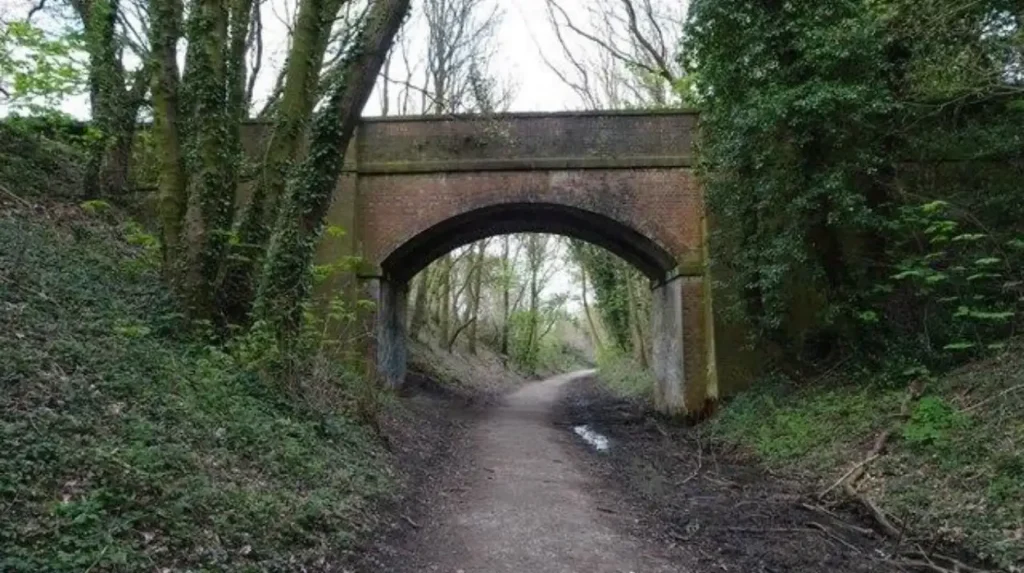
The Lines Way provides a particularly useful starting point. Leeds City Council identifies The Lines Way as a Local Green Space and its Garforth neighbourhood planning material describes it as an important connectivity route through the area. The route follows a former railway alignment, giving photographers a combination of vegetation, paths and historic transport context.
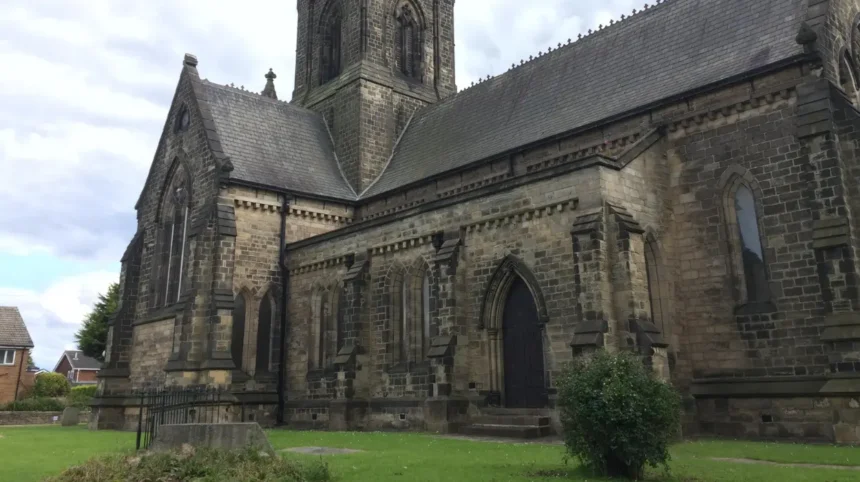
St Mary the Blessed Virgin provides a contrasting architectural subject. Historic England records the church as a Grade II listed building dating from 1844 and designed by George Fowler Jones. Its Magnesian limestone construction, slate roof, cruciform plan and crossing tower provide several opportunities for architectural composition.
The Lord Gascoigne Pub Community Garden adds another visual category. Visit Leeds describes it as a volunteer-run community garden used for vegetables and wildlife-friendly planting, with a colour garden for dyes and inks also being developed.
These locations provide different levels of photographic complexity. Beginners can start with simple static subjects and progress towards more complicated compositions.
How can beginners photograph The Lines Way in Garforth?
Beginners can photograph The Lines Way by using its path, vegetation, former railway alignment and changing perspectives to practise leading lines, symmetry, depth, texture and environmental composition while keeping camera settings simple and focusing on one subject at a time.
The Lines Way is one of the most useful places for learning composition because the route itself creates strong visual direction.
A path naturally leads the viewer’s eye into the frame. A beginner can stand centrally and photograph the route straight ahead. This creates a symmetrical composition. Moving to one side changes the perspective and creates an angled composition.
Trees and vegetation add depth. A photographer can place a nearby branch or tree trunk in the foreground and use the path as the middle ground. The distance then creates a background layer.
The route also connects with the wider local green-space network. Leeds City Council’s Garforth neighbourhood plan specifically identifies The Lines Way and supports improved connectivity between the route and Local Green Space around Green Lane Cricket Club.
The former railway character adds historical context to photographs. As you explore the modern route, you are crossing land shaped by an earlier transport network. Read the full [Insert Anchor Text for Garforth Railway and Industrial History Article Here] to understand its origins.
For beginners, the most important technique is to photograph the same scene from several positions. Change height, distance and angle before changing complicated camera settings.
What can beginners photograph around St Mary the Blessed Virgin in Garforth?
St Mary the Blessed Virgin offers beginners architectural subjects including Magnesian limestone walls, lancet windows, roof lines, entrances, buttresses and the crossing tower, creating opportunities to practise shape, texture, symmetry and detail photography from appropriate public viewpoints.
Historic England identifies St Mary the Blessed Virgin in Garforth as a Grade II listed church. The building dates from 1844 and was designed by George Fowler Jones. Its architectural details include dressed Magnesian limestone, a slate roof, aisles, transepts, a chancel and a crossing tower with a broach spire.
These features provide a structured photography lesson.
A beginner can start with the complete exterior. The next step is to photograph one architectural feature. Windows work particularly well because their repeated shapes create visual rhythm.
Stone walls provide opportunities for texture photography. Photographing the surface from an angle reveals changes in light across the material.
The entrance provides another subject. Doorways introduce rectangles, arches and repeated lines. A photographer can practise keeping vertical architectural lines straight.
The church also demonstrates why timing matters. Different daylight conditions change the appearance of stone, windows and architectural projections.
Photography around a religious building should remain respectful. Public viewpoints provide the simplest starting point. Interior photography should follow the building’s own access and photography rules.
Where can beginners practise nature photography in Garforth?
Beginners can practise nature photography in Garforth’s green spaces by photographing trees, leaves, paths, seasonal plants and wider landscapes, using simple techniques such as close focusing, natural framing, selective composition and observation of changing daylight.
Leeds City Council’s parks and countryside records list several green and recreational spaces in the Garforth area. These include BarleyHill Park, Hollinhurst Wood, The Chase, East Garforth Recreation Ground, Glebelands Recreation Ground and several Local Green Spaces.
These places support different approaches to nature photography.
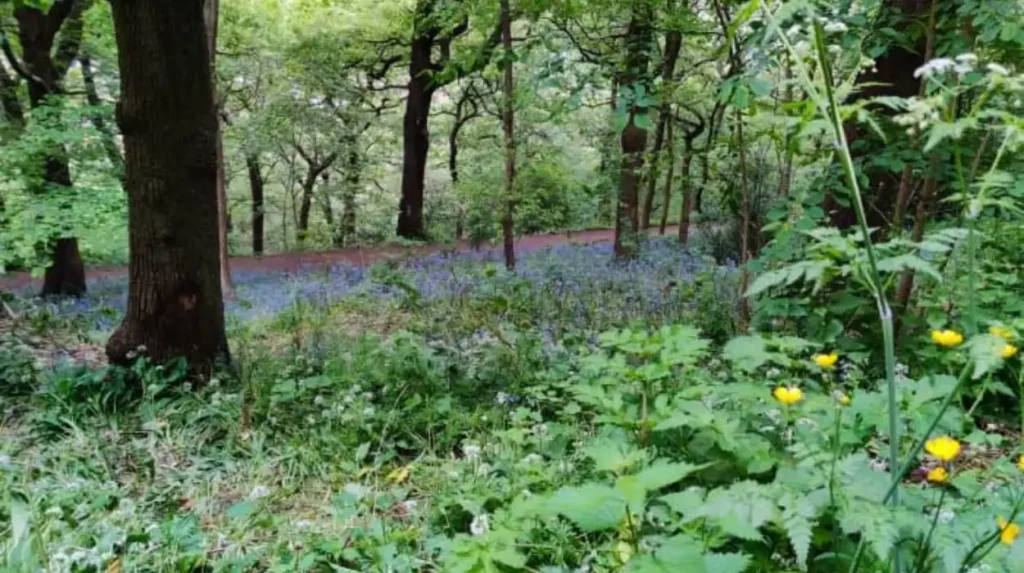
Woodland environments are useful for learning texture and layered composition. Trees create vertical lines. Paths create leading lines. Leaves provide close-up subjects.
Open recreational spaces offer wider compositions. A beginner can practise photographing a large area rather than concentrating on one object.
Hollinhurst Wood provides a woodland setting within the Garforth area. The Chase is another recognised Local Green Space. The different environments allow photographers to compare open and enclosed compositions.
Seasonal change also provides a natural photography curriculum. Spring introduces fresh foliage and blossom. Summer provides dense greenery. Autumn brings changes in leaf colour and ground texture. Winter exposes branches and structural forms.
The key beginner skill is observation. A strong photograph does not require a rare subject. Ordinary natural features provide enough material for practising framing and focus.
How can the Lord Gascoigne Pub Community Garden help beginners learn close-up photography?
The Lord Gascoigne Pub Community Garden provides accessible subjects for close-up photography, including vegetables, plants and wildlife-friendly planting, allowing beginners to practise focus, texture, colour, detail and simple compositions at a manageable scale.
The community garden is located at the Lord Gascoigne pub on Aberford Road. Visit Leeds describes the garden as volunteer-run and focused on vegetables and plants in a wildlife-friendly environment. A colour garden for dyes and inks is also being established.
This type of environment is useful for beginners because subjects are relatively small and clearly defined.
A photographer can choose one leaf and fill the frame. The same subject can then be photographed from above, from the side and at ground level.
Close-up photography teaches focus control. When a camera focuses on a small subject, the background often becomes less visually important. Smartphone portrait modes also demonstrate this effect through computational depth processing.
Plants provide strong opportunities for texture. Leaves contain veins, edges and repeating patterns. Flowers provide shapes and colour blocks.
The garden also introduces environmental photography. Instead of photographing only individual plants, a beginner can show how a community garden occupies its wider setting.
Access should follow the site’s arrangements. A community garden is a shared space rather than a conventional photographic attraction.
What can beginners photograph around Garforth railway station?
Garforth railway station provides useful beginner subjects including station architecture, platforms, signage, tracks, footbridges and surrounding streets, helping photographers practise perspective, repetition, geometric composition and documentary-style images without requiring a specialist photography location.
Garforth station is on Station Road and is managed by Northern. National Rail lists step-free access from the main entrance, lifts, bicycle storage and a station car park with 250 spaces. The station also has sheltered waiting and seating areas.
Railway environments contain strong geometric shapes. Tracks create converging lines. Platform edges create horizontal lines. Signs introduce typography and colour blocks.
These elements make railway stations useful for learning perspective.
A beginner should photograph only from permitted public areas and follow railway safety instructions. Tracks, restricted areas and operational railway infrastructure are not photography positions.
The station also provides a useful starting point for a wider walk. Visitors arriving by train can begin photographing the built environment before moving towards green spaces.
East Garforth station provides another transport-related subject. National Rail records it at Woodlands Drive and confirms ramped access to both platforms. The station does not have a car park.
Transport photography also teaches patience. Station scenes change continuously, so beginners can practise waiting for a visually clear moment rather than adjusting complicated settings.
How can beginners use Garforth’s streets for photography?
Garforth’s streets provide beginner-friendly subjects such as building façades, shopfronts, signs, pavements, doors, windows and street details, making them useful for practising framing, perspective, visual balance and documentary photography.
Street photography does not require famous landmarks. Ordinary streets contain repeated architectural forms and local details.
Main Street and surrounding streets provide opportunities to photograph façades and commercial details. Historic and modern structures can appear within the same local environment.
A beginner can practise one visual rule at a time. The first exercise is symmetry. The second is leading lines. The third is repetition. The fourth is framing.
Signs also provide useful compositions. Lettering creates graphic shapes. Shopfronts combine text, glass, reflections and architectural lines.
Reflections provide another simple technique. Glass windows and wet pavements can produce secondary versions of buildings and streets.
Privacy remains important. Beginners should avoid intrusive photographs of identifiable people, private homes and sensitive situations. A street photograph can focus on architecture and environmental detail instead.
This approach makes photography an observational activity rather than a search for dramatic subjects.
Which nearby attractions expand a beginner photography walk?
Nearby attractions such as Townclose Hills and the wider Kippax green-space network extend a Garforth photography visit into woodland, nature and former railway landscapes, giving beginners additional opportunities to practise landscape composition and environmental photography.
Townclose Hills Local Nature Reserve is located near Kippax and connects with the local walking network. Leeds City Council states that several footpaths enter the site and that The Lines Way runs along its western edge, connecting Garforth with Allerton Bywater. The reserve is managed and promoted in partnership with Yorkshire Wildlife Trust.
This makes Townclose Hills useful as an extension rather than a replacement for Garforth’s local attractions.
The reserve offers a different photographic environment. Woodland edges, open areas and paths create changes in scale.
A beginner can compare photographs taken on The Lines Way with photographs taken around Townclose Hills. Both areas have links to former railway landscapes, but vegetation and terrain alter the composition.
Kippax also contains significant historic architecture. Historic England lists the Church of St Mary in Kippax as a Grade I building and describes it as an Anglo-Saxon or early Norman church with later alterations.
The church grounds also contain listed historic features, including a probably medieval grave cover and a weathered stone shaft.
These sites require particular care because historic buildings and church grounds are protected environments.
How should a beginner plan a Garforth photography walk?
A beginner can plan a Garforth photography walk by choosing one transport starting point, combining an architectural site with a green space, allowing time for repeated viewpoints, checking access conditions and carrying only the equipment needed for the planned route.
Garforth station provides a practical starting point for visitors arriving by rail. National Rail provides current station information and journey planning services, while Garforth station has car parking and bicycle facilities.
A simple photography session can begin with station architecture and street details. The route can then continue towards local green spaces or The Lines Way.
Another approach starts with St Mary the Blessed Virgin and moves towards community and green-space subjects.
The objective is not to photograph every attraction. Beginners learn more effectively by spending time on fewer subjects.
A useful session includes three stages. The first stage is observation. The second stage is experimentation. The third stage is review.
During observation, identify lines, shapes, light and potential subjects.
During experimentation, photograph the same subject from different distances and angles.
During review, compare the images and identify which composition communicates the subject most clearly.
This process builds photography skills without requiring expensive equipment.
What photography techniques should beginners practise in Garforth?
Beginners should practise leading lines, symmetry, rule-of-thirds composition, foreground framing, texture, close-up focus and perspective because Garforth’s paths, churches, railway features, gardens, streets and green spaces provide straightforward subjects for each technique.
Leading lines work well on The Lines Way and railway surroundings. Paths and tracks naturally direct attention through the frame.
Symmetry works well with architectural façades, windows and straight paths. The photographer should position the camera centrally and check whether both sides of the frame balance.
The rule of thirds divides the frame into nine sections using two horizontal and two vertical lines. Placing the main subject near an intersection creates a straightforward composition.
Foreground framing uses a nearby object to surround or partially frame the main subject. Trees, branches and architectural openings provide practical examples.
Texture photography works particularly well with stone walls, tree bark, leaves and older surfaces.
Close-up photography isolates a small subject. Plants in the Lord Gascoigne Pub Community Garden provide appropriate examples.
Perspective involves changing the relationship between foreground and background. A photographer can move closer to a subject or step backwards to alter its visual scale.
These techniques apply equally to smartphones and dedicated cameras.
What equipment does a beginner need for Garforth photography?
Beginners do not need specialist equipment for Garforth photography; a smartphone or basic camera, spare battery or charging capacity, sufficient storage and suitable weather protection provide the essential equipment for most local photography walks.
A smartphone provides enough capability for learning composition, exposure and visual observation.
A basic interchangeable-lens camera provides additional control over focal length, aperture and shutter speed. A standard zoom lens is sufficient for architecture, streets, nature and general landscapes.
A telephoto lens is not essential for the attractions described here. A tripod is also unnecessary for most daytime photography.
Weather protection is more important than specialist equipment. Garforth’s photography opportunities include outdoor routes and green spaces, so conditions change with the season.
Comfort also matters. Appropriate footwear is useful for walking routes. A lightweight camera bag keeps equipment accessible without adding unnecessary weight.
The best equipment is equipment that the photographer can use confidently. Beginners should learn the camera they already own before buying additional accessories.
When is the best time to photograph Garforth attractions?
Different times provide different photographic conditions in Garforth, with morning offering softer directional light, daytime supporting clear documentary images, late afternoon creating longer shadows and seasonal changes altering vegetation, colour, texture and landscape structure.
Morning light can emphasise architectural texture and create directional shadows.
Midday light provides clearer visibility and works well for documentary photographs where accurate representation matters more than dramatic lighting.
Late afternoon produces longer shadows. These shadows add depth to buildings, paths and vegetation.
Weather also changes the appearance of the same location. Overcast conditions reduce strong contrast and provide even light for architecture and close-up subjects.
Bright conditions create stronger shadows. Rain changes pavements, leaves and surfaces through reflections.
Seasonal variation creates additional reasons to revisit familiar places. Trees, woodland and community gardens change throughout the year.
Beginners should therefore treat Garforth as a repeat photography location. Returning to the same subject under different conditions demonstrates how light affects an image.
How can visitors combine photography with other Garforth activities?
Visitors can combine photography with walking, local food, community facilities and leisure activities because Garforth has attractions and services distributed around its town centre, green spaces and transport connections, making photography suitable for short visits and longer local itineraries.
Photography does not need to be the only purpose of a visit.
Garforth Community Hub and Library on Lidgett Lane provides library services, online support and community activities. Visit Leeds lists accessible facilities including an accessible toilet, age-friendly facilities, assistance-dog access and wheelchair accessibility.
Garforth Miners Welfare Hall on Main Street hosts community activities and events, including coffee mornings, musical and theatre productions and fairs.
These community facilities provide context for understanding the town beyond its outdoor scenery.
The Lord Gascoigne Pub Community Garden provides another example of local community activity. Its volunteer management and wildlife-friendly planting create a small-scale subject area for photography.
Visitors can therefore combine a photography walk with refreshments, local activities or a wider exploration of Garforth.
Explore More Area Guide
Garforth Best Places for a Casual Afternoon With Friends
Garforth Guide to Recreation for Older Visitors | Leeds
Why is Garforth useful for learning photography over repeated visits?
Garforth is useful for repeated photography practice because its combination of historic architecture, railway infrastructure, green spaces, community gardens and everyday streets provides changing subjects while keeping the photographer within a familiar and manageable local environment.
Photography improves through repetition.
A beginner who photographs The Lines Way once learns its general composition. A second visit allows experimentation with different viewpoints. A third visit introduces seasonal differences.
The same principle applies to St Mary the Blessed Virgin, railway surroundings and community spaces.
Repeated visits also reduce the pressure to find new subjects. The photographer can concentrate on technique instead.
Garforth’s local green-space network supports this approach. Leeds City Council’s records identify numerous designated green and recreational spaces around Garforth, while the neighbourhood plan identifies public rights of way and The Lines Way as important parts of local connectivity.
The result is a practical environment for building photographic confidence.
For beginners, the most useful goal is not collecting the largest number of photographs. It is producing clearer images through deliberate practice.
What should photography beginners remember when exploring Garforth?
Photography beginners exploring Garforth should prioritise safe public access, respect for residents and religious sites, railway safety, protection of historic buildings and responsible behaviour in community and natural spaces while using simple techniques to develop composition skills.
Garforth combines public routes, working railway infrastructure, community facilities, private property and protected historic buildings. Each environment requires appropriate behaviour.
Railway safety takes priority around stations and tracks. Photography should remain within permitted public areas.
Historic buildings should be photographed without damaging surfaces or entering restricted areas. Listed buildings are protected because of their special architectural or historic interest.
Nature spaces require responsible use. Leeds City Council advises visitors to dress for the weather, supervise children and dogs, remove litter and follow site guidance at Townclose Hills.
Community spaces require respect for volunteers and other users.
These principles also improve photography. Taking time to observe a location produces more deliberate images than rushing between subjects.
Garforth therefore works as an accessible photography-learning environment rather than simply a collection of attractions. Its railway heritage, architecture, green spaces, community gardens and everyday streets provide a broad range of subjects within the Leeds district.
For a beginner, the most useful starting point is simple: choose one location, identify one photographic technique, make several compositions and review the results. Repeating that process across Garforth gradually builds practical photography skills.
Is Garforth a good place for beginner photographers?
Yes. Garforth offers accessible photography subjects including The Lines Way, St Mary the Blessed Virgin, railway infrastructure, community gardens, green spaces and everyday streets. Beginners can practise composition, perspective, texture and nature photography without specialist equipment.