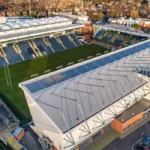

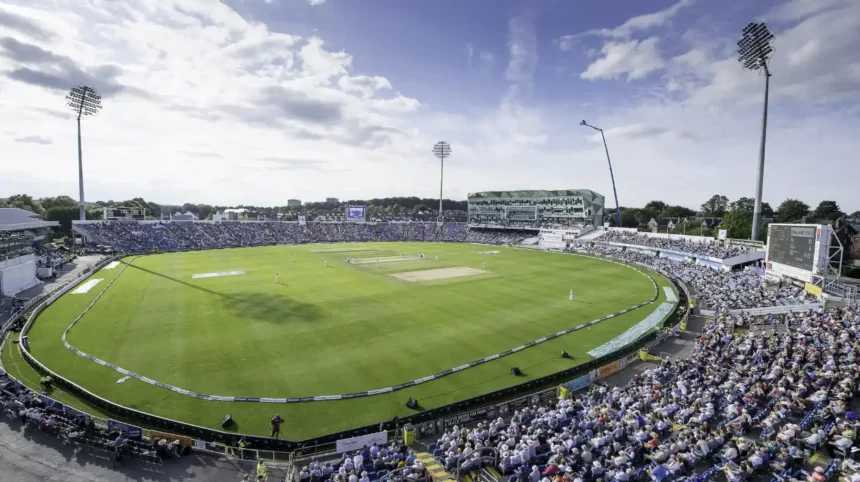
Headingley is one of Leeds’s most important sporting districts, with cricket at the centre of its identity. The area is home to Headingley Cricket Ground, Yorkshire County Cricket Club and a sporting complex that has hosted county, international and historic fixtures for more than a century.
- Why is Headingley important to cricket heritage in Leeds?
- When did Headingley Cricket Ground first open?
- When did international cricket begin at Headingley?
- What is Yorkshire County Cricket Club’s connection with Headingley?
- What are the main sporting landmarks at Headingley?
- What can visitors see at the Yorkshire Cricket Museum?
- How has Headingley’s sporting architecture developed?
- Why is Headingley significant to Leeds sporting history?
- Which famous cricket matches are associated with Headingley?
- How can visitors explore Headingley’s cricket heritage?
- What role does cricket heritage play in Headingley’s future?
- What should you know before visiting Headingley Cricket Ground?
- Why should Headingley’s cricket landmarks be included in a Leeds heritage itinerary?
The cricket heritage of Headingley extends beyond individual matches. It includes the development of organised sport in Leeds, the growth of Yorkshire cricket, the architecture of the ground, the relationship between cricket and rugby, and the preservation of sporting records.
For visitors, Headingley offers a concentrated way to explore Leeds sporting history. For residents, the district provides landmarks connected to generations of local sporting life. For business travellers and digital nomads, the area combines an established sporting venue with cafés, restaurants, transport links and the wider Headingley neighbourhood.
Why is Headingley important to cricket heritage in Leeds?
Headingley is important because it has been the home of Yorkshire County Cricket Club since 1890 and has hosted international Test cricket since 1899. Its sporting identity connects Yorkshire cricket, Leeds history and major international fixtures.
Headingley Cricket Ground was officially opened on 27 May 1890. Yorkshire County Cricket Club subsequently established the venue as its principal home in Leeds.
The ground was developed during a period when organised sport was expanding rapidly in Victorian Britain. Cricket already had a long history in Leeds, but the creation of a purpose-built sporting site gave high-level cricket a permanent base.
The original development was organised by the Leeds Cricket, Football and Athletic Company Ltd. A group of businessmen and sports enthusiasts, chaired by Lord Hawke, purchased land from the Cardigan estate for £25,000.
The site was designed for several sports rather than cricket alone. Cricket and rugby were central, while the wider sporting organisation also incorporated activities including bowls, cycling and tennis.
This multi-sport origin remains important today. Headingley is unusual because cricket and rugby facilities occupy the same wider sporting complex.
The modern stadium therefore represents more than a cricket ground. It is part of the physical development of organised sport in Leeds.
As you explore the modern site, you are crossing land with a deep heritage. Read about the full to understand its origins.
When did Headingley Cricket Ground first open?
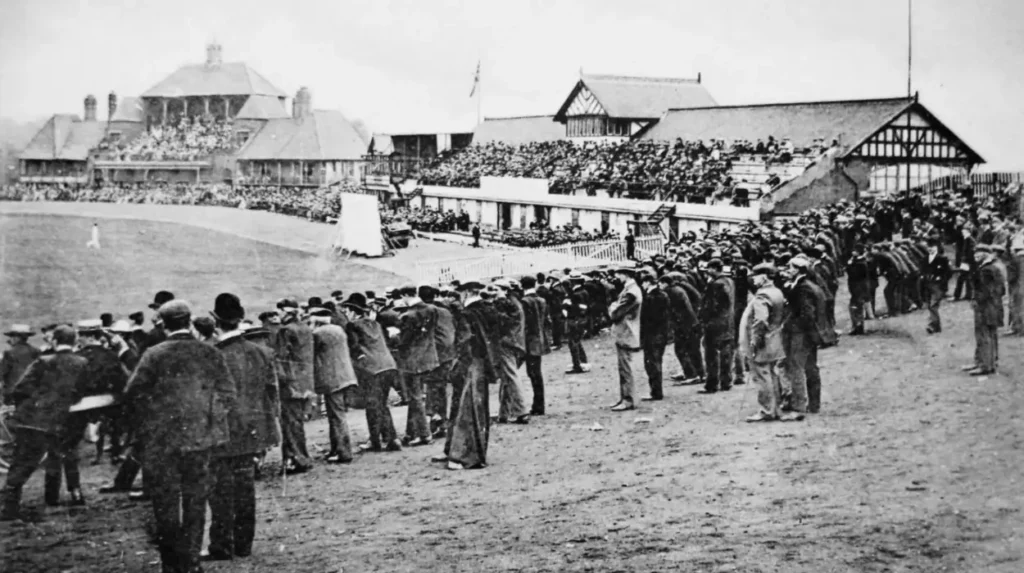
Headingley Cricket Ground officially opened on 27 May 1890 when Leeds Cricket Club played Scarborough Cricket Club. The first rugby match followed in September 1890, establishing the site as a major multi-sport venue from its earliest years.
The opening of Headingley followed several decades of cricket activity elsewhere in Leeds.
Yorkshire County Cricket Club had not always had a permanent base at Headingley. Before 1890, important cricket fixtures took place at several Leeds grounds.
One significant earlier venue was the Victoria Ground on Woodhouse Moor. Robert Cadman acquired land there in 1837, levelled it and enclosed it for sporting use. The ground hosted important matches during the nineteenth century, including appearances by the All-England XI.
This earlier history explains why the creation of Headingley was significant. Leeds already had an established cricket audience. The new ground provided a larger and more organised sporting setting.
The pavilion and main stand were built in 1889. They were designed by the architectural firm Smith and Tweddle and formed part of the original development before the official opening in 1890.
Yorkshire played its first county match at Headingley in 1891. The ground then became increasingly important to Yorkshire cricket.
The transition from temporary or changing grounds to a permanent major venue helped establish Headingley as a long-term sporting landmark.
When did international cricket begin at Headingley?
International Test cricket began at Headingley in 1899 when England played Australia. Since then, the Leeds ground has developed into an established international venue for Test, one-day and other major cricket formats.
The first Test match at Headingley took place in 1899.
Test cricket is the longest established international format of the sport. Matches are played over multiple days, traditionally up to five, and represent the highest level of the men’s international game.
Headingley’s inclusion in the Test schedule gave the venue national and international significance.
The ground has subsequently hosted major England fixtures against visiting international teams. Australia has been particularly important to Headingley’s cricket history because of the venue’s connection with Ashes cricket.
The Ashes is the Test cricket contest between England and Australia. Headingley has hosted several memorable Ashes matches, including England victories over Australia in 1981 and 2019.
The 2019 Ashes Test became one of the best-known recent matches played at Headingley. England successfully chased a demanding fourth-innings target, with Ben Stokes producing a decisive unbeaten innings.
The significance of such matches extends beyond the scorecard. Major international fixtures bring global attention to Leeds and reinforce Headingley’s position within English cricket.
Headingley’s international history also forms part of the wider visitor experience. A cricket enthusiast visiting Leeds can connect the modern stadium with more than 125 years of international Test cricket.
What is Yorkshire County Cricket Club’s connection with Headingley?
Yorkshire County Cricket Club has been based at Headingley since 1890, making the ground central to the club’s identity. Yorkshire cricket history, county competition, player development and international cricket are all closely connected with the Leeds venue.
Yorkshire County Cricket Club was established in 1863. The club represents Yorkshire in county cricket and has played a major role in the development of English cricket.
Headingley became the club’s long-term Leeds home shortly after the ground opened.
Yorkshire’s history includes a large collection of County Championship successes. The club’s official heritage records list titles across different periods, including championship victories in the nineteenth century, the dominant inter-war period, the mid-twentieth century and the twenty-first century.
The County Championship is England’s domestic first-class cricket competition. It provides the traditional four-day structure through which county players compete at professional level.
Headingley’s importance therefore covers both international cricket and domestic cricket.
The ground has also supported the development of younger players through Yorkshire’s performance and pathway structures. This gives the venue a role beyond major matchdays.
For visitors, understanding Yorkshire County Cricket Club makes the stadium easier to interpret. The ground is not simply a place where England plays international cricket. It is the home environment of a historic county club.
What are the main sporting landmarks at Headingley?
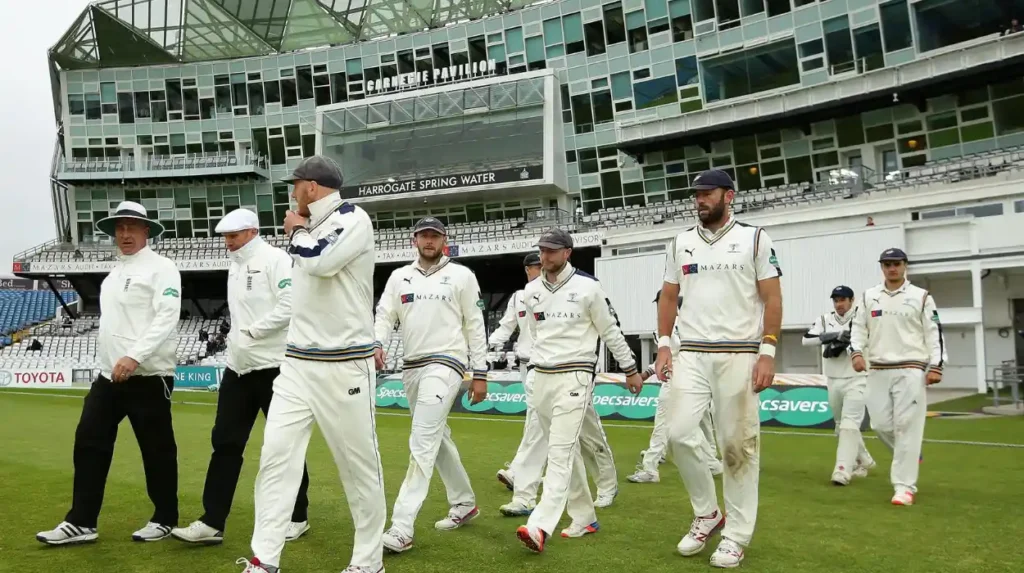
The main sporting landmarks include Headingley Cricket Ground, the Yorkshire County Cricket Club facilities, the Yorkshire Cricket Museum, the stands and pavilion, and the adjoining rugby facilities. Together they create one of Leeds’s most concentrated sporting heritage environments.
Headingley is unusual because two major sporting venues operate within the same wider stadium complex.
The cricket ground provides the central landmark for Yorkshire cricket. Its stands, playing surface, pavilion areas and entrances form a recognisable sporting landscape.
The Howard Stand has particular significance because spectators can view both the cricket and rugby pitches from the same stand. Yorkshire County Cricket Club describes Headingley as one of the few stadiums in the world with two international venues in one place.
The rugby side of the complex is associated with rugby league and Leeds Rhinos. Rugby has been part of the Headingley sporting story since the original venue opened in 1890.
The Yorkshire Cricket Museum provides another important landmark. It is located in the East Stand and contains material relating to Yorkshire cricket history.
The wider complex therefore allows visitors to understand how different sports developed alongside each other in Leeds.
What can visitors see at the Yorkshire Cricket Museum?
The Yorkshire Cricket Museum preserves and displays material relating to Yorkshire cricket, including historic artefacts, memorabilia, records and stories from the county game. It is located inside Headingley and forms a key heritage attraction for cricket visitors.
The Yorkshire Cricket Museum is located in the East Stand at Headingley Stadium.
The museum is operated by the Yorkshire Cricket Foundation, the charitable arm associated with Yorkshire County Cricket Club. Its purpose is to communicate the history of cricket in Yorkshire through collections and archive material.
The collection covers more than individual matches. It records the development of cricket across Yorkshire and its relationship with local communities.
The Yorkshire Cricket Archive contains historic artefacts and memorabilia documenting the development of Yorkshire cricket from its origins to the present.
Some archive material is displayed at the museum. Other collections are stored on behalf of Yorkshire County Cricket Club at the West Yorkshire Archives Service in Morley, Leeds.
The museum also provides context for people who are unfamiliar with county cricket.
Matchday access is particularly relevant to visitors. The club states that the museum operates during the cricket season for first-team matchdays, with opening arrangements varying according to the competition. Visitors should check current arrangements before travelling because access schedules change.
The museum is free to enter, although visitors can make voluntary donations supporting its operation and heritage work.
How has Headingley’s sporting architecture developed?
Headingley’s architecture reflects more than a century of sporting development. The original 1889 pavilion and main stand formed the foundation, while later redevelopment introduced modern spectator facilities, stands and infrastructure around the historic sporting site.
The earliest buildings established the architectural framework of the venue.
The original pavilion and main stand were constructed in 1889. Their development before the official opening demonstrates the scale of investment involved in creating a major sporting ground at the end of the nineteenth century.
Sporting architecture at Headingley subsequently changed as spectator expectations, safety standards and professional sport developed.
Large spectator stands replaced or supplemented earlier arrangements. Modern hospitality areas, media facilities, player facilities and circulation routes now sit alongside the older sporting footprint.
The architectural evolution is important because cricket grounds are working environments as well as heritage sites.
The pitch remains the central functional space. Around it are spectator stands, hospitality areas, operational buildings, entrances and access routes.
The Howard Stand provides a particularly distinctive example of Headingley’s combined sporting identity because its position allows views towards both cricket and rugby.
Visitors interested in architecture should therefore examine the relationship between older and newer parts of the stadium rather than focusing on a single building.
Why is Headingley significant to Leeds sporting history?
Headingley is significant because its history connects professional cricket, rugby, athletics and other organised sports with the growth of Leeds as a major northern city. Its sporting institutions have operated across generations and created a distinctive local identity.
The development of Headingley coincided with the expansion of organised leisure in Victorian Britain.
Industrial cities developed large audiences for professional and organised sport. Leeds was no exception.
The Leeds Cricket, Football and Athletic Company Ltd was created to develop a substantial sporting venue. The original concept incorporated six sports, demonstrating that the site was conceived as a broad sporting facility rather than a single-purpose cricket ground.
This history links Headingley to the wider development of urban sporting culture.
Cricket became particularly important because Yorkshire County Cricket Club established a permanent home there. Rugby also became deeply associated with the complex.
The sporting landscape around Headingley therefore reflects the changing organisation of British sport. Amateur traditions, professional competition, county cricket and international sport all became part of the venue’s development.
For Leeds, the stadium also functions as a recognisable city landmark.
International cricket brings visitors into the city, while domestic fixtures support regular local engagement.
The ground’s heritage therefore has both historical and contemporary importance.
Which famous cricket matches are associated with Headingley?
Headingley has hosted major matches involving England, Australia, Yorkshire and other leading cricket teams. Its most widely recognised modern fixtures include the 1981 and 2019 Ashes Tests, alongside a long sequence of county and international matches.
The ground’s match history stretches across several generations.
The first Test in 1899 established Headingley as an international cricket venue. County cricket provided the regular sporting foundation while international fixtures created a wider audience.
The Ashes have played an important role in the venue’s public identity.
In 1981, England defeated Australia at Headingley during the famous Ashes series. The match became associated with Ian Botham’s performance and England’s successful recovery after Australia had established a strong position.
In 2019, England again defeated Australia at Headingley in an Ashes Test. Ben Stokes scored an unbeaten 135 during England’s successful run chase.
Other historic county matches also form part of the venue’s heritage. Yorkshire’s long County Championship history provides thousands of innings, bowling performances and team records connected with the ground.
The Yorkshire Cricket Museum helps preserve this wider statistical and material history rather than focusing solely on famous international matches.
How can visitors explore Headingley’s cricket heritage?
Visitors can explore Headingley’s cricket heritage through matchday attendance, the Yorkshire Cricket Museum, stadium experiences when available and an exterior walk around the sporting complex. Combining these activities provides context about the ground’s architecture, teams, competitions and history.
A cricket match provides the most direct way to experience the venue.
Different competitions create different atmospheres and perspectives. County Championship cricket shows the traditional first-class format. T20 cricket provides a shorter professional format. International matches connect the ground to global cricket.
The Yorkshire Cricket Museum provides the historical component.
Stadium tours have also formed part of the visitor programme. Yorkshire County Cricket Club states that tours provide behind-the-scenes access to the stadium, although tour availability is subject to current club arrangements.
Visitors should check official information before planning a museum or tour visit because opening arrangements can change.
The wider Headingley neighbourhood also provides useful context. Walking around the area shows how the stadium sits within a dense urban district rather than an isolated sports park.
A heritage-focused visit can therefore combine the stadium with surrounding streets, local architecture, public transport routes and other Leeds attractions.
What role does cricket heritage play in Headingley’s future?
Cricket heritage remains part of Headingley’s future through continued international fixtures, Yorkshire County Cricket Club activity, museum collections, heritage projects and long-term investment in the stadium. The venue therefore operates as both a historic landmark and a contemporary sporting facility.
Heritage is most effective when a historic venue remains active.
Headingley continues to host professional cricket while preserving records and objects from earlier generations.
Yorkshire County Cricket Club has also published its Chasing Glory 2026–2036 strategy. The strategy identifies three broad priorities: sporting excellence, stronger connections across Yorkshire and long-term financial sustainability.
The future programme also includes international cricket.
Yorkshire County Cricket Club stated that Headingley was allocated 34 days of men’s international cricket across seven years following the England and Wales Cricket Board’s 2023 major-match allocation. The club also identified women’s international fixtures at Headingley, including an England Women versus Australia Women Test in 2027 and white-ball fixtures in later years.
These fixtures demonstrate the continuing role of Headingley in English international cricket.
The Yorkshire Cricket Museum adds another layer of continuity. Its archive, exhibitions and community projects preserve material that would otherwise become disconnected from the modern sporting venue.
This combination of active sport and heritage preservation gives Headingley lasting relevance.
Explore More Area Guide
Headingley Historic Buildings & Architecture Guide | Leeds
Headingley Student-Friendly Places for Free Time in Leeds
What should you know before visiting Headingley Cricket Ground?
Visitors should check the official Yorkshire County Cricket Club information before travelling because museum access, tours, matchday arrangements and stadium facilities vary by fixture and season. Headingley is located on St Michael’s Lane in Leeds, with the cricket museum inside the East Stand.
Headingley Stadium is located in the Headingley area of Leeds at St Michael’s Lane, LS6 3BU.
Planning around a match is important because access arrangements differ between ordinary days and major fixtures.
The Yorkshire Cricket Museum is especially dependent on cricket-season and matchday arrangements. The club’s current information states that the museum opens during the cricket season on first-team matchdays, subject to the published schedule.
Visitors interested in stadium tours should also confirm availability before travelling.
A visit does not need to be limited to a match. Cricket enthusiasts can combine the stadium with an exploration of Headingley itself.
The surrounding area has a strong student and residential population, a variety of hospitality businesses and established transport connections with central Leeds.
For digital nomads and business travellers, the area also works as a base for combining daytime work with sporting or cultural activities outside working hours.
For leisure travellers, the key attraction is the concentration of sporting heritage. A single visit connects Victorian sporting development, Yorkshire county cricket, international Test cricket, rugby and modern stadium operations.
Why should Headingley’s cricket landmarks be included in a Leeds heritage itinerary?
Headingley’s cricket landmarks provide a direct connection between Leeds’s Victorian sporting development and modern international sport. The cricket ground, museum, historic buildings, rugby facilities and Yorkshire County Cricket Club together create a distinctive sporting heritage destination.
Headingley offers a different type of heritage experience from Leeds’s traditional museums and historic civic buildings.
Its heritage remains active.
The same sporting site that opened in 1890 continues to host professional cricket more than a century later. Yorkshire County Cricket Club remains based there, while international fixtures continue to bring global teams and spectators to Leeds.
The Yorkshire Cricket Museum provides physical evidence of this long history.
The architecture demonstrates how sporting venues changed from Victorian facilities into modern international stadiums.
The shared cricket and rugby environment demonstrates the multi-sport origins of the site.
The match records demonstrate the venue’s national and international importance.
Together, these elements make Headingley a useful destination for anyone researching the sporting history of Leeds.
Its significance is also easy to understand geographically. Visitors can see the physical venue, identify its major stands and sporting spaces, visit the museum when open and then explore the surrounding Headingley neighbourhood.
Headingley’s cricket heritage is therefore not confined to historic scorecards. It is embedded in the buildings, institutions, collections and continuing sporting activity of one of Leeds’s best-known sporting districts.
When did Headingley Cricket Ground open?
Headingley Cricket Ground officially opened on 27 May 1890. Leeds Cricket Club played Scarborough Cricket Club in the opening cricket match.