
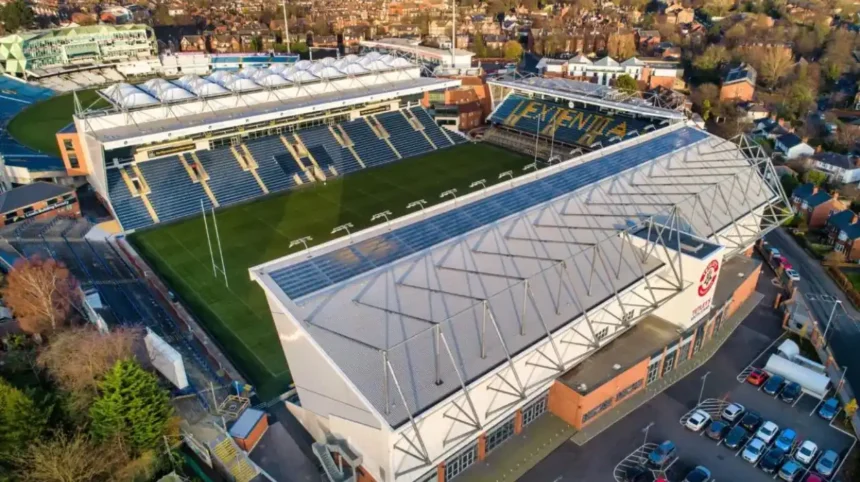
Headingley is one of Leeds’s most important sporting districts, with a rugby heritage extending from the late Victorian period into modern professional sport. Its identity is centred on Headingley Stadium, a major sporting complex containing separate rugby and cricket grounds linked by shared facilities.
- Why is Headingley important to rugby history?
- When did rugby first become established in Headingley?
- What is the history of Headingley Rugby Stadium and Leeds Rhinos?
- Which famous rugby matches were played at Headingley?
- How did rugby union shape Headingley’s sporting identity?
- What are the main sporting landmarks around Headingley?
- How has Headingley Stadium changed over time?
- Why does Headingley remain significant for visitors interested in rugby?
The rugby story began before the present stadium opened. Headingley Football Club was founded in 1878 and became part of the development of rugby union in Leeds. The professional rugby league story developed through Leeds St John’s and Leeds Rugby Football Club, which became closely associated with Headingley from the late nineteenth century.
Headingley Stadium opened in 1890 after the Leeds Cricket, Football and Athletic Company acquired land from the Cardigan estate. The site was designed as a multi-sport venue. Cricket and rugby developed side by side, creating the unusual sporting landscape that still defines Headingley. Yorkshire County Cricket Club confirms that the first rugby match at the new ground took place in September 1890.
The area remains significant because its sporting heritage is not represented by one club or one code. Rugby league, rugby union and cricket all contributed to the development of Headingley as a national sporting location.
Why is Headingley important to rugby history?
Headingley is important to rugby history because it has hosted major rugby league and rugby union events since 1890, including international matches, Challenge Cup fixtures and professional club rugby involving Leeds Rhinos and Leeds Tykes.
Headingley’s importance comes from continuity. Rugby has been played at the site since the opening period of the stadium. The first rugby union match at the ground was Leeds against Manningham on 20 September 1890. Five years later, Leeds played Brighouse in the first Northern Union match at Headingley.
Northern Union was the organisation formed in 1895 after clubs separated from the Rugby Football Union. It later became the governing structure associated with rugby league. Leeds was among the founding members of the Northern Union, establishing Headingley as an early centre of the professional code.
Headingley also hosted the first Northern Union Test match at the venue in 1908, when Great Britain played New Zealand. Great Britain won 14–6.
The stadium therefore connects several stages of rugby development. Visitors can understand the transition from Victorian amateur rugby to organised professional competition through the history of the venue itself.
The sporting importance extends beyond Leeds. Headingley has hosted representative rugby, domestic finals and international tournaments. Its records include a Great Britain versus Australia Test in 1948 attended by 36,529 spectators and a Leeds versus Bradford Northern match in 1947 attended by 40,175.
These records demonstrate the scale of rugby crowds attracted to Headingley during the twentieth century.
For visitors exploring the district, the stadium is therefore more than a modern sporting venue. It is a physical reference point for the development of rugby in Leeds and the wider history of British sport.
When did rugby first become established in Headingley?
Rugby became established in Headingley during the late nineteenth century, with Headingley Football Club founded in 1878 and the present Headingley Stadium opening in 1890, creating a permanent sporting base for rugby alongside cricket and other organised sports.
Headingley Football Club provides an important part of the rugby union story. Leeds Tykes records its heritage to the club’s foundation in 1878. The club later became part of the organisational development that produced Leeds Rugby Union Football Club.
The 1890 opening of Headingley Stadium changed the scale of local sport. The Leeds Cricket, Football and Athletic Company acquired Lot 17A on the Cardigan estate for £25,000. The development incorporated facilities for cricket, rugby and other sports. The pavilion and main stand were constructed in 1889 before the official cricket opening in May 1890.
Rugby was therefore built into the identity of the ground from its earliest years.
Headingley’s early sporting model was broader than a single-purpose stadium. The original development accommodated six sports, including cricket, rugby, bowls, cycling and tennis. This multi-sport foundation explains why the venue developed into a major sporting complex rather than a conventional single-code ground.
The rugby union tradition continued through Headingley Football Club. According to Leeds Tykes’ historical record, Headingley was admitted to the Rugby Football Union and Yorkshire Rugby Football Union in 1898. The club later produced international players and remained an important Yorkshire rugby institution through the twentieth century.
The history also intersects with the development of rugby league. In 1895, Leeds became part of the Northern Union following the split from the Rugby Football Union. That change established the foundations for the professional rugby league tradition that later became associated with Leeds Rhinos.
As you explore the modern stadium, you are crossing land with a deep sporting heritage. Read about the full [Insert Anchor Text for History Article Here] to understand its origins.
What is the history of Headingley Rugby Stadium and Leeds Rhinos?
Headingley Rugby Stadium has been associated with Leeds rugby since 1890 and became the long-term home of the professional rugby league club now known as Leeds Rhinos, linking the venue directly with more than a century of Leeds rugby competition.
Leeds Rhinos trace their stadium history to the Leeds rugby organisation that occupied Headingley from the opening period. The club became an important part of the Northern Union after the 1895 breakaway and later developed into one of the best-known rugby league institutions in England.
Headingley hosted major rugby league fixtures throughout the twentieth century. The venue became particularly important for Challenge Cup and representative matches.
The stadium’s official history records the first Northern Union match at Headingley as Leeds against Brighouse on 21 September 1895. The first Northern Union Test followed in 1908, when Great Britain played New Zealand.
Headingley also hosted major finals and semi-finals. The stadium records include a 1922 Rugby League Challenge Cup Final attended by 32,596 spectators and a 1937 Rugby League Cup semi-final attended by 39,998.
The venue’s largest recorded rugby league attendance came on 21 May 1947. Leeds played Bradford Northern in front of 40,175 spectators. This remains one of the clearest indicators of the scale of rugby support in Leeds during the post-war period.
The stadium also hosted the 1970 Rugby League World Cup final between Great Britain and Australia. The match attracted 18,776 spectators. International rugby therefore forms an important part of Headingley’s identity rather than being an occasional addition to club fixtures.
Modern development has changed the physical appearance of the rugby ground. A major redevelopment programme began in 2005 and included changes affecting both the rugby and cricket facilities. The £7 million project produced new shared infrastructure and increased the stadium’s overall capacity to 22,000 at the time.
The rugby ground continues to serve as the home of Leeds Rhinos. The stadium’s commercial name has changed over time, including Headingley Carnegie Stadium, Emerald Headingley Rugby Stadium and AMT Headingley Rugby Stadium. The current name reflects a naming-rights partnership announced in 2023.
Which famous rugby matches were played at Headingley?
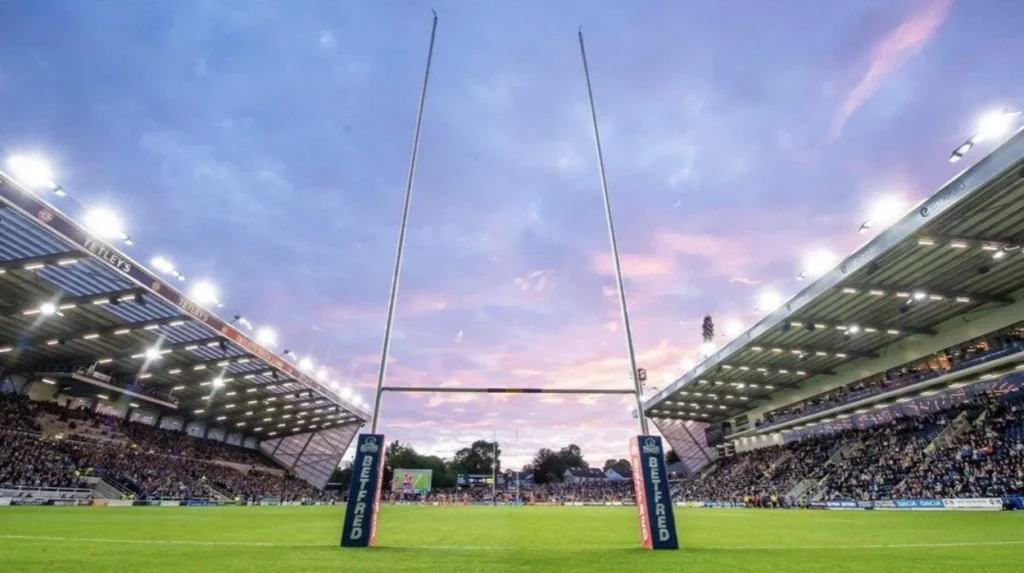
Famous rugby matches at Headingley include Great Britain Tests, Rugby League World Cup fixtures, Challenge Cup matches and major Leeds club games, with the venue recording landmark crowds and international contests across more than a century of competition.
Headingley’s match history covers domestic and international rugby. The venue has been used for representative fixtures involving Great Britain and touring nations, as well as major competitions involving Leeds.
The first Northern Union Test at Headingley took place on 25 January 1908. Great Britain defeated New Zealand 14–6. This fixture established the ground as an international rugby venue during the early development of rugby league.
Great Britain later played Australia at Headingley in 1921, with Great Britain winning 6–5. Another Great Britain-New Zealand Test followed in 1927, ending 32–17. These fixtures form part of a long sequence of international rugby at the stadium.
The 1947 Leeds versus Bradford Northern fixture is another major landmark. Its attendance of 40,175 remains the stadium’s recorded rugby league attendance record. The figure illustrates the strength of local rugby support during the period.
The 1970 Rugby League World Cup final added global significance. Great Britain played Australia at Headingley in front of 18,776 spectators. Hosting a World Cup final placed the Leeds venue within the international history of rugby league.
Headingley also hosted Rugby League World Cup fixtures in later decades. During the 1995 tournament, England played South Africa at the ground. The 2000 Rugby League World Cup included England against Fiji and an England versus Ireland quarter-final at Headingley.
These fixtures show how the stadium developed from a Victorian club venue into an international rugby location.
For visitors, the significance is visible in the stadium layout. The rugby ground sits beside the cricket ground, creating a sporting complex where two major British sports have shared the same wider site for more than 130 years.
How did rugby union shape Headingley’s sporting identity?
Rugby union shaped Headingley through Headingley Football Club, Leeds Rugby Union Football Club and later Leeds Tykes, creating a parallel rugby tradition that operated alongside rugby league and made the stadium unusual within English professional sport.
Rugby union has a separate history from rugby league at Headingley. The origins of the union tradition lie with Headingley Football Club, founded in 1878. The club developed through the amateur era and produced players who represented England and other Home Nations.
Headingley’s union tradition became particularly strong during the twentieth century. Leeds Tykes records that the club had eight internationals during one important period in the 1930s, with players representing all four Home Unions.
One prominent figure was Peter Winterbottom. The Headingley rugby history records that he earned 58 England caps and toured with the British Lions. His career demonstrates the route from local club rugby to international competition.
The modern Leeds union story developed after Headingley FC and Roundhay RUFC were brought together. Leeds Rugby Union Football Club was established in 1991. The club subsequently moved into Headingley Stadium and became Leeds Tykes.
A major development followed in 1998. Leeds Tykes became part of a dual-code rugby partnership with Leeds Rhinos. The arrangement was described by the club as the world’s first partnership in which one business owned both a professional rugby league and rugby union club. Both teams used Headingley as their playing base.
Leeds Tykes later reached the top level of English rugby union. The club gained promotion to the Premiership in 2001 and won the Powergen Cup at Twickenham in 2005 after defeating Bath.
The union club eventually left Headingley. In 2020, the organisation reverted to the Leeds Tykes name and ended its long-standing arrangement with Leeds Rhinos. The club stated that it would continue to retain a link with Headingley through selected fixtures.
This history explains why Headingley remains relevant to both codes even though the professional rugby operations have developed separately.
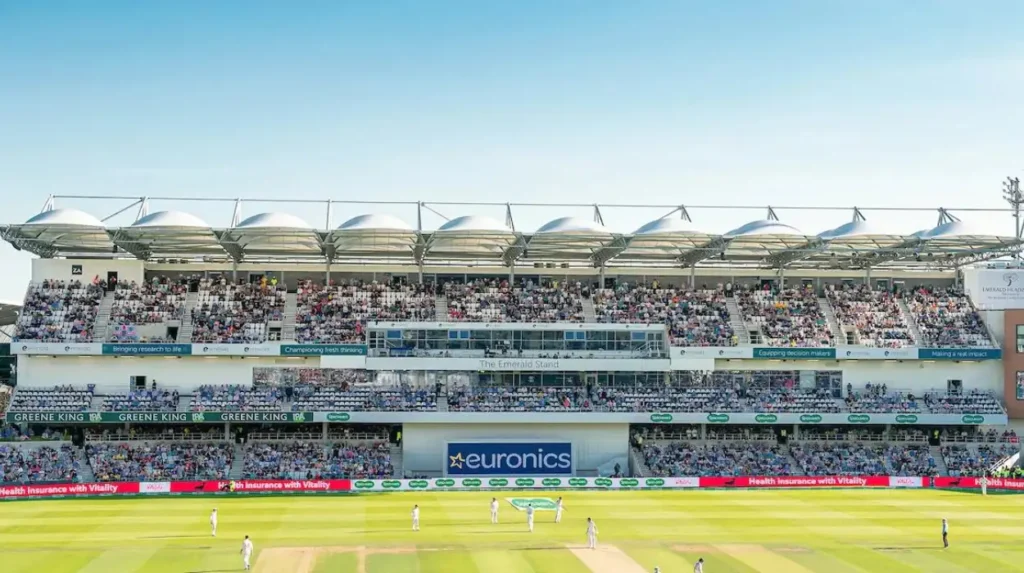
What are the main sporting landmarks around Headingley?
The main sporting landmarks include AMT Headingley Rugby Stadium, Headingley Cricket Ground, the shared Howard Stand area, Yorkshire Cricket Museum and nearby university sports facilities, creating a concentrated sporting district within Headingley and the wider Leeds area.
AMT Headingley Rugby Stadium is the principal rugby landmark. It is the home ground of Leeds Rhinos and remains the central location for exploring the district’s rugby heritage.
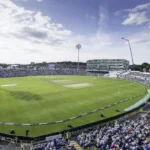
Immediately beside it is Headingley Cricket Ground, home of Yorkshire County Cricket Club since 1890. The cricket ground hosted its first Test match in 1899. Yorkshire describes Headingley as one of the few grounds in the world where two international sporting venues operate within the same wider stadium complex.
The physical relationship between the two grounds is particularly important. The Howard Stand provides views towards both the cricket and rugby pitches. This shared architectural arrangement reflects the original multi-sport concept of the site.
The Yorkshire Cricket Museum provides another heritage point. It is located within Headingley Cricket Ground and displays material from Yorkshire cricket history. The wider Yorkshire Cricket Archive contains historic artefacts and memorabilia, with parts of the collection held at West Yorkshire Archives Service in Morley.
Although the museum focuses on cricket, it forms part of the wider sporting landscape that makes Headingley distinctive. Visitors interested in rugby can combine the stadium experience with the history of the neighbouring cricket ground.
Beckett Park and the wider Headingley university area provide another sporting connection. Leeds City Council’s neighbourhood design documentation records the development of athletics and other sports facilities around the former training college site, now associated with Leeds Beckett University.
These locations create a wider sporting geography rather than a single attraction.
A visit focused on rugby therefore fits naturally into a broader Headingley sports itinerary. The stadium, cricket ground, museum, university facilities and surrounding streets collectively show how sport has influenced the district’s physical development.
Explore More Area Guide
Headingley Historic Buildings & Architecture Guide | Leeds
Headingley Student-Friendly Places for Free Time in Leeds
How has Headingley Stadium changed over time?
Headingley Stadium has evolved from a Victorian multi-sport ground into a modern professional sporting complex through successive stand replacements, redevelopment projects, improved facilities and commercial partnerships while retaining separate rugby and cricket grounds on the historic site.
The original Headingley development dates from 1889 and 1890. The pavilion and main stand were built before the cricket ground formally opened in May 1890. Rugby also became part of the new venue from its first season.
The rugby ground underwent major structural changes during the twentieth century. The South Stand was completed in 1931. The original North Stand was destroyed by fire during a match against Halifax in March 1932 and replaced before the end of that year.
Floodlights were installed in 1966. These changes enabled the stadium to accommodate modern evening fixtures and reflected the wider transformation of professional sport during the second half of the twentieth century.
The most significant modern redevelopment began in 2005. The project covered the wider Headingley complex and included a replacement North/South Stand, new cricket facilities and a media centre. The project cost £7 million and opened in September 2006.
Further redevelopment followed during the 2010s. The North-South Stand was redeveloped again as part of the wider modernisation programme and became the Emerald Stand after its completion in 2019.
Naming rights have also changed the terminology used for the venue. The rugby stadium became Emerald Headingley Rugby Stadium in 2017 before being renamed AMT Headingley Rugby Stadium following the 2023 naming-rights agreement.
The changing names do not represent a break in the venue’s history. The underlying location remains the same historic rugby ground.
For visitors researching old photographs, match reports or historical references, different stadium names therefore refer to different periods in the same continuing sporting location.
Why does Headingley remain significant for visitors interested in rugby?
Headingley remains significant for rugby visitors because its stadium combines a continuous Leeds rugby tradition with international fixtures, historic match records, modern professional facilities and direct connections to both rugby league and rugby union.
Headingley offers a concentrated way to understand Leeds rugby. The principal attraction is the rugby stadium, but its significance becomes clearer when viewed alongside the neighbouring cricket ground and the wider sporting history of the district.
Leeds Rhinos provide the strongest current rugby connection. The club continues to play professional rugby league at Headingley, preserving the venue’s relationship with Leeds rugby that dates back to the nineteenth century.
The historical record provides several measurable reference points. The first rugby union match at the stadium took place in 1890. The first Northern Union match followed in 1895. The first Northern Union Test took place in 1908. The stadium later hosted a Rugby League World Cup final in 1970.
Rugby union also remains part of the location’s heritage through Headingley FC and Leeds Tykes. The union history includes international players, Premiership rugby and the 2005 Powergen Cup victory by Leeds Tykes.
The wider sporting complex adds another layer. Yorkshire County Cricket Club has been based at Headingley since 1890, while the ground has hosted Test cricket since 1899. The two sporting grounds remain physically connected within the same historic site.
Headingley therefore works as both a current sports venue and a heritage location. A visitor can attend a modern rugby league fixture while standing inside a ground that has hosted international rugby for more than a century.
Its future relevance also comes from continued redevelopment and professional use. The stadium remains an active venue rather than a preserved historic site. That combination of current sport and documented history gives Headingley its distinctive place in Leeds.
For tourists, the most useful approach is to treat Headingley as a sporting district rather than a single attraction. The rugby stadium provides the central focus, while the adjacent cricket ground, museum, university sports facilities and historic neighbourhood provide additional context.
Headingley’s rugby heritage is ultimately defined by continuity. The names, stands, competitions and professional structures have changed, but rugby has remained part of the site since the Victorian era. That uninterrupted sporting connection explains why Headingley remains one of the most recognisable rugby locations in Leeds and Yorkshire.
What is Headingley famous for?
Headingley is famous for its sporting heritage, particularly Headingley Stadium, Leeds Rhinos rugby league and Yorkshire County Cricket Club. The area has hosted major rugby and cricket events since the late nineteenth century.