
Headingley is a well-established inner-city area of Leeds with a strong student, residential and professional population. Its location between Leeds city centre and northwest Leeds creates regular demand for accessible healthcare, including routine dental care, urgent treatment, private dentistry and NHS dental services.
- What is dental care in Headingley?
- What dental services are available in Headingley?
- How do NHS dentists work in Headingley?
- How can you find a dentist near Headingley?
- What should you check before choosing a Headingley dentist?
- What happens during a routine dental appointment in Headingley?
- How does emergency dental care work in Headingley?
- Where can visitors get dental help while staying in Headingley?
- How much does dental treatment cost in Headingley?
- How does Headingley’s location affect access to dental care?
- What dental care is important for students in Headingley?
- How can residents maintain good oral health between dental appointments?
- Why is Headingley a practical location for ongoing dental care?
- What should you do before booking a Headingley dental appointment?
Dental care in Headingley covers preventive appointments, examinations, hygiene treatment, fillings, crowns, root canal treatment, tooth removal, dentures, cosmetic dentistry and emergency assessment. Availability, fees and NHS registration arrangements differ between practices, so patients need to check current arrangements directly with individual providers.
The area also benefits from its proximity to larger healthcare facilities and Leeds city centre. This gives residents, students, visitors and workers several options when they need dental treatment during their time in Headingley.
What is dental care in Headingley?
Dental care in Headingley refers to the examination, prevention, diagnosis and treatment of oral health conditions provided by dental practices serving Headingley and nearby Leeds neighbourhoods. Services include check-ups, hygiene appointments, fillings, emergency assessments and restorative care.
Dental care focuses on maintaining healthy teeth, gums and supporting oral tissues. A dentist assesses the mouth, identifies disease and recommends appropriate treatment. Dental hygienists provide professional cleaning and support patients with preventive oral care.
Headingley has a mixed population. Students form a significant part of the local community because of nearby educational institutions. The area also contains long-term residents, families, professionals and visitors. This creates demand for both routine and short-notice dental appointments.
Patients seeking a dentist in Headingley should distinguish between NHS and private services. NHS dentistry operates within the National Health Service and uses NHS charging arrangements in England. Private dentistry operates outside NHS funding and sets its own fees.
The availability of NHS appointments is practice-specific. A dental practice accepting NHS patients at one point does not necessarily have open NHS registration at another. Patients should therefore confirm availability before travelling.

What dental services are available in Headingley?
Headingley dental practices provide preventive, restorative and urgent services that address common oral health needs. Typical care includes examinations, dental hygiene, fillings, crowns, root canal treatment, extractions, dentures, cosmetic procedures and emergency dental assessments.
A routine dental examination is the foundation of ongoing dental care. The dentist checks teeth, gums, existing restorations and other structures inside the mouth. X-rays are used when clinically necessary to assess areas that are not visible during a standard examination.
Preventive dentistry aims to stop oral disease before it requires extensive treatment. Professional hygiene appointments remove hardened deposits such as tartar. Dentists and hygienists also provide guidance on brushing, interdental cleaning, fluoride use and diet.
Restorative dentistry repairs damaged or diseased teeth. Fillings treat cavities by removing decayed material and restoring the affected tooth. Crowns cover heavily damaged teeth and restore their shape and function.
Root canal treatment addresses infection or inflammation inside a tooth. The procedure removes infected pulp tissue, cleans the root canal system and seals the tooth.
Tooth extraction removes a tooth that cannot be retained or requires removal for clinical reasons. Dentures replace missing teeth using removable dental appliances.
Some Headingley practices also provide cosmetic treatments. These include tooth whitening, cosmetic bonding, veneers and other appearance-focused procedures. Cosmetic treatment should begin with an assessment of dental health because untreated disease requires attention before elective procedures.
How do NHS dentists work in Headingley?
NHS dentists in Headingley provide clinically necessary dental treatment under the NHS dental system in England. Patients should check whether a practice currently accepts NHS patients, whether registration is available and which treatments are covered under NHS arrangements.
NHS dentistry in England is commissioned through NHS structures and delivered by dental practices under contractual arrangements. NHS treatment focuses on maintaining oral health and treating clinically necessary dental conditions.
NHS dental charges in England are organised into treatment bands. The bands cover courses of treatment rather than individual procedures. The charge structure is set nationally and changes when government policy changes.
Patients should confirm current NHS charges through official NHS information before attending treatment. Some people qualify for free NHS dental treatment, including eligible children and certain groups receiving qualifying benefits or financial support.
NHS availability is an important practical issue. A practice can provide NHS dentistry while having no capacity for new NHS patients. Some practices also operate mixed models, providing both NHS and private treatment.
Patients searching for an NHS dentist in Headingley should therefore ask three questions before booking. They should confirm that the practice provides NHS dentistry, whether it is accepting new NHS patients and whether the required treatment is available under NHS arrangements.
How can you find a dentist near Headingley?
Finding a dentist near Headingley starts with checking the NHS service directory, individual practice websites and current appointment availability. Patients should compare location, NHS or private status, services, accessibility, opening hours and arrangements for urgent dental problems.
The NHS website provides an official search service for dental practices in England. Patients can search by location and review information about available services.
Individual dental practices provide more detailed information about appointment types, clinicians, fees, accessibility and contact procedures. Practice websites also provide the most relevant information about current opening hours.
Location is particularly important for people without a car. Headingley is connected to Leeds city centre and surrounding neighbourhoods by local bus services. Headingley railway station also provides rail access for some journeys.
Students often prioritise a dental practice close to accommodation or university facilities. Residents often prioritise continuity of care and convenient appointment times. Visitors generally require accessible urgent treatment rather than long-term registration.
Patients should avoid assuming that a practice listed online has immediate appointment availability. A direct enquiry confirms whether the practice can accept a particular patient and treatment requirement.
What should you check before choosing a Headingley dentist?
Patients should compare the dentist’s NHS or private status, treatment availability, fees, appointment access, emergency arrangements, accessibility and location. Checking these details before booking reduces unexpected costs and helps patients select a practice suited to their circumstances.
The first consideration is the type of dental care required. A routine examination has different requirements from an emergency appointment, orthodontic assessment or complex restorative treatment.
The second consideration is payment. NHS patients should confirm NHS availability and applicable charges. Private patients should request a written treatment estimate before starting significant treatment.
The third consideration is access. Patients should check whether the practice has step-free access, accessible toilets or other facilities when required. These details are particularly important for people with mobility needs.
Opening hours also matter. Standard daytime appointments suit routine care. Extended hours provide additional options for workers and students.
Emergency arrangements deserve separate attention. Patients should ask what happens outside normal opening hours and where they should seek urgent help.
Professional regulation is another important consideration. Dentists and dental care professionals in the United Kingdom are regulated by the General Dental Council, commonly called the GDC. The GDC maintains professional standards and a public register of dental professionals.
What happens during a routine dental appointment in Headingley?
A routine dental appointment normally involves a medical and dental history review, an examination of the teeth and gums, assessment of oral health and discussion of recommended care. X-rays are taken when clinically justified.
The appointment begins with relevant health information. Patients should disclose medications, allergies, medical conditions and previous dental problems because these factors can affect dental treatment.
The dentist examines the teeth for decay, fractures, wear and existing restorations. The gums are assessed for signs of inflammation and periodontal disease.
The dentist also checks the soft tissues of the mouth. This assessment helps identify abnormalities that require further investigation.
Dental X-rays provide images of structures beneath the visible surface. They help identify cavities between teeth, changes around tooth roots, bone loss and other conditions that cannot be assessed fully through visual examination.
The dentist then explains findings and treatment options. Preventive advice forms part of routine care. Treatment recommendations depend on clinical findings rather than the patient’s location or occupation.
Regular dental examinations support early identification of problems. Early treatment often prevents a minor dental issue from developing into a more complex clinical problem.
How does emergency dental care work in Headingley?
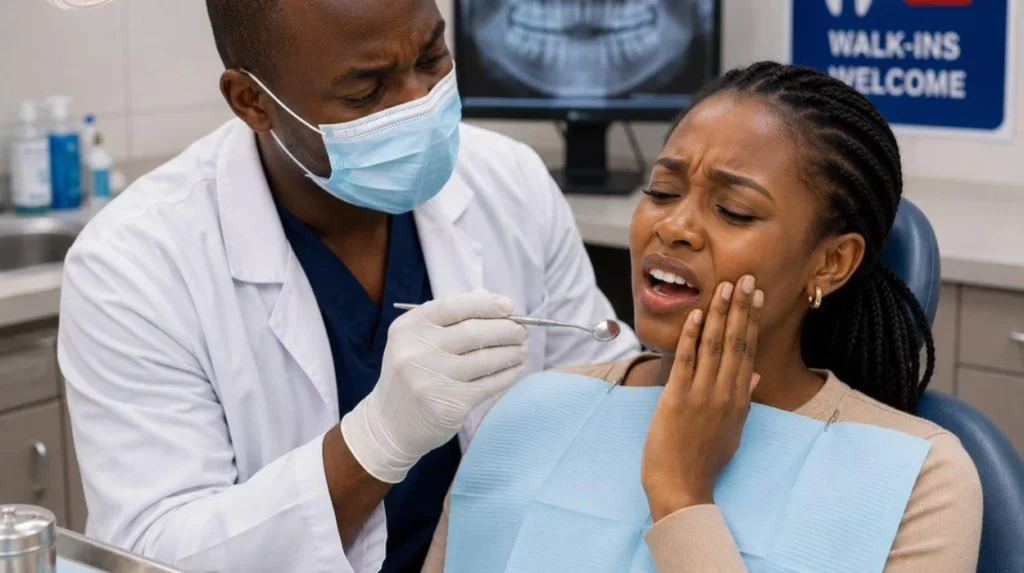
Emergency dental care addresses urgent problems such as severe dental pain, swelling, dental trauma, uncontrolled bleeding and suspected serious infection. Patients should contact a dental service promptly and use emergency medical services for life-threatening symptoms.
Dental emergencies require rapid assessment when symptoms indicate significant infection, trauma or severe pain. Examples include facial swelling, a knocked-out permanent tooth, uncontrolled bleeding and severe toothache.
A dental practice can assess whether the problem requires urgent treatment. The treatment provided depends on the diagnosis. It can include temporary repair, drainage, extraction, medication when clinically appropriate or referral for specialist care.
A knocked-out permanent tooth requires particularly prompt attention. The tooth should be handled carefully by the crown rather than the root. Patients should seek urgent dental advice immediately.
Facial swelling accompanied by difficulty breathing or swallowing represents a medical emergency. Such symptoms require immediate emergency medical attention because airway compromise is a serious risk.
The NHS provides guidance for urgent and emergency dental care. Patients should use official NHS information when they need help outside normal practice hours.
Where can visitors get dental help while staying in Headingley?
Visitors staying in Headingley should contact local dental practices for urgent appointments and confirm whether the practice accepts temporary or private patients. Severe swelling, breathing difficulty or serious facial trauma requires emergency medical attention rather than routine dental booking.
Tourists and short-term visitors generally do not need to approach dental care in the same way as registered local patients. A practice can explain whether it offers urgent appointments to visitors.
Private dental treatment can provide an alternative when NHS capacity is unavailable. The patient should ask about consultation fees and treatment costs before agreeing to non-emergency private care.
Visitors from outside the United Kingdom should check their travel insurance policy. Dental emergencies and routine dental treatment have different insurance conditions.
People travelling for business in Leeds should also consider appointment location. Headingley provides access to Leeds city centre, making it possible to combine necessary healthcare with other planned activities.
For urgent symptoms, delaying care simply because the patient is away from home is inappropriate. Dental infections and traumatic injuries require professional assessment.
How much does dental treatment cost in Headingley?
Dental treatment costs in Headingley depend on whether care is provided through the NHS or privately, the treatment required and the practice’s current fee structure. Patients should confirm current charges and obtain estimates before non-routine private treatment.
NHS dental charges in England use nationally defined bands. The relevant charge depends on the course of treatment rather than each individual procedure being priced separately.
Private dental practices set their own fees. Costs therefore vary between practices and treatments. A private examination, hygiene appointment, filling, crown or cosmetic procedure can have different prices.
Patients should request a treatment plan for complex work. The plan should explain recommended procedures and associated fees.
Price comparison alone does not establish whether one practice is suitable. Appointment availability, treatment scope, professional qualifications and continuity of care are also relevant.
Fees for specialist services can differ significantly from routine dentistry. Orthodontics, dental implants and complex restorative procedures often involve longer treatment plans.
Current prices should always be confirmed directly with the dental practice because fee schedules change.
How does Headingley’s location affect access to dental care?
Headingley’s position northwest of Leeds city centre makes local dental services accessible to residents, students and visitors. Bus connections, Headingley railway station and nearby roads support access from surrounding Leeds neighbourhoods and central Leeds.
Headingley is a connected urban district rather than an isolated residential area. Its proximity to Leeds city centre gives patients access to a wider healthcare network.
The area is served by regular public transport connections. Bus routes provide links between Headingley, Leeds city centre and surrounding communities.
Headingley railway station sits on the Harrogate Line and provides rail services towards Leeds and destinations to the north. The station is useful for some residents and visitors travelling without a car.
Cycling and walking also form part of local travel patterns. The University of Leeds and other educational facilities are close to Headingley, creating demand for accessible healthcare among students and staff.
Parking arrangements vary by street and practice. Patients travelling by car should check local restrictions and practice-specific parking information before an appointment.
As you explore modern Headingley, its healthcare services sit within an area shaped by a much longer local story. Read about the full [Insert Anchor Text for Headingley History Article Here] to understand its origins.
What dental care is important for students in Headingley?
Students in Headingley benefit from registering with a suitable dental practice early, maintaining regular preventive care and understanding NHS or private payment arrangements. Routine examinations, hygiene care and prompt treatment help prevent dental problems during university life.
Headingley has a strong student population because of its proximity to the University of Leeds and Leeds Beckett University facilities.
Students often live in rented accommodation and change address during their studies. Dental care should therefore be considered separately from other household arrangements.
A student should establish whether a practice accepts NHS patients before attempting to register. If NHS capacity is unavailable, the student can ask about private appointments and costs.
Preventive care is particularly important during periods of changing routines. Diet, sleep patterns, alcohol consumption, smoking and oral hygiene habits influence dental health.
Students should also keep records of previous dental treatment. This information helps a new dentist understand existing restorations, previous orthodontic treatment and known dental conditions.
Emergency dental information should be saved before a problem occurs. Knowing whom to contact reduces delays when severe pain or trauma develops.
How can residents maintain good oral health between dental appointments?
Good oral health depends on consistent daily hygiene, regular dental assessment, appropriate fluoride exposure, healthy dietary habits and prompt attention to symptoms. Brushing twice daily with fluoride toothpaste and cleaning between teeth are core preventive measures.
The NHS recommends brushing teeth twice a day with fluoride toothpaste. Fluoride strengthens tooth enamel and helps protect against tooth decay.
Cleaning between teeth removes plaque from areas that a toothbrush cannot reach effectively. Interdental brushes or dental floss provide options depending on the patient’s dental anatomy.
Diet also affects oral health. Frequent consumption of sugary foods and drinks increases the risk of tooth decay. Limiting frequency and maintaining regular meals supports preventive dental care.
Smoking damages oral health and increases the risk of gum disease. Tobacco use is also associated with oral cancer.
Alcohol can affect oral health through its relationship with dietary habits, dehydration and exposure to acidic or sugary drinks. Moderation supports wider health objectives.
People should seek dental advice when symptoms persist. Pain, bleeding gums, swelling, loose teeth or changes in the mouth require professional assessment.
Explore More Area Guide
Headingley Healthcare Centres and Local Pharmacies
Headingley Parks & Outdoor Exercise Guide | The Leeds
Why is Headingley a practical location for ongoing dental care?
Headingley combines a substantial residential population, student community, transport connections and proximity to central Leeds, creating a practical setting for routine and urgent dental care. Local practices serve everyday needs while wider Leeds provides additional healthcare options.
Dental care works best when patients can access services consistently. Headingley’s location supports this through proximity to residential areas, educational institutions, workplaces and central Leeds.
The area has a varied population with different healthcare requirements. Students often require convenient and affordable services. Families require preventive and restorative care. Professionals often prioritise appointment flexibility.
The availability of multiple dental providers across Headingley and nearby districts gives patients options. However, the exact availability of NHS and private appointments changes over time.
Digital nomads and business travellers also benefit from understanding local dental arrangements. A short stay does not prevent someone from seeking urgent dental treatment, but appointment and payment conditions should be confirmed before attending.
Headingley’s dental services form part of the wider Leeds healthcare system. Patients with complex requirements can receive local assessment and referral when specialist services are appropriate.
What should you do before booking a Headingley dental appointment?
Before booking, identify the type of care required, check NHS or private availability, confirm current fees, review appointment times and ask about emergency arrangements. Bring relevant medical information and arrive prepared to discuss previous dental treatment.
The first step is identifying whether the appointment is routine or urgent. Severe pain, swelling or trauma requires a different pathway from a standard check-up.
The second step is checking the practice’s current patient status. Ask whether the practice accepts new NHS patients or offers private appointments.
The third step is confirming cost. NHS patients should ask about applicable NHS charges. Private patients should request current prices and estimates for planned treatment.
The fourth step is checking practical access. Confirm opening hours, public transport options, parking and accessibility requirements.
The final step is maintaining continuity. Once a suitable dentist is found, regular examinations and preventive appointments provide a structured approach to oral health.
For residents, students and regular visitors, understanding local dental services before an urgent problem develops makes healthcare planning simpler. For short-term visitors, knowing where to seek urgent assistance provides an important safeguard while staying in Headingley.Headingley Dentists and Dental Care Services Guide
Are there dentists in Headingley, Leeds?
Yes. Headingley has dental practices providing routine examinations, hygiene appointments, fillings, crowns, root canal treatment, extractions, dentures, cosmetic dentistry and urgent dental assessments. Availability differs between individual practices.