Key Points
- Railway Reopened: Rail services between Leeds and York have officially resumed following the successful completion of a nine-day engineering closure.
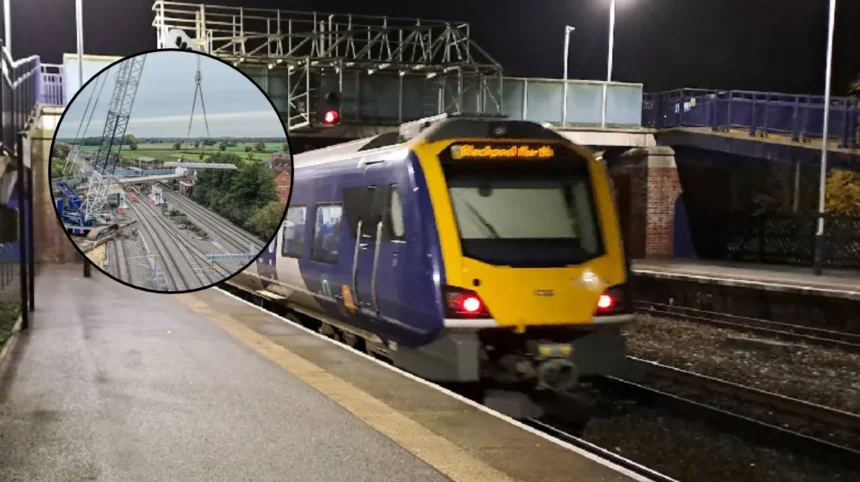
- Bridge Replacement: Engineers installed the new Common Lane railway bridge in Church Fenton, replacing a structure dating back to 1901 a year earlier than originally planned.
- Overhead Line Fitting: Essential overhead power line equipment was fitted to prepare the line for faster, greener electric train services across the North.
- Severe Weather Overcome: The project team successfully managed work around severe weather conditions caused by Storm Boelo, rescheduling activities to complete all tasks safely and on time.
- Parallel Upgrades: Simultaneous infrastructure works were carried out on the East Coast Main Line in North Yorkshire, including track renewal, points replacement, and drainage improvements.
- Road Restorations: Diverted utility services are now being relocated inside the new structure, with Common Lane scheduled to fully reopen to road traffic in June 2027.
Church Fenton (The Leeds Times) November 2, 2026 – Passenger rail services connecting Leeds and York have reopened on schedule following a intensive nine-day blockade undertaken by engineers from the Transpennine Route Upgrade.The crucial line closure, which began on Saturday 24 October and concluded on Sunday 1 November, saw engineering crews working around the clock to modernise infrastructure near the village of Church Fenton in North Yorkshire. Central to the operation was the complete removal of the historic Common Lane railway bridge—originally erected in 1901—and the installation of a modern replacement structure.
Alongside the bridge construction, technical teams completed the fitting of new overhead power lines. This installation is designed to enable the future deployment of electric trains along the key cross-country corridor, forming part of broader efforts to deliver faster, more reliable, and environmentally sustainable services for passengers travelling between York, Leeds, Huddersfield, and Manchester.
How Was the Infrastructure Upgraded Ahead of Schedule?
The replacement of the Common Lane overbridge was executed a full year ahead of its original 2027 structural deadline. Historical inspections by engineering teams had indicated that the 125-year-old bridge was nearing the end of its operational lifespan. Furthermore, the low clearance of the 1901 design prevented the installation of high-voltage overhead line equipment required for electrification.
By bringing the bridge replacement forward to coincide with scheduled access windows, project managers maximised productive time on the operational railway while avoiding the need for an additional extended line closure in future years. The strategy was explicitly devised to minimise repeat disruption to both rail passengers and the surrounding local community.
The engineering operation faced severe environmental challenges during the nine-day window when high winds and heavy rainfall from Storm Boelo swept across North Yorkshire.
To maintain safety standards during the peak of the storm, site managers temporarily paused outdoor construction activities. Crucially, project leaders had pre-emptively rescheduled heavy lifting operations and shifted shift rosters in advance of the weather front, ensuring the project remained strictly on target to meet its reopening deadline on 2 November.
To maintain passenger mobility while the line was severed, train operators coordinated a bus replacement network. Direct coaches operated between Leeds and York, as well as between York and Selby, while stopping bus services served intermediate stations including Ulleskelf, Church Fenton, Sherburn-in-Elmet, and Micklefield to link travelers with local connecting services.
What Do Rail Industry Leaders Say About the Milestone?
As reported by the Network Rail Press Office, Adam Sellers, Senior Sponsor for the Transpennine Route Upgrade, stated:
“We’ve completed this major work at Church Fenton safely and on time, bringing us a step closer to more frequent, faster, greener trains between York, Huddersfield, Leeds and Manchester. A big thank you to our teams who worked around the clock and in very challenging weather conditions to deliver this latest milestone.”
Highlighting the collaborative nature of the regional transport effort, Carl Harland, Customer Lead for Northern at TRU, stated via official project communications:
“We would like to thank our colleagues from across the industry for completing these works at Church Fenton and keeping our customers moving over the past nine days. The upgrades that have been delivered form an integral part of transforming the route between Leeds and York, helping better connect our communities. Thank you to our customers for their patience whilst these major upgrades have taken place.”
What Additional Infrastructure Works Were Conducted in North Yorkshire?
The nine-day blockade at Church Fenton coincided with a parallel series of infrastructure enhancements along the adjacent East Coast Main Line across two consecutive weekends in North Yorkshire.
Engineers executed track renewals, replaced track points, upgraded existing overhead line equipment, and carried out structural drainage maintenance. Additional work teams performed vegetation management along rail embankments to reduce seasonal leaf-fall delays and upgraded station platform infrastructure to improve overall reliability and journey quality for long-distance and regional commuters.
With the structural framework of the new Common Lane bridge now anchored in place, project teams have transitioned to the next phase of the site plan.
Engineers have begun re-routing and relocating municipal utility services—including water, gas, and telecommunications cables—within the interior cavities of the new bridge deck. Once utility integrations are complete, highway contractors will restore the road surface, with the thoroughfare scheduled to reopen to vehicular traffic in June 2027.
Explore More Local Leeds News
£148m Royal Armouries Transformation Moves Forward in Leeds 2026
Leeds Bonfire Night 2026: 30 Fireworks Displays Across Leeds 2026
Background of the Transpennine Route Upgrade Development
The Transpennine Route Upgrade is a multi-billion-pound major infrastructure programme managed by Network Rail aimed at modernising the main rail artery connecting Manchester, Huddersfield, Leeds, and York. Historically, the route has suffered from capacity constraints, mixed traffic congestion, and legacy infrastructure dating back to the Victorian era.
The decision to combine bridge renewal, track bed preparation, and overhead wiring installation into concentrated engineering blockades reflects a broader shift in UK rail asset management. By addressing structural vulnerabilities—such as the 1901 Church Fenton bridge—a year ahead of schedule, the programme avoids compound delays and lowers total capital expenditure.
Predictions
The successful completion of the Church Fenton upgrades marks a pivotal transition point for rail transport across Northern England.
In the medium to long term, passengers traveling between York, Leeds, and Manchester will experience significantly improved operational reliability.
The installation of modern overhead line equipment lays the direct technical foundation for replacing legacy diesel rolling stock with higher-acceleration electric trains. This transition is projected to trim journey times between key Northern cities, expand overall seat capacity, and reduce carbon emissions across the regional rail network.
Additionally, the track renewal and drainage works on the East Coast Main Line will reduce speed restrictions caused by asset failure during severe winter weather.
For local residents in Church Fenton and surrounding North Yorkshire villages, the early replacement of the bridge eliminates the prospect of further prolonged rail closures in 2027. However, local motorists will experience ongoing highway diversions via Sherburn-in-Elmet while utility diversions and road reconstruction continue on Common Lane. The restoration of full road access in June 2027 will ultimately leave the community with a modernised, low-maintenance highway structure designed to accommodate contemporary traffic loads alongside electrified rail infrastructure.
By systematically removing historical bottlenecks along the Transpennine corridor, the upgrade enhances labor market mobility across Yorkshire and Lancashire. Businesses relying on cross-regional connectivity stand to benefit from more dependable transport links, aligning with wider public policy objectives to strengthen economic integration across northern urban centers.