Headingley is a residential suburb in north-west Leeds, West Yorkshire, with a mixture of Victorian and Edwardian houses, traditional terraces, student accommodation, family homes and modern residential developments. Its gardens range from compact courtyard spaces and shared outdoor areas to established private gardens with mature trees, lawns, flower beds and landscaped boundaries.
- What Does Garden Maintenance and Landscaping Include in Headingley?
- Why Do Headingley Properties Need Regular Garden Maintenance?
- What Garden Maintenance Services Are Available in Headingley?
- How Do Landscaping Services Improve Residential Gardens in Headingley?
- Which Garden Design Features Work Best for Headingley Homes?
- How Does the Local Climate Affect Garden Maintenance in Headingley?
- How Can Homeowners Choose Reliable Gardeners and Landscaping Contractors in Headingley?
- How Much Do Garden Maintenance and Landscaping Services Cost in Headingley?
- What Garden Maintenance Regulations Apply to Properties in Headingley?
- Tree Preservation Orders
- Conservation Areas
- Boundary responsibilities
- Fences and garden walls
- Tenanted properties
- How Should Garden Waste Be Managed in Headingley?
- Leeds brown-bin collections
- Additional garden waste collections
- Home composting
- Professional garden waste removal
- How Can Sustainable Landscaping Support Gardens in Headingley?
- Native and pollinator-friendly planting
- Rainwater harvesting
- Permeable landscaping
- Composting and soil improvement
- Wildlife habitats
- What Should Property Owners Consider Before Starting a Landscaping Project?
- Measure the garden
- Assess drainage and ground conditions
- Check underground services
- Establish a realistic budget
- Agree a maintenance plan
- How Does Headingley’s History Influence Garden Design and Property Maintenance?
- How Can Landlords and Property Managers Maintain Gardens in Headingley?
- When Should Headingley Residents Hire a Specialist Landscaping Contractor?
- How Can Residents Maintain a Garden Throughout the Year?
- What Is the Future of Garden Maintenance and Landscaping in Headingley?
- How Can You Find Suitable Garden Maintenance and Landscaping Services in Headingley?
Garden maintenance and landscaping services help property owners keep these outdoor spaces attractive, functional, safe and environmentally sustainable. Professional gardeners provide routine maintenance, while landscape contractors undertake larger improvements such as patio installation, garden redesign, drainage, fencing, planting and lawn construction.
For homeowners, landlords, tenants and property managers, understanding the local gardening industry helps identify suitable professionals and plan outdoor improvements. This guide explains garden maintenance in Headingley, the services available, local property considerations, landscaping processes, environmental responsibilities and the factors involved in choosing a reliable gardening professional.
What Does Garden Maintenance and Landscaping Include in Headingley?
Garden maintenance and landscaping cover the routine care, improvement and redesign of outdoor spaces. Garden maintenance includes lawn mowing, pruning, weeding and seasonal planting, while landscaping involves structural work such as patios, paths, fencing, drainage and complete garden redesign.
These services address different aspects of outdoor property management. Garden maintenance preserves the condition of an existing garden. Landscaping changes its layout, appearance or practical use.
In Headingley, garden requirements vary according to property type. Victorian terraces often have narrow rear gardens, small courtyards and enclosed boundaries. Larger detached and semi-detached properties have more space for lawns, trees, borders and seating areas.
Professional garden maintenance services typically include:
- Lawn mowing and edging, including regular grass cutting and border maintenance.
- Hedge trimming, including shaping established hedges and controlling excessive growth.
- Weed removal, including clearing paving joints, flower beds and lawn edges.
- Plant care, including deadheading flowers, watering and seasonal planting.
- Tree and shrub maintenance, including appropriate pruning and removal of dead branches.
- Garden clearance, including removing fallen leaves, unwanted vegetation and accumulated garden waste.
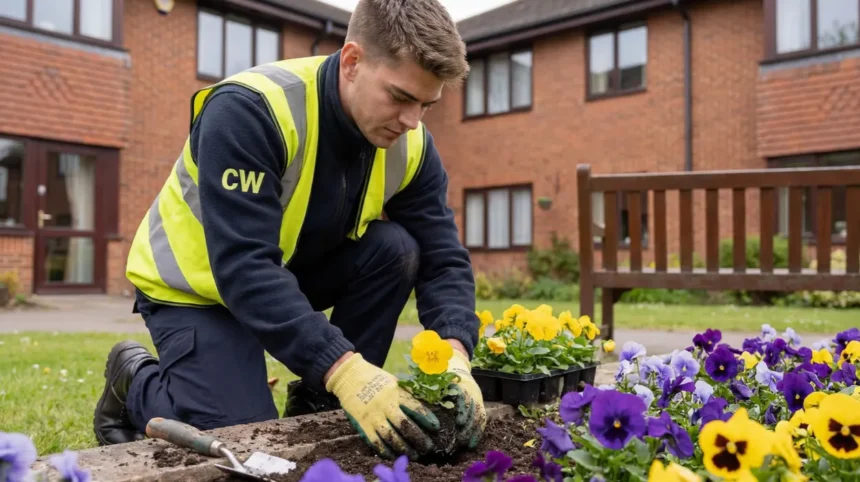
Landscaping services concentrate on physical improvements. Examples include installing natural stone patios, building timber decking, creating raised planting beds, laying new turf and constructing garden pathways.
Some gardening businesses provide both maintenance and landscaping. Others specialise in particular services, such as tree surgery, paving, fencing or lawn treatment.
The distinction matters when requesting quotations. A routine gardening visit does not cover the same work as a complete landscape construction project.
Why Do Headingley Properties Need Regular Garden Maintenance?
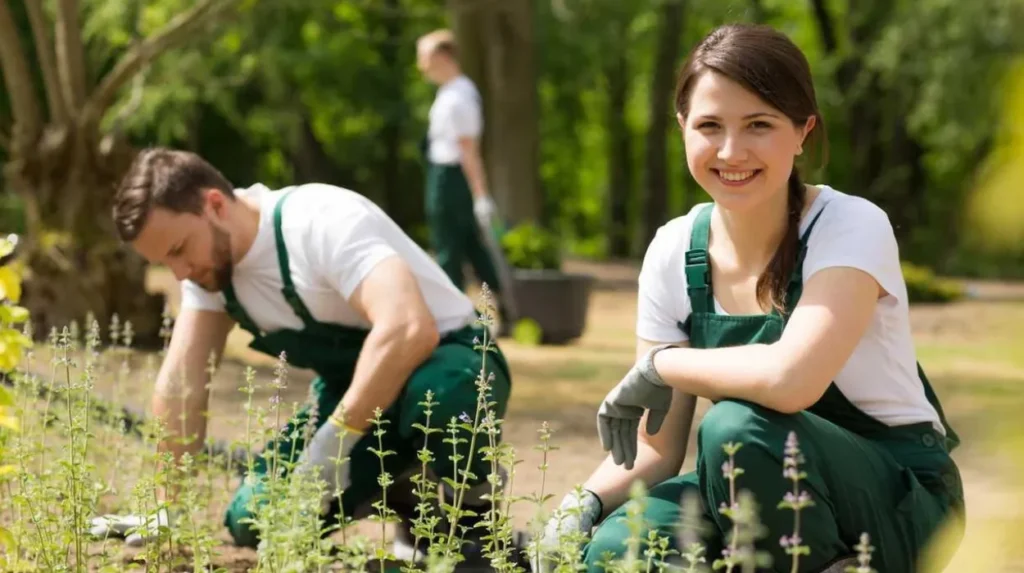
Regular garden maintenance protects outdoor spaces from excessive vegetation, damaged lawns, blocked drainage and neglected boundaries. In Headingley, consistent seasonal care helps residential gardens remain usable, presentable and manageable throughout the changing weather conditions of West Yorkshire.
Gardens require continuous attention because plants, lawns and outdoor structures respond to seasonal changes. Grass grows rapidly during suitable spring and summer conditions, while autumn brings falling leaves and increased organic debris.
Unmaintained gardens develop practical problems. Overgrown hedges restrict access, weeds compete with planted vegetation, and accumulated leaves create slippery surfaces on paths and patios.
Garden maintenance also supports property presentation. Landlords preparing student accommodation, homeowners selling residential properties and property managers overseeing shared gardens benefit from consistent outdoor upkeep.
Headingley has a varied residential population, including long-term homeowners, private renters and students. Different property arrangements create different maintenance responsibilities.
A landlord might arrange regular garden maintenance for a rented house. A homeowner might employ a gardener for seasonal pruning and lawn treatment. A shared residential property might require an agreed maintenance schedule covering communal outdoor areas.
Regular maintenance also helps identify problems before they become expensive. Examples include:
- Damaged fencing that requires repair before sections become unstable.
- Poor drainage that causes persistent waterlogging.
- Diseased plants that require identification and appropriate treatment.
- Tree branches that interfere with buildings, paths or neighbouring properties.
- Loose paving that creates access and trip hazards.
The frequency of professional gardening depends on garden size, vegetation, intended use and available maintenance time.
What Garden Maintenance Services Are Available in Headingley?
Headingley residents can arrange routine gardening, lawn care, hedge trimming, pruning, planting, garden clearance and seasonal maintenance. Specialist professionals also provide tree surgery, pressure washing, fencing repairs and maintenance for communal residential gardens.
The local gardening market includes independent gardeners, small landscaping companies and specialist outdoor maintenance contractors.
Routine garden maintenance is suitable for properties requiring regular attention without major structural changes.
Lawn mowing and grass care
Lawn maintenance involves cutting grass to an appropriate height, trimming edges and managing weeds. Professional gardeners also provide turf installation, lawn renovation and overseeding.
Grass cutting frequency depends on growth conditions. Spring and summer generally require more frequent attention than winter.
Hedge trimming and pruning
Hedge maintenance controls growth and preserves the shape of garden boundaries. Common examples include privet, laurel, yew and other established hedge plants.
Pruning removes selected branches from shrubs and trees. The correct timing depends on plant species, flowering periods and wildlife considerations.
Weeding and flower-bed maintenance
Weeding removes unwanted vegetation from lawns, borders and paved areas. Gardeners also prepare soil, apply mulch and maintain established planting schemes.
Flower-bed maintenance includes seasonal planting, deadheading, dividing suitable perennials and replacing damaged plants.
Garden clearance
Garden clearance removes accumulated vegetation and unwanted outdoor materials. Examples include cutting back overgrown shrubs, removing fallen branches, clearing leaves and preparing neglected gardens for landscaping.
Tree and shrub care
Tree maintenance includes inspections, crown management and removal of hazardous branches where appropriate. Specialist tree surgeons undertake technical work requiring suitable equipment and training.
Property owners should distinguish routine pruning from major tree work. Trees covered by preservation controls require additional consideration before work begins.
How Do Landscaping Services Improve Residential Gardens in Headingley?
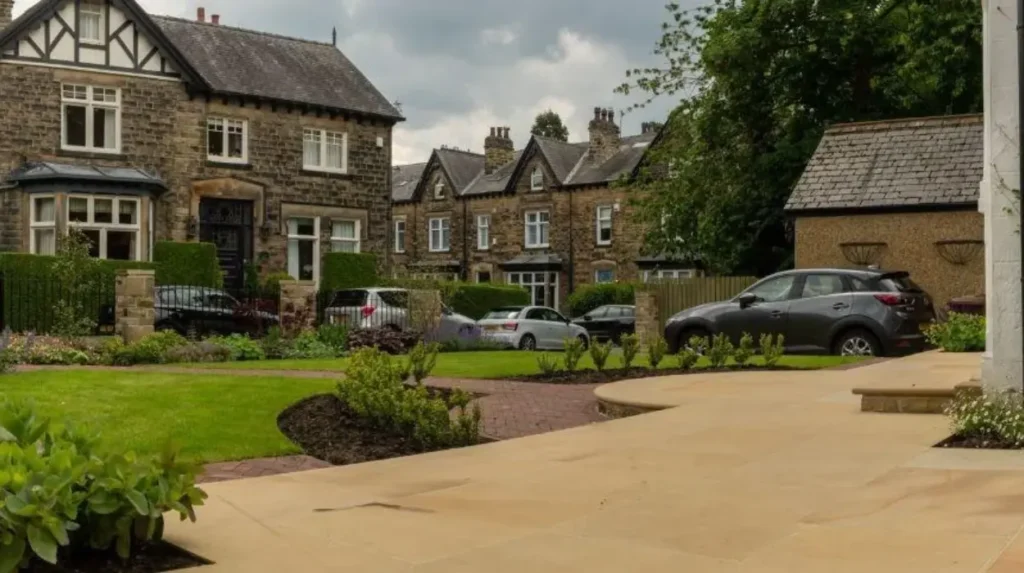
Professional landscaping improves garden layout, drainage, accessibility and outdoor usability. Landscaping contractors combine planting, paving, lawn construction, fencing and garden structures to create outdoor spaces that suit property dimensions, maintenance requirements and household needs.
Landscaping begins with an assessment of the existing outdoor space. Contractors examine ground conditions, boundaries, sunlight, access and the intended use of the garden.
The design must reflect the physical characteristics of the property. A narrow terrace garden requires different planning from a large detached-house garden.
Typical landscaping improvements include:
Patio installation
Patios create stable outdoor seating and entertaining areas. Common materials include natural stone, concrete paving, porcelain slabs and block paving.
A properly installed patio requires suitable ground preparation, an appropriate sub-base and effective water management.
Garden paths
Paths connect entrances, seating areas, lawns and planting zones. Materials include paving slabs, gravel, stone and permeable surfaces.
Path design should provide safe access and avoid unnecessary obstruction.
Raised flower beds
Raised beds provide defined planting areas and help organise gardens with limited ground space. They are suitable for flowers, herbs, vegetables and smaller ornamental plants.
Decking and outdoor seating
Timber and composite decking create elevated or level outdoor platforms. Installation requires attention to structural support, ventilation, drainage and safe access.
Lawn installation
Landscapers prepare ground before installing turf or establishing grass from seed. Preparation includes removing unwanted vegetation, improving soil condition and levelling the surface.
Fencing and boundary improvements
Fencing establishes privacy and separates neighbouring outdoor spaces. Contractors install timber panels, close-board fencing, decorative screens and suitable gates.
The most appropriate landscaping solution depends on budget, property layout and long-term maintenance requirements.
Which Garden Design Features Work Best for Headingley Homes?
Garden design for Headingley homes should reflect available space, building character, sunlight and maintenance requirements. Compact terraces benefit from vertical planting and practical seating, while larger gardens accommodate lawns, patios, established borders and separate outdoor activity areas.
Headingley’s traditional housing stock creates different landscaping opportunities.
Victorian terraces commonly feature narrow rear gardens. These spaces benefit from carefully positioned paving, compact planting beds and storage that does not obstruct access.
Semi-detached and detached properties often have more flexible layouts. Their gardens can accommodate separate lawn, seating and planting areas.
Modern garden design increasingly considers practical use alongside appearance.
Low-maintenance garden designs
Low-maintenance gardens reduce the amount of routine work required. Examples include compact planting schemes, durable paving, mulched borders and appropriately selected evergreen shrubs.
Low maintenance does not mean maintenance-free. Plants still require watering, pruning and occasional replacement.
Wildlife-friendly gardens
Wildlife-friendly gardens support pollinators and other beneficial species. Native plants, flowering borders, suitable shrubs and small water features provide food and habitat.
Examples include lavender, foxglove, hawthorn and native flowering plants suited to local growing conditions.
Family gardens
Family gardens combine open areas with practical planting and seating. Features include durable lawns, secure boundaries and clearly defined play spaces.
Edible gardens
Vegetable beds, fruit trees and herb planters make residential gardens productive. Examples include strawberries, raspberries, rosemary, mint and seasonal vegetables.
Contemporary gardens
Contemporary landscaping uses simple layouts, consistent materials and defined planting areas. Porcelain paving, timber screens, ornamental grasses and structured borders are common design features.
Garden design should also consider the property’s architectural character. Traditional brick houses often suit planting and materials that complement their original appearance.
How Does the Local Climate Affect Garden Maintenance in Headingley?
Headingley’s West Yorkshire climate requires seasonal garden management, including spring planting, summer watering, autumn leaf clearance and winter protection. Gardeners must consider rainfall, temperature changes, soil drainage and plant hardiness when planning outdoor maintenance.
The climate influences how quickly lawns grow, when plants flower and how outdoor materials perform.
Spring generally provides suitable conditions for preparing flower beds, repairing lawns and planting many garden varieties. Gardeners remove winter debris, improve soil structure and prepare outdoor areas for increased growth.
Summer maintenance focuses on grass cutting, watering, weed control and monitoring plant health. Newly planted shrubs and flowers require particular attention during dry periods.
Autumn introduces falling leaves, reduced daylight and changing temperatures. Gardeners clear gutters and garden paths, collect leaves, prepare lawns and remove damaged annual plants.
Winter requires a different maintenance approach. Heavy pruning, ground disturbance and construction work depend on weather conditions and plant requirements. Gardeners also protect vulnerable plants against frost and check outdoor structures following strong winds.
Soil condition is another important consideration. Compacted or poorly drained soil restricts root development and creates waterlogging. Landscaping contractors assess ground conditions before installing lawns, patios and planting beds.
Gardeners should select plants suited to local conditions rather than relying entirely on appearance. Hardy shrubs, suitable perennial flowers and established native species provide planting options for gardens across Leeds.
How Can Homeowners Choose Reliable Gardeners and Landscaping Contractors in Headingley?
Choosing a reliable gardener involves checking relevant experience, insurance, references, service descriptions and written quotations. Homeowners should compare the proposed work, maintenance frequency, waste arrangements and payment conditions before appointing a gardening or landscaping professional.
The quality of garden maintenance depends on suitable equipment, plant knowledge and consistent working practices.
Homeowners should first identify the exact service required. Routine grass cutting requires different expertise from tree surgery, patio construction or complete garden redesign.
A professional contractor should explain the proposed work clearly and provide a written quotation.
Important checks include:
Experience and specialisation
Ask whether the gardener regularly undertakes the required work. A contractor experienced in lawn maintenance does not automatically have the qualifications or equipment for complex tree surgery.
Public liability insurance
Public liability insurance provides financial protection against certain claims involving accidental injury or property damage. Ask the contractor to confirm their insurance cover and its validity.
References and previous projects
Request examples of completed gardening projects. Photographs of similar properties help establish whether the contractor has experience with compact terraces, larger gardens or particular landscaping materials.
Written quotations
A quotation should explain the work included, materials, labour, estimated completion period and additional charges.
Waste management
Ask how grass cuttings, soil, branches and removed materials will be handled. Confirm whether waste removal is included in the price.
Communication and reliability
Professional gardeners should provide clear appointment arrangements, explain delays and confirm changes to the agreed work.
For larger landscaping projects, request a written specification and an agreed payment schedule. Avoid paying the entire project cost before the work starts.
A contractor’s website and online reviews provide useful background information, but they should not replace direct checks of insurance, experience and written terms.
How Much Do Garden Maintenance and Landscaping Services Cost in Headingley?
Garden maintenance and landscaping prices depend on garden size, vegetation, labour requirements, materials, waste disposal and project complexity. Routine gardening is generally charged by the visit or hour, while landscaping contractors usually provide project-based quotations.
There is no single standard price for gardening services in Headingley. A small courtyard requires less labour than a large garden with mature hedges, extensive lawns and established trees.
The type of work also influences the quotation.
Routine gardening commonly involves:
- Grass cutting and lawn edging.
- Hedge trimming and shrub pruning.
- Weeding and flower-bed maintenance.
- Leaf clearance and general tidying.
Landscaping projects involve additional expenses. Patio installation requires materials, ground preparation, labour and waste removal. New lawns require soil preparation, turf or seed and finishing work.
Other pricing considerations include:
Garden accessibility
Restricted access increases labour requirements. Narrow entrances, steps and limited vehicle access make it harder to transport tools, paving materials and garden waste.
Garden condition
An overgrown garden requires more preparation than an established garden receiving routine maintenance.
Material selection
Natural stone, porcelain paving, composite decking and premium fencing materials have different purchase and installation costs.
Waste disposal
Removing large volumes of soil, branches and unwanted materials increases project expenses.
Maintenance frequency
A regular gardening arrangement creates a predictable schedule. One-off clearance visits often involve more intensive labour.
Homeowners should obtain at least three comparable quotations for substantial landscaping work. Each quotation should describe the same project requirements so that prices can be compared fairly.
A low initial price does not necessarily represent the lowest overall cost. Material quality, workmanship, maintenance requirements and waste disposal also affect long-term value.
What Garden Maintenance Regulations Apply to Properties in Headingley?
Garden maintenance in Headingley must comply with relevant planning controls, tree protection requirements, waste disposal rules and property boundaries. Homeowners should check Leeds City Council guidance before undertaking protected tree work, substantial alterations or landscaping affecting neighbouring land.
Garden improvements are not exempt from legal responsibilities simply because they take place outdoors.
Property owners and contractors should understand the regulations relevant to the proposed work.
Tree Preservation Orders
A Tree Preservation Order (TPO) is a legal protection imposed by a local planning authority to safeguard trees with public amenity value.
Leeds City Council requires permission before work is carried out on a tree protected by a TPO. This includes cutting down, topping, lopping, uprooting or damaging the protected tree.
The council provides an online facility for checking protected trees and submitting applications.
Conservation Areas
Conservation Areas are designated places where buildings, landscapes and other features contribute to a recognised historic character.
Leeds has 80 Conservation Areas. Trees within these areas receive additional protection, even when they are not individually covered by a Tree Preservation Order.
For trees in a Conservation Area, owners generally need to give Leeds City Council at least six weeks’ notice before undertaking work. Specific exceptions apply, including certain small or dangerous trees.
Boundary responsibilities
Property owners should establish the legal position of garden boundaries before installing fences, removing hedges or cutting vegetation.
A homeowner can generally cut branches or roots that cross into their property, but the work must not extend beyond the boundary or damage the neighbouring tree.
Fences and garden walls
Planning Portal guidance states that many residential fences and garden walls fall within permitted development rights.
However, height restrictions and other conditions apply. A fence beside a vehicle highway generally has a maximum permitted height of one metre, while the usual limit elsewhere is two metres.
Listed buildings, conservation restrictions and planning conditions create additional requirements.
Tenanted properties
Tenants should check their tenancy agreement before making permanent garden alterations.
Council tenants in Leeds require written permission for certain improvements, including garden walls, fencing and patios.
Private renters should also obtain the landlord’s approval before changing established planting, removing trees or installing permanent landscaping structures.
How Should Garden Waste Be Managed in Headingley?
Garden waste management involves collecting, composting, recycling or legally disposing of unwanted vegetation and landscaping materials. Leeds City Council provides brown-bin collections, recycling facilities and additional collection arrangements for eligible households.
Garden maintenance produces organic waste throughout the year. Common materials include grass cuttings, leaves, hedge clippings, dead plants, weeds, twigs and small branches.
Responsible disposal prevents garden waste from accumulating and reduces unnecessary landfill use.
Leeds brown-bin collections
Leeds City Council operates a brown-bin garden waste collection service for eligible households.
The council reported in November 2026 that its service collects more than 31,000 tonnes of garden waste annually from approximately 220,000 households.
The council’s 2026 winter collection arrangements are particularly relevant to Headingley residents. The final scheduled collection round began on 16 November 2026, with the final collection date scheduled for 28 November.
The service resumes according to the council’s published seasonal arrangements. Residents should check their individual collection dates rather than assume every property follows the same schedule.
Additional garden waste collections
Households without a brown-bin collection route can use the council’s additional garden waste collection arrangements, subject to availability and eligibility.
The council allows qualifying bookings for up to four items or four lots of double-bagged garden waste. Specific size and preparation requirements apply.
Home composting
Composting converts suitable organic materials into a soil conditioner. Gardeners can compost leaves, grass cuttings and suitable plant materials.
Home composting reduces the volume of waste requiring collection and creates material that improves garden soil.
A compost bin should be positioned on suitable ground with sufficient airflow and access for adding materials.
Professional garden waste removal
Landscaping contractors often include waste removal within their quotations. However, property owners should confirm how waste is transported and disposed of.
Leeds City Council operates the Leeds Accredited Waste Carrier Scheme. Residents using an unaccredited carrier should check its Environment Agency waste carrier registration and request appropriate documentation.
How Can Sustainable Landscaping Support Gardens in Headingley?
Sustainable landscaping reduces unnecessary resource consumption while supporting soil health, biodiversity and responsible water management. Headingley homeowners can introduce native planting, composting, rainwater collection, permeable paving and wildlife-friendly garden features.
Sustainable gardening considers the environmental impact of maintaining and improving outdoor spaces.
Traditional landscaping sometimes relies heavily on artificial materials, frequent watering and chemical treatments. Sustainable alternatives focus on using suitable plants, protecting soil and managing water more efficiently.
Native and pollinator-friendly planting
Native plants are species that naturally occur in a particular geographical area. They provide food and habitat for insects and other wildlife.
Examples suitable for wildlife-friendly garden schemes include:
- Foxgloves, which provide nectar for pollinating insects.
- Hawthorn, which provides flowers and shelter.
- Primroses, which support early-season pollinators.
- Native bluebells, which provide seasonal spring colour.
- Honeysuckle, which provides flowers and wildlife value.
Gardeners should select plants according to soil, sunlight and available space.
Rainwater harvesting
Rainwater harvesting collects rainfall from roofs and stores it for later garden use.
Water butts connect to suitable rainwater collection systems and provide an alternative water source for watering plants. Their capacity should reflect roof size, garden requirements and available storage space.
Permeable landscaping
Permeable surfaces allow water to pass through the surface and into the ground.
Examples include permeable paving, gravel pathways and suitable porous landscaping materials.
These features help manage surface water and reduce unnecessary runoff. Proper installation still requires appropriate ground preparation and drainage design.
Composting and soil improvement
Compost improves soil structure and provides organic matter for plant growth.
Gardeners can use suitable homemade compost as a soil conditioner for planting beds and borders. Mulching also helps retain soil moisture and reduce weed growth.
Wildlife habitats
Small garden features support urban biodiversity. Examples include bird boxes, insect habitats, native hedges and shallow wildlife water sources.
Gardeners should avoid disturbing active nests and should consider wildlife when scheduling hedge cutting and vegetation clearance.
Sustainable landscaping is particularly relevant to smaller Headingley gardens because thoughtful planting and material selection improve environmental performance without requiring extensive outdoor space.
What Should Property Owners Consider Before Starting a Landscaping Project?
Property owners should assess garden dimensions, ground conditions, drainage, boundaries, access, planning restrictions and long-term maintenance before commissioning landscaping work. A clear project specification helps contractors produce accurate quotations and deliver suitable outdoor improvements.
Planning prevents unnecessary expenditure and reduces the risk of unsuitable construction.
The first stage involves identifying the purpose of the garden. A homeowner might want a seating area, improved lawn, additional privacy or a low-maintenance planting arrangement.
The intended use determines the layout and material requirements.
Measure the garden
Accurate measurements help establish the available area for patios, lawns, paths and planting beds.
A basic garden plan should identify:
- Property boundaries.
- Existing buildings and garden structures.
- Trees and established shrubs.
- Drainage features and inspection covers.
- Existing paving and lawn areas.
- Access points and gates.
Assess drainage and ground conditions
Waterlogging affects plant growth and the durability of landscaping installations.
Contractors should identify existing drainage problems before installing paving or turf. Changing ground levels can also redirect surface water towards buildings or neighbouring properties.
Check underground services
Before excavation, contractors should identify underground utility services and other buried infrastructure.
This is particularly important when installing fence posts, drainage systems, retaining structures and foundations.
Establish a realistic budget
The budget should include labour, materials, ground preparation, waste removal and any necessary professional assessments.
Allow for additional work where contractors discover hidden problems, such as damaged drainage or unsuitable ground conditions.
Agree a maintenance plan
A new garden still requires regular attention. Newly installed lawns, young plants and recently constructed features have specific establishment and maintenance requirements.
Agreeing a maintenance schedule before the project starts helps protect the completed investment.
How Does Headingley’s History Influence Garden Design and Property Maintenance?
Headingley’s historic residential development influences the design and maintenance of its gardens. Victorian and Edwardian properties, traditional boundaries and established vegetation create distinctive outdoor spaces that benefit from landscaping sympathetic to local architectural character.
Headingley developed from a historic settlement into a substantial residential suburb during the expansion of Leeds.
The growth of the city during the nineteenth and early twentieth centuries influenced its housing, streets and surrounding green spaces. Victorian and Edwardian buildings remain important parts of its residential character.
Older properties frequently have established garden boundaries, mature trees and traditional outdoor layouts. These features require careful maintenance when homeowners undertake landscaping improvements.
For example, replacing an old garden wall, removing an established tree or redesigning a traditional front garden can affect the appearance of a property and its surrounding streetscape.
Homeowners planning improvements should consider the age of their property, existing materials and any relevant heritage restrictions.
As you improve a modern Headingley garden, you are also working within a suburb shaped by generations of residential development. Explore the [Insert Anchor Text for Headingley History Article Here] to understand the historical development of the neighbourhood and its traditional residential character.
Historic context is particularly important when maintaining older properties. Traditional brick boundaries, established trees and original garden features contribute to the character of residential streets.
Landscaping contractors should discuss the retention of valuable existing features before recommending their removal or replacement.
How Can Landlords and Property Managers Maintain Gardens in Headingley?
Landlords and property managers maintain residential gardens through agreed responsibilities, scheduled inspections, routine gardening and appropriate contractor arrangements. Clear maintenance expectations help protect outdoor spaces across rented houses, student accommodation and shared residential properties.
Headingley has a substantial student and private rental market. Many rented properties have rear gardens, shared outdoor areas and boundaries that require regular attention.
Garden responsibilities depend on the tenancy agreement and property ownership arrangements.
Landlords should establish who is responsible for routine activities such as grass cutting, weeding, hedge trimming and waste disposal.
For managed student properties, a scheduled gardening service helps prevent outdoor areas from becoming overgrown between tenancies.
Property managers should also inspect gardens during routine property visits. Inspections identify damaged fences, loose paving, blocked drains and vegetation affecting access.
Garden maintenance between tenancies
The period between tenancies provides an opportunity to arrange more intensive outdoor maintenance.
Typical work includes clearing unwanted vegetation, cutting lawns, removing accumulated waste and checking garden structures.
Landlords preparing properties for new occupants should ensure outdoor areas are safe and accessible.
Communal garden maintenance
Shared gardens require clear arrangements for maintenance costs and responsibilities.
Examples include shared lawns, communal planting beds, residential courtyards and outdoor seating areas.
Management agreements should establish maintenance frequency, contractor access and arrangements for reporting problems.
Protecting property presentation
A maintained garden contributes to the overall condition of a rental property.
Regular maintenance also helps identify defects before they affect neighbouring properties or create additional repair costs.
A written maintenance agreement provides clarity for landlords, tenants, letting agents and gardening contractors.
When Should Headingley Residents Hire a Specialist Landscaping Contractor?
Residents should hire specialist landscaping contractors when outdoor work requires construction expertise, technical equipment, drainage knowledge or specialist plant care. Examples include substantial patios, retaining walls, complex tree work, large-scale garden redesigns and major lawn installations.
Routine gardening and specialist landscaping are different types of work.
An independent gardener can manage grass cutting and ordinary pruning. A landscaping contractor is more appropriate for projects involving ground preparation, structural installation and coordinated construction work.
Specialist professionals are particularly important for the following tasks.
Tree surgery: Arborists and qualified tree surgeons undertake specialist tree inspections, pruning and removal. Protected trees require the appropriate council authorisation.
Drainage installation: Drainage specialists assess water movement, install suitable systems and investigate persistent waterlogging.
Patio construction: Experienced paving contractors prepare sub-bases, install paving and establish suitable surface gradients.
Retaining walls: Structural landscaping professionals assess ground pressure, materials and drainage requirements when building retaining structures.
Large garden redesigns: Landscape designers prepare layouts and planting plans for more complex residential projects.
A homeowner should ask about previous projects, qualifications, insurance and relevant technical experience before appointing a specialist.
For larger projects, a written contract should specify materials, dimensions, construction standards, completion arrangements and responsibilities for unexpected problems.
How Can Residents Maintain a Garden Throughout the Year?
Year-round garden maintenance combines scheduled lawn care, pruning, planting, weed control, seasonal clearance and inspections. A consistent maintenance routine protects garden condition, supports healthy vegetation and reduces the need for expensive corrective landscaping.
A planned maintenance schedule helps homeowners organise gardening work around seasonal requirements.
The most effective approach divides tasks into manageable activities rather than leaving all garden work until problems develop.
For Headingley residents, a practical annual maintenance plan includes:
- January to February: Inspect fencing, maintain tools, remove damaged branches where appropriate and plan spring planting.
- March to April: Prepare planting beds, repair lawns, remove weeds and begin regular grass cutting.
- May to June: Maintain flower beds, trim suitable hedges, water new plants and monitor lawn growth.
- July to August: Continue grass cutting, manage weeds, water during dry conditions and maintain outdoor seating areas.
- September to October: Collect leaves, prepare lawns, plant suitable bulbs and maintain garden borders.
- November to December: Clear fallen leaves, protect vulnerable plants, inspect structures and prepare gardens for winter.
Pruning schedules must reflect plant species and wildlife protection requirements. Gardeners should avoid disturbing active bird nests. The Wildlife and Countryside Act 1981 provides legal protection for wild birds and their nests.
Routine inspections also help identify problems with drainage, paving and fencing.
Homeowners with limited time can arrange monthly or fortnightly professional maintenance visits. Larger properties often require more frequent attention during periods of rapid vegetation growth.
Explore More Area Guide
Headingley Window Cleaning and Exterior Property Care
Headingley Interior Design and Home Decoration Services Guide
What Is the Future of Garden Maintenance and Landscaping in Headingley?
Garden maintenance in Headingley increasingly involves sustainable planting, efficient water management, biodiversity improvements and practical outdoor design. Professional gardeners and landscaping contractors support these priorities through responsible maintenance, suitable materials and environmentally conscious landscaping.
Residential gardens contribute to the wider urban environment. They provide vegetation, wildlife habitats and outdoor spaces within developed neighbourhoods.
Future garden improvements are likely to place greater emphasis on environmental performance and efficient property management.
Several developments are particularly relevant.
Climate-conscious planting: Gardeners increasingly consider drought tolerance, plant suitability and changing weather patterns when selecting vegetation.
Water-efficient maintenance: Rainwater collection and appropriate watering practices help reduce unnecessary water consumption.
Biodiversity improvements: Native planting, flowering borders and wildlife-friendly features support urban ecological networks.
Sustainable materials: Recycled materials, responsibly sourced timber and permeable surfaces provide alternatives for suitable landscaping projects.
Smart garden equipment: Automated irrigation systems, robotic lawnmowers and efficient gardening tools support routine outdoor maintenance.
These developments do not remove the need for professional gardening knowledge. Correct installation, seasonal maintenance and appropriate plant selection remain important.
For Headingley property owners, sustainable landscaping provides a practical way to improve outdoor spaces while considering environmental responsibilities and long-term maintenance costs.
How Can You Find Suitable Garden Maintenance and Landscaping Services in Headingley?
Finding suitable garden maintenance and landscaping services starts with identifying property requirements, comparing experienced professionals and checking insurance, quotations and waste arrangements. Regular maintenance and carefully planned landscaping protect outdoor spaces and improve residential property usability.
Headingley offers a varied residential environment, with gardens ranging from small Victorian courtyards to larger family gardens and shared rental-property outdoor spaces.
Each property requires an appropriate maintenance approach.
Routine gardening keeps existing outdoor areas clean and manageable. Specialist landscaping improves garden structure through paving, planting, drainage, fencing and lawn installation.
Homeowners should consider seasonal requirements, local planning controls, protected trees and responsible waste management before starting outdoor projects.
Landlords and property managers benefit from clear maintenance agreements and scheduled inspections. Residents undertaking major improvements should obtain written specifications and comparable quotations from suitable contractors.
A well-maintained garden supports property presentation, practical outdoor living and local biodiversity. Choosing the right gardening professional helps Headingley property owners maintain these benefits throughout the year.
What garden maintenance services are available in Headingley?
Garden maintenance services in Headingley include lawn mowing, hedge trimming, pruning, weeding, planting, garden clearance, leaf removal and general outdoor property maintenance.