
Horsforth is a north-west Leeds suburb with a strong mix of public green space, local heritage, independent businesses, museums, cafés and transport connections. Its compact village areas and nearby attractions make it suitable for visitors who want a flexible day without booking a detailed itinerary.
- What makes Horsforth suitable for an unplanned day out?
- Where can you start an unplanned day in Horsforth?
- What can you do at Horsforth Hall Park without booking?
- Is Horsforth Town Street useful for a spontaneous afternoon?
- Can you visit Kirkstall Abbey without planning a full day?
- What is worth seeing at Abbey House Museum?
- What outdoor alternatives are available around Horsforth?
- How can Horsforth railway station support a flexible day out?
- What should families do in Horsforth without an itinerary?
- What is the best way to build a spontaneous Horsforth day?
- Why is Horsforth relevant for future flexible tourism?
The area sits roughly six miles north-west of Leeds city centre. Leeds City Council identifies Horsforth Hall Park as a major local community park, while Horsforth railway station provides a practical rail connection on the Harrogate Line.
An unplanned day out does not mean having no options. It means choosing places that work independently. A park can fill an hour. A café can provide a break. A museum can occupy a rainy afternoon. A railway station can support a spontaneous extension into another part of Leeds or West Yorkshire.
Horsforth also has substantial historical depth. The area appears in the Domesday Book of 1086, and its development was strongly influenced by Kirkstall Abbey and later Horsforth Hall.
That combination gives Horsforth particular value for flexible leisure. Visitors can start with a walk, add food or coffee, visit a heritage attraction and finish in a park without committing to a rigid schedule.
What makes Horsforth suitable for an unplanned day out?
Horsforth suits spontaneous days because it combines parks, heritage attractions, cafés, community facilities and rail access within a relatively compact area. Visitors can choose activities according to weather, time, energy and opening hours without planning every stop in advance.
The most useful feature is variety. A flexible day requires places that serve different purposes. Horsforth provides outdoor space, local shopping streets, food and drink, heritage sites and practical transport connections.
Horsforth Hall Park is particularly useful because it offers several facilities within one destination. Leeds City Council lists scenic walks, a cricket pitch, summer entertainment, a trim trail, Japanese garden, skate park and children’s play facilities.
The wider Leeds parks network also supports this type of visit. Leeds City Council manages 70 parks across the city, with facilities including walking routes, playgrounds, sports pitches, cafés and gardens. A University of Leeds parks study cited by the council recorded around 45 million adult park visits each year.
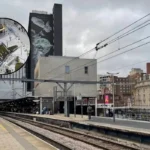
Horsforth also has an important practical advantage: transport. Horsforth railway station is on the York–Harrogate–Leeds route, giving visitors a straightforward way to arrive without driving. The station has step-free access to both platforms via a road bridge and ramp.
For an unplanned visit, these characteristics reduce the need for advance scheduling. You can select a starting point and make decisions during the day.
Where can you start an unplanned day in Horsforth?
Horsforth Hall Park is one of the strongest starting points for an unplanned day because it provides open space, walking routes, recreation facilities and family amenities. Its location also connects naturally with Horsforth’s residential and local commercial areas.
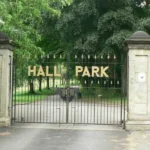
Horsforth Hall Park sits on Hall Lane and is approximately six miles north-west of Leeds city centre. Leeds City Council classifies it as a community park.
The park works particularly well as a first stop because admission is not structured around a timed attraction. Visitors can walk through the grounds, sit outdoors, use recreational facilities or continue towards other parts of Horsforth.
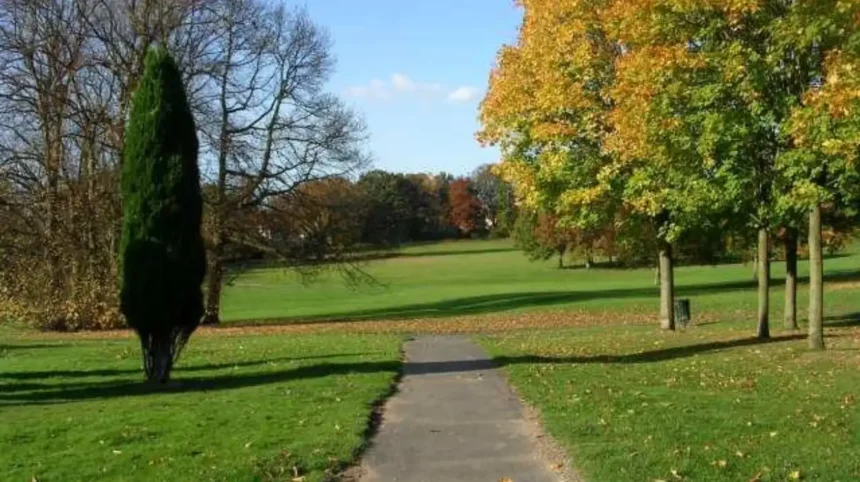
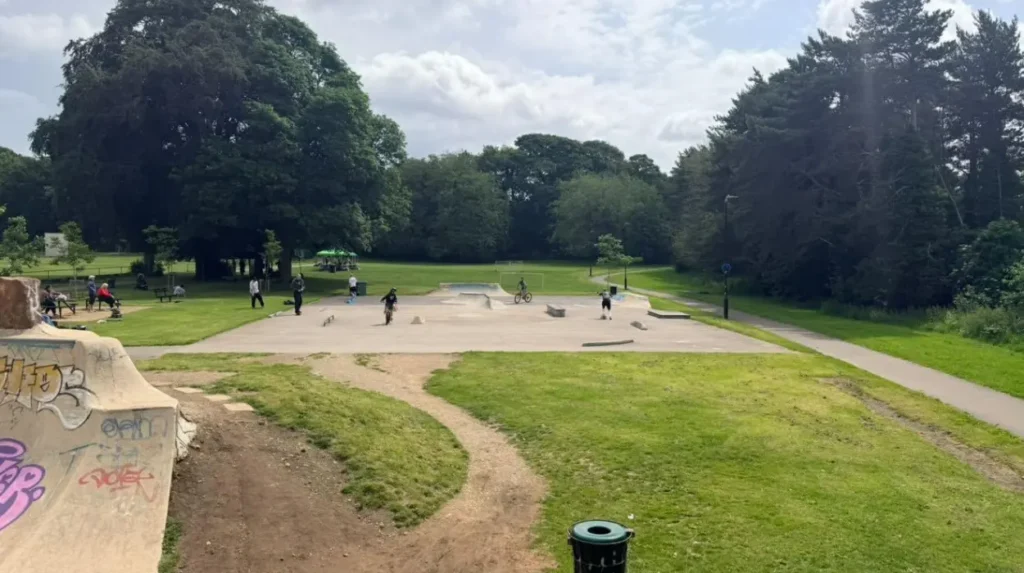
Its walking environment provides a simple activity when the purpose of the day is relaxation rather than sightseeing. The park also includes a Japanese garden, trim trail and skate park, giving different visitors separate reasons to stay.
Families have additional facilities. The park contains an integrated play facility designed for children under eight, with equipment supporting inclusive play. An additional playground for older children includes a climbing feature known as the Spider’s Web.
Accessibility is also relevant for spontaneous visits. The main car park has two disabled parking bays, the paths are suitable for wheelchair users, and the entrances are wheelchair accessible. Leeds City Council also identifies accessible play equipment.
The park has historical significance as well as recreational value. The current grounds reflect the former Horsforth Hall estate. Horsforth Hall was constructed between 1699 and 1707 and demolished in the early 1950s. Historic features associated with the former estate remain within the park, including the listed stable block, war memorial and bandstand.
As you explore the modern park, you are crossing land with a deep heritage. Read about the full [Insert Anchor Text for History Article Here] to understand its origins.
What can you do at Horsforth Hall Park without booking?
You can walk, relax, explore the Japanese garden, use the trim trail, watch recreational activity and visit the playgrounds at Horsforth Hall Park without constructing a detailed itinerary. The range of facilities makes the park suitable for short or extended visits.
A spontaneous park visit works because individual activities do not depend on one another. A visitor can walk for 20 minutes or spend considerably longer exploring the grounds.
The scenic walking routes provide the simplest option. They require no specialist equipment and fit easily around other activities in Horsforth.
The trim trail provides a more active option. It creates a structured outdoor activity without requiring a formal class or advance reservation.
Families have several choices. Younger children can use the integrated play facility, while older children have access to the separate playground and Spider’s Web climbing feature.
The cricket pitch also adds a sporting dimension. Its presence reflects the park’s role as a community recreation space rather than simply a landscaped garden.
The Japanese garden provides a quieter section of the park. It offers a different environment from the more active play and sports areas.
The park also accommodates seasonal entertainment events. These are separate from the everyday facilities, so visitors can still use the park when no organised event is taking place.
For an unplanned day, this flexibility is important. A visitor arriving early can begin outdoors and decide later whether to continue walking, find refreshments or move towards another attraction.
Is Horsforth Town Street useful for a spontaneous afternoon?
Horsforth’s local commercial areas provide practical options for an unplanned afternoon, including cafés, food venues, independent businesses and everyday services. They work particularly well as flexible stops between outdoor activities, shopping, heritage visits and transport connections.
Horsforth has a recognised local commercial character around areas including Town Street and New Road Side. Leeds City Council’s Horsforth design statement identifies Town Street as an important historic area containing sandstone buildings, cottages, churches and other historic structures.
This makes the commercial centre useful for visitors who do not want to spend the entire day inside a major attraction.
Food and drink provide natural breaks. Visit Leeds lists several Horsforth businesses across cafés, food venues, bars and activity-based businesses. Examples include Little Leaf Cafe, Truly Scrummy, Café Yoga Horsforth and Honey Pottery.
The value of these places for an unplanned day comes from choice rather than a fixed sightseeing sequence. Visitors can stop for coffee, food or a short break according to the time available.
Horsforth’s local businesses also broaden the day beyond conventional tourism. Pottery, cafés, food venues and community-oriented spaces create activities that suit different travel purposes.
Digital nomads and domestic business travellers also have practical reasons to consider the area. Horsforth Community Hub provides free Wi-Fi and free computer access with Microsoft Office and internet facilities. The hub also provides public toilets and disabled-access facilities.
That makes the area relevant when leisure time needs to be combined with practical work. A visitor can complete essential online tasks and then continue exploring rather than returning to a hotel or travelling into central Leeds.
Can you visit Kirkstall Abbey without planning a full day?
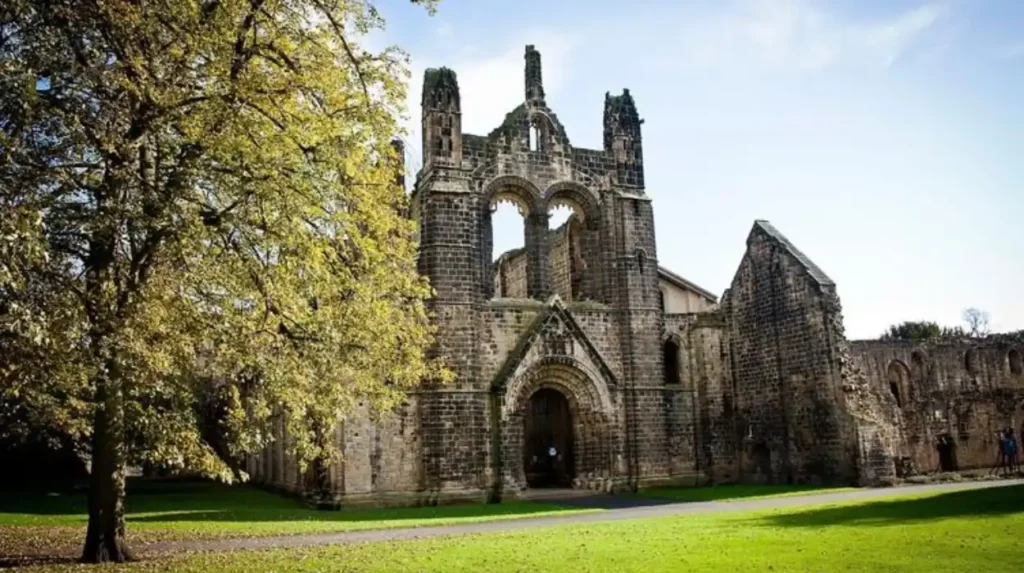
Kirkstall Abbey provides a strong flexible heritage option near Horsforth because visitors can combine historic ruins, parkland, walking, family activities and a café. The site operates as both a cultural attraction and an outdoor space, supporting different lengths of visit.
Kirkstall Abbey is one of Leeds’s most significant medieval heritage sites. Leeds Museums and Galleries describes it as one of the most complete Cistercian monasteries in Britain. It is both a Grade I listed building and a Scheduled Ancient Monument.
The abbey dates from the medieval period, with the foundation associated with the Cistercian order in 1152. Its surviving ruins provide a substantial architectural attraction without requiring visitors to follow a long itinerary.
The surrounding Abbey Park expands the experience. Leeds Museums and Galleries describes the park as suitable for picnics, play, walking and year-round exploration. It also contains a large children’s playground.
The site therefore works for different visitor groups. A history-focused visitor can concentrate on the ruins. Families can combine the heritage site with outdoor play. A leisure traveller can use the park for a walk and stop at the café.
Kirkstall Abbey also has an informal audio guide called Tales of Kirkstall Abbey. It uses 10 points across the ruins, allowing visitors to explore selected areas through short audio content.
This is particularly useful for spontaneous visitors because it provides structure without requiring a formal guided tour.
The abbey also hosts events, talks, markets and other activities throughout the year. Current programming changes, so visitors should check the official Leeds Museums and Galleries listing before travelling when a particular event is important.
What is worth seeing at Abbey House Museum?
Abbey House Museum is a strong rainy-day and heritage option because it recreates Victorian streets and displays Leeds social history, childhood objects and everyday life. Its indoor galleries provide a structured activity when outdoor plans are unsuitable.
Abbey House Museum sits beside Kirkstall Abbey and focuses on Leeds social history. Its collection includes authentic toys, childhood objects, household items and tools.
The museum’s defining feature is its recreated Victorian streets. Three streets—Abbey Fold, Harewood Square and Stephen Harding Gate—present different aspects of Victorian urban life.
Stephen Harding Gate represents the nineteenth-century equivalent of a modern high street, with recreated commercial environments. Abbey Fold focuses on poorer residential life, while other displays examine domestic and working conditions.
The museum building itself has a much older history. The core of Abbey House was originally the inner gatehouse of Kirkstall Abbey. Following the Dissolution of the Monasteries under Henry VIII, it became a house and later served different purposes before becoming a museum.
Leeds City Council acquired Abbey House in 1926, and the museum opened to the public in 1927. The recreated Victorian streets were developed in the 1950s.
This makes the museum particularly valuable for visitors interested in how Leeds changed through industrialisation and urban development.
The museum is also suitable for repeat and spontaneous visits because its programme includes exhibitions, family sessions, talks, workshops and community events.
Current opening arrangements should always be checked before setting out. The museum currently lists Tuesday to Friday opening from 10am to 5pm, Saturday from noon to 5pm and Sunday from 10am to 5pm, with Monday closed except bank holidays.
What outdoor alternatives are available around Horsforth?
Horsforth contains several additional green spaces and recreation grounds, including Cragg Hill Recreation Ground, King George’s Playing Fields, Stanhope Recreation Ground and other local green spaces. These provide alternatives when Horsforth Hall Park is busy or unsuitable.
Leeds City Council’s parks byelaws identify several designated green and recreational spaces in Horsforth. They include Horsforth Hall Park, Cragg Hill Recreation Ground, King George’s Playing Fields, Stanhope Recreation Ground, Woodside Recreation Ground and The Green.
These locations have different functions and scales. They are useful for local recreation rather than serving as major tourist attractions.
Cragg Hill Recreation Ground provides an alternative outdoor destination. King George’s Playing Fields provide another designated recreational area. Woodside Recreation Ground and Stanhope Recreation Ground add further local options.
The wider network matters because an unplanned day does not require every visitor to use the same central attraction.
For walkers, the presence of multiple green spaces also supports a flexible approach. A visitor can choose a nearby outdoor location based on where they are already travelling.
The wider Leeds public-rights-of-way network adds another dimension. Leeds City Council’s parks information records 819 kilometres of public rights of way across the city.
Visitors should distinguish between a formal attraction and a public right of way. A public path is primarily a route through the landscape, while a museum or park provides a defined visitor destination.
This distinction helps with planning. Someone looking for a simple walk does not need to build the day around ticketed attractions.
How can Horsforth railway station support a flexible day out?
Horsforth railway station makes spontaneous travel easier because it connects the area with Leeds, Harrogate and York through the Harrogate Line. Its ticketing, parking, cycling and accessibility facilities also support visitors arriving without a detailed transport plan.
Horsforth station is served by the York–Harrogate–Leeds route. Northern currently lists the timetable period from 17 May to 12 December 2026 for this route.
The station has a ticket office, ticket machine, smartcard facilities and seating. It also has toilets accessible with a radar key during service hours.
For drivers, the station car park has 68 spaces, including three accessible spaces. Cycling facilities include 14 spaces, with sheltered provision and secure cycle lockers.
Accessibility is another useful consideration. Northern classifies Horsforth as a Category B station and states that both platforms are accessible via a road bridge and ramp. Train access also has ramp provision.
The station’s role extends beyond arriving in Horsforth. A visitor can use rail to connect the day with other destinations on the route.
That creates a practical flexible-day model. Start in Horsforth, explore the local area, then continue by train if there is sufficient time. The reverse also works for visitors staying elsewhere in West Yorkshire.
Rail travel should still be checked on the day because engineering works, replacement buses and timetable changes affect individual services. Northern specifically provides rail-replacement information for Horsforth, including bus-stop arrangements on Troy Road.
What should families do in Horsforth without an itinerary?
Families can combine Horsforth Hall Park’s inclusive playgrounds, outdoor recreation and walking areas with nearby museums, cafés and heritage attractions. This approach provides several activity levels and allows families to change plans according to weather, energy and children’s interests.
Horsforth Hall Park is the strongest family starting point because it combines multiple facilities. The integrated play area is designed for children under eight and includes equipment supporting inclusive play.
Older children have a separate playground with the Spider’s Web climbing feature. The park also includes a skate park and trim trail, providing alternatives to conventional playground equipment.
A family can therefore create a flexible sequence without booking individual activities. Outdoor play can come first, followed by food, a walk or a heritage visit.
Kirkstall Abbey adds another family-friendly option. The surrounding park contains a large playground, while the abbey provides a substantial historic environment for exploration.
Abbey House Museum also has a family-oriented collection of childhood objects and recreated Victorian streets. Its programme includes school-holiday activities and family sessions, although specific activities have their own dates and availability.
Accessibility should form part of family planning. Horsforth Hall Park has wheelchair-accessible entrances and paths, while Abbey House Museum has step-free access at its main entrance and wheelchair access across most galleries and Victorian streets.
This combination gives families practical choices for both active and quieter periods.
Explore More Area Guide
Horsforth Independent Food Businesses Guide 2026
Horsforth Best Places to Visit During a Long Layover 2026
What is the best way to build a spontaneous Horsforth day?
The most flexible approach is to choose one main destination, one food or coffee stop and one optional activity. Horsforth Hall Park, the local commercial area, Kirkstall Abbey and Abbey House Museum provide enough variety to adapt the day without overplanning.
Start with the weather. Dry conditions favour Horsforth Hall Park and the outdoor areas around Kirkstall Abbey. Wet weather makes Abbey House Museum more practical.
Next, choose one fixed destination. Horsforth Hall Park works well for a primarily local day. Kirkstall Abbey and Abbey House Museum work better for a heritage-focused visit.
Keep the middle of the day flexible. Horsforth’s cafés and food businesses provide opportunities for refreshments without requiring the entire day to revolve around dining.
The final activity should remain optional. A second walk, another heritage stop or a railway journey towards another destination can extend the day.
This structure avoids the common problem of overplanning. An itinerary with too many timed stops leaves little room for weather changes, transport delays or simply spending longer at a place that interests you.
Horsforth’s transport position makes this especially useful. The railway station connects with Leeds, Harrogate and York, while the local commercial areas provide everyday facilities and the parks provide low-cost outdoor recreation.
For visitors combining leisure with work, Horsforth Community Hub provides free Wi-Fi and computer access, giving the area additional practical value.
The result is a day out based on options rather than appointments.
Why is Horsforth relevant for future flexible tourism?
Horsforth’s combination of accessible green space, local heritage, independent businesses, community facilities and public transport gives the area long-term relevance for flexible tourism. Its attractions support short visits, repeat visits, family outings and mixed leisure-work days.
Flexible tourism increasingly depends on destinations offering several activities rather than a single attraction. Horsforth already has this structure at neighbourhood level.
Its parks provide open-access recreation. Its heritage sites provide structured cultural experiences. Its commercial areas provide food and everyday services. Its railway station provides connections beyond the suburb.
The historical environment also supports long-term visitor interest. Horsforth’s documented history extends back to the Domesday Book, while the relationship between Horsforth and Kirkstall Abbey shaped land ownership and development for centuries.
Horsforth Hall Park demonstrates how historical land use remains visible in contemporary recreation. The current park occupies the grounds associated with the former Horsforth Hall, while historic structures remain part of its character.
Kirkstall Abbey and Abbey House Museum provide an even wider historical connection. Abbey House itself evolved from the medieval abbey gatehouse into a later house and ultimately a social-history museum.
Leeds Museums and Galleries is also developing a long-term vision for Abbey House Museum focused on sustainability, accessibility, visitor flow and repeat visits. The development programme is based on visitor research, public feedback and staff expertise.
These developments reinforce the area’s relevance for repeat leisure travel.
For visitors seeking an unplanned day out, the central advantage remains simple: Horsforth offers multiple independent choices. A day can begin in a park, continue through local streets, include food or coffee, move into heritage, and finish with rail travel or another walk.
That flexibility makes Horsforth particularly suitable for visitors who want to explore Leeds without following a rigid timetable.
What are the best places for an unplanned day out in Horsforth?
The best options include Horsforth Hall Park, Kirkstall Abbey, Abbey House Museum, Horsforth’s local commercial areas, and nearby recreation grounds. These places offer a mixture of outdoor activities, heritage, food, family facilities and flexible sightseeing.