
Garforth is a compact town in the eastern part of Leeds, West Yorkshire, with a historic centre, local shops and cafés, green spaces, walking routes and two railway stations. Its position on the Leeds–York rail corridor makes it practical for visitors with only a few hours available.
- What is the best way to spend half a day in Garforth?
- How should you start a Garforth half-day visit?
- What can you see around Garforth Main Street?
- Why should you visit St Mary the Blessed Virgin during a short trip?
- What historical facts should visitors know about Garforth?
- Where can you take a short walk in Garforth?
- Is Garforth suitable for a quick visit without a car?
- Where can you take a break during a Garforth half-day itinerary?
- What should digital nomads and business travellers do with limited downtime?
- How should families and leisure travellers adapt the itinerary?
- What should you do if you only have three hours in Garforth?
- What should you do if you have four to five hours in Garforth?
- When is the best time to visit Garforth for a half-day trip?
- What is the most efficient Garforth itinerary for first-time visitors?
- Why does Garforth work well for a quick Leeds-area visit?
A half-day visit works best when the itinerary focuses on central Garforth rather than attempting to cover the wider countryside. A practical route combines Garforth railway station, Main Street, St Mary the Blessed Virgin, the local library and community facilities, and a short section of the Linesway or another nearby green space.
Garforth has a population of roughly 15,000 according to the 2011 Census, and Leeds City Council describes it as a settlement with strong transport connections to Leeds and York. The A1 and M1 are also close to the town, giving road travellers another direct access option.
What is the best way to spend half a day in Garforth?
The most efficient half-day route combines Garforth station, Main Street, St Mary’s Church, local refreshments and a short green-space walk. This route keeps travel distances short while covering Garforth’s heritage, community facilities, central streets and countryside connections.
A four-hour visit gives enough time to experience the character of central Garforth without turning the trip into a long-distance walking excursion. The itinerary below assumes arrival at Garforth railway station and a departure from the same station.
A typical schedule is:
9:00–9:15: Arrive at Garforth railway station.
9:15–10:00: Walk towards central Garforth and explore Main Street.
10:00–10:30: Visit the area around St Mary the Blessed Virgin.
10:30–11:15: Take a café or refreshment break.
11:15–12:15: Walk part of a nearby green route, such as the Linesway.
12:15–12:45: Return towards the station and allow time for departure.
The precise timing should be adjusted around train services, opening hours and walking speed. Garforth station has ticket facilities, a waiting area and car parking. Northern also lists step-free access onto the platforms from the main entrance through the station footbridge arrangement.
The itinerary is particularly suitable for visitors travelling from Leeds. Garforth has direct rail connections, and Northern’s current journey information provides live service information and journey planning.
How should you start a Garforth half-day visit?
Start at Garforth railway station because it provides a practical arrival point close to the town centre and connects directly with the wider rail network. Beginning here reduces unnecessary backtracking and leaves more time for central Garforth and nearby walking routes.
Garforth railway station is on Station Road and provides a straightforward starting point. It has a ticket office, ticket machines, smartcard facilities, seating and waiting areas. The station also has car parking.
The station is significant beyond transport. Historic structures associated with Garforth station form part of the town’s built heritage. Local heritage records identify the road bridge at Garforth station and the footbridge at the station among the area’s Grade II listed structures.
This makes the station a useful first point for visitors interested in transport history as well as practical travel.
From the station, visitors can walk towards the central area. The exact route depends on the preferred destination, but the town’s central streets are compact enough for a short exploratory walk.
Visitors arriving by car should check current parking arrangements before travelling. Visitors arriving by rail should check the latest service information before departure because timetables change seasonally.
Garforth also has East Garforth railway station. It is another useful rail access point, although the main Garforth station is the more practical starting point for an itinerary centred on the historic and commercial core. Northern records East Garforth as a Category B station with ramped access to both platforms.
What can you see around Garforth Main Street?
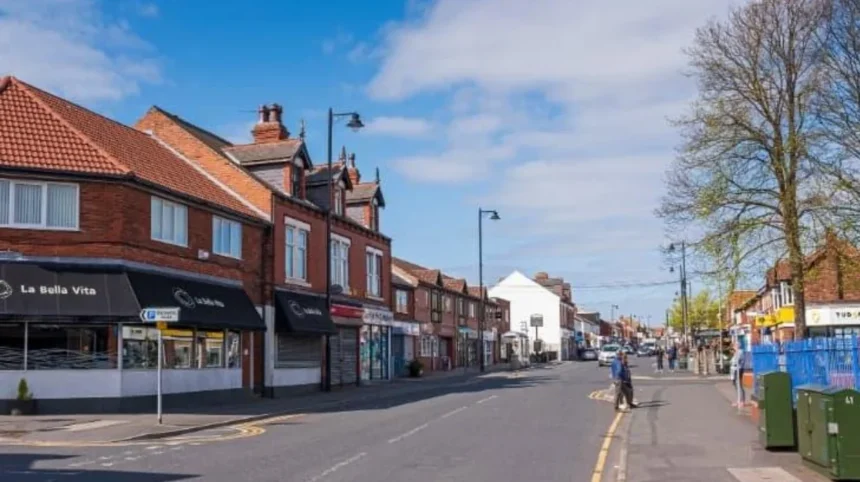
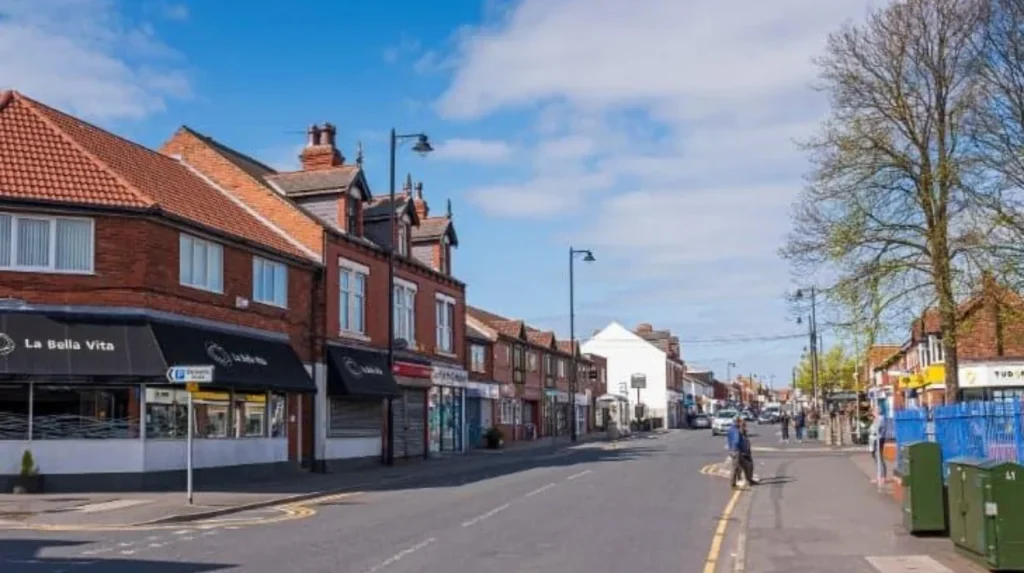
Garforth Main Street is the logical central section of a short visit because it connects everyday shops and services with older parts of the settlement. It provides a compact introduction to local life before visitors continue towards Church Lane and surrounding green spaces.
Central Garforth combines residential, commercial and community uses. The Garforth Neighbourhood Plan identifies Central Garforth as an area containing older buildings, shops, offices, the Welfare Hall, library and local food and drink businesses.
The present-day Main Street developed from an older route through the settlement. Before the Garforth Enclosure Act of 1810, the central area consisted largely of fields and meadows. The route now associated with Main Street was an unnamed lane linking West Garforth and Moor Garforth and was sometimes known as Moor Road.
This historical development explains why a short walk through central Garforth provides more than a conventional shopping stop. The street forms part of the physical development of the settlement.
Visitors with limited time should avoid trying to cover every side street. A focused walk along the central area gives a clearer sense of Garforth’s structure.
As you explore the modern centre, you are crossing land with a deep heritage. Read about the full to understand its origins.
The central area also provides practical opportunities to stop for food or a drink. Availability varies by business and day, so visitors should check individual opening times when planning a tightly timed visit.
Why should you visit St Mary the Blessed Virgin during a short trip?
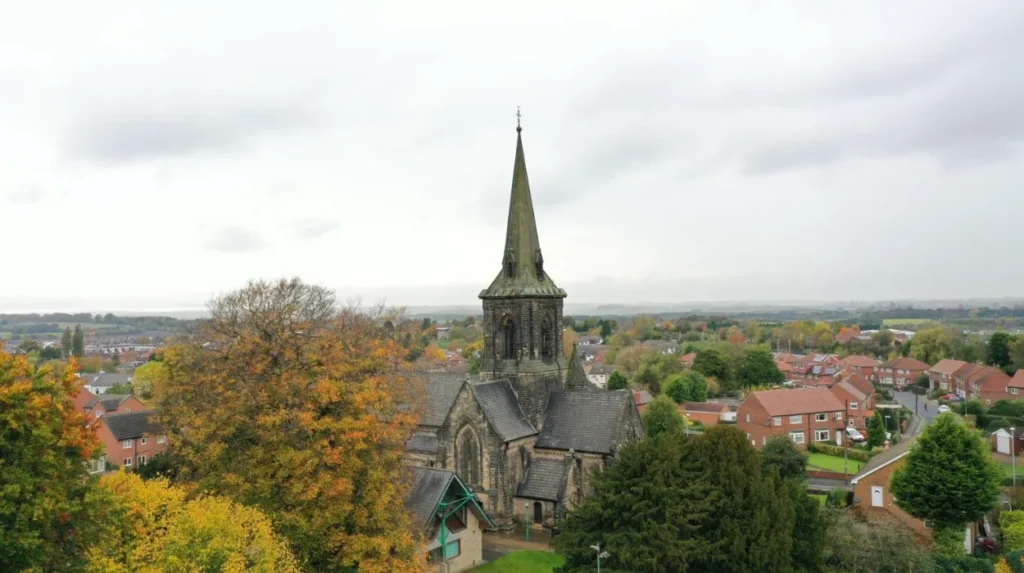
St Mary the Blessed Virgin is one of Garforth’s most important heritage landmarks. The Grade II listed church was designed by George Fowler Jones and completed in 1844. Its limestone construction, Gothic Revival design and prominent tower make it a key historic stop.
St Mary the Blessed Virgin stands on Church Lane. Historic England lists the building at Grade II and records its construction in 1844 by architect George Fowler Jones. The church is built from dressed magnesian limestone with a slate roof.
Its architectural plan includes a nave, aisles, transepts, chancel and crossing tower. The tower has a broach spire, while the church uses Early English architectural features including tall lancet windows and a corbel table.
The building is important because it represents the Victorian rebuilding of a much older religious site.
Garforth itself appears in the Domesday Survey of 1086, which recorded a church in the settlement. Archaeological and historical research indicates that Church Garforth developed around the church and that earlier churches occupied the site before the present building.
The present church therefore provides a direct connection between modern Garforth and its medieval settlement history.
Visitors should distinguish between viewing the exterior and entering the church. Access inside depends on worship, events and opening arrangements. Visitors should check the church’s current arrangements before planning an interior visit.
The surrounding churchyard also contributes to the historic setting. The Church of England’s Church Heritage Record identifies St Mary the Virgin as a Grade II listed building and records its historic significance.
A short visit does not require extensive time inside. Around 20 to 30 minutes is sufficient for an exterior-focused heritage stop.
What historical facts should visitors know about Garforth?
Garforth has roots recorded in the Domesday Survey of 1086 and developed from several historic settlement areas. Archaeological research identifies West Garforth, Moor Garforth and Church Garforth as distinct settlements before their modern physical expansion created one continuous town.
Garforth’s historical development is important for understanding its present layout. The Leeds archaeological settlement analysis records that the modern town developed from three separate settlements: West Garforth, Moor Garforth and Church Garforth.
Church Garforth developed around St Mary’s Church and represented an early historic core. The settlement remained relatively small during the nineteenth century, with a church, Methodist chapel, rectory, grange, cottages and villas forming the local built environment.
Garforth was also shaped by its geological setting. Archaeological research identifies three geological zones around the settlement: Pennine Lower Coal Measures to the north, Pennine Middle Coal Measures to the south and dolomitised limestone to the east.
The surrounding limestone landscape influenced agriculture and settlement development.
The 1810 Garforth Enclosure Act represents another important stage. Enclosure changed the organisation of agricultural land and contributed to the transformation of the central settlement area.
Industrial development later strengthened Garforth’s transport and employment connections. The railway became an important part of its growth, while modern road infrastructure connected the settlement to the A1, M1 and M62.
This historical sequence explains why Garforth works well as a short heritage destination. Its history is concentrated across streets, churches, railway infrastructure and landscape rather than being confined to one museum.
Where can you take a short walk in Garforth?
The Linesway is one of the strongest choices for a short outdoor section because it follows a disused railway between Garforth and Allerton Bywater. Leeds City Council identifies it as a three-mile recreational route suitable for walking and cycling.
The Linesway provides a direct change of environment after exploring central Garforth. Leeds City Council lists it among the city’s shorter recreational routes and describes it as a three-mile disused railway between Garforth and Allerton Bywater.
Visitors on a half-day schedule do not need to complete the entire route. A short out-and-back section provides outdoor time without committing the itinerary to a three-mile linear journey.
The route also connects modern recreation with Garforth’s railway history. Its origins as a railway corridor provide a clear example of how former transport infrastructure can become a public walking route.
The Leeds Country Way also passes through the Garforth area. The council’s route information identifies a 5.5-mile section from Barwick-in-Elmet to Garforth and another 5.5-mile section from Garforth towards the River Aire.
These longer routes are unsuitable for a tightly timed half-day itinerary if visitors attempt to complete the full sections. They are better treated as options for a future longer visit.
Garforth also has several designated green spaces. Leeds City Council’s parks information lists BarleyHill Park, Hollinhurst Wood, East Garforth Recreation Ground, Glebelands Recreation Ground and other local green spaces within the Garforth and Swillington area.
For a quick visit, the best approach is to select one outdoor area rather than attempting several.
Is Garforth suitable for a quick visit without a car?
Garforth is well suited to a car-free half-day visit because its railway stations connect the town with Leeds and other destinations. Central streets, community facilities, heritage sites and walking routes can then be combined through local walking.
Rail is the most efficient option for many short visits from Leeds. Northern provides direct journey planning between Leeds and Garforth, while current services also operate towards York and other destinations on the wider network.
The journey time from Leeds to East Garforth is typically short. Northern’s current journey information shows direct services taking around 13 to 14 minutes on the examples displayed.
Journey times and departure frequencies vary, so visitors should use current timetable information rather than relying on a fixed schedule from an older guide.
East Garforth offers another access point. The station has ramped access to both platforms, making it a useful option for visitors whose itinerary starts closer to the eastern side of the settlement.
Bus travel is also possible. Garforth Library has a bus stop approximately 150 metres from the building, with an even concrete surface providing access to the facility.
For a four-hour visit, rail plus walking provides the simplest structure. It removes parking time and keeps the itinerary focused on the town rather than road travel.
Where can you take a break during a Garforth half-day itinerary?
Garforth’s central area provides local cafés, food businesses and community facilities suitable for a short refreshment stop. Garforth Library also has a café and free Wi-Fi, providing a practical option for visitors who need a brief work-friendly pause.
A refreshment break fits naturally between the heritage and walking sections of the itinerary.
Garforth Library and One Stop Centre is located on Lidgett Lane. Leeds Libraries records free Wi-Fi, free computer access, public toilets, accessible facilities and a café as part of the facility.
The café currently operates on selected weekdays, with Leeds City Council listing opening from 10am to 2pm on Wednesday, Thursday and Friday for the community hub.
This makes the library particularly relevant for digital nomads or business travellers with limited downtime. The building provides Wi-Fi and computer access while remaining close to the central area.
Visitors should not assume café availability every day. Sunday is listed as closed for the library, and café hours are narrower than general building opening hours.
For leisure travellers, independent cafés and local food businesses in central Garforth provide additional options. Current opening times should be checked before travelling.
The best approach is to keep the break to around 30 to 45 minutes. Longer dining periods reduce the time available for walking and heritage exploration.
What should digital nomads and business travellers do with limited downtime?
Digital nomads and business travellers can use Garforth’s central facilities for a short working break before exploring the town. Garforth Library provides free Wi-Fi and computer access, while the compact centre allows visitors to combine work, refreshments and outdoor walking efficiently.
Garforth is not primarily a business district, but its community infrastructure supports short periods of remote work.
The library’s free Wi-Fi and computer facilities are useful for travellers who need to check messages, complete short administrative tasks or organise onward travel. Leeds Libraries also provides accessible entrances, lifts and an induction loop.
The community hub includes customer services and other public facilities. It therefore provides a practical daytime stop for visitors with a work-related reason to spend a few hours in Garforth.
The best working strategy is to complete essential tasks first and then use the remaining time for a short walk.
A simple business-travel schedule is arrival, 45 minutes of work, 30 minutes for refreshments, 45 minutes exploring central Garforth, 30 minutes around St Mary’s and 30 minutes returning towards the station.
This structure reduces the risk of missing a return train.
How should families and leisure travellers adapt the itinerary?
Families should prioritise short walking distances, open spaces and flexible refreshment stops. The central Garforth route allows visitors to reduce walking when needed, while parks and recreational areas provide alternatives when children need outdoor time.
Families do not need to complete a long walking route during a half-day visit.
The Linesway can provide outdoor space, but the distance should be adjusted according to the family’s schedule and walking ability. A short section is more suitable than attempting the full three-mile route.
Leeds City Council lists several community parks, recreation grounds and local green spaces around Garforth, including BarleyHill Park and East Garforth Recreation Ground.
Families should check current conditions and facilities before travelling, particularly when choosing a specific recreation area.
St Mary’s Church works best as a short heritage stop rather than a long activity. Children can observe the architecture from the surrounding area while adults explore the site’s history.
A café or food stop should be scheduled before the final walk back to the station. This reduces time pressure and provides a predictable point for a break.
What should you do if you only have three hours in Garforth?
With three hours, prioritise Garforth railway station, Main Street, St Mary’s Church and one short outdoor walk. Skip longer countryside routes and keep refreshments brief so the itinerary remains practical and finishes comfortably before the return journey.
A three-hour itinerary can follow this structure:
First 20 minutes: arrive and walk from the station towards central Garforth.
Next 40 minutes: explore Main Street and nearby central streets.
Next 30 minutes: visit the St Mary’s Church area.
Next 30 minutes: take refreshments.
Next 35 minutes: walk a short section of the Linesway or visit a nearby green space.
Final 25 minutes: return towards the station.
This route covers the town’s main themes without creating unnecessary transfers.
The key principle is proximity. Each stop should contribute to the overall understanding of Garforth rather than adding a distant attraction simply to increase the number of places visited.
What should you do if you have four to five hours in Garforth?
Four to five hours allow visitors to combine central Garforth, St Mary’s Church, a longer outdoor walk and a relaxed refreshment stop. The additional time also supports a slower exploration of local streets and historic features around the town centre.
A four-hour itinerary provides the best balance for a first short visit.
Visitors can spend approximately one hour exploring central Garforth, 30 minutes around St Mary’s Church, 45 minutes taking refreshments and up to 90 minutes walking.
A five-hour visit provides additional flexibility. It allows time for longer sections of the Linesway or more relaxed exploration around the central area.
Visitors interested in heritage can also spend more time examining historic structures around the railway. The local heritage record identifies several listed structures associated with Garforth’s transport history, including the road bridge at Garforth station and railway bridges.
The additional hour should not be treated as a requirement to add another destination. It is better used as contingency time because train delays, café queues and slower walking can affect a tightly scheduled itinerary.
When is the best time to visit Garforth for a half-day trip?
Weekday and Saturday daytime visits provide the widest practical access to Garforth’s community facilities and central services. Visitors should check individual opening hours, rail timetables and event schedules because availability differs between weekdays, Saturdays, Sundays and public holidays.
For heritage-focused visitors, daytime provides the clearest opportunity to view buildings and streets.
For digital workers, weekday opening hours are most useful because Garforth Library and Community Hub operates during the working week and provides Wi-Fi and computer facilities.
Saturday can suit leisure travellers because the library is listed as open from 10am to 4pm. Sunday is less suitable for visitors relying on library facilities because the library is closed.
Outdoor walking remains possible outside library hours, subject to weather, daylight and current route conditions.
Visitors should also check train services before setting off. Northern publishes current timetables for routes serving Garforth, including services towards Leeds, York and other destinations.
A half-day trip works best when the return train is planned before the walking route begins.
Explore More Area Guide
Garforth Picnic Locations & Outdoor Relaxation Spots 2026
Best Garforth Photography Locations for Scenic Views | Leeds 2026
What is the most efficient Garforth itinerary for first-time visitors?
The most efficient first-time itinerary is Garforth station, Main Street, St Mary’s Church, a local refreshment stop and a short Linesway walk. This sequence covers transport, town life, heritage and outdoor space without requiring a car or lengthy transfers.
Garforth’s main strength for a short visit is its combination of accessibility and variety.
The railway provides a convenient arrival point. Main Street introduces the modern settlement. St Mary’s Church provides the principal historic landmark. Local cafés and community facilities provide a practical pause. The Linesway supplies an outdoor component.
The route also reflects the town’s historical development. Garforth evolved from separate settlement areas into a connected modern town, while former railway infrastructure now supports recreation.
Visitors should therefore avoid treating Garforth as a destination that requires a long list of attractions. Its appeal for a half-day visit comes from combining several compact experiences.
The itinerary is also adaptable. A visitor interested in heritage can extend the church and historic streets section. A walker can spend more time on the Linesway. A business traveller can use the library and café facilities. A family can prioritise green space.
Why does Garforth work well for a quick Leeds-area visit?
Garforth works well for a quick Leeds-area visit because it combines direct rail access, a historic settlement core, community facilities and nearby walking routes within a compact geographic area. Its transport links make a short visit practical without requiring an overnight stay.
Garforth occupies a strategically connected position east of Leeds. Leeds City Council’s Garforth planning documentation identifies its two railway stations, nearby A1 and M1 connections and proximity to the M62 as important transport advantages.
The settlement also provides a clear mixture of urban and rural characteristics.
Visitors can move from a railway station to central streets, from central streets to a historic church, and from the built environment to a former railway walking route within the same half-day.
This makes Garforth particularly useful for travellers who already have plans in Leeds or York but have several free hours.
The town’s historical depth adds another layer. Garforth is recorded in Domesday, its church site has medieval origins, its current St Mary’s Church dates from the nineteenth century, and its railway infrastructure reflects later transport development.
A carefully planned half-day therefore provides a concentrated introduction to Garforth without requiring an extensive itinerary.
Practical half-day plan
For the most straightforward visit, arrive at Garforth railway station and walk towards the central area. Explore Main Street before continuing towards Church Lane and St Mary the Blessed Virgin. Allow time for a short heritage stop, then take refreshments in the central area or at the library café when operating hours match your visit. Finish with a short section of the Linesway before returning to the station.
Check current train times before travelling. Confirm café and attraction opening hours on the day. Wear suitable footwear for walking routes. Allow a buffer before the return train.
Garforth’s compact combination of transport, heritage, community facilities and green routes makes it suitable for visitors who have limited time but still want to experience a distinct part of the Leeds area.
How long do you need to visit Garforth?
A three- to five-hour visit is enough to explore Garforth’s central area, see St Mary the Blessed Virgin, enjoy refreshments and complete a short walk along the Linesway.