Headingley is a popular district in north-west Leeds, West Yorkshire, known for its student population, independent businesses, cafés, pubs and community activities. Chess clubs and informal gaming groups provide opportunities for residents and visitors to meet people, develop strategic thinking and participate in social activities. These communities suit beginners, experienced players, university students, working professionals and travellers looking for activities beyond traditional sightseeing.
- What Chess Clubs and Casual Gaming Groups Can You Find in Headingley?
- What is the difference between a chess club and a casual gaming group?
- Why is Headingley suitable for social gaming?
- Where Can You Find Chess Clubs Near Headingley?
- How Can Beginners Join Chess Sessions in Headingley?
- Which Casual Gaming Groups Suit Different Skill Levels?
- How Can You Find Board Game Meet-Ups and Informal Gaming Events?
- How do you assess whether a gaming event is active?
- Are informal gaming events suitable for solo visitors?
- Which Cafés and Pubs in Headingley Are Suitable for Chess?
- What Is the History Behind Chess and Gaming Communities in Headingley?
- How Much Does It Cost to Join a Chess Club or Gaming Group in Leeds?
- How Can University Students and Young Adults Find Gaming Communities in Headingley?
- How can new students meet other chess players?
- Can working professionals join informal gaming groups?
- How Can Digital Nomads and Business Travellers Enjoy Chess in Headingley?
- What Equipment and Chess Skills Should You Prepare Before Attending?
- How Should You Plan a Visit to a Chess Club in Headingley?
- Why Do Chess Clubs and Casual Gaming Groups Matter to Headingley?
- What is the wider relevance of social gaming?
- How can Headingley develop a more accessible gaming culture?
- How Can You Find the Right Chess or Gaming Group in Headingley?
Chess is a strategy board game in which two players compete using 16 pieces each on a board containing 64 squares. Casual gaming covers informal recreational activities, including chess, board games, card games and tabletop strategy games. Both activities encourage concentration, planning, communication and social interaction.
Headingley offers a useful starting point for discovering gaming communities across Leeds. Its connections with the University of Leeds, Leeds Beckett University and the wider city create opportunities to find university societies, community events and established chess organisations. Visitors benefit from exploring nearby areas when a dedicated chess meeting is unavailable in Headingley itself.
Finding the right group requires checking its current location, meeting schedule, membership requirements, playing format and suitability for newcomers. Some sessions welcome walk-in participants, while others require advance registration or membership. Understanding these differences helps visitors select an activity that fits their interests, experience and available time.
What Chess Clubs and Casual Gaming Groups Can You Find in Headingley?
Chess clubs organise structured games, practice sessions and competitive matches, while casual gaming groups offer informal opportunities to play and socialise. Headingley residents and visitors can investigate university societies, local community events, cafés and nearby Leeds chess organisations to find suitable sessions.
Chess clubs and gaming groups operate in different formats. A traditional chess club usually provides regular meetings, opponents of different abilities and opportunities to improve playing skills. Some clubs organise internal competitions, rated matches and team events. Casual groups generally prioritise participation, social interaction and accessible games rather than formal competition.
Headingley’s student community creates a natural audience for these activities. University students often look for inexpensive social events, while residents seek regular hobbies that fit around work and family commitments. Visitors benefit from activities that do not require specialist equipment or extensive preparation.
However, a distinction is necessary between established venues in Headingley and organisations operating elsewhere in Leeds. Not every Leeds chess club holds meetings in Headingley, and a university society does not automatically admit members of the public. Check the current venue and eligibility requirements before travelling.
What is the difference between a chess club and a casual gaming group?
A chess club concentrates on chess-related activities, such as friendly matches, tactical exercises and tournament preparation. A casual gaming group includes a broader selection of activities, such as chess, draughts, modern board games and social card games.
The choice depends on the intended experience. Players seeking structured improvement benefit from a chess club with regular opponents and coaching opportunities. People seeking a relaxed social activity benefit from a mixed gaming session where participants choose games according to their interests.
Why is Headingley suitable for social gaming?
Headingley has a substantial student presence, independent hospitality businesses and connections to nearby university campuses. These characteristics support a varied social environment in which people discover clubs through student networks, community notices and local events.
Cafés and pubs also provide familiar meeting places for informal games, subject to venue policies. A public venue does not necessarily operate a gaming group, so visitors should check whether organised sessions take place before arriving with a chessboard or a larger group.

Where Can You Find Chess Clubs Near Headingley?
Players searching for chess clubs near Headingley should investigate Leeds chess organisations, university societies and community event listings. Confirm the current meeting address, session dates, membership rules and visitor policy directly with organisers before travelling to a club or scheduled chess event.
The most reliable approach is to search beyond Headingley’s immediate boundaries. Leeds has a wider network of educational institutions, community organisations and recreational groups. A nearby club with a confirmed public session is more useful than an unverified listing that appears close to Headingley.
The English Chess Federation is a national organisation supporting organised chess in England. Its resources provide a starting point for identifying affiliated clubs, competitive opportunities and information about organised chess. The official directory is available through the English Chess Federation website.
Players should also investigate the Leeds City Council website for community information and local activities. Council listings are useful for discovering public facilities and community services, although they do not guarantee that a particular chess group currently meets at a listed venue.
How can you verify a local chess club?
Start by searching for a club using the terms “chess club Leeds”, “chess near Headingley” and “casual chess Leeds”. Compare the results with official organisation pages and recent event announcements.
Check the following details before attending:
- The current meeting address and access arrangements.
- The date and start time of the next session.
- Whether beginners and visitors are welcome.
- Whether advance booking or membership is required.
- Whether boards and chess pieces are provided.
- Whether the session includes casual games or formal competition.
Recent announcements are especially important when a club has moved premises, changed its schedule or paused its activities. An old directory entry does not establish that a session remains active.
Can you find chess opportunities through Leeds universities?
The University of Leeds and Leeds Beckett University are useful starting points for researching student chess activities and gaming societies. Their official student-union websites provide information about societies, events and participation arrangements.
University societies often prioritise students, but individual events have different access policies. Some activities are restricted to registered students, while others offer guest participation or public events. Visitors should obtain confirmation before attending.
How Can Beginners Join Chess Sessions in Headingley?
Beginners should choose welcoming sessions that prioritise friendly games, basic rules and practical learning. Contact the organiser, explain your experience level and ask whether newcomers receive an introduction. Bring a chess set only when necessary, and confirm any registration requirements before attending.
Chess is accessible to people without previous club experience. The basic equipment consists of a chessboard and 32 pieces, divided equally between two players. Players learn how each piece moves, how check works and how to achieve checkmate.
A beginner-friendly session usually allows participants to practise at their own pace. Experienced players often explain basic tactics, review mistakes and demonstrate simple openings. The amount of instruction depends on the organiser and the experience of the other participants.
A first visit should focus on understanding the format rather than winning every game. Beginners benefit from playing opponents who explain decisions and allow time for questions. A relaxed atmosphere also makes it easier to meet other players and return for subsequent sessions.
What should a first-time chess player expect?
A first-time player should expect a short introduction to the venue, the session format and the available opponents. Some clubs arrange informal pairings, while others allow participants to select their own opponents.
Ask whether the session uses standard chess rules or a quicker format. Standard games allow more time for planning, whereas rapid and blitz chess use shorter time controls. Blitz chess typically gives each player ten minutes or less for the entire game under standard international definitions.
Do you need to bring your own chessboard?
Not necessarily. Established clubs frequently provide equipment, but informal meet-ups depend on their organisers and venues. Ask whether boards, pieces and clocks are available before attending.
A portable chess set is useful when meeting friends in a café or public space. Check the venue’s rules before setting up a game, particularly during busy periods when tables are needed for customers.
Which Casual Gaming Groups Suit Different Skill Levels?
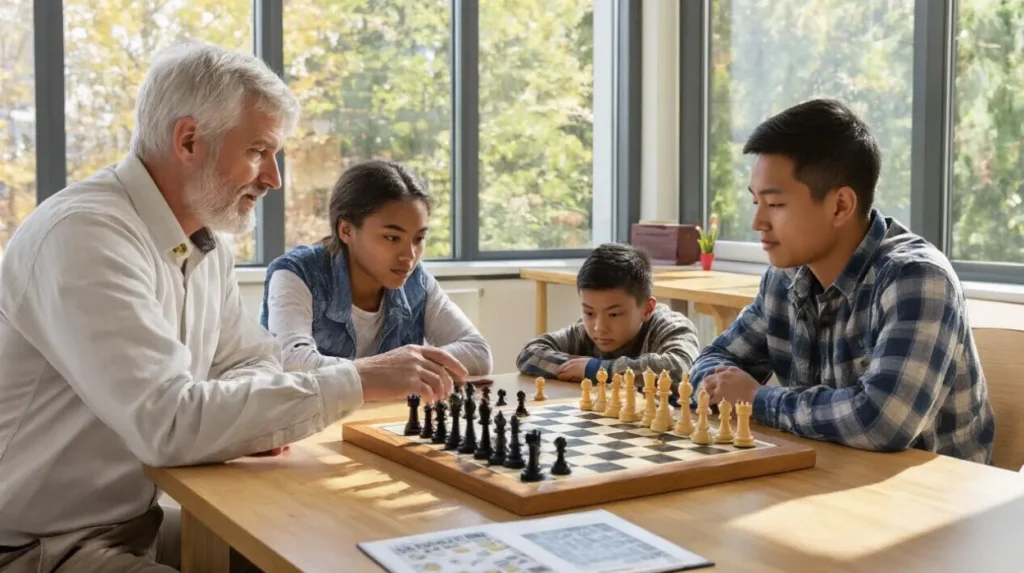
Casual gaming groups suit different experience levels because participants choose activities according to their abilities and interests. Beginners benefit from simple games and friendly explanations, while experienced players prefer strategic challenges, competitive chess and longer sessions that allow detailed decision-making.
Casual gaming is broader than chess. It includes traditional board games, modern strategy games, card games and tabletop activities. Each format offers a different balance of competition, cooperation and social interaction.
A mixed gaming session is particularly useful for people who enjoy games but do not want to specialise in chess. Participants can learn new rules, change opponents and try different activities without committing to a formal club.
The best group is one whose expectations match those of its participants. Some groups focus on relaxed conversation, while others organise serious competitive games. Checking the session description helps prevent misunderstandings.
Which games work well for beginners?
Simple abstract strategy games, introductory board games and basic chess sessions provide accessible starting points. Draughts, for example, teaches players to plan moves, anticipate opponents and recognise tactical opportunities.
Beginners should select games with rules that can be explained in a short introduction. A friendly group also provides opportunities to ask questions without interrupting an advanced competition.
Which games suit experienced players?
Experienced players often enjoy longer chess games, tactical puzzles, tournament practice and complex strategy board games. These activities reward careful analysis, forward planning and the ability to evaluate competing options.
Players preparing for chess competitions should ask whether a club organises rated games or uses official tournament rules. Casual sessions are valuable for practice, but they do not automatically provide official ratings or recognised competition results.
How Can You Find Board Game Meet-Ups and Informal Gaming Events?
Board game meet-ups can be discovered through local community listings, university networks, event platforms and gaming communities. Search for recent events in Headingley and neighbouring Leeds districts, then confirm the venue, game selection, booking requirements and participation costs with the organiser.
Online event listings help identify groups that do not maintain permanent premises. Organisers often announce one-off sessions, monthly gatherings and themed gaming evenings through event pages or social media.
Search using specific phrases, such as “board game meet-up Headingley”, “social games Leeds” and “beginner chess Leeds”. Include the intended date when looking for an event during a short visit.
Event platforms are discovery tools rather than proof of availability. Check the event’s latest announcement, cancellation notices and organiser details before making travel arrangements.
How do you assess whether a gaming event is active?
An active event listing usually includes a recent date, a named organiser, a clear location and instructions for joining. Recent participant updates also help establish whether a group continues to meet.
An old listing without future dates provides insufficient evidence of an upcoming session. Contact the organiser directly when the next meeting is unclear.
Are informal gaming events suitable for solo visitors?
Many social gaming events welcome individuals, although the rules depend on the organiser. Some sessions match participants into groups, while others expect attendees to arrive with friends.
Solo visitors should look for descriptions containing terms such as “beginners welcome”, “drop-in session” or “individual players welcome”. Ask whether the organiser assigns tables or expects participants to arrange their own games.
Which Cafés and Pubs in Headingley Are Suitable for Chess?
Cafés and pubs provide potential settings for informal chess when the venue permits table games. Choose a quiet period, check table-use policies and avoid obstructing service areas. Confirm whether an establishment hosts organised gaming events before advertising it as a chess venue.
A café game offers flexibility for friends who want to play without joining a club. Players can arrange a short match, practise tactics or introduce a visitor to chess in a familiar environment.
However, hospitality businesses do not automatically provide gaming facilities. Some venues restrict extended table use during busy periods, and others require food or drink purchases. A venue’s general suitability for conversation does not establish that it welcomes organised gaming groups.
Contact the business before arranging a larger meet-up. Ask whether chessboards are permitted, whether tables can be reserved and whether the venue has scheduled community events.
What makes a venue suitable for chess?
A suitable venue has enough table space for a board, comfortable seating and manageable background noise. Good lighting helps players distinguish the squares and pieces, while accessible entrances make the experience easier for people with mobility requirements.
Players should also consider the length of the session. A quick game fits more easily into a short café visit than a lengthy competitive match.
How should you organise a casual chess meet-up?
Choose a venue, agree on a start time and estimate the number of participants. Tell attendees whether they need to bring equipment and whether the gathering involves chess only or other games.
For larger groups, ask the venue for permission before promoting the event. Confirming arrangements in advance reduces the risk of arriving when the venue cannot accommodate the group.
What Is the History Behind Chess and Gaming Communities in Headingley?
Chess has a long history as a strategy game, while modern gaming communities reflect changing patterns of education, leisure and social organisation. Headingley’s development as a residential and university-linked district provides context for understanding how local residents discover clubs and shared recreational activities.
Chess developed from earlier forms of strategic board games in South Asia before spreading through Persia and the wider Islamic world into Europe. Its rules evolved over centuries, producing the modern game recognised internationally today.
Organised chess expanded through clubs, publications and formal competitions. National organisations helped establish shared rules, competitive structures and opportunities for players to test their skills against opponents beyond their immediate communities.
Headingley’s local history is also relevant. The district’s growth, educational connections and changing commercial areas have shaped its social life. Modern chess and gaming activities form part of a wider pattern of community participation rather than existing separately from the area’s development.
As you explore modern Headingley, you are also crossing an area with a distinctive local heritage. Read the full to understand how the district developed into the community visitors encounter today.
How have chess clubs changed over time?
Traditional chess clubs relied on regular in-person meetings, printed notices and membership networks. Modern organisers use websites, digital calendars and social media to announce sessions and reach new participants.
Online chess platforms also allow players to practise remotely, analyse games and compete internationally. These services complement in-person meetings, but they do not replace the social benefits of playing face to face.
Why does local history matter to visitors?
Local history helps visitors understand the places where community activities take place. Headingley’s streets, commercial areas and educational institutions reflect different stages of its development.
Combining a gaming session with a walk around the district creates a broader visit. Travellers gain insight into local community life instead of limiting their experience to major tourist attractions.
How Much Does It Cost to Join a Chess Club or Gaming Group in Leeds?
The cost of chess and casual gaming depends on the organiser, venue and session format. Free community meet-ups, university activities, paid club memberships and commercial gaming events follow different pricing arrangements. Check current fees, equipment charges and refreshments costs before making plans.
Chess is generally an inexpensive hobby because players need only a board, pieces and a suitable playing space. Many digital chess resources also provide free opportunities to practise tactics and play opponents online.
Organised clubs have different financial arrangements. Some charge annual membership fees, while others collect a small contribution for room hire or individual sessions. Competitive events can involve separate entry fees, particularly when organisers provide prizes, tournament equipment or rated games.
Casual gaming events also vary in cost. A community gathering in a public space can be free, while a commercial event or ticketed board game session can require advance payment. Café meet-ups also involve the cost of any refreshments purchased.
What expenses should visitors check?
Visitors should distinguish between participation fees and other expenses. A free chess session still involves travel costs, while a café gathering involves any purchases required by the venue.
Check whether the advertised price includes equipment, instruction and refreshments. Ask about refunds when booking a ticketed event, particularly when travelling from outside Leeds.
Are free chess activities available?
Free activities can include informal games with friends, online chess practice and selected community events. Public libraries and community venues also provide places to investigate local activities, although access to chess equipment and organised sessions varies.
The Leeds Libraries service is a useful starting point for finding library locations and community information. Contact an individual library to establish whether it offers chess, board games or suitable space for informal play.
How Can University Students and Young Adults Find Gaming Communities in Headingley?
University students and young adults can investigate student societies, local event listings and community gaming sessions to find people with similar interests. Check membership eligibility, event dates and guest policies before attending activities associated with Leeds universities or independent organisers.
Headingley’s connection to higher education makes student networks an important source of information about recreational activities. Students often discover societies through university welcome events, student-union announcements and recommendations from classmates.
University societies provide opportunities to meet other people regularly. Chess activities support strategic practice, while broader gaming societies introduce participants to board games and tabletop communities.
Students who do not attend university can investigate independent events and public meet-ups. University-based activities are not necessarily open to everyone, so it is important to distinguish between student-only sessions and events accepting external participants.
How can new students meet other chess players?
New students should check university society directories and attend relevant introductory events. These activities provide an opportunity to learn about regular meeting schedules, membership fees and the experience levels represented within a group.
Students who already play chess can ask whether a society organises competitive teams, casual practice or beginner coaching. Those who have never played can ask about introductory sessions.
Can working professionals join informal gaming groups?
Working professionals can look for evening sessions, weekend meet-ups and occasional social events. These formats allow people to participate without committing to a demanding weekly schedule.
People working remotely also benefit from separating work time from leisure activities. A scheduled chess game or board game gathering provides a reason to leave a home office and interact with other people.
How Can Digital Nomads and Business Travellers Enjoy Chess in Headingley?
Digital nomads and business travellers can use chess and casual gaming as low-equipment leisure activities during a stay in Leeds. Search for sessions that fit the available schedule, confirm visitor access and choose venues that provide convenient transport connections and suitable playing conditions.
Digital nomads are people who use digital technology to work remotely while spending time in different locations. Business travellers often have limited free time between meetings, travel and accommodation commitments. Both groups benefit from activities that require little preparation.
Chess is particularly practical because a small travel set fits into a bag, and online games require only a suitable device and internet connection. In-person sessions provide opportunities to meet residents and discover aspects of local life beyond the workplace.
Headingley is connected to other parts of Leeds through local transport services. Travellers should check current routes and journey times using official transport information before choosing an event.
How can travellers fit gaming into a short visit?
Travellers should prioritise events with confirmed start times, clear locations and straightforward joining arrangements. A one-hour casual session is easier to fit around sightseeing than an all-day tournament.
Check the distance between the venue, accommodation and transport stops. Allow extra time for the return journey when the session finishes late.
Can online chess complement in-person activities?
Online chess helps travellers practise when no suitable local session is available. It also provides a way to maintain playing routines while moving between cities.
However, online activity serves a different purpose from meeting people face to face. Travellers seeking social interaction should prioritise a confirmed in-person event and use online games as an alternative when schedules do not align.
What Equipment and Chess Skills Should You Prepare Before Attending?
Most beginners need only a basic understanding of chess rules and the ability to follow the game’s legal moves. A portable board is optional when the organiser supplies equipment. Experienced players should confirm time controls, notation requirements and tournament rules before competitive sessions.
Preparation depends on the session. Casual games require less equipment and advance planning than organised competitions. Participants should understand the basic objective, recognise how the pieces move and know how checkmate ends the game.
A standard chessboard contains 64 squares arranged in eight rows and eight columns. Each player begins with 16 pieces: one king, one queen, two rooks, two bishops, two knights and eight pawns.
Players who already know the rules can practise tactics before attending. Common tactical ideas include forks, pins and skewers. A fork attacks two or more opposing pieces at once, a pin restricts a piece’s movement because moving it exposes a more valuable piece, and a skewer attacks a valuable piece to expose another target behind it.
What should competitive players know about chess clocks?
A chess clock measures the time each player uses to make moves. Organised games often use time controls, which determine the amount of thinking time available.
Rapid chess and blitz chess use shorter time limits than classical chess. The exact format depends on the competition rules, so players should confirm the time control before a match.
How can players improve between sessions?
Regular practice, reviewing completed games and solving tactical puzzles help players identify mistakes. Beginners benefit from concentrating on piece safety, basic checkmates and controlling the centre of the board.
More experienced players can study opening principles, positional play and endgame technique. Consistent practice provides a practical way to improve without requiring expensive equipment.
How Should You Plan a Visit to a Chess Club in Headingley?
Planning a chess club visit starts with identifying an active group, confirming its next session and checking participation requirements. Visitors should allow time for travel, establish whether equipment is provided and choose a session suited to their experience and available schedule.
A little preparation makes it easier to find an appropriate gaming activity. Headingley visitors should verify the details of a session rather than relying on general descriptions of the area.
Begin by searching official club directories, university society pages and recent community event announcements. Identify two potential options in case the preferred session is cancelled or restricted to members.
Contact the organiser before travelling. Explain whether you are a beginner, an experienced chess player or someone interested in casual gaming. This helps establish whether the session matches your interests.
What should you check before leaving?
Use the following checklist to prepare for a successful visit:
- Location: Confirm the venue’s current address and entrance.
- Schedule: Verify the date and start time of the session.
- Eligibility: Establish whether visitors and beginners are welcome.
- Costs: Check membership fees, admission charges and minimum purchases.
- Equipment: Ask whether chessboards, pieces and clocks are provided.
- Transport: Check public transport connections and the return journey.
- Accessibility: Confirm step-free access and other requirements directly with the venue.
- Booking: Establish whether registration or advance payment is necessary.
These checks are particularly useful for tourists and business travellers with limited time. They also help residents identify groups that offer a consistent schedule for regular participation.
How can you choose between a club and a casual meet-up?
Choose a chess club when your priority is improving your playing ability, finding regular opponents or entering organised competitions. Choose a casual meet-up when your priority is social interaction, trying different games or fitting an activity into a short visit.
Some participants benefit from both formats. A regular club provides structured practice, while informal gaming sessions offer opportunities to meet new people and explore other games.
Explore More Area Guide
Headingley Board Game Cafés and Tabletop Gaming Guide
Headingley Craft Groups: Local Hobbies and Communities
Why Do Chess Clubs and Casual Gaming Groups Matter to Headingley?
Chess clubs and casual gaming groups contribute to recreational life by creating opportunities for social interaction, strategic learning and shared interests. They provide accessible leisure options for residents, students and visitors while connecting individuals through recurring activities and community participation.
Chess encourages players to evaluate positions, anticipate consequences and adjust their plans. Casual gaming also involves communication, cooperation and decision-making, depending on the games selected.
These activities offer a structured way to spend free time without requiring specialist facilities. A chessboard takes up little space, and many games accommodate participants with different levels of experience.
Gaming groups also provide a recurring reason to meet people outside established social circles. New residents can use shared interests to build connections, while visitors can experience local community life through an organised activity.
What is the wider relevance of social gaming?
Social gaming forms part of the wider leisure economy, which includes clubs, community events, recreational venues and organised hobbies. Its accessibility depends on the availability of suitable spaces, affordable participation and clear information about events.
Digital platforms have expanded access to chess instruction and opponents. In-person groups continue to serve a distinct purpose by offering direct interaction, shared experiences and opportunities for local participation.
How can Headingley develop a more accessible gaming culture?
Organisers can improve accessibility by publishing accurate event information, clearly stating membership requirements and welcoming players with different experience levels. Beginner sessions, transparent pricing and accessible venues also make participation easier.
Community organisations can strengthen local engagement by coordinating events, sharing reliable listings and creating opportunities for newcomers to join. These practical measures help people discover activities that suit their interests and circumstances.
How Can You Find the Right Chess or Gaming Group in Headingley?
Headingley provides a useful base for discovering chess, board games and informal gaming communities across Leeds. The most effective approach is to investigate established chess organisations, university societies and current community events before choosing a session.
Beginners should prioritise welcoming groups and opportunities to learn. Experienced players should look for suitable opponents, structured practice and competitive events. Tourists, digital nomads and business travellers should focus on confirmed sessions that fit their schedules.
The English Chess Federation, Leeds university student unions, Leeds City Council and local event organisers provide starting points for researching activities. Always confirm current arrangements directly with the relevant organisation.
With suitable preparation, chess and casual gaming offer practical ways to meet people, develop skills and discover a different side of Headingley’s community life.
Are there chess clubs in Headingley, Leeds?
Headingley residents and visitors can search for chess clubs and gaming communities in Headingley and nearby areas of Leeds. Check the English Chess Federation directory and Leeds chess organisations for current club locations and meeting schedules.