Headingley is a well-established suburban neighbourhood in north-west Leeds, with residential streets, parks, gardens, woodland edges and institutional green spaces. These habitats support a recognisable range of native and non-native trees and plants. Learning to identify them helps residents and visitors understand the local landscape, recognise seasonal changes and explore green spaces with greater confidence.
- What trees and plants are commonly found in Headingley?
- How can you identify a tree from its leaves?
- How do you recognise common trees by their bark, buds and fruits?
- Which common native trees should you learn to recognise first?
- How can you identify common wild plants in local green spaces?
- What are the main differences between native and introduced plants?
- How do seasonal changes affect tree and plant identification?
- What tools help people identify trees and plants accurately?
- How can beginners avoid common identification mistakes?
- Why do trees and plants matter to Headingley’s local environment?
- How can visitors explore Headingley while learning about local plants?
- What is the best way to build long-term tree and plant identification skills?
- How can Headingley residents recognise local trees and plants with confidence?
Tree and plant identification involves observing visible features rather than relying on a single characteristic. Leaf shape, bark texture, flowers, fruits, buds, stems and habitat provide useful evidence. Seasonal changes also affect identification because many deciduous species lose their leaves during autumn and winter.
Headingley’s vegetation reflects the wider ecology of West Yorkshire. Native species grow alongside ornamental plants introduced through gardening, landscaping and urban development. The result is a mixed urban flora that connects streets, private gardens and larger green corridors.
Understanding local species also provides historical context. Mature trees can survive for decades and form part of the neighbourhood’s changing landscape. As you explore Headingley’s modern green spaces, you are also moving through land shaped by earlier settlement and development. Read about the full [Insert Anchor Text for History Article Here] to understand its origins.
What trees and plants are commonly found in Headingley?
Headingley contains common broadleaf trees, conifers, grasses, wildflowers and garden plants. Oak, ash, birch, sycamore, beech, rowan and lime are widespread trees, while bluebells, nettles, brambles and dandelions represent familiar plants across local green spaces.
The most familiar vegetation in Headingley appears in streets, gardens, parks and semi-natural areas. Urban planting has introduced numerous ornamental species, while native trees and wild plants persist in suitable habitats.
Common trees include English oak, ash, silver birch, sycamore, beech, rowan and lime. Examples of conifers include yew, Scots pine and ornamental cedar species. Each species has a distinct combination of leaves or needles, bark, buds and fruits.
Common flowering plants include dandelion, daisy, bluebell, foxglove and buttercup. Examples of plants that grow in disturbed ground include stinging nettle, broadleaf plantain and bramble. These species often occupy pathsides, field margins and unmanaged corners.
Plant communities change according to soil, light and management. Closely mown grass supports different species from woodland shade. Garden borders contain cultivated plants that do not necessarily occur naturally in nearby habitats.
Which habitats support the greatest variety of species?
Different habitats support different groups of plants and trees. Woodland areas favour shade-tolerant species, while open grassland supports sun-loving grasses and flowering plants. Hedgerows provide another important habitat, combining shrubs, trees and ground flora.
Urban gardens also contribute to local biodiversity. Mature trees provide nesting and feeding opportunities for birds, while flowers supply pollen and nectar for insects. The diversity of planted gardens increases the range of species visible throughout the neighbourhood.
How can you identify a tree from its leaves?
Leaves provide one of the fastest ways to identify common trees in Headingley. Observers should examine leaf shape, edges, veins and arrangement on the twig, then confirm identification using bark, buds, flowers, fruits and the surrounding habitat.
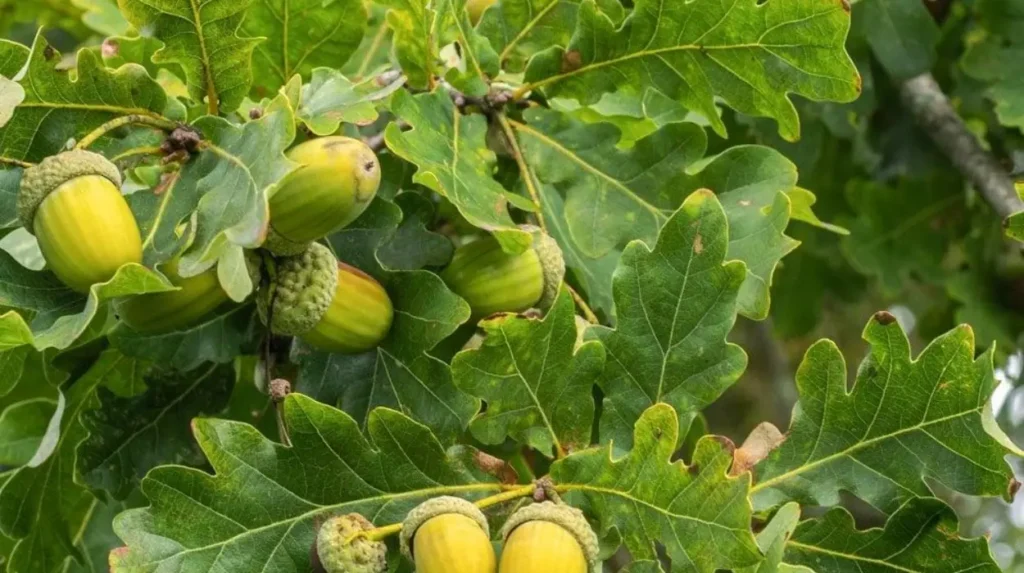
Leaf shape provides an important starting point. English oak has deeply lobed leaves, while sycamore has five broad lobes with pointed tips. Silver birch has triangular leaves with toothed edges, and beech has oval leaves with a smoother, gently wavy edge.
The leaf margin also provides useful information. A serrated edge has a sequence of small teeth. A lobed leaf has deeper divisions extending towards the centre. A smooth edge has no obvious teeth or lobes.
Leaf arrangement describes how leaves attach to a stem. Opposite leaves occur in pairs at the same point on a twig. Examples include ash and sycamore. Alternate leaves occur singly at different positions along the stem. Examples include oak and birch.
Leaf identification becomes more difficult during winter because deciduous trees shed their leaves. Bud shape and twig structure then become more important.
What does a compound leaf tell you?
A compound leaf consists of several leaflets attached to one main stalk. Ash is a familiar local example. Its leaf generally contains several pointed leaflets arranged in pairs along a central stalk, with a leaflet at the tip.
A common identification error involves confusing leaflets with individual leaves. The position of the bud helps resolve this problem. A true leaf grows from a point with a bud at its base, while individual leaflets do not have buds at their bases.
How do you recognise common trees by their bark, buds and fruits?
Bark, buds and fruits provide reliable identification features throughout the year. Oak produces acorns, beech forms prickly seed cases, rowan carries clusters of berries, and mature trees often develop bark patterns distinctive to their species.
Bark changes as a tree ages. Young trees often have smoother bark than mature specimens. English oak develops thick, deeply ridged bark, while silver birch is recognised by its pale, peeling outer surface.
Beech usually has smooth grey bark. Sycamore develops bark that flakes in patches, creating a mottled appearance. Lime trees develop ridged bark on older trunks and often produce leafy shoots from the base or trunk.
Fruits provide strong seasonal evidence. Oak produces acorns, which consist of a nut sitting in a cup-shaped structure. Rowan produces clusters of red-orange berries. Sycamore produces paired winged seeds known as samaras.
Seed cases and berries should be observed without assuming they are safe to eat. Accurate identification remains essential because many wild plants and fruits contain toxic compounds.
Why are winter buds useful for identification?
Winter buds remain visible after leaves have fallen. Ash has distinctive dark buds, including a prominent terminal bud at the end of a twig. Beech has long, narrow, sharply pointed buds. Horse chestnut has large, sticky buds during late winter and early spring.
Bud position also provides identification evidence. Opposite buds occur as pairs, while alternate buds occur one at a time along the twig. Combining bud position with bark and tree form improves accuracy.

Which common native trees should you learn to recognise first?
English oak, silver birch, rowan, beech and lime provide a strong starting group for local tree identification. These species display clear differences in leaves, bark and fruits, making them useful reference points for beginners exploring Headingley.
English oak, Quercus robur, is one of Britain’s best-known native trees. Its leaves have rounded lobes, and its fruit is the acorn. Mature oak trees support a wide range of associated wildlife because their leaves, bark and deadwood create varied habitats.
Silver birch, Betula pendula, has pale bark and triangular, toothed leaves. It is often recognised from a distance by its light-coloured trunk and fine branches. Birch species are common in many British landscapes and urban settings.
Rowan, Sorbus aucuparia, has compound leaves made up of numerous narrow leaflets. It produces clusters of small red-orange fruits during late summer and autumn. Rowan is widely planted in streets and gardens because of its compact form and seasonal colour.
Beech, Fagus sylvatica, has smooth grey bark and oval leaves. Its fruits develop inside prickly outer cases known as cupules. Mature beech trees create dense shade and produce a distinctive woodland character.
Lime trees, including small-leaved lime and commonly planted hybrid limes, are familiar components of British streets. Their heart-shaped leaves provide a useful recognition feature.
How can you identify common wild plants in local green spaces?
Common wild plants can be identified by examining flowers, leaves, stems and growing conditions. Dandelions, nettles, brambles, daisies and bluebells have distinctive visible features, while seasonal timing and habitat provide additional identification evidence.
Dandelions have a yellow flower head composed of many small individual florets. Their toothed leaves form a basal rosette close to the ground. After flowering, the seed head forms a familiar globe of wind-dispersed seeds.
Stinging nettle, Urtica dioica, has serrated leaves and fine hairs that cause a temporary skin reaction. It commonly grows in nutrient-rich soil and disturbed areas. Nettles also provide food for the caterpillars of several butterfly species.
Bramble, usually represented by Rubus fruticosus aggregates, produces arching thorny stems, white or pink flowers and blackberry fruits. Its leaves are generally divided into several leaflets.
Common daisy, Bellis perennis, forms low rosettes in grassland and lawns. Its flower head has a yellow centre surrounded by white ray florets, often with pink colouring on the outer surfaces.
Bluebells appear in spring, particularly in woodland environments. British native bluebells and introduced Spanish bluebells can hybridise, making identification more complex. Flower shape, pollen colour and the direction of the flowering stem provide useful features for closer identification.
Why should habitat be considered when identifying plants?
Habitat narrows the range of likely species. A plant growing beside a shaded woodland path faces different conditions from one growing in an exposed roadside verge. Light levels, soil moisture and disturbance affect where species establish.
Habitat information should support, rather than replace, examination of physical features. A plant can occur outside its typical environment, particularly in urban areas where soil has been moved or ornamental species have escaped from cultivation.
What are the main differences between native and introduced plants?
Native plants occur naturally in Britain through long-established ecological processes, while introduced plants arrived through human activity. Headingley’s streets and gardens contain both groups, creating a mixed urban landscape shaped by ecology, horticulture and development.
Native species form part of Britain’s established flora. Examples include English oak, rowan, stinging nettle and common daisy. These plants developed relationships with local fungi, insects and other wildlife over long periods.
Introduced species arrived from other geographical regions through gardening, forestry, trade or deliberate planting. Many introduced species remain confined to gardens or managed landscapes.
The term introduced does not automatically mean harmful. Some non-native plants provide visual interest and food resources. Problems arise when particular species spread aggressively and disrupt existing habitats.
Accurate identification is therefore important for land management. Local authorities, conservation organisations and landowners use species information to plan planting, control invasive species and protect valuable habitats.
What is an invasive non-native species?
An invasive non-native species is an introduced organism that spreads and causes negative environmental, economic or social impacts. Examples found in parts of Britain include Japanese knotweed and Himalayan balsam.
These species require careful identification because control methods vary. Landowners should use reliable guidance before attempting management, particularly where legal restrictions apply.
How do seasonal changes affect tree and plant identification?
Seasonal changes alter the visible features used for identification. Spring reveals buds and flowers, summer provides mature leaves, autumn produces fruits and seed structures, and winter exposes bark, buds and branch patterns on deciduous trees.
Spring is an important period for observing emerging leaves and flowers. Many woodland plants complete much of their annual growth before the tree canopy becomes dense.
Summer provides the fullest display of mature foliage. Leaf size, texture and arrangement become easier to study. Flowering plants also show their most obvious identification features during this period.
Autumn introduces fruits, seeds and leaf colour changes. Acorns, berries and winged seeds become valuable identification clues. Fallen leaves also allow close examination without damaging living vegetation.
Winter shifts attention towards tree structure. Deciduous trees reveal their branching patterns, bark and buds. Evergreen species retain foliage and provide a consistent point of comparison.
How can a seasonal record improve identification skills?
Keeping a record of the same tree or plant through the year shows how one species changes. Photographs can document buds, leaves, flowers and fruits at different stages.
Recording the date and location also improves understanding of local seasonal patterns. Repeated observations turn a single identification exercise into a broader understanding of Headingley’s urban ecology.
What tools help people identify trees and plants accurately?
Field guides, identification keys, reputable recording platforms and clear photographs support accurate tree and plant identification. The strongest results come from comparing several features and checking observations against authoritative scientific and conservation information.
A field guide provides structured descriptions and illustrations. Good guides distinguish similar species and explain which features offer the strongest evidence.
Identification keys guide the observer through a sequence of choices. A key often begins with broad features such as leaf arrangement before moving towards more detailed characteristics.
Digital tools can support observations, but automated image recognition should not be treated as final confirmation. Image results depend on photograph quality and the species represented in the training data.
The most reliable process combines observation with independent checking. Photographing leaves, bark, flowers and the entire plant creates a stronger record than photographing one feature alone.
What should you photograph for identification?
A useful plant record includes the whole organism and close images of its defining features. For a tree, photographs should show the overall form, bark, leaves and any visible flowers or fruits.
For smaller plants, photographs should include the complete plant, flower, leaf arrangement and stem. A clear image of the growing environment provides useful habitat context.
How can beginners avoid common identification mistakes?
Beginners avoid mistakes by checking several features instead of relying on colour or leaf shape alone. Seasonal variation, similar species and cultivated plants create confusion, so accurate identification requires systematic observation and reliable reference material.
Colour changes with age, weather and lighting. A flower’s colour therefore provides only one part of the identification process.
Similar species often share broad features. Several trees have lobed leaves, while many flowers have yellow petals. Smaller details, including leaf arrangement, bud structure and fruit shape, separate closely related species.
Cultivated plants add further complexity in urban environments. Gardens contain hybrids, varieties and species from other parts of the world. A plant beside a street therefore does not automatically represent the local native flora.
Learning a manageable group of species first improves accuracy. Begin with familiar examples such as oak, birch, rowan, nettle and dandelion, then expand knowledge to similar species.
Why do trees and plants matter to Headingley’s local environment?
Trees and plants form the foundation of urban green infrastructure in Headingley. They provide habitats, support food webs, influence local environmental conditions and connect streets, gardens and larger green spaces into a functioning ecological network.
Urban trees support birds, insects, fungi and other organisms. Their value extends beyond individual specimens because connected vegetation allows wildlife to move through built-up areas.
Plants also contribute to the structure of green spaces. Grasses stabilise soil, flowering plants support pollinating insects and shrubs provide shelter and nesting cover.
The importance of urban vegetation has increased as cities plan for biodiversity and climate resilience. Tree planting and habitat restoration require appropriate species selection, long-term maintenance and protection of existing mature vegetation.
Identification skills support public participation in this process. Residents who recognise local species can record changes, understand planting decisions and contribute observations to citizen science projects.
How does plant identification support local biodiversity records?
Biological records provide information about where species occur and how distributions change. Conservation organisations and local recording networks use verified observations to build a clearer picture of biodiversity.
Accurate records require correct species names, dates and locations. Photographs provide supporting evidence and help experts review unusual observations.
How can visitors explore Headingley while learning about local plants?
Visitors can combine tree and plant identification with walks through Headingley’s streets, parks and green corridors. Observing vegetation at different locations reveals how planting, habitat conditions and seasonal change shape the neighbourhood’s local natural environment.
A productive route includes contrasting environments. A residential street demonstrates ornamental and mature urban tree planting. A park provides open grassland and planted specimens. A wooded area reveals species adapted to shade and more natural ground conditions.
Visitors should observe without damaging plants or disturbing wildlife. Leaves, flowers and fruits should generally remain in place, particularly in managed or protected areas.
A short walk can focus on a single identification theme. One visit can compare leaf shapes. Another can concentrate on bark patterns or seasonal fruits. This approach creates a structured activity for tourists, residents and people spending limited leisure time in the area.
Digital nomads and business travellers can also use nearby green spaces as short breaks from indoor work. A 20-minute observation walk provides a focused way to explore the neighbourhood without requiring specialist equipment.
Explore More Area Guide
Headingley Birdwatching Guide: Best Places to See Birds
Headingley Wildlife Habitats and Urban Biodiversity Guide
What is the best way to build long-term tree and plant identification skills?
Long-term identification skills develop through repeated observation, accurate record keeping and gradual expansion from familiar species to similar or less common plants. Learning local habitats and seasonal patterns creates a strong foundation for recognising Headingley’s vegetation throughout the year.
Start with a small number of highly visible species. Learn their leaves, bark, flowers and fruits. Observe the same species in different seasons and locations.
The next stage involves comparing similar plants. Compare oak species by leaf structure, distinguish common berry-bearing trees by their leaves and examine different members of the same plant family.
Scientific names become useful as knowledge develops. Common names vary between regions and can refer to more than one organism. Scientific names provide a standardised naming system used by researchers and biological recorders.
Local knowledge also improves with time. The same route changes through the seasons, and repeated observation reveals patterns that a single visit cannot show.
How can Headingley residents recognise local trees and plants with confidence?
Confident identification depends on observing several features, understanding seasonal change and checking records against reliable sources. Headingley’s streets and green spaces provide accessible opportunities to learn common species while developing a stronger understanding of local biodiversity.
The most effective approach begins with direct observation. Examine the leaf, bark, flower or fruit, then consider the habitat and season. Check more than one characteristic before confirming a species.
Headingley’s mixture of mature streets, gardens, parks and green corridors provides a practical outdoor setting for this learning process. Native species and introduced plants demonstrate how natural ecology and urban development exist together.
Learning to identify common trees and plants also creates a useful connection between everyday places and wider environmental systems. A mature oak, a roadside rowan or a patch of nettles represents part of a larger network of habitats and species.
Regular observation builds knowledge that remains useful throughout the year. By recognising common trees and plants, residents and visitors can explore Headingley’s green spaces with greater accuracy and a clearer understanding of the natural life within the neighbourhood.
What are the most common trees found in Headingley?
Common trees found in Headingley include English oak, silver birch, sycamore, beech, rowan and lime. These species grow along residential streets, in gardens, parks and other green spaces across the neighbourhood.