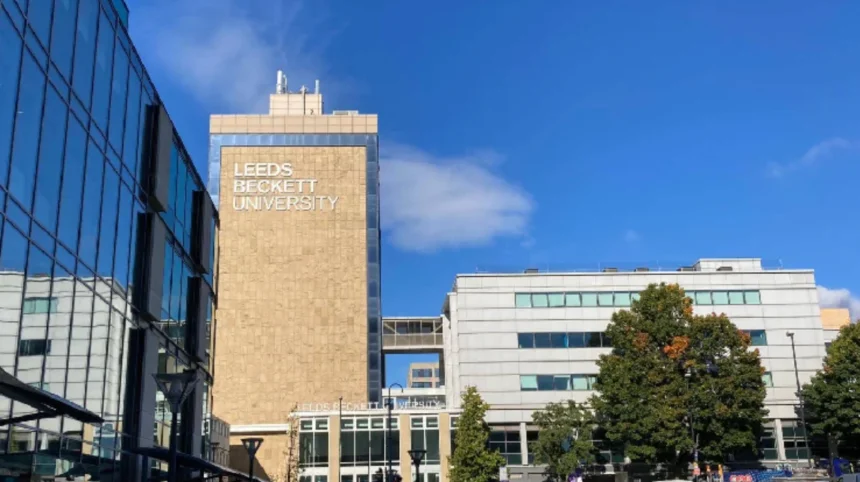
Headingley, a suburb in north-west Leeds, West Yorkshire, has a distinctive educational heritage shaped by historic estates, teacher training, university development and community learning. Its educational buildings record the transformation of the area from agricultural land associated with Kirkstall Abbey into an established residential suburb and an important centre for higher education. The most significant surviving example is Leeds Beckett University’s Headingley Campus, where historic architecture, landscaped grounds and modern academic facilities occupy land with a history extending back to the medieval period.
- Why is Headingley important for the history of education in Leeds?
- What is the history of Leeds Beckett University’s Headingley Campus?
- Which historic educational buildings should visitors look for in Headingley?
- What architectural features make Headingley’s educational buildings historically significant?
- How did historic schools and teacher-training institutions shape Headingley’s community?
- How did the First World War change the use of Headingley’s educational buildings?
- Where can visitors discover historic school buildings beyond the university campus?
- How can visitors plan a heritage walk around Headingley’s educational buildings?
- How are Headingley’s historic educational buildings being used today?
- Why should historic educational buildings be part of a Headingley visit?
For visitors interested in architecture, local history and cultural heritage, Headingley offers opportunities to explore the relationship between education and urban development. Historic school buildings, former institutional sites, university landmarks and community venues reveal how education influenced the area’s identity. These places also connect the experiences of earlier pupils and students with contemporary learning, residential life and public access to heritage.
This guide examines Headingley’s historic educational buildings, their architectural features, their development and their significance for visitors exploring Leeds.
Why is Headingley important for the history of education in Leeds?
Headingley is important to Leeds’ educational history because it combines early settlement heritage, historic school sites, teacher-training buildings and a university campus established in the early twentieth century. Its surviving architecture records the development of education alongside suburban expansion and changing community needs.
Headingley developed from a rural settlement into a substantial Leeds suburb during the nineteenth century. Before extensive residential construction, the surrounding landscape contained agricultural land, estates and scattered buildings. The area’s earlier history was closely connected with Kirkstall Abbey, a Cistercian monastery founded in the twelfth century.
The dissolution of the monasteries in 1539 changed ownership of land previously controlled by religious institutions. Estates passed into private hands, and successive owners altered houses, farms and grounds. These changes established the landscape that later accommodated schools, colleges and residential neighbourhoods.
The nineteenth century brought further development as Leeds expanded through industrialisation and population growth. Headingley became an increasingly desirable residential district, with substantial houses, churches, local businesses and public facilities. The growing population created demand for educational provision and institutions that prepared teachers for employment across the city.
The establishment of the City of Leeds Training College at Beckett Park in the early twentieth century marked a major change. Rather than education being represented only by local schools, Headingley became home to a purpose-built institution for professional teacher training. The campus later formed part of the institutional history that led to Leeds Beckett University.
For today’s visitor, this history explains why Headingley’s educational heritage extends beyond classrooms. Historic estates, institutional buildings, landscaped grounds and former school premises all contribute to the area’s cultural character.
What is the history of Leeds Beckett University’s Headingley Campus?
Leeds Beckett University’s Headingley Campus developed from an estate associated with Kirkstall Abbey into a teacher-training college opened in 1913. Its historic buildings subsequently served educational and wartime medical purposes before becoming part of a modern university campus.
The history of the campus begins with New Grange, an agricultural estate associated with the Cistercian monks of Kirkstall Abbey. The site was part of the wider rural landscape of West Headingley, where farms and estate land dominated before suburban development transformed the district.
Following the Dissolution of the Monasteries, the estate passed into private ownership. The Wade family acquired New Grange around 1604, and the property underwent substantial changes over subsequent centuries. In 1752, architect James Paine designed the present form of The Grange for Walter Wade. The building reflects the classical architectural tradition associated with substantial country houses of the period.
William Beckett acquired the estate in 1832. The Beckett family renamed it Kirkstall Grange and remodelled parts of the mansion. The family’s association with the property gave the estate a name that remains important in the history of the university campus.
In 1908, Ernest Beckett, Lord Grimthorpe, sold the estate to Leeds Corporation. The local authority acquired the land for a teacher-training college, a public park and housing. Construction of the college buildings began in the following years, and the institution officially opened in 1913. The site combined purpose-built educational facilities with existing estate buildings and landscaped grounds.
During the First World War, the college buildings were taken over for medical use. The complex became the 2nd Northern General Hospital, treating wounded and sick servicemen. The campus returned to educational use after the war, although its history continued to reflect the relationship between public institutions and wider national events.
Carnegie College of Physical Education was established on the site in 1933. The colleges later developed closer institutional links and formally merged in 1968. Further consolidation followed in 1976, when the relevant colleges joined Leeds Polytechnic. Leeds Metropolitan University adopted that name in 1992, and the institution became Leeds Beckett University in 2014.
This sequence makes Headingley Campus a valuable destination for understanding how education in Leeds evolved from specialist teacher preparation to a broad university environment.
Which historic educational buildings should visitors look for in Headingley?
The most significant educational heritage buildings to identify include The Grange, the James Graham Building, Brontë Hall and the historic structures of Leeds Beckett University’s Headingley Campus. Each illustrates a different stage in the site’s development, from an eighteenth-century mansion to purpose-built twentieth-century educational architecture.
These buildings form a connected heritage landscape rather than a collection of unrelated monuments. Their architectural details, original functions and later adaptations help explain how Headingley became an educational centre.
The Grange
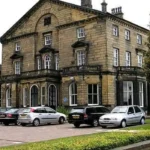
The Grange is the historic mansion at the centre of the former Kirkstall Grange estate. Its present architectural form dates to James Paine’s design of 1752, although the land has much earlier agricultural associations. The building demonstrates how an estate residence became part of a modern educational campus.
The James Graham Building
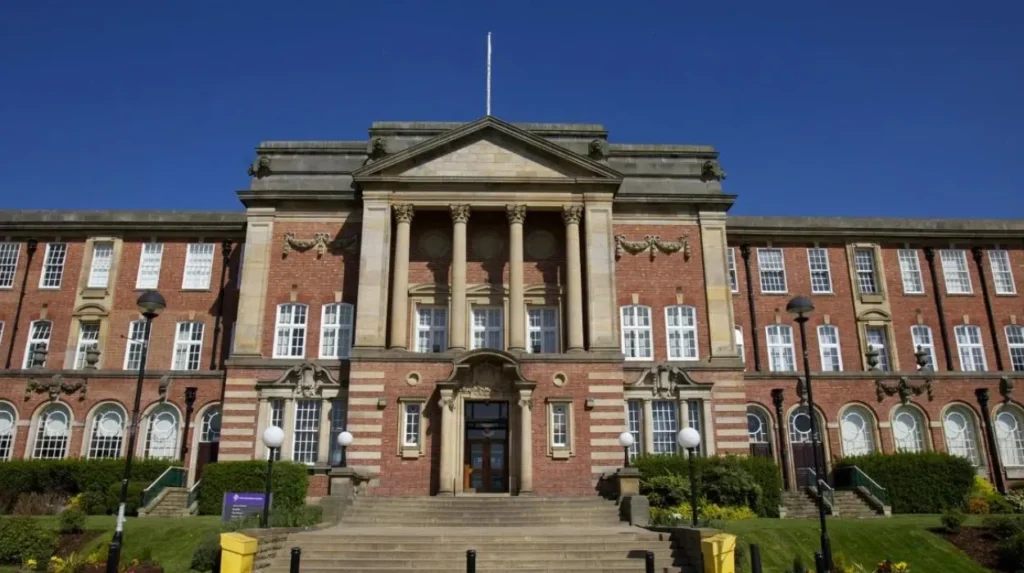
Originally known as the Education Block or Main Building, this structure was designed as part of the City of Leeds Training College. Its early twentieth-century brickwork and distinctive owl-shaped rainwater heads are important features. The building’s name commemorates James Graham, Leeds’ Director of Education, who contributed to the campus’s development.
Brontë Hall
Brontë Hall is part of the historic campus architecture associated with the early teacher-training college. Historical campus records identify the building in photographs from around 1912. Its architectural details and position within the grounds help visitors understand the planned character of the original educational complex.
Historic entrances and South Lodge
The campus entrance features and South Lodge contribute to the estate’s historic setting. Both the gate piers and South Lodge are identified as Grade II listed structures in local heritage material. They show how entrances, boundaries and supporting estate buildings formed part of the campus’s original landscape.
These buildings are best understood together. The Grange represents the estate’s earlier domestic history, while the college structures reflect the development of organised professional education. The entrances and landscaped grounds connect these different phases.
Visitors should distinguish between the age of a building and the age of the institution occupying it. A historic structure can retain architectural significance even when its present use differs from its original purpose.

What architectural features make Headingley’s educational buildings historically significant?
Headingley’s educational buildings preserve architectural features associated with Georgian estate design and early twentieth-century institutional planning. Classical proportions, historic brickwork, decorative ironwork, distinctive rooflines, landscaped approaches and formal entrances reveal how buildings expressed status, permanence and the public importance of education.
The architecture of Headingley’s educational heritage reflects different periods of construction and changing expectations about public institutions.
The Grange is the clearest example of Georgian architectural influence. James Paine, the architect responsible for its present form in 1752, worked in the Palladian tradition. Palladian architecture draws on classical Roman principles, including balanced proportions, orderly façades and a sense of symmetry. These features distinguished substantial residences and helped establish their visual prominence within landscaped estates.
The building’s history also demonstrates architectural adaptation. The Beckett family remodelled parts of the mansion during the nineteenth century. Later educational use introduced another functional layer, as the estate became a setting for institutional buildings and academic activities.
The early twentieth-century college buildings reflect a different architectural purpose. They were designed to accommodate teaching, administration, student activities and the practical needs of a training institution. The James Graham Building and Brontë Hall form part of the campus’s historic architectural identity.
One particularly distinctive detail is the group of iron owl rainwater heads on the James Graham Building. Leeds Beckett University’s archive identifies these features with the inscription “A. D. 1911”. The owl has a long association with Leeds’ civic identity and traditionally represents wisdom and learning. Its presence connects the building’s decorative design with the city’s historical symbolism.
The campus layout also matters. The relationship between buildings, open lawns, paths, entrances and mature greenery contributes to its historic character. Institutional architecture was not simply about individual façades; it involved creating a coherent environment for education.
When examining these buildings, visitors should look for the relationship between the original architectural design and later alterations. Changes in windows, entrances, extensions and interior layouts often reflect the practical demands of maintaining historic structures in active use.
Architectural significance therefore depends on more than appearance. It includes the age of the building, its original purpose, its historical associations and its contribution to the wider setting.
How did historic schools and teacher-training institutions shape Headingley’s community?
Historic schools and teacher-training institutions helped shape Headingley by supporting local education, professional development and community life. The establishment of a major training college brought educational activity to Beckett Park, while neighbourhood schools and community venues connected learning with everyday residential life.
Education became increasingly important as Headingley developed from a rural settlement into a residential suburb. Population growth created demand for schools, public facilities and institutions serving families across the expanding district.
The City of Leeds Training College represented a significant development because it prepared teachers for work beyond the immediate neighbourhood. Teacher training supported the wider education system by developing professional skills in instruction, classroom management and subject teaching.
The campus also introduced a substantial educational institution into an estate landscape previously associated with private ownership. Its development involved the local authority, architects, educators and the wider community. The project linked urban planning with the provision of professional education.
The college’s history demonstrates that educational buildings frequently served purposes beyond their original teaching role. During the First World War, the site became a military hospital. This conversion reflected the need to use large institutional buildings and facilities during a national emergency. The wartime history became part of the campus’s identity and remains relevant to its interpretation today.
Neighbourhood schools provide another perspective on Headingley’s educational past. Local school buildings emerged within the wider development of streets, churches and community facilities. Their architectural styles and locations help explain how education became integrated into residential life.
A useful place to understand the area’s wider development is the former school on Bennett Road, now used as Headingley Enterprise and Arts Centre, known as HEART. Its change of use illustrates how a former educational building can continue to serve the community after its original function ends. HEART provides a community and arts setting rather than operating simply as a preserved school building.
This type of adaptation has implications for local heritage. Retaining a historic building for community activities keeps it in active use and helps maintain its connection with the surrounding neighbourhood.
For visitors, these places reveal that Headingley’s educational history extends beyond university life. It includes the everyday institutions that supported children, families, teachers and residents as the suburb developed.
How did the First World War change the use of Headingley’s educational buildings?
The First World War transformed the City of Leeds Training College at Beckett Park into a military hospital. The buildings became part of the 2nd Northern General Hospital from 1914, demonstrating how educational facilities were adapted to meet urgent wartime medical needs.
The college opened in 1913, shortly before the outbreak of the First World War. Its purpose-built buildings were designed for teaching and professional training, but their size and institutional layout made the site suitable for alternative use during wartime.
In 1914, military authorities took over the college buildings and converted them into hospital facilities. The site became the 2nd Northern General Hospital, treating wounded and sick servicemen. The hospital remained associated with the campus until 1927, according to Leeds Beckett University’s historical account of the site.
The conversion changed the daily function of the campus. Rooms designed for educational activities were adapted to support medical care, while the grounds and supporting buildings became part of a wider hospital operation.
This episode is important because it links local architecture with national history. Educational institutions are generally designed for long-term public use, but large institutional buildings can also provide adaptable spaces during emergencies.
The campus was again commandeered for military purposes during the Second World War. Leeds Beckett University’s historical records describe the buildings being used for hospital, training and storage purposes. After the war, educational activity resumed and the colleges continued to develop.
Visitors researching this period should consult the university’s Archive and Special Collections, which holds historical material relating to the campus and its wartime use. Photographs and archival records provide evidence of how the buildings and grounds changed over time.
The wartime history also demonstrates why the preservation of educational buildings matters. Their significance includes not only the lessons taught inside them, but also the wider civic functions they performed during periods of national crisis.
Where can visitors discover historic school buildings beyond the university campus?
Visitors exploring Headingley’s educational heritage should include the former school on Bennett Road, now HEART, alongside the historic university campus. These locations illustrate how educational buildings and their surroundings have changed over time while continuing to support learning, community activities and local cultural life.
Headingley’s educational history is distributed across the neighbourhood. University buildings provide the clearest record of large-scale institutional development, while former schools and community facilities illustrate the relationship between education and residential growth.
HEART, the Headingley Enterprise and Arts Centre, occupies a former school building on Bennett Road. Its present community and arts role provides a practical example of adaptive reuse, the process of giving an existing building a new purpose while retaining its value to the surrounding area.
A visit to this building offers a different perspective from the university campus. Rather than focusing on higher education, it highlights the continuing importance of neighbourhood spaces for creative activity, community meetings and cultural events.
Headingley’s historic churches and older residential streets also help visitors understand the setting in which schools developed. The expansion of the suburb brought together homes, places of worship, shops and public facilities. Examining these buildings in context gives a more complete picture of the environment that supported local education.
The Headingley community heritage website provides additional information about historic buildings, listed structures and local development. Its historical resources include photographs, building descriptions and references to published neighbourhood histories. These materials help visitors identify buildings that are not immediately recognisable as historic landmarks.
For a broader historical perspective, explore the [history of Headingley and its development from a rural settlement into a Leeds suburb]. This contextual link connects the area’s educational buildings with the social and architectural changes that shaped the neighbourhood.
When visiting former school sites, it is important to distinguish between public community venues and buildings that remain in private or institutional use. A historic exterior does not automatically mean that visitors can enter the building.
How can visitors plan a heritage walk around Headingley’s educational buildings?
A heritage walk around Headingley can combine Leeds Beckett University’s historic campus, its former estate buildings and community heritage sites. Visitors should check access arrangements, identify landmarks in advance and allow time to examine architectural details and the wider historic setting.
A practical walk begins with the historic buildings and landscaped grounds at Leeds Beckett University’s Headingley Campus. The Grange provides the starting point for understanding the site’s earlier estate history, while the James Graham Building and Brontë Hall illustrate the development of the teacher-training college.
The historic entrances and South Lodge add further context by showing how the estate was approached and organised. Visitors interested in architectural detail should look for the Georgian character of The Grange, the brickwork of the institutional buildings and the decorative owl features associated with the James Graham Building.
A second part of the walk can focus on the surrounding neighbourhood. Headingley has a documented collection of listed buildings, including historic villas, mansions and institutional structures. These buildings reflect the suburb’s nineteenth-century expansion and the architectural ambitions of its residents.
HEART on Bennett Road provides a useful additional stop for understanding how former educational buildings remain relevant to community life. Visitors should check the venue’s current opening times and event arrangements before planning an interior visit.
The following approach helps organise a self-guided heritage walk:
- Begin with the estate history: Identify The Grange and learn about its association with Kirkstall Abbey, the Wade family and the Beckett family.
- Examine the college architecture: Compare the James Graham Building and Brontë Hall with the older mansion.
- Look at landscape features: Observe entrances, boundaries, paths and open spaces that connect the buildings.
- Explore neighbourhood heritage: Include accessible historic buildings and the former school site at HEART.
- Use archival resources: Consult historical photographs and university records to compare past and present appearances.
The university’s official history and archive resources are particularly useful for identifying buildings and understanding their original functions. Headingley heritage resources provide complementary information about local landmarks and historic photographs.
Access should always be checked before travelling. University campuses are active educational environments, and historic buildings often contain offices, teaching rooms or other facilities that are not open for general sightseeing.
Explore More Area Guide
Headingley University History and Student Life in Leeds
Headingley Literary Heritage: Famous Writers and Authors
How are Headingley’s historic educational buildings being used today?
Headingley’s historic educational buildings demonstrate the continuing value of architectural conservation and adaptive reuse. Leeds Beckett University retains an active campus within its historic setting, while former school premises such as HEART support community and cultural activities that connect heritage with contemporary local life.
Historic educational buildings face the challenge of accommodating modern needs without losing their architectural and historical character. Teaching methods, accessibility requirements, technology and building regulations change over time, while older structures often require specialised maintenance.
The continued educational use of Leeds Beckett University’s Headingley Campus provides a direct link between the original teacher-training institution and modern higher education. The institution’s history stretches from the early twentieth-century college to the university established under its present name in 2014.
The campus also demonstrates how an older estate can accommodate multiple generations of development. The Grange predates the college by more than a century and a half, while the historic institutional buildings represent the expansion of organised professional education. Their continued presence provides a physical record of the area’s changing functions.
Adaptive reuse offers another approach to maintaining historic buildings. HEART illustrates how a former school can become a community and arts venue. Such conversions retain the building’s place in the neighbourhood while creating opportunities for activities that differ from its original educational purpose.
Conservation is not simply a matter of keeping old buildings standing. It involves understanding their significance, maintaining architectural features, managing alterations and ensuring that new uses respect their historic character. Listed status can provide additional protection for buildings recognised as having special architectural or historic interest.
For residents and visitors, these efforts preserve a tangible connection with Headingley’s past. They also make heritage relevant to future generations by keeping historic buildings visible within everyday urban life.
Why should historic educational buildings be part of a Headingley visit?
Historic educational buildings belong on a Headingley itinerary because they reveal the area’s development through architecture, education, public service and community life. The combination of an eighteenth-century mansion, a historic teacher-training campus and a former school now used by the community offers a varied heritage experience.
Headingley’s educational heritage tells a wider story about the development of Leeds. The landscape associated with Kirkstall Abbey became a private estate, the estate became the site of a teacher-training college, and that institution contributed to the history of a modern university.
The Grange provides evidence of eighteenth-century architectural design and estate life. The James Graham Building and Brontë Hall represent the planned development of professional education in the early twentieth century. The campus’s wartime use connects these buildings with the medical response to the First World War. HEART demonstrates how an old school can continue to serve the neighbourhood in a different capacity.
These places also suit visitors with different interests. Architecture enthusiasts can examine historic building details, local history researchers can consult archival material, and leisure travellers can explore the relationship between Headingley’s built environment and its development as a Leeds suburb.
The most effective way to understand the area is to consider buildings alongside their historical context. A former classroom, an institutional entrance or a converted mansion becomes more meaningful when its original purpose and later changes are understood.
Headingley’s historic educational buildings remain an important part of the area’s identity. Exploring them provides a clear view of how education, architecture and community development have shaped this part of Leeds across several centuries.
What are the most significant historic educational buildings in Headingley?
The most significant examples include The Grange, the James Graham Building and Brontë Hall at Leeds Beckett University’s Headingley Campus. These buildings represent the area’s estate history and the development of teacher training in the early twentieth century.