Headingley’s development is closely connected to the growth of higher education in Leeds, the expansion of student accommodation and the influence of university communities on local businesses, transport, housing and culture. The suburb combines historic residential streets with a modern student population, creating a distinctive part of Leeds shaped by education and community life.
- How did Headingley develop from a rural village into a university suburb?
- When did Headingley become closely associated with university education?
- How has Leeds Beckett University shaped Headingley’s identity?
- What role has the University of Leeds played in Headingley’s student history?
- How has student accommodation changed Headingley’s housing and neighbourhoods?
- How does student life influence Headingley’s shops, cafés and local economy?
- How has university life influenced Headingley’s culture, sport and social activities?
- How do transport links connect Headingley with Leeds universities and the city centre?
- What historical landmarks reveal Headingley’s university heritage?
- How has the growth of student life affected Headingley’s permanent residents?
- How can visitors explore Headingley’s university history today?
- Why will universities remain important to Headingley’s future?
How did Headingley develop from a rural village into a university suburb?
Headingley developed from a small rural village into a residential suburb during the nineteenth century, then became increasingly associated with higher education during the twentieth century. University expansion, student accommodation and improved transport established its lasting connection with academic life in Leeds.
Headingley’s university history begins with a much older rural landscape. For centuries, the area consisted of farmland, scattered cottages and estates outside the densely developed centre of Leeds. Leeds City Council’s conservation appraisal records that Headingley had only 45 houses in 1831. The settlement subsequently experienced substantial residential growth as wealthier households moved away from the industrial city.
The opening of the Leeds–Otley turnpike across Headingley Hill in 1755 improved access to the area. A horse-drawn bus service reached Headingley in 1838, helping residents travel between the suburb and central Leeds. By 1850, the village had approximately 1,000 houses, according to the council’s historical account. These changes established the residential foundations that later supported a growing student population.
Higher education subsequently became an important influence on the suburb. The development of university institutions in Leeds created demand for accommodation within travelling distance of lectures, libraries and campus facilities. Headingley offered established residential streets, larger houses and convenient routes towards the city.
This transition did not happen overnight. The area retained its historic buildings and residential character while new educational facilities and student housing developed around it. The result was a suburb with a layered identity: a historic village, a Victorian residential district and a recognised university neighbourhood.
Understanding this background helps explain why Headingley contains historic houses, student residences, independent shops and university facilities within the same local area.
When did Headingley become closely associated with university education?
Headingley’s university connections strengthened during the early twentieth century, particularly after the City of Leeds Training College was established in 1907. Student accommodation opened at Devonshire Hall in 1928, creating a lasting residential connection between the suburb and university communities.
The early twentieth century marked a major stage in Headingley’s educational development. The City of Leeds Training College was established at Beckett Park in 1907, providing professional teacher training. The institution became an important predecessor of Leeds Beckett University, whose present-day Headingley Campus preserves parts of this educational heritage.
The university landscape also expanded elsewhere in Leeds. The University of Leeds received its royal charter in 1904, formalising its status as an independent university after its development from earlier educational institutions. Its growth increased the importance of surrounding residential areas for students and university staff.
Devonshire Hall opened as student accommodation in 1928. The residence incorporated existing properties and helped establish a tradition of university students living in Headingley. Other accommodation followed, including Lupton Residences and James Baillie Park. These developments connected student life with the suburb’s housing and community infrastructure.
The historical significance of this period extends beyond the opening of individual buildings. Universities created continuing demand for places to live, study, socialise and travel. As the student population increased, the surrounding neighbourhood developed services suited to people living away from their family homes.
Visitors exploring Headingley today can still see how educational institutions and residential architecture coexist. Historic university buildings, established streets and purpose-built accommodation provide evidence of the suburb’s changing role.
How has Leeds Beckett University shaped Headingley’s identity?
Leeds Beckett University has shaped Headingley through its historic campus at Beckett Park, its educational facilities and its continuing student community. The campus connects modern higher education with a landscape that includes historic estates, established buildings and long-standing residential traditions.
Leeds Beckett University is one of the principal institutions associated with Headingley. Its origins extend to the Leeds Mechanics’ Institute, founded in 1824 to provide education in subjects including science. Over subsequent decades, educational institutions in Leeds expanded and developed into the network of colleges that ultimately formed the modern university.
The Headingley Campus has a separate local history that predates the modern institution. Its grounds include The Grange, a building associated with an estate that originally formed part of the agricultural lands connected to Kirkstall Abbey. The present house was designed by architect James Paine for Walter Wade in 1752. Later, the Beckett family renamed the estate Kirkstall Grange and altered parts of the mansion.
This architectural heritage gives the campus significance beyond its educational function. The site demonstrates how historic estates were incorporated into the development of modern educational facilities. Students now use a landscape whose history includes medieval agriculture, private estates and twentieth-century teacher training.
Leeds Beckett’s institutional development also reflects broader changes in British higher education. Its predecessor institutions expanded their teaching across professional, technical, artistic and academic subjects. The institution became Leeds Polytechnic in 1970, Leeds Metropolitan University in 1992 and Leeds Beckett University in 2014.
For tourists, the campus provides a way to understand the relationship between heritage and contemporary university life. For residents, it represents an established local institution whose history is connected to the suburb’s buildings, employment and student accommodation.

What role has the University of Leeds played in Headingley’s student history?
The University of Leeds has influenced Headingley by expanding the number of students and staff seeking accommodation outside the city centre. Its growth, combined with the development of nearby university residences, helped establish Headingley and neighbouring districts as important student residential areas.
The University of Leeds became an independent university in 1904, following its earlier development as a college. Its expansion during the twentieth century increased the demand for housing within reach of the main campus and central Leeds.
Headingley Hill became associated with university staff, residential properties and student accommodation. Devonshire Hall, established in 1928, formed part of this pattern. As university enrolment grew, additional residences and privately rented properties provided accommodation for students who preferred to live beyond the main campus.
Leeds City Council’s historical conservation appraisal identifies the late 1960s and early 1970s as a particularly important period. During these decades, growing student numbers increased demand for private rented housing in Headingley and nearby Hyde Park. Some family homes subsequently changed into student houses as landlords responded to this demand.
The University of Leeds also contributes to the wider cultural and intellectual environment of the city. Student societies, academic events, research projects and community volunteering connect university life with local residents and organisations. The university’s School of History, for example, describes opportunities for students to participate in societies, produce publications, volunteer and engage with the wider community.
The distinction between the university’s city-centre campus and Headingley’s residential role is important. Headingley is not simply a university campus district. It is a neighbourhood where university-related housing, businesses and community activities interact with the everyday needs of permanent residents.
Its development demonstrates how an institution situated elsewhere in the city can influence the character of a suburb through housing demand, transport requirements and the daily routines of its students.
How has student accommodation changed Headingley’s housing and neighbourhoods?
Student accommodation has changed Headingley by increasing demand for rented rooms, encouraging some large houses to become shared homes and supporting a local rental market. These changes have created economic opportunities while raising questions about housing quality, neighbourhood balance and conservation.
Student housing is one of the clearest ways university life has influenced Headingley. As enrolment expanded during the twentieth century, students increasingly sought accommodation close to educational facilities and transport links. Existing houses offered landlords a way to provide rooms without relying exclusively on purpose-built residences.
This process became particularly visible from the late 1960s onwards. Leeds City Council’s conservation appraisal describes the conversion of some family homes into student rentals and identifies Hyde Park as an area where the effects were especially pronounced. The appraisal also discusses concerns about property maintenance and changes to the character of conservation areas.
The term studentification describes the social, economic and physical changes that occur when a neighbourhood develops a substantial concentration of student residents. Examples include houses becoming shared accommodation, shops adapting to student demand and changes in the balance between short-term and long-term residents.
Studentification does not describe every student household or every street. Its effects vary according to housing type, landlord practices, planning decisions and the distribution of accommodation.
For local businesses, student rentals create a recurring customer base for supermarkets, cafés, laundrettes, takeaways and household services. For landlords, student demand provides a rental market. For permanent residents, the effects depend partly on property maintenance, noise, waste management and the continuity of neighbourhood relationships.
Housing quality remains an important consideration. Shared accommodation requires suitable facilities, responsible management and compliance with applicable housing regulations. The council’s conservation work also highlights the importance of protecting historic buildings while accommodating changing residential needs.
For visitors interested in Headingley’s history, the housing landscape offers visible evidence of these developments. Large Victorian and Edwardian houses, converted terraces and modern student residences reflect different stages in the suburb’s growth.
The most accurate understanding of Headingley recognises both sides of this change: universities have helped sustain the local economy, while concentrated student housing has created challenges that require planning, maintenance and community engagement.
How does student life influence Headingley’s shops, cafés and local economy?
Student life supports Headingley’s local economy through regular spending on food, coffee, groceries, transport, entertainment and essential services. University calendars also influence trading patterns, while independent businesses serve students alongside permanent residents, visitors and university staff.
A substantial student community creates recurring demand for everyday goods and services. Students living independently need groceries, affordable meals, laundry facilities, stationery, mobile phone services and transport. These needs support a range of businesses in Headingley’s local shopping areas.
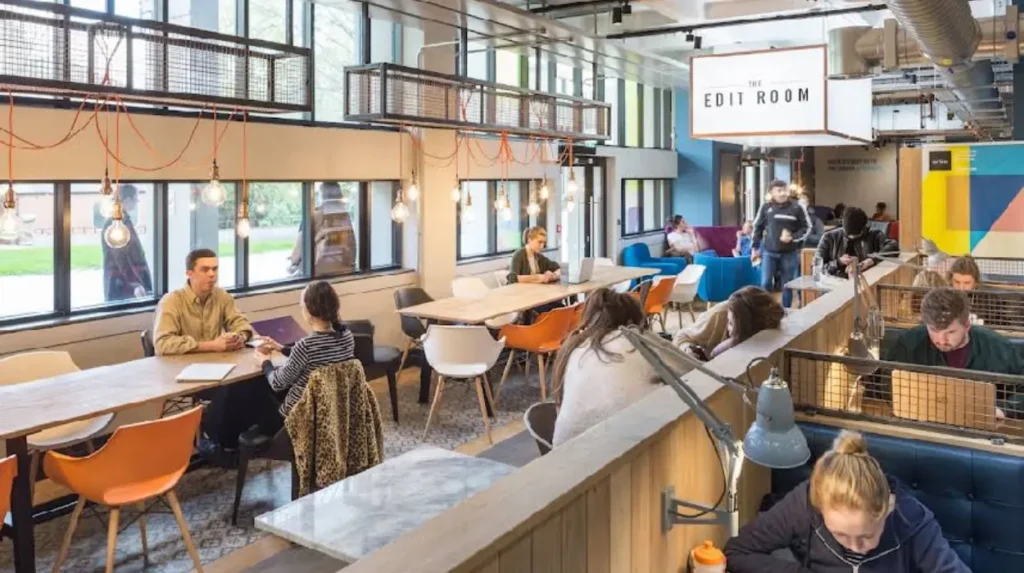
Cafés and coffee shops serve several audiences. Students use them for informal meetings, revision and breaks between activities. Residents visit for everyday refreshments, while visitors use them as convenient stops when exploring the suburb. Businesses that serve different customer groups are less dependent on any single section of the population.
Food businesses also respond to the routines of university life. Affordable lunches, takeaway meals and evening food options are relevant to students managing study schedules and household budgets. At the same time, residents require supermarkets, pharmacies and other services throughout the year.
The academic calendar affects the local economy. During term time, students create regular demand near residences and transport routes. University holidays and the summer period change the number of students living locally, although permanent residents, staff and visitors continue to use local services.
The wider city benefits from university-related spending through employment, accommodation, retail and cultural activities. Leeds Beckett University’s historic development from vocational and technical education illustrates the long-standing relationship between education and the region’s economic life.
Independent businesses are an important part of Headingley’s identity because they give the suburb a local commercial character distinct from a university campus. Shops and cafés serve practical needs while providing places for people to meet outside formal educational settings.
For digital nomads and business travellers, these businesses also offer convenient places to take a break, have an informal meeting or work between appointments, subject to each venue’s facilities and policies. Visitors should check opening hours and available seating before planning a longer working session.
Student demand therefore contributes to Headingley’s economic activity without defining every business or customer. The suburb’s commercial life depends on the interaction between students, residents, university employees and visitors.
How has university life influenced Headingley’s culture, sport and social activities?
University life has contributed to Headingley’s social and cultural identity through student societies, sporting participation, volunteering and informal community networks. These activities connect academic life with local venues, recreational spaces and events, creating opportunities for interaction beyond lectures and university buildings.
Student life extends beyond formal teaching. University societies bring together people with shared interests, including history, music, theatre, politics, sport and environmental issues. These groups organise activities, develop friendships and provide opportunities to gain practical experience.
The University of Leeds supports student-led activities through Leeds University Union. Its School of History describes opportunities for students to contribute to publications, participate in sports teams, join societies and volunteer within the wider community. These activities illustrate how university communities interact with the city rather than remaining confined to campus.
Leeds Beckett University also has a strong connection with sport and physical recreation. Its Headingley Campus includes sporting facilities such as swimming pools, fitness facilities, playing fields and tennis courts, according to the university’s student-life information. These facilities support exercise, team activities and social interaction.
Headingley’s wider sporting identity also contributes to its appeal. The area is associated with major cricket and rugby venues, including Headingley Stadium, which hosts cricket and rugby league. University sport and professional sport represent different parts of the neighbourhood’s recreational life, but both contribute to its public profile.
The cultural effects of student life are also visible in everyday routines. Students meet friends in cafés, attend performances and participate in local activities. Residents encounter university communities through shops, public spaces, volunteering projects and shared transport routes.
For leisure travellers, these connections help explain why Headingley combines residential streets with an active social environment. Visitors can explore the commercial centre, walk through historic areas and discover the relationship between educational institutions and the suburb’s recreational facilities.
University societies and community engagement also create opportunities for people to develop skills outside the classroom. Student publications provide experience in writing and editing, while volunteering connects academic interests with local organisations. These activities contribute to a broader relationship between education, cultural participation and community life.
How do transport links connect Headingley with Leeds universities and the city centre?
Headingley’s transport connections support the movement of students, university staff, residents and visitors between the suburb and central Leeds. Bus services, nearby railway stations, walking routes and cycling connections help people reach educational facilities, shops, workplaces and recreational destinations.
Transport has been central to Headingley’s development. The Leeds–Otley turnpike, opened across Headingley Hill in 1755, improved access between the rural settlement and Leeds. The horse-drawn bus service introduced in 1838 further strengthened this connection, supporting the suburb’s nineteenth-century expansion.
Modern transport continues to support the relationship between Headingley and the city’s universities. Students travel between residential areas, teaching facilities, libraries and social venues. University employees use the same routes to reach work, while visitors travel towards the suburb’s shops, sporting grounds and historic sites.
Buses provide connections between Headingley and central Leeds. Railway stations in the surrounding area, including Headingley and Burley Park, offer additional options for journeys across the city and beyond. The most suitable station depends on the starting point, destination and current service arrangements.
Walking is practical for many local journeys, particularly between nearby residential streets, shops and university-related destinations. Cycling offers another option for shorter trips, although route conditions, junctions and secure bicycle parking remain relevant considerations.
Transport demand follows the university calendar to some extent. The start of an academic year brings new students and additional journeys as people settle into accommodation and establish daily routines. During teaching periods, commuting patterns reflect lecture timetables, work schedules and evening activities.
For tourists, public transport provides access to Headingley without requiring a car. Visitors attending cricket or rugby events should check transport information before travelling, particularly when major fixtures attract large crowds.
Digital nomads and business travellers also benefit from understanding local connections. Reliable transport makes it easier to combine a meeting in central Leeds with time spent exploring Headingley. Checking current timetables and disruption notices helps travellers plan around service changes.
The historical development of transport and housing demonstrates that Headingley’s university identity depends on more than the location of educational buildings. The ability to move between campuses, homes and local services has helped sustain the suburb’s relationship with higher education.
What historical landmarks reveal Headingley’s university heritage?
Headingley’s university heritage is visible in historic estates, former training-college buildings and established student residences. The Grange, Beckett Park and Devonshire Hall illustrate different stages in the suburb’s development, from medieval agricultural land to modern higher education and student accommodation.
The Grange is one of the most historically significant buildings within Leeds Beckett University’s Headingley Campus. The estate’s origins extend to the agricultural lands associated with Kirkstall Abbey. The present house, designed by James Paine in 1752, reflects the development of country estates before the site became part of a modern educational setting.
Beckett Park is another important location. Its connection with the City of Leeds Training College established a lasting educational presence in Headingley during the early twentieth century. The campus illustrates how the suburb’s historic landscape was adapted for professional training and later university education.
Devonshire Hall represents a different part of this history. Student accommodation opened there in 1928, providing an early example of the residential infrastructure that linked university life with Headingley. Its history helps explain the long-standing presence of students in the surrounding streets.
Visitors exploring these locations should distinguish between public areas and university property. Campus access, opening arrangements and the availability of guided visits depend on current university policies. Historic buildings are not automatically open to the public simply because they are visible from a public road or path.
The suburb also contains residential architecture associated with its nineteenth- and early twentieth-century expansion. Houses built when Headingley was developing as a desirable residential district later became part of the housing supply used by university staff and students.
These different buildings illustrate the relationship between architectural preservation and social change. Some properties retain their original residential purpose, while others serve educational or shared-housing functions.
To explore the wider background behind these buildings and the settlement itself, see [Insert Anchor Text for Headingley History Article Here]. This historical context helps explain how a rural village developed into a residential suburb with a substantial educational presence.
A heritage-focused visit can therefore connect architectural details with broader developments in education, transport, housing and community life. Headingley’s history is visible not in one landmark alone, but in the relationship between its estates, campus buildings and residential streets.
How has the growth of student life affected Headingley’s permanent residents?
The growth of student life has created economic opportunities and increased demand for local services, but it has also changed housing patterns and neighbourhood routines. The effects on permanent residents depend on property management, accommodation concentration, community engagement and the availability of everyday services.
Student populations bring additional customers to local shops, cafés, restaurants and transport services. They also support demand for rental housing and provide opportunities for landlords and property-related businesses.
However, the concentration of shared student housing can change the character of residential streets. Homes previously occupied by families can become shared rentals, affecting the balance between long-term residents and temporary residents. Leeds City Council’s conservation appraisal documents these changes in Headingley and neighbouring Hyde Park, including concerns about property maintenance and conservation-area character.
Neighbourhood routines also differ according to the academic calendar. The beginning of term introduces new residents, while the end of the academic year often brings changes in occupancy. Moving dates, household waste and parking demand can create pressure in streets with substantial numbers of rented properties.
These effects are not uniform across Headingley. Some streets contain a mixture of families, professionals, students and long-term residents. Others have a higher concentration of shared accommodation. The local experience depends on housing type, location and how properties are managed.
Responsible renting and property maintenance help address practical concerns. Landlords and tenants have responsibilities under relevant housing and tenancy rules, while planning and licensing requirements apply to particular types of accommodation. Residents should consult Leeds City Council for current rules rather than relying on assumptions about every shared house.
Community relationships are also important. Students who participate in volunteering, local activities and neighbourhood initiatives can strengthen connections between universities and residents. University institutions provide channels for student support and engagement, while local organisations help people understand community expectations.
For visitors, these changes explain why Headingley has a distinct combination of residential life and student-oriented services. The suburb is not exclusively a student district, and its identity continues to depend on the needs of people who live and work there throughout the year.
The long-term challenge is to accommodate a changing student population while maintaining housing quality, protecting historic character and ensuring that local services remain useful to different age groups and household types.
Explore More Area Guide
Headingley Literary Heritage: Famous Writers and Authors
New Burley Park Sports Facilities Planned by Leeds City Council LS4 2026
How can visitors explore Headingley’s university history today?
Visitors can explore Headingley’s university history by combining a walk around Beckett Park, an appreciation of historic campus architecture and a visit to local shopping streets. Checking campus access, transport timetables and event schedules helps visitors experience the area respectfully and efficiently.
Headingley is suitable for visitors interested in the relationship between education, architecture and everyday urban life. Its university heritage is spread across the suburb rather than concentrated in one museum or historic attraction.
Beckett Park and Leeds Beckett University’s Headingley Campus provide a starting point for understanding the area’s educational history. The Grange offers a connection with the historic estate landscape, while the wider campus reflects the development of teacher training and modern higher education. Visitors should confirm whether particular buildings or grounds are accessible before travelling.
A walk through the surrounding residential streets reveals another aspect of this history. Established houses, converted properties and student residences demonstrate how accommodation has adapted to changing population needs. These buildings are part of a living neighbourhood, so visitors should respect residents’ privacy and avoid entering private property.
Headingley’s commercial centre offers an opportunity to observe how student life influences the local economy. Cafés, food businesses and independent shops serve students, permanent residents and visitors. A break in the shopping area also provides a practical way to experience the suburb beyond its university grounds.
Sporting venues provide another perspective. Headingley Stadium is associated with major cricket and rugby events, drawing audiences whose journeys contribute to the suburb’s activity. Visitors attending fixtures should check ticket information, transport arrangements and any event-specific access guidance.
The most useful approach is to combine historical exploration with an understanding of contemporary life. University buildings explain the development of education, residential streets illustrate changing housing patterns, and local businesses reveal how the student population supports everyday economic activity.
For travellers with limited time, a short visit to the campus area followed by a walk through Headingley’s commercial streets provides a clear introduction. Those with additional time can explore nearby parks, sporting venues and historic neighbourhoods.
Why will universities remain important to Headingley’s future?
Universities will remain important to Headingley because higher education continues to influence housing demand, employment, transport, local spending and community activities. The suburb’s future depends on balancing educational growth with housing quality, heritage protection and the needs of permanent residents.
Headingley’s connection with higher education has developed over more than a century. The establishment of teacher training at Beckett Park, the opening of student residences and the expansion of universities across Leeds created a lasting relationship between academic institutions and suburban life.
This relationship continues through accommodation, employment and local services. Students require places to live and study, while university staff contribute to the local workforce. Businesses benefit from demand generated by the wider university community, and cultural and sporting activities provide opportunities for people to meet beyond educational settings.
Housing remains one of the most significant issues. Continued demand for student accommodation requires effective property management and attention to the condition of older buildings. Maintaining a suitable balance between student housing and homes for other residents is important for the suburb’s long-term character.
Transport will also remain relevant. Convenient connections between residential areas, university campuses and central Leeds support access to education, employment and leisure. Walking, cycling and public transport form part of the practical infrastructure needed to accommodate residents and visitors.
Heritage protection presents another consideration. Buildings such as The Grange demonstrate that educational sites can retain connections with earlier periods of local history. Conservation and responsible development help ensure that these features remain part of Headingley’s identity as the neighbourhood changes.
Universities also have a continuing role in community engagement. Volunteering, public events, student projects and partnerships with local organisations connect academic resources with wider civic life. These activities help establish relationships between people who study in Leeds and those who live there permanently.
Headingley’s future therefore depends on more than university expansion alone. Effective housing management, accessible transport, thriving local businesses and respect for historic buildings all contribute to a sustainable neighbourhood.
The suburb’s defining feature is the relationship between these elements. Its history explains how higher education became embedded in a residential area, while contemporary student life demonstrates how universities continue to influence the way Headingley works, feels and develops.
Which universities have influenced Headingley in Leeds?
Leeds Beckett University and the University of Leeds have significantly influenced Headingley through student accommodation, education, local businesses and community activities. Leeds Beckett University has a historic campus at Beckett Park, while University of Leeds students also contribute to the suburb’s residential and social life.