Headingley is a well-established suburb in north-west Leeds, West Yorkshire, known for its residential neighbourhoods, educational institutions, independent businesses and community facilities. Its religious landscape includes historic Christian churches, Methodist congregations, Catholic parishes and Lutheran worship, alongside Muslim, Buddhist and other faith communities in neighbouring areas. These places provide spaces for prayer, religious education, community support and social connection.
- What places of worship can visitors find in Headingley?
- Which historic churches and Christian communities are located in Headingley?
- St Michael and All Angels’ Church
- Headingley Methodist Church
- Headingley St Columba United Reformed Church
- Cornerstone Baptist Church
- Our Lady of Lourdes Roman Catholic Church
- St Luke’s Lutheran Church
- How does Headingley’s religious history connect with its modern community?
- Where can visitors discover Muslim and Buddhist communities near Headingley?
- What does interfaith engagement mean in Headingley and Leeds?
- How can visitors attend religious services respectfully?
- Check service times before travelling
- Follow clothing and footwear guidance
- Ask before taking photographs
- Respect active worship
- How can students and new residents connect with faith communities in Headingley?
- What community services do religious organisations provide in Leeds?
- How can visitors research religious diversity across the wider Leeds area?
- Why are places of worship important to Headingley’s future?
For visitors, residents, students and business travellers, understanding Headingley’s places of worship offers a practical introduction to the area’s community life. Religious buildings also provide insight into local history, architecture and the development of Leeds as a diverse city.
The area is particularly suitable for visitors interested in religious heritage and community relationships. Nearby Hyde Park, Burley, Far Headingley and the wider Leeds area provide additional opportunities to learn about different religious traditions. Visitors can explore public information, attend advertised services where appropriate and discover organised interfaith initiatives.
What places of worship can visitors find in Headingley?
Headingley has several established Christian places of worship, including Methodist, Anglican, Roman Catholic, Baptist, United Reformed and Lutheran churches. Nearby neighbourhoods provide access to additional religious communities. Visitors should confirm current service times, public access arrangements and visitor guidance directly with each congregation before travelling.
Places of worship are buildings or designated spaces used for religious observance, prayer, ceremonies, teaching and community activities. In Headingley, these institutions form part of the suburb’s social infrastructure as well as its architectural and historical character.
Headingley Methodist Church, St Michael and All Angels’ Church, Headingley St Columba United Reformed Church, Cornerstone Baptist Church, Our Lady of Lourdes Roman Catholic Church and St Luke’s Lutheran Church are among the established Christian congregations associated with the area.
Each institution follows a particular Christian tradition. Methodist churches emphasise discipleship, congregational worship and community service. Anglican churches belong to the Church of England and follow its liturgical traditions. Roman Catholic churches operate within the Catholic Church, while Baptist congregations emphasise baptism and local church life. Lutheran congregations follow a Protestant tradition shaped by the Reformation.
These distinctions influence worship styles, religious observances and community activities. Visitors interested in attending a service should consult the relevant church’s official website for current details.
Headingley’s religious landscape also extends beyond Christian institutions. Hyde Park and other neighbouring districts contain mosques and Buddhist places of worship, while the wider Leeds area includes Hindu temples, Sikh gurdwaras, synagogues, Quaker meeting houses and other religious communities.
The distance between these sites varies. Visitors should distinguish places within Headingley itself from those in nearby neighbourhoods or elsewhere in Leeds.
Which historic churches and Christian communities are located in Headingley?
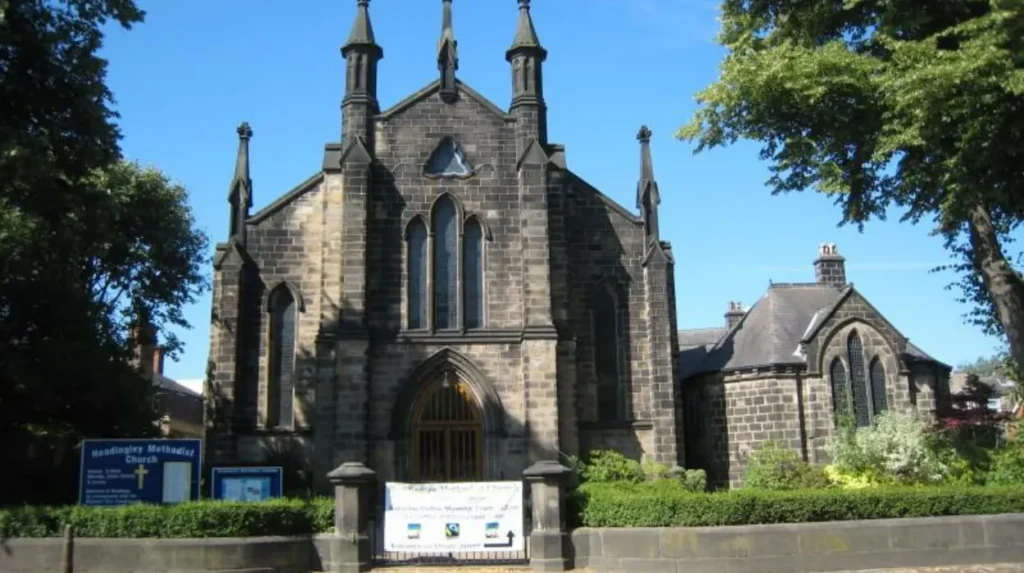
Headingley’s Christian heritage includes churches established for Anglican, Methodist, Catholic, Baptist, United Reformed and Lutheran worship. St Michael and All Angels’ and Headingley Methodist Church are notable examples. Their congregations maintain distinct worship traditions and community activities within the wider Leeds religious landscape.
Christian institutions have contributed to Headingley’s development through worship, education, charitable work and the provision of community meeting spaces. Several churches remain active religious centres, while their buildings reflect different periods of local architectural history.
St Michael and All Angels’ Church
St Michael and All Angels’ is the historic parish church of Headingley. The congregation identifies its history with a Christian presence in the community dating to 1620, although the current church building and its architectural features reflect subsequent periods of development.
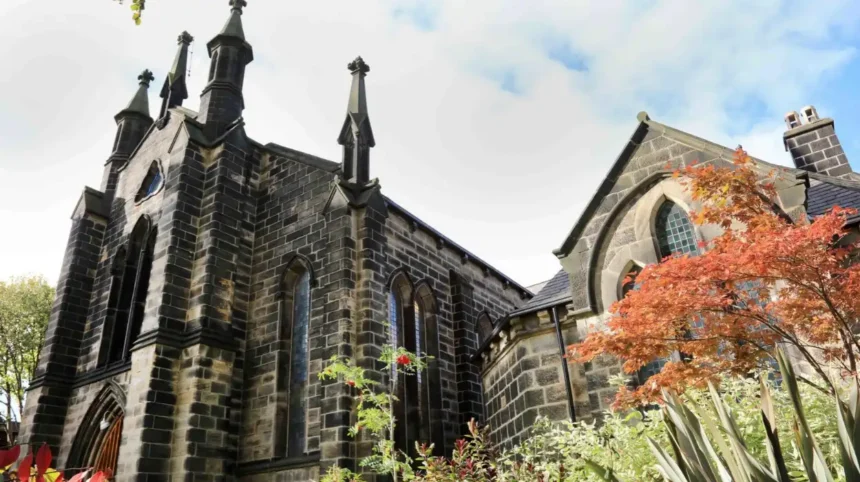
The church follows the Liberal Catholic tradition within the Church of England. Its building features Gothic architectural elements, stained glass, wrought-iron work and an organ. These features contribute to its significance as a religious and architectural landmark.
The church’s published service information includes a Sunday Parish Eucharist at 10 am, Sunday Evensong at 6.30 pm and a Wednesday Eucharist at 10.30 am. Visitors should verify these times before attending because service arrangements can change.
The church is located on St Michael’s Road, Headingley, Leeds, LS6 3AW. Its official website provides information about worship, the parish community and visitor arrangements.
Headingley Methodist Church
Headingley Methodist Church is an established Methodist congregation in the centre of the suburb. The church opened in 1845 and occupies a building associated with early Victorian religious architecture.
Its continuing use demonstrates how a historic religious building can serve both worshippers and the wider community. In addition to worship, the premises contain rooms used for different activities and gatherings.
The church is part of the Leeds South and West Methodist Circuit. Visitors can consult its official website for current services, community activities and room-use information.
The church’s central location makes it a useful point of reference for people exploring Headingley’s religious heritage on foot.
Headingley St Columba United Reformed Church
Headingley St Columba is a United Reformed Church located at 70 Headingley Lane, Leeds, LS6 2DH. The United Reformed Church is a Protestant denomination with roots in the traditions of Congregational and Presbyterian churches.
St Columba provides another example of the variety within Headingley’s Christian community. Denominational differences affect church governance, worship practices and theological traditions, but individual congregations also develop their own local activities.
People interested in attending a service or learning about the congregation should check the church’s official information before visiting.
Cornerstone Baptist Church
Cornerstone Baptist Church is associated with Kirkstall Lane, Headingley, Leeds, LS6 3LF. Baptist churches generally emphasise believers’ baptism, congregational participation and the importance of the local church.
The congregation contributes to the range of Christian traditions represented in the neighbourhood. Visitors seeking information about services, religious teaching or community programmes should consult the church’s current listing and contact details.
Our Lady of Lourdes Roman Catholic Church
Our Lady of Lourdes is a Roman Catholic church on Cardigan Road, Leeds, LS6 1LU. Its history is associated with the development of Catholic worship in a residential area that also serves a substantial student population.
Roman Catholic worship includes the Mass, the celebration of sacraments and observances linked to the Christian calendar. The church forms part of the wider Catholic parish network serving the area.
Visitors should consult the relevant parish website for Mass times, confession arrangements, accessibility details and special services.
St Luke’s Lutheran Church
St Luke’s Lutheran Church is located at 9 Alma Road, Headingley, Leeds, LS6 2AH. The congregation belongs to the Lutheran Church in Great Britain and provides worship in English, with information about Polish-language services also available through local church listings.
Lutheran Christianity developed from the Protestant Reformation and places particular emphasis on scripture, grace, faith and the sacraments. St Luke’s illustrates the presence of a distinct Protestant tradition within Headingley’s religious community.
The congregation publishes information about its Sunday worship and other services. Visitors should check the latest schedule before travelling.
How does Headingley’s religious history connect with its modern community?
Headingley’s religious history reflects the growth of local congregations, the construction of churches and the development of community institutions over several centuries. Historic buildings continue to accommodate worship and community activities, connecting present-day residents with the area’s social and architectural heritage.
Religious buildings often preserve evidence of changes in settlement patterns, population growth and community organisation. In Headingley, historic churches provide visible examples of how religious institutions developed alongside residential streets, educational establishments and local businesses.
The Methodist Church opened in 1845, while St Michael and All Angels’ represents a parish tradition with roots extending back to the seventeenth century. Other churches reflect the growth of different Christian denominations and the changing religious needs of local residents.
The wider development of Leeds also shaped the area’s faith landscape. Migration, higher education, employment and changes in family settlement patterns contributed to the growth of religious communities throughout the city.
Religious institutions often respond to these changes by adapting their facilities, introducing new activities and supporting people from different backgrounds. Their buildings can host meetings, social events and community initiatives alongside scheduled worship.
Architecture provides another historical dimension. Gothic features, stained glass, organs and traditional chapel layouts reveal different approaches to religious space. These elements also help explain why churches attract visitors interested in local history, architecture and cultural heritage.
As you explore the modern religious landscape, you are also encountering a neighbourhood shaped by generations of community life. Read the full [Insert Anchor Text for Headingley History Article Here] to understand the area’s historical development and the origins of its local institutions.
This connection between past and present is important when interpreting places of worship. A church is not simply an architectural landmark. It is also an institution shaped by successive congregations, changes in religious practice and relationships with the surrounding community.
Visitors should respect the continuing religious purpose of these buildings. Historic significance does not automatically mean unrestricted public access. Some churches welcome visitors outside service times, while others require advance arrangements for tours or entry.
Where can visitors discover Muslim and Buddhist communities near Headingley?
Muslim and Buddhist communities are represented in the neighbourhoods surrounding Headingley, particularly Hyde Park and other parts of Leeds. Local listings identify Makkah Masjid, Al Madina Jamia Masjid and Wat Buddharam among nearby religious institutions. Visitors should verify locations, services and access arrangements.
Headingley’s wider religious environment includes institutions serving Muslim and Buddhist communities. These communities follow distinct religious traditions, maintain their own places of worship and contribute to the cultural diversity of Leeds.
Makkah Masjid
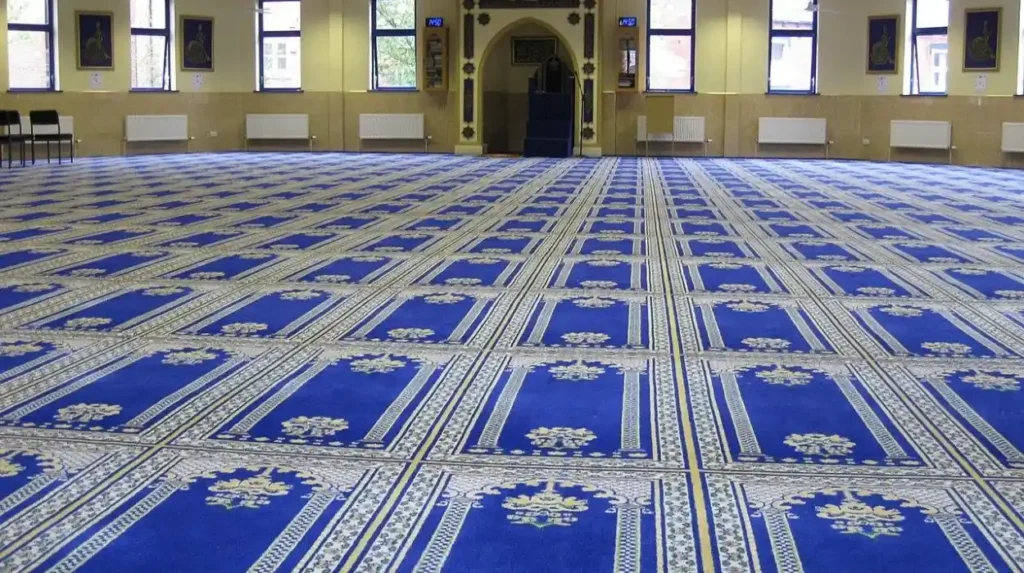
Makkah Masjid is listed at 36 Thornville Road, Hyde Park, Leeds, LS6 1JY. Hyde Park lies close to Headingley and has residential streets associated with students and long-term residents.
A mosque is a place where Muslims gather for prayer, religious learning and community activities. Congregational prayer on Fridays, known as Jumu’ah, is an important part of Muslim religious life.
Visitors should check directly with the mosque for current prayer arrangements, facilities and visitor guidance. People entering a mosque should follow any instructions concerning footwear, prayer areas, clothing and photography.
Al Madina Jamia Masjid
Al Madina Jamia Masjid is listed at 31–33 Brudenell Grove, Leeds, LS6 1HR. It serves the wider local Muslim community.
The term masjid refers to a mosque, while jamia is commonly used in the names of institutions associated with congregational worship and, in some cases, religious education. The precise activities offered by an individual mosque depend on its facilities and congregation.
Visitors should confirm opening arrangements and the availability of public visits before arriving.
Wat Buddharam Leeds
Wat Buddharam Leeds is a Buddhist place of worship listed at 46 Cliff Road, Leeds, LS6 2ET, in the wider Headingley and Hyde Park area.
Buddhism includes several traditions concerned with teachings associated with Siddhartha Gautama, commonly known as the Buddha. Buddhist communities differ in their practices, meditation traditions, ceremonies and approaches to religious teaching.
A wat is a term used for a Buddhist temple or monastery in several Southeast Asian Buddhist traditions. The name Wat Buddharam reflects a Buddhist religious setting, but visitors should consult the centre directly to understand its particular tradition and activities.
People interested in Buddhist practice should ask about meditation sessions, teaching events and public ceremonies. Participation arrangements vary by institution, and some activities require advance booking.
Exploring beyond the immediate neighbourhood
The wider Leeds area contains additional mosques, Buddhist centres, Hindu temples, Sikh gurdwaras and Jewish congregations. These institutions offer a broader picture of religious life across the city.
The Leeds City Council faith map provides a practical starting point for locating organisations by area and religious tradition. Visitors should use current institutional information rather than relying exclusively on older directory entries.
What does interfaith engagement mean in Headingley and Leeds?
Interfaith engagement brings people from different religious traditions together for dialogue, learning and collaborative community work. In Leeds, initiatives supported by faith organisations and public institutions encourage mutual understanding, strengthen relationships and connect religious communities with wider social needs.
Interfaith engagement refers to organised interaction between people from different religions. It can include educational visits, public discussions, shared community projects and events that explore religious traditions.
Interfaith work differs from simply having several religions represented in one neighbourhood. Religious diversity describes the presence of different communities, while interfaith engagement involves purposeful communication or cooperation between them.
Leeds has established structures supporting cooperation between the council and religious or belief organisations. The Leeds Faith Covenant sets out principles for engagement, inclusion, public service and community participation.
The covenant recognises the contribution religious organisations make to local society. It encourages constructive relationships between faith groups and public bodies, including collaboration on social needs, education and community support.
The Diocese of Leeds also documents interfaith activities involving visits to religious sites. These activities have included church representatives visiting mosques, synagogues and temples, as well as members of the Hindu community visiting St Michael and All Angels’ Church in Headingley as part of the Leeds Faiths Trail.
Such activities allow participants to learn about religious spaces directly from the people who use them. They also provide opportunities to ask questions about worship, religious calendars, community traditions and shared concerns.
Interfaith programmes do not require participants to abandon their beliefs or adopt another religion. Their purpose is to improve understanding and build relationships while recognising differences between religious and non-religious worldviews.
For visitors, publicly advertised interfaith events offer a structured way to learn about Leeds’ religious communities. Event organisers should be contacted in advance to establish whether an activity is open to the public.
How can visitors attend religious services respectfully?
Visitors can attend publicly advertised services by checking the venue’s guidance, confirming the schedule and following local customs. Respectful behaviour includes wearing appropriate clothing, observing photography restrictions, keeping quiet during prayer and asking permission before entering restricted areas.
Religious services follow different practices depending on the tradition, congregation and occasion. Preparation helps visitors avoid disrupting worship and ensures that they understand the expectations of the institution.
Check service times before travelling
Service schedules can change because of religious festivals, clergy availability, seasonal observances or special events. A venue’s official website or direct contact details provide the most reliable source of current information.
Church services often include prayer, readings, music, preaching or the celebration of sacraments. Mosque visits require awareness of daily prayer times and Friday congregational worship. Buddhist centres organise activities according to their own teaching and ceremonial schedules.
Visitors should not assume that a building is open for general entry simply because it is listed as a place of worship.
Follow clothing and footwear guidance
Some religious settings expect visitors to dress modestly. Mosques commonly require shoes to be removed before entering designated prayer areas. Other institutions have their own expectations for clothing and conduct.
Visitors should follow signs and instructions from staff or members of the congregation. Where requirements are unclear, asking politely before entering is appropriate.
Ask before taking photographs
Photography can be restricted during worship or in particular areas of a religious building. People attending prayer may not wish to be photographed, and some religious objects or ceremonies require additional sensitivity.
Visitors should obtain permission before photographing worshippers, clergy, religious ceremonies or areas marked as private. Public access does not automatically permit photography.
Respect active worship
Religious services are occasions for participants to pray, reflect and observe their beliefs. Visitors should silence mobile phones, avoid unnecessary conversation and remain in areas designated for visitors.
If a ceremony is already in progress, visitors should follow the congregation’s instructions. Anyone unsure about whether to sit, stand or participate should observe quietly rather than imitate unfamiliar rituals without understanding them.
Respectful attendance allows visitors to learn about a faith tradition without treating worship as a performance.
How can students and new residents connect with faith communities in Headingley?
Students and new residents can connect with local faith communities through church websites, mosque and temple contacts, university chaplaincies, student faith societies and community events. These channels provide information about worship, religious learning, pastoral support and opportunities for social participation.
Headingley has a substantial student presence because of its proximity to educational institutions in Leeds. Students arrive from across the United Kingdom and overseas, bringing a range of religious traditions, cultural backgrounds and personal beliefs.
University chaplaincies help students locate places of worship and access pastoral support. They also provide information about campus prayer spaces, faith societies and religious activities throughout the city.
The University of Leeds Chaplaincy offers information about faith groups, places of worship and student religious societies. Its resources help students identify communities that correspond with their beliefs and understand where services take place.
Students who follow a particular religion can contact a relevant congregation to ask about regular services, introductions for newcomers and community events. People who are exploring religion for the first time can ask whether a public introductory session is available.
New residents should also consider the distinction between formal religious participation and social engagement. Some people attend weekly worship, while others join occasional festivals, charitable activities or educational events.
Faith communities also support social relationships through shared meals, volunteer opportunities and community gatherings. The nature and availability of these activities vary between organisations.
People who do not identify with a religion can still participate in suitable public discussions, cultural events and interfaith activities. They should check each organiser’s participation policy before attending.
What community services do religious organisations provide in Leeds?
Religious organisations in Leeds contribute to community life through activities such as volunteering, charitable support, social gatherings and partnerships with public services. The services available depend on each organisation, its resources and its safeguarding arrangements, so visitors should confirm specific provision directly.
Places of worship often serve functions beyond formal religious observance. Some provide meeting rooms, host educational sessions, organise food collections or connect residents with local support networks.
The Leeds Faith Covenant encourages faith organisations to work constructively with public bodies and other community partners. Its principles include inclusion, accountability, safeguarding and fair access to services.
This approach recognises that religious organisations are part of civil society. Their local relationships and volunteer networks can help identify community needs and connect people with available assistance.
Leeds City of Sanctuary also describes ways faith communities support refugees and people seeking asylum. Examples include food collections, welcoming new arrivals and providing practical community support.
However, services are not identical across all institutions. A church with a community hall does not necessarily operate a food bank, and a mosque does not automatically provide every form of social assistance. Current provision should be confirmed with the relevant organisation.
Community spaces and local activities
Some religious buildings contain rooms used for meetings, educational sessions and community gatherings. Headingley Methodist Church, for example, describes facilities used for activities beyond its main worship services.
Such facilities support the connection between religious institutions and the surrounding neighbourhood. They can provide venues for organised activities and meetings where suitable arrangements are in place.
Visitors seeking to hire a room, attend an event or participate in a community activity should check availability, access requirements and any fees.
Volunteering and charitable work
Faith-based volunteering includes activities such as collecting donations, supporting community meals and assisting charitable projects. The type of work depends on each organisation and its partnerships.
People interested in volunteering should contact the organisation directly and ask about current opportunities, safeguarding requirements and any training needed.
Pastoral and personal support
Many religious communities offer pastoral support through clergy, religious leaders or trained volunteers. This support can include listening, spiritual guidance and help identifying relevant community resources.
Pastoral care is distinct from professional medical, legal or specialist social care. People who need professional assistance should contact the relevant qualified service.
Explore More Area Guide
Headingley Mental Wellbeing Activities and Support
Headingley Disability Support and Independent Living Guide
How can visitors research religious diversity across the wider Leeds area?
Visitors can research Leeds’ religious diversity through the council’s faith map, university chaplaincy resources, official religious websites and established community directories. These sources help identify institutions, understand religious traditions and check practical details before visiting a place of worship.
Headingley provides a useful starting point for exploring religious communities, but a city-wide perspective reveals a wider range of institutions and traditions.
The Leeds City Council faith map is designed to help people locate faith organisations across the city. It is particularly useful when researching a religious tradition that does not have a clearly identified place of worship within Headingley itself.
University chaplaincy resources offer another source of information. They connect students and other members of university communities with faith groups, prayer spaces and religious societies.
Official websites are especially valuable for confirming service times and contact information. Community directories help identify possible venues, but older listings do not always reflect changes in opening arrangements or organisational status.
A practical research process involves identifying the relevant institution, checking its official information and contacting the organisation if any details remain unclear.
Visitors should also distinguish between a place of worship and a religious community organisation. Some groups meet in hired premises, community centres or university facilities rather than in a dedicated religious building.
This distinction matters when planning a visit. A directory entry for a faith group does not necessarily mean that the group operates a public building with regular opening hours.
For people researching Leeds’ religious heritage, comparing official institutional histories with local directories provides a stronger understanding of the city’s changing religious landscape.
Why are places of worship important to Headingley’s future?
Places of worship remain important to Headingley’s future because they preserve religious heritage, support community relationships and provide spaces for worship and social participation. Cooperation between faith organisations, residents and public institutions helps maintain inclusive neighbourhoods and improve understanding across different beliefs.
Headingley’s places of worship connect historic buildings with contemporary community life. Their continuing use demonstrates the role religious institutions play in maintaining traditions while responding to changing populations and social needs.
Religious diversity also has implications for public services, education, cultural activities and community planning. Residents benefit when institutions communicate clearly, provide accessible information and develop constructive relationships with other organisations.
Leeds’ Faith Covenant establishes a framework for cooperation between the council and religious or belief organisations. This approach supports dialogue and recognises the contribution of faith communities to local social action.
Interfaith activities also have a continuing role in helping residents understand religious differences. Educational visits, public events and collaborative projects create opportunities to address misconceptions through direct communication.
For visitors, these developments make Headingley more than a collection of historic religious buildings. The area provides an entry point for understanding the relationship between faith, local identity and community life in Leeds.
People exploring the neighbourhood should approach each institution with respect for its religious purpose and current activities. Checking access arrangements, confirming service times and using reliable information sources helps ensure that visits are informative and considerate.
Headingley’s churches, nearby mosques and Buddhist institutions, together with the wider city’s religious organisations, form part of a varied local landscape. Exploring them provides a practical way to learn about religious traditions, local history and the community relationships that continue to shape Leeds.
What places of worship are located in Headingley, Leeds?
Headingley has several Christian places of worship, including St Michael and All Angels’ Church, Headingley Methodist Church, Headingley St Columba United Reformed Church, Cornerstone Baptist Church, Our Lady of Lourdes Roman Catholic Church and St Luke’s Lutheran Church.