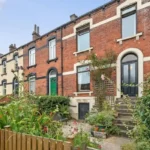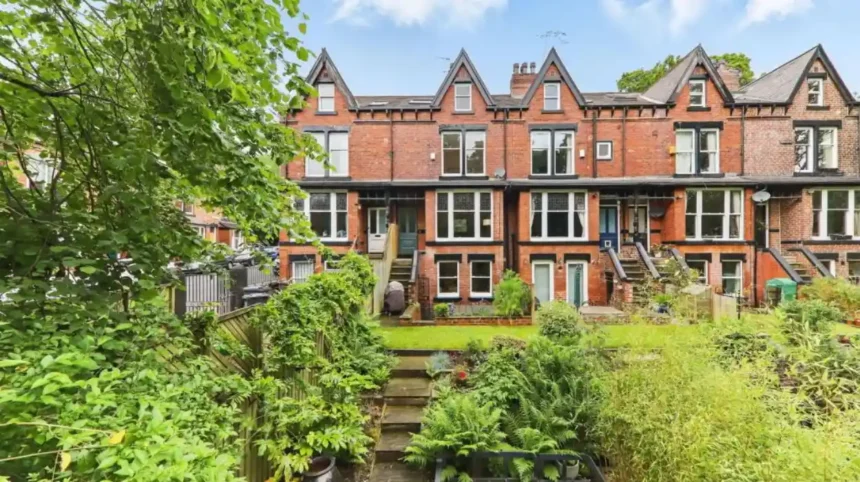
Headingley is an established residential suburb in north-west Leeds, West Yorkshire. Its housing market reflects its Victorian architecture, proximity to the University of Leeds, access to local employment and transport connections, and demand from students, professionals and families. Understanding these factors helps visitors and prospective residents interpret local property prices and housing trends.
- What defines the Headingley property market in Leeds?
- How much do properties cost in Headingley compared with Leeds?
- Which factors affect house prices in Headingley?
- How does location influence property values?
- How does property condition affect value?
- How do gardens, parking and internal space influence demand?
- How does student accommodation affect Headingley’s housing market?
- What is the difference between student and residential property demand?
- What should landlords consider before buying student property?
- How does Headingley’s Victorian architecture influence property values?
- How do transport links and local amenities influence housing demand?
- How do leisure facilities affect residential appeal?
- What should remote workers consider when choosing a property?
- How is the Leeds housing market performing, and what does it mean for Headingley?
- What do interest rates and mortgage affordability mean for buyers?
- How should readers interpret short-term market changes?
- What should buyers and renters check before choosing a Headingley property?
- What should buyers investigate before making an offer?
- What should renters check before signing a tenancy?
- How can buyers compare properties fairly?
- What are the long-term prospects for Headingley’s property market?
What defines the Headingley property market in Leeds?
Headingley is a residential suburb of Leeds with a varied housing stock, including Victorian terraces, converted flats, traditional family houses and purpose-built student accommodation. Its property market is influenced by university demand, local amenities, transport connections and the character of individual streets.
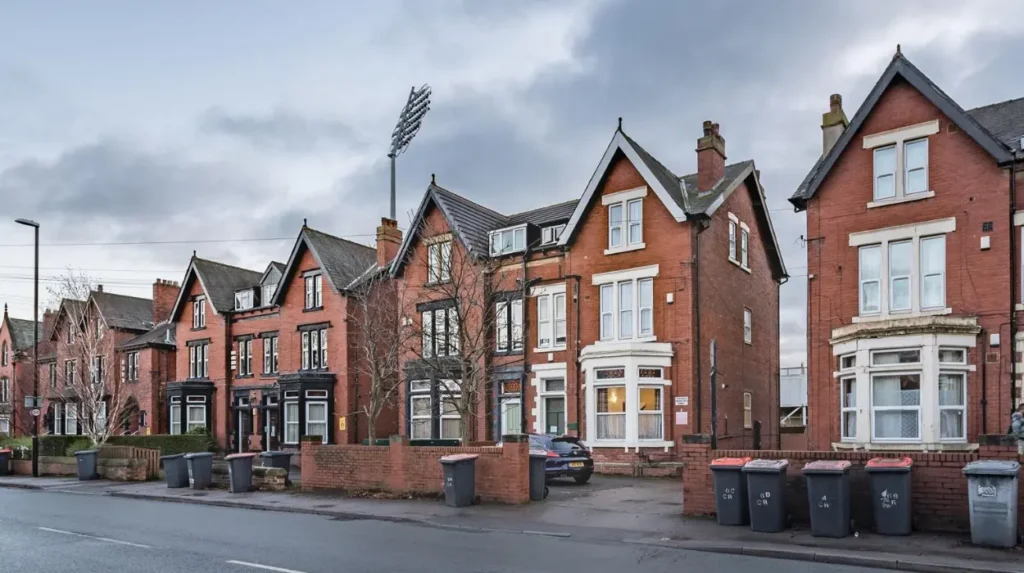
Headingley sits approximately two miles north-west of Leeds city centre. It is associated with Headingley Stadium, Otley Road, independent businesses, pubs, cafés and residential streets lined with older properties. These features contribute to its identity as a place to live, study and socialise.
The housing market is not uniform. A flat near a busy commercial street serves a different market from a large detached house on a quieter residential road. Buyers and renters therefore need to compare similar properties rather than relying on a single average for the entire suburb.
Headingley also forms part of the wider Leeds housing market. City-wide employment, mortgage affordability, household incomes and housing supply influence local transactions. However, the suburb’s university connections and established housing stock create additional local factors.
Leeds City Council recognises Headingley and the adjoining Headingley Hill, Hyde Park and Woodhouse Moor areas through its conservation-area framework. These designations identify places where historic character and architectural appearance require particular consideration. The council publishes maps and appraisal documents to help people understand the boundaries and relevant planning considerations.
For anyone exploring the area, the property market also provides a way to understand its development. Victorian terraces, converted houses and newer student buildings reflect different periods of housing demand. The historical background of [Headingley’s History and Architectural Heritage] provides context for understanding how the suburb developed into its present residential neighbourhood.
How much do properties cost in Headingley compared with Leeds?
Headingley property prices vary by street, property size, condition and tenure. Leeds-wide official figures provide a useful benchmark, but they do not represent Headingley’s exact average. Buyers should compare recent local sales and equivalent properties before estimating a realistic purchase budget.
The Office for National Statistics (ONS) and HM Land Registry publish housing-price statistics for the Leeds local authority area. These figures provide an evidence-based starting point for understanding the regional market.
The ONS housing-price release updated on 21 October 2026 reports a provisional average Leeds house price of £246,000 for August 2026, representing a 2.4% increase compared with August 2025. The equivalent Yorkshire and the Humber average was approximately £209,000.
These figures cover a broad geographical area. They include neighbourhoods with different housing types, price levels and buyer profiles. They should not be presented as the average price of a home in Headingley.
A useful comparison considers the following property categories.
Which property types influence local prices?
Headingley’s residential stock includes several established housing types, each serving different household requirements.
Victorian terraced houses are a recognisable feature of the suburb. These homes typically offer multiple floors and several bedrooms. Their values depend on floor area, layout, condition, extensions and whether they retain original architectural features.
Flats and maisonettes provide smaller ownership options for first-time buyers, single occupants and couples. A converted flat inside an older house differs from a purpose-built apartment in maintenance responsibilities, communal facilities and ownership arrangements.
Semi-detached and detached houses appeal to households seeking more internal space, gardens and residential streets away from the busiest commercial areas. Property size and the availability of outdoor space influence comparisons between these homes and smaller central properties.
Student accommodation includes shared houses, converted buildings and purpose-built developments. Its commercial performance depends on rental income, operating costs, occupancy, management and the relevant legal requirements.
The city-wide figures show why property type matters. In August 2026, average Leeds prices were approximately £450,000 for detached homes, £270,000 for semi-detached homes, £206,000 for terraced houses and £151,000 for flats and maisonettes. These are Leeds-wide figures, not Headingley valuations.
Why should buyers avoid relying on asking prices alone?
An asking price is the amount a seller advertises, whereas a completed sale price records the amount paid for a property. The figures often differ because of negotiation, competition, property condition and changes in market conditions.
Land Registry transaction data provide evidence of completed purchases. Estate-agent listings help explain current competition and the range of properties being marketed. Using both sources creates a more reliable picture than using advertised prices alone.
A meaningful comparison should include similar properties in Headingley, with particular attention to bedroom count, floor area, condition, outdoor space and tenure. Recent sales on the same street provide stronger evidence than a broad city average.
Which factors affect house prices in Headingley?
Headingley property values are shaped by location, building condition, property size, transport access, nearby amenities and buyer demand. University-related housing demand also influences some streets. These factors interact, so two homes with similar bedroom counts can attract different prices.
The local housing market reflects both the physical characteristics of properties and the advantages of their surroundings. Buyers assess the home itself, while renters consider convenience, affordability and access to education or work.
How does location influence property values?
Properties close to Otley Road and other commercial areas provide convenient access to shops, cafés, restaurants and public transport. This proximity appeals to people who prioritise walkability and easy access to everyday services.
Homes on quieter residential streets offer a different set of benefits. Reduced exposure to commercial activity, garden space and a family-oriented layout influence their appeal. The relationship between these factors and price depends on the particular property and its competing listings.
Headingley also benefits from its position within the wider Leeds urban area. Residents can access employment, shopping, cultural attractions and higher education across the city. This wider accessibility supports housing demand beyond the immediate suburb.
How does property condition affect value?
Maintenance requirements influence both the purchase price and the total cost of ownership. Older houses require careful inspection of their roofs, windows, heating systems, insulation, electrical installations and plumbing.
A refurbished property with an efficient heating system and a practical layout presents a different financial proposition from a similar house requiring extensive renovation. Buyers need to account for repair costs when comparing the two.
Victorian houses also require attention to their original construction. Older walls, historic windows and traditional roof structures have different maintenance needs from modern building materials. A survey identifies defects and helps establish the likely cost of essential work.
How do gardens, parking and internal space influence demand?
Outdoor space is a relevant consideration for households comparing properties in Headingley. Private gardens, balconies and shared outdoor areas provide different levels of privacy and usability.
Parking is another practical factor. Homes with private driveways offer a different arrangement from properties dependent on on-street parking. Buyers should check local parking restrictions, permits and any relevant planning conditions rather than assuming that a property includes unrestricted parking.
Internal space also affects comparisons. Two three-bedroom houses have different practical value if one includes a separate living room, usable loft space and a larger kitchen, while the other has a more restricted layout.
These characteristics influence buyer preferences, but their financial effect must be established through comparable local sales rather than assumptions about a fixed price premium.
How does student accommodation affect Headingley’s housing market?
Headingley’s proximity to Leeds universities supports demand for student houses, shared rentals and purpose-built accommodation. This demand affects parts of the private rental market, particularly properties suited to multiple occupants, while professional tenants and permanent residents contribute to demand throughout the year.
The University of Leeds and Leeds Beckett University are major higher education institutions in the city. Their student populations create demand for accommodation across several neighbourhoods, including Headingley and nearby Hyde Park.
The effect is particularly relevant to larger houses that accommodate groups of students. Landlords assess the number of bedrooms, shared facilities, location, property condition and achievable rent when considering these properties.
Student demand does not mean every property performs in the same way. A small flat, a family house and a large shared rental serve different groups. Their financial performance depends on their individual characteristics and local competition.
What is the difference between student and residential property demand?
Student housing often follows the academic calendar. Tenancies frequently align with university terms or academic-year arrangements, although contracts and occupancy patterns differ between properties.
Professional tenants can have different requirements, including convenient commuting routes, reliable internet access, furnished accommodation and flexible access to employment centres. Families tend to place greater emphasis on living space, outdoor areas, schools and longer-term residential stability.
These groups overlap in their preferences. Reliable transport, property maintenance and proximity to everyday services remain relevant across the market.
What should landlords consider before buying student property?
A prospective landlord should evaluate realistic rental income alongside all operating expenses. These expenses include mortgage payments, repairs, insurance, management charges, compliance work and periods without tenants.
The legal status of a shared property is particularly important. In England, a house in multiple occupation (HMO) generally involves at least three tenants forming more than one household who share facilities such as a kitchen or bathroom. Mandatory HMO licensing usually applies to properties occupied by five or more people from more than one household who share facilities, subject to the applicable rules. Additional local licensing schemes can apply.
Landlords need to confirm the relevant requirements with Leeds City Council before letting a property. Planning permission, building safety requirements and licence conditions are separate considerations, and meeting one requirement does not automatically satisfy the others.
A property’s advertised rental income is not equivalent to its profit. Investors need a complete cost assessment and a realistic occupancy forecast before deciding whether a purchase is financially suitable.
How does Headingley’s Victorian architecture influence property values?
Headingley’s Victorian and Edwardian housing contributes to its distinctive residential character. Period features, room layouts, extensions and maintenance requirements influence buyer interest. Properties within designated conservation areas also require careful consideration of planning controls affecting alterations and the preservation of historic features.
Victorian housing developed during the nineteenth century, when urban expansion and industrial growth increased demand for homes in many British cities. Headingley’s older residential streets reflect this period of expansion and subsequent changes in domestic architecture.
Traditional terraces often have brick façades, pitched roofs, narrow frontages and vertically arranged living spaces. Larger period houses feature different layouts and architectural details, while some historic buildings have been converted into flats or shared accommodation.
The condition of these features affects the property’s practical value. Original windows, decorative brickwork and traditional roof details require appropriate maintenance. Poorly maintained historic elements can create additional repair expenses.
What does conservation-area status mean for homeowners?
Leeds City Council designates conservation areas to protect places with special architectural or historic interest. Its published resources include the Headingley conservation-area map and the separate Headingley Hill, Hyde Park and Woodhouse Moor conservation-area documents.
Conservation-area status does not automatically prohibit development or all alterations. However, certain changes receive additional planning scrutiny, particularly where they affect a building’s appearance or the character of the surrounding area.
Buyers considering extensions, replacement windows, roof alterations or other external work should establish whether the property lies within a conservation area and check the relevant planning requirements. They should also review any applicable permitted development restrictions and existing planning conditions.
These checks matter financially. A proposed improvement that requires additional design work, consent or specialist materials has different costs from a straightforward internal refurbishment.
Are period properties always more expensive?
No single rule applies to all older homes. A well-maintained Victorian house with a practical layout can attract strong interest, but age alone does not establish its market value.
Floor area, the number of usable bedrooms, natural light, energy efficiency, maintenance costs and the surrounding street all influence comparisons. Modern flats can offer lower maintenance responsibilities, while period houses can provide more internal space or architectural features.
A buyer should compare the total cost of ownership rather than focusing only on the purchase price. Survey findings, energy bills, insurance, future repairs and planned alterations all contribute to the financial assessment.
How do transport links and local amenities influence housing demand?
Transport links and everyday amenities contribute to Headingley’s residential appeal by connecting homes with employment, education, shopping and leisure facilities. Bus services, nearby rail stations, local shops and access to Leeds city centre influence how different households assess convenience and overall housing costs.
Headingley offers a mix of local services and connections to the wider Leeds area. Otley Road functions as an important commercial corridor, with food outlets, independent businesses and other services supporting daily life.
For commuters, access to Leeds city centre is a practical consideration. The journey depends on the starting street, destination, travel mode and time of day. Prospective residents should check current bus timetables and rail services before choosing a property based on commuting convenience.
Headingley railway station and Burley Park railway station serve the wider neighbourhood. Their usefulness depends on the precise location of a home and the destination of the journey. A property advertised as being near a station should be assessed using its actual walking route rather than a straight-line distance.
How do leisure facilities affect residential appeal?
Headingley’s leisure facilities include Headingley Stadium, local cafés, restaurants, pubs and community venues. The stadium hosts major sporting events, including rugby league and cricket, bringing visitors into the area on event days.
For residents, these facilities offer activities close to home. For property buyers, they form part of the neighbourhood’s overall amenities, alongside supermarkets, healthcare services, parks and education facilities.
The effects are not identical for every street. A home close to restaurants and public transport offers convenience, while a property immediately beside a busy venue can experience more noise and pedestrian activity during major events.
People comparing homes should visit the relevant streets at different times, including evenings and weekends. This provides a clearer understanding of parking conditions, noise levels, traffic and the general environment.
What should remote workers consider when choosing a property?
Remote workers need a property that supports reliable internet access, a practical workspace and manageable household costs. A separate room, good natural light and sufficient electrical outlets can make working from home more practical.
Headingley’s cafés and other public venues provide alternatives for people who occasionally work outside their homes. However, access to a café does not guarantee quiet seating, reliable Wi-Fi or suitable working conditions throughout the day.
Remote workers should also consider broadband availability at the individual address, heating costs and the distance to transport links for occasional office visits. These factors can be more useful than choosing a property solely because it is close to popular leisure venues.

How is the Leeds housing market performing, and what does it mean for Headingley?
Leeds housing statistics provide context for Headingley’s market, although local prices can behave differently from city-wide averages. Official data show that Leeds prices increased annually in August 2026, while rental values also rose, highlighting the importance of separating purchase-price trends from rental-market performance.
The ONS housing-price series, based on UK House Price Index data, reported a provisional average Leeds house price of £246,000 in August 2026, up 2.4% year on year. The average private rent in Leeds reached £1,148 per month in September 2026, an annual increase of 4.5%.
These indicators describe different parts of the housing market. House prices measure the value of completed purchases, while rental statistics track rents paid by private tenants. Rising rents do not automatically mean that property prices increase at the same rate.
The figures are also subject to revision. Recent house-price data are provisional because completed transactions take time to register. The ONS advises readers to consider longer-term trends because local estimates fluctuate when the number of transactions is relatively small.
What do interest rates and mortgage affordability mean for buyers?
Mortgage affordability influences the amount buyers can borrow and the monthly cost of home ownership. Lenders assess factors such as income, regular expenditure, existing debts, deposit size and the proposed mortgage terms.
When borrowing costs rise, the same loan generally requires higher monthly repayments. This reduces the amount some households can afford to offer for a property. When borrowing becomes less expensive, affordability can improve, although other household costs still matter.
Buyers should obtain a mortgage agreement in principle and calculate the full cost of ownership before making an offer. The budget should include the deposit, mortgage payments, legal fees, survey costs, relevant taxes, insurance and expected maintenance.
The Bank of England’s interest-rate decisions influence the wider borrowing environment, but mortgage products do not all change at the same time or by the same amount. Fixed-rate products, tracker mortgages and standard variable rates operate under different terms.
How should readers interpret short-term market changes?
A single month of rising or falling prices does not establish a long-term trend. Transaction numbers, the mix of properties sold and seasonal changes can affect local averages.
For Headingley, the strongest approach combines official Leeds statistics with completed sales for comparable homes in the suburb. Current listings provide additional context about the properties competing for buyers.
People considering a purchase should examine data over several months and, where possible, several years. They should also distinguish changes in nominal prices from changes in affordability, which depends on incomes, borrowing costs and other household expenses.
Explore More Area Guide
Headingley Planning Applications and Development Guide 2026
Headingley Flood Risk: Surface Water Maps and Leeds Guide
What should buyers and renters check before choosing a Headingley property?
Buyers and renters should assess the property’s condition, total cost, location, transport access and legal arrangements before committing. Comparing equivalent homes, checking relevant council requirements and reviewing current market evidence helps establish whether a property meets practical needs and financial limits.
Property decisions involve more than the advertised price or monthly rent. A low purchase price can reflect significant repairs, while a seemingly affordable rental can involve additional bills, deposits or transport expenses.
What should buyers investigate before making an offer?
A buyer should review the property’s tenure, title information, condition and any restrictions affecting its use. Leasehold flats require particular attention to lease length, service charges, ground rent provisions where applicable, building management and planned major works.
A professional survey provides information about defects and maintenance needs. For older homes, the survey should address roof condition, damp, structural movement, insulation, heating and alterations that require further investigation.
Buyers should also review the Energy Performance Certificate (EPC), which records a property’s assessed energy efficiency and related recommendations. The EPC helps identify potential improvements, although actual energy consumption depends on the building and how it is used.
Properties intended for rental require additional checks. The buyer should confirm that the proposed letting arrangement complies with planning rules, licensing requirements, safety obligations and any applicable restrictions in the mortgage or lease.
What should renters check before signing a tenancy?
Renters should confirm the monthly rent, tenancy length, deposit arrangements, bills included and responsibilities for maintenance. They should inspect the property and document existing damage before moving in.
Students renting shared accommodation should check how rent and utilities are divided, whether all occupants are named on the tenancy and what happens when a housemate leaves. They should also verify that the property meets applicable safety and licensing requirements.
Professionals and longer-term residents should assess transport costs, internet availability, heating expenses and the practical distance to work. Comparing the full monthly budget gives a more accurate picture than comparing rent alone.
How can buyers compare properties fairly?
A reliable comparison uses homes with similar characteristics and recent transaction evidence. Buyers should record the sale price, property type, bedroom count, condition, floor area and relevant tenure details.
For example, a renovated three-bedroom terrace should not be compared directly with a two-bedroom flat without accounting for differences in size, maintenance and ownership costs. The comparison should also consider whether either property has an extension, garden or dedicated parking.
This process produces a more useful estimate of value than relying on a general claim that Headingley prices are rising or falling.
What are the long-term prospects for Headingley’s property market?
Headingley’s long-term housing prospects depend on affordability, housing supply, employment, university demand, building maintenance and investment in local infrastructure. These factors shape future demand, but historical price growth alone cannot guarantee future appreciation or establish whether an individual property represents good value.
The suburb’s established residential character, university connections and access to Leeds amenities provide important context for assessing its housing market. Its mixture of period houses, flats and shared accommodation serves households with different budgets and priorities.
Future demand also depends on the wider economy. Employment opportunities, wage growth, mortgage availability and the cost of living influence how many households can afford to buy or rent in the area.
Housing supply is another important consideration. New developments, conversions and changes in the use of existing buildings can alter the number and type of homes available. Planning decisions determine how particular proposals progress, while conservation-area policies influence the treatment of buildings in designated historic locations.
Leeds City Council’s planning resources provide information about conservation areas and their boundaries, including Headingley and Headingley Hill, Hyde Park and Woodhouse Moor. Buyers planning substantial alterations should consult these resources alongside property-specific planning records.
How should property investors assess future performance?
Investors should distinguish rental yield from capital growth. Rental yield measures annual rental income against the property’s purchase price, while capital growth refers to a change in the property’s market value over time.
For example, a property purchased for £200,000 and rented for £1,000 per month produces £12,000 in annual gross rent. Its gross rental yield is 6%, calculated by dividing £12,000 by £200,000 and multiplying by 100.
This calculation excludes mortgage interest, repairs, insurance, management fees, licensing expenses, tax and periods without tenants. The net return is therefore lower when operating costs apply.
Investors should use realistic rents for comparable properties and account for all relevant expenses. They should also consider the effect of changes in mortgage rates, tenant demand and regulation on future returns.
No investment calculation guarantees a particular outcome. A property that performs well under one set of assumptions can produce a different result when costs rise or rental income falls.
How can visitors understand Headingley’s housing market without buying a property?
Visitors can explore Headingley’s residential character by walking along its established streets, observing the differences between Victorian terraces and newer developments, and visiting its commercial centre along Otley Road.
Headingley Stadium provides a prominent local landmark, while nearby cafés, independent shops and public transport connections illustrate how residential areas relate to everyday services. Walking between the commercial centre and quieter residential streets also reveals differences in building style, density and access to outdoor space.
These observations offer useful context for understanding why property prices vary within a single suburb. However, appearance alone does not establish a home’s value, condition or legal status. Actual valuations require property-specific evidence and, where appropriate, professional advice.
Headingley’s property market reflects the relationship between historic housing, modern residential needs and the wider Leeds economy. Victorian terraces, converted flats, family houses and student accommodation each serve different sections of the market.
Official Leeds statistics provide a useful regional benchmark, but accurate Headingley valuations require comparable local sales, current rental evidence and an assessment of the individual property. Transport access, conservation requirements, maintenance costs and local amenities also influence the financial and practical appeal of a home.
For buyers, renters and property investors, the most reliable approach combines official statistics with property-level research. This provides a clearer understanding of market conditions without treating city-wide averages or past price movements as guarantees of future performance.
Is Headingley an expensive area to buy a property?
Headingley has a varied housing market, with prices depending on property type, size, condition and location. Victorian terraces, flats and larger family houses attract different prices. Buyers should compare recent local sales rather than relying solely on Leeds-wide averages.