
Horsforth is a north-west Leeds suburb with a distinctive mix of green space, historic architecture, community facilities, independent businesses and easy access to major heritage attractions. For artists, writers, photographers and digital creatives, the area provides varied settings without requiring a journey into central Leeds.
- What makes Horsforth a useful place for creative inspiration?
- Which places in Horsforth are best for artists and photographers?
- Where can writers find peaceful places to work and observe?
- Which historic places provide the strongest creative material?
- How can Horsforth Hall Park support different creative activities?
- Why is Kirkstall Abbey important for creatives visiting Horsforth?
- Where can digital creatives combine work with local exploration?
- How can visitors plan a creative day around Horsforth?
- What should creatives know before visiting Horsforth?
- Why does Horsforth remain relevant for creative visitors?
The area sits around six miles north-west of Leeds city centre and has its own railway station, regular bus connections and a strong local centre around Town Street. Visit Leeds identifies Horsforth Hall Park, Horsforth Village Museum, Firefly Pottery and the local arts community among its attractions.
Creative inspiration in Horsforth is particularly accessible because different environments sit close together. A short outing can combine landscaped parkland, historic buildings, library research, local streets and the medieval landscape of nearby Kirkstall.
For visitors, this makes Horsforth suitable for a creative-focused day trip. For residents and business travellers, it also provides places for short periods of observation, writing, sketching, photography or research.
What makes Horsforth a useful place for creative inspiration?
Horsforth offers a strong mix of green space, historic architecture, local culture and quiet working spots. Hall Park, Town Street, Horsforth Library, St Margaret’s Church, Horsforth Village Museum and nearby Kirkstall Abbey provide varied visual and intellectual stimulus daily.
Horsforth’s appeal comes from its variety rather than one single attraction. The suburb contains community parks, historic streets, churches, local heritage collections and modern businesses within a relatively compact area.
Leeds City Council identifies Horsforth Hall Park as a community park with scenic walks, a Japanese garden, cricket pitch, trim trail, skate park and integrated play facilities. These different landscape elements create changing subjects for sketching, photography and observational writing.
The built environment also contributes to the area’s character. Leeds City Council’s Horsforth design documentation identifies Hall Lane as an area with views towards the Aire Valley and describes St Margaret’s Church as a prominent landmark overlooking Horsforth. The document also records Arts and Crafts, Tudor, Art Deco and later architectural influences in the surrounding streets.
This architectural variety is important for creatives because it provides different visual scales. A photographer can work with individual architectural details, while a writer can use the wider relationship between streets, buildings and green spaces as material for place-based observation.
The combination of natural and built environments also makes Horsforth suitable for different creative disciplines. A painter can focus on landscape. A photographer can document architectural textures. A writer can observe local activity. A digital creative can combine research with a short working session.
Which places in Horsforth are best for artists and photographers?
Artists find Horsforth useful because its visual character changes quickly between parkland, stone buildings, residential streets and heritage sites. Hall Park supplies landscapes, while Town Street and Church Lane provide architectural subjects, textures, façades and everyday local details.
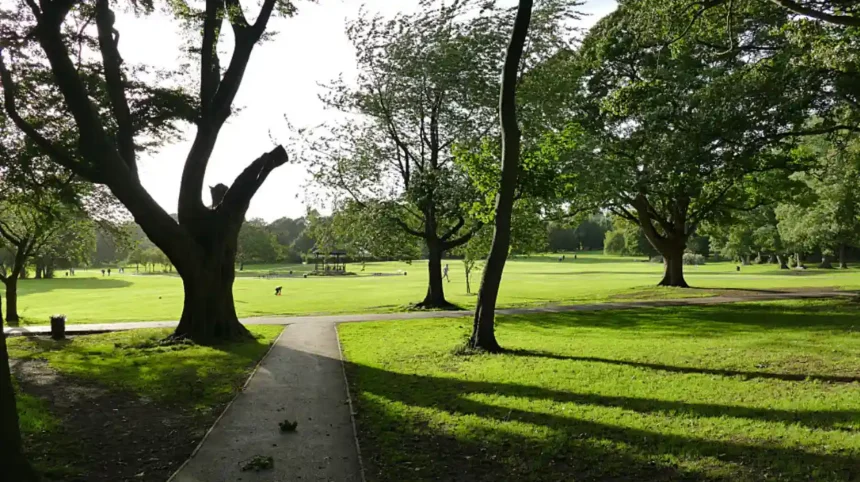
Horsforth Hall Park is one of the strongest starting points for visual work. The park covers a substantial community green space and includes woodland, open areas, landscaped gardens and recreational facilities. Its Japanese garden introduces a more structured landscape style, while the wider park supplies trees, paths and seasonal vegetation.
The park is also officially recognised within Leeds City Council’s parks framework as a community park. This distinguishes it from smaller local green spaces and recreation grounds elsewhere in Horsforth.
For photographers, Hall Lane is particularly useful because its elevated position provides views towards the Aire Valley. The local design statement describes dramatic south-facing views and highlights the relationship between the road, Hall Park and surrounding woodland.
Church Lane provides another visual focus. St Margaret’s Church was constructed between 1877 and 1883, with its spire added in 1902. The building follows the Early English Gothic style and occupies a prominent elevated position.
The surrounding architecture adds further variety. Springfield Farm is a listed building on West End Lane, while nearby houses display different architectural periods and materials. These details provide useful subjects for architectural photography, urban sketching and observational studies.
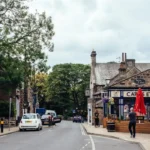
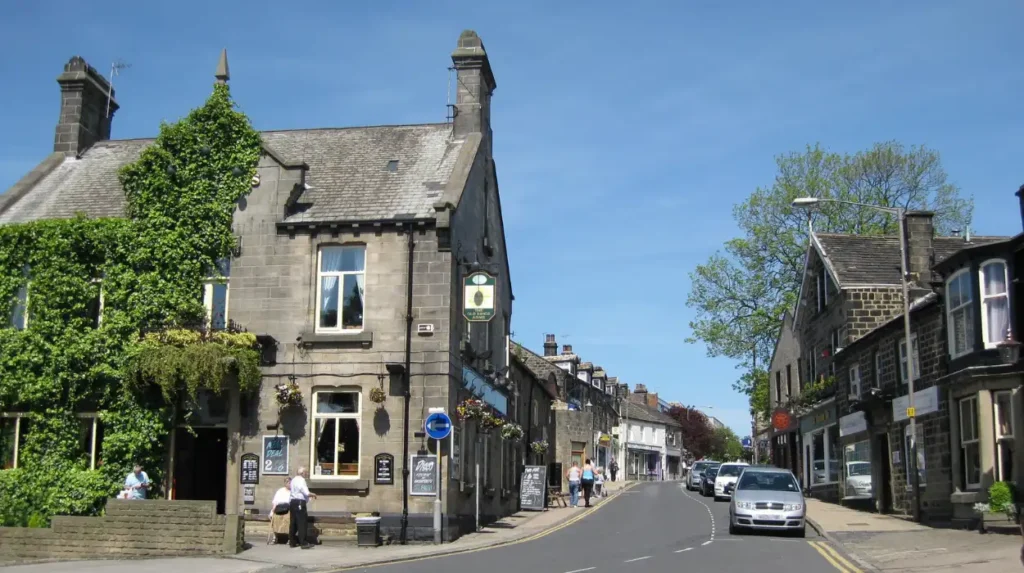
Town Street offers a different creative environment. Its shops, cafés, services and pedestrian activity provide everyday scenes rather than formal heritage subjects. For documentary photographers and writers, this creates opportunities to study how a traditional local centre functions within a modern Leeds suburb.
Where can writers find peaceful places to work and observe?
Writers benefit from Horsforth’s combination of quiet public spaces, accessible libraries, heritage settings and walkable streets. Horsforth Library supports focused work, while Hall Park and the surrounding historic streets provide settings for observation, note-taking, research and uninterrupted creative planning.
Horsforth Library is the most practical formal workspace for visitors who need research facilities. The Horsforth Community Hub and Library is located on Town Street and provides books, computers, free WiFi, public internet access and accessible facilities.
The library operates six days a week, with opening times extending to 7pm on Wednesdays. These hours create useful options for writers who need a quiet research period before or after exploring the area. Opening times should still be checked before travelling because public-service schedules change.
The library is also valuable for local research. Its position on Town Street places it close to the historic centre of Horsforth, allowing writers to combine desk-based research with direct observation.
A productive writing session can therefore follow a simple pattern. Research a subject in the library, walk through nearby streets, record visual details, then return to a suitable workspace for drafting.
Hall Park provides a contrasting environment. Instead of structured research, it offers opportunities for observation. Paths, trees, gardens and changing activity create material for descriptive writing, travel writing and local-interest projects.
Town Street works well for people studying everyday community life. Writers can observe shopfronts, public movement, architecture and local services without needing to travel into Leeds city centre.
For digital nomads, the library is particularly relevant because it combines connectivity and public facilities. The council confirms that free WiFi and public computer access are available.
The important distinction is that creative work in Horsforth does not require a dedicated artists’ studio. Public infrastructure already provides several practical environments for research, observation and writing.
Which historic places provide the strongest creative material?
Horsforth’s heritage gives creative work a strong sense of place. St Margaret’s Church, historic stone buildings, older streets and the village’s development from an independent settlement into a Leeds suburb provide architectural details and historical context for visual or written projects.
Horsforth’s historic character is important because the suburb retains evidence of its development before incorporation into the wider Leeds urban area.
Leeds planning documents describe Horsforth as having a long history as an independent settlement. The historic core retains a village character, while the wider area includes nineteenth-century industry, older buildings and later residential development.
St Margaret’s Church is one of the most prominent historic landmarks. Its Early English Gothic architecture, tall spire and elevated position make it an identifiable feature of the local landscape. The church was built between 1877 and 1883, while the spire was added in 1902.
The Old Vicarage on Church Lane adds another layer. Leeds’ neighbourhood planning documentation records it as a stone-built former vicarage dating from 1894. Its architectural relationship with St Margaret’s Church contributes to a coherent historic grouping.
For creatives, this history provides more than attractive buildings. It supplies context. Architectural photography becomes stronger when buildings are understood as parts of a changing settlement. Historical writing becomes more precise when streets and structures are connected with documented development.
Horsforth also has a dedicated local heritage institution. Horsforth Village Museum aims to represent the heritage of the village through exhibitions covering life in and around Horsforth. Visit Leeds describes it as being housed in the former council chambers.
The museum is particularly relevant for writers researching local history, family history, architecture and community development.
As you explore the modern suburb, you are crossing land with a deep heritage. Read about the full to understand its origins.
Historic research also helps photographers identify visual relationships between old and new buildings. This creates a stronger documentary approach than photographing individual structures without context.
How can Horsforth Hall Park support different creative activities?
Horsforth Hall Park supports landscape sketching, photography, observational writing and outdoor research through scenic walks, woodland, a Japanese garden and open recreational areas. Its accessible paths and varied environments allow creatives to change subject, viewpoint and pace within one destination.
Horsforth Hall Park is one of the most versatile creative locations in the area.
Leeds City Council lists scenic walks, a Japanese garden, cricket pitch, trim trail, skate park and several play facilities among its features. The park therefore contains both natural and designed environments.
The Japanese garden provides a more controlled composition. Planting, paths and landscaping create opportunities for close-up photography and detailed sketches.
The wider park is better suited to landscape work. Trees and open spaces create different perspectives depending on season, weather and time of day. Artists can study changing light and vegetation without leaving the park.
Writers can use the park for observation-based exercises. The setting provides physical movement, recreational activity, plants, architecture around the park boundary and changing patterns of public use.
The park also has practical access advantages. Leeds City Council states that paths are suitable for wheelchair users and that all entrances are wheelchair accessible. Two disabled parking bays are available in the main car park off Hall Lane.
This accessibility makes the park useful for a wider range of creative visitors.
The surrounding Hall Lane area adds another dimension. Leeds planning documentation highlights views towards the Aire Valley and the relationship between Hall Lane, Hall Park woodland and nearby residential streets.
A creative walk can therefore move from close botanical details to broader landscape views and then towards architecture.
For photographers, the park also works as a starting point rather than an endpoint. A route can continue towards Church Lane and Town Street, creating a varied sequence of images from one outing.
Why is Kirkstall Abbey important for creatives visiting Horsforth?
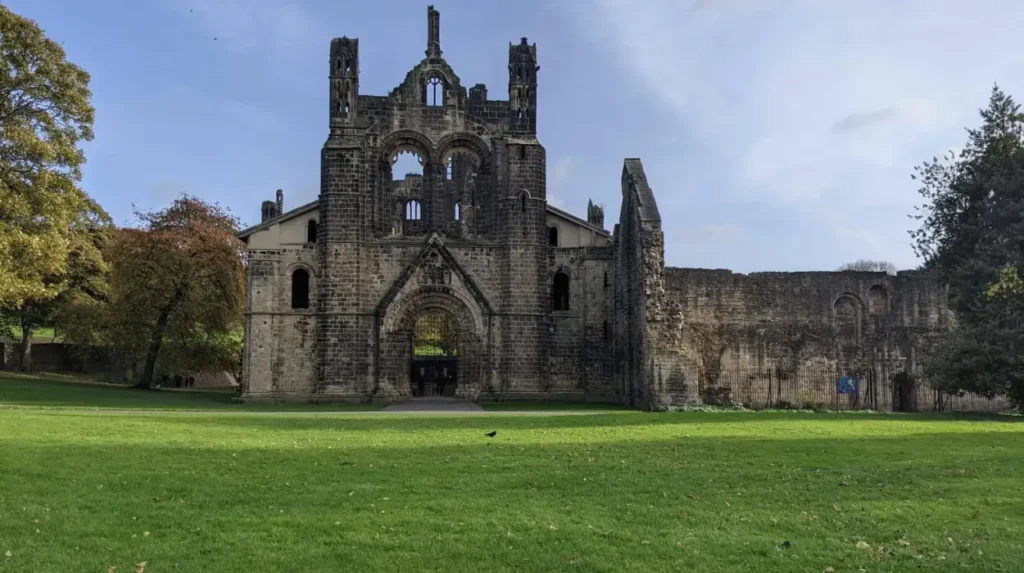
Kirkstall Abbey is one of the strongest nearby destinations for creative inspiration. The Grade I listed Cistercian ruins, riverside setting, parkland and detailed medieval architecture create subjects for drawing, photography, writing, architectural study and historical research close to Horsforth.
Kirkstall Abbey sits a short distance from Horsforth and provides one of the area’s richest combinations of architecture, history and landscape.
The abbey was founded in 1152 by Cistercian monks. Leeds Museums and Galleries identifies it as one of the most complete Cistercian monasteries in Britain. It is also a Grade I listed building and Scheduled Ancient Monument.
The site’s architectural remains provide extensive material for artists. The church, cloister, chapter house, cellarium, infirmary, warming house, library and guest house each represent different functions within the medieval monastery.
Leeds Museums and Galleries provides a free audio guide with ten locations around the ruins. The guide explains the history of specific spaces and the people connected with the abbey.
This makes the site useful for creatives who want historical information alongside visual observation.
The abbey’s parkland also expands the creative possibilities. Visitors can combine architectural studies with landscape photography and riverside observation. The museum describes the surrounding park as a space for walking, picnics and exploring the grounds.
Kirkstall Abbey also has a direct connection to Horsforth history. Leeds Museums and Galleries records Nigel of Horsforth as a historical figure who gave his body and lands in Horsforth to Kirkstall Abbey.
This connection reinforces the value of visiting the abbey when researching Horsforth’s historical landscape.
Access is also practical. The nearest railway stations are Kirkstall Forge and Headingley, both around one mile from the abbey, while buses including routes 33 and 34 stop outside.
The abbey grounds and visitor centre are largely accessible at ground level, although some heritage areas contain cobbles and uneven surfaces.
Where can digital creatives combine work with local exploration?
Digital creatives need reliable facilities as well as visual stimulation. Horsforth Library provides free WiFi, public computers, accessible facilities and book collections, while nearby cafés and Town Street offer additional settings for writing, planning, research and short focused work sessions.
Horsforth works well for digital creatives because practical facilities are integrated into the local centre.
Horsforth Library provides free WiFi and public computers, alongside books, public toilets and accessible facilities. The library also has meeting-room facilities and assistive technology.
Its location on Town Street is particularly useful. Creatives can work indoors and then move directly into the surrounding streets for visual research.
This is valuable for projects that depend on place-based information. A travel writer can research local history before walking through the area. A photographer can review images between locations. A designer can collect architectural references and organise them during a working session.
Town Street also provides access to food, drink and everyday local services. Visit Leeds identifies the street as a popular destination for eating and nightlife, with a range of bars and restaurants.
Nearby creative businesses add another dimension. Visit Leeds lists Firefly Pottery as a ceramic learning and play centre and highlights Horsforth Arts Society as a local group for drawing, painting and crafts.
These organisations demonstrate that creative activity in Horsforth is not limited to passive observation. The area also supports participatory creative interests.
For business travellers, the combination of transport and public facilities is useful. Horsforth has its own railway station and regular bus connections with Leeds. Visit Leeds lists buses including services 50, 30 and 33a between Leeds and Horsforth.
A visitor can therefore stay connected while exploring the area without depending entirely on a car.
How can visitors plan a creative day around Horsforth?
A productive Horsforth creative day works best when activities are combined rather than isolated. Start with quiet observation in Hall Park, research at the library, explore heritage streets, then continue towards Kirkstall Abbey for architecture, landscape study and historical reference.
A creative itinerary can begin at Horsforth Hall Park.
Morning light provides useful conditions for landscape photography and sketching, while the park’s paths provide a straightforward route through different environments. The Japanese garden offers detailed subjects, while woodland and open areas provide broader compositions.
The next stage can move towards Hall Lane and Church Lane. This transition changes the subject from landscape to architecture.
St Margaret’s Church is particularly important because of its elevated position, Gothic design and prominent spire. The surrounding buildings provide additional examples of local architectural development.
Town Street then provides an opportunity for research, refreshment and observation. Writers can use Horsforth Library for local research, while photographers can review their work and organise notes. The library provides free WiFi and public computer access.
The final stage can continue towards Kirkstall Abbey.
The abbey provides a much older architectural setting than Horsforth’s nineteenth- and twentieth-century streets. Its medieval Cistercian ruins introduce a different visual language, with stonework, arches, columns, cloisters and large structural remains.
The site’s free audio guide adds historical context at ten locations across the ruins. This allows visitors to connect physical details with documented history while exploring.
A creative day can therefore progress through several layers of place: landscape, neighbourhood architecture, community facilities and medieval heritage.
This approach is useful for artists producing a portfolio, writers developing a location-based project, photographers creating a local series and digital workers who want structured downtime.
Explore More Area Guide
Horsforth Places to Explore on a Clear Summer Day 2026
Horsforth Meeting Points and Gathering Spots Guide 2026
What should creatives know before visiting Horsforth?
Creatives should check opening times, access arrangements, weather conditions and transport before travelling. Public parks remain useful for flexible outdoor work, while libraries, museums and heritage attractions operate scheduled hours that vary by day, season and programme.
Preparation improves the usefulness of a creative visit.
Horsforth Hall Park is an outdoor public park, making it the most flexible destination for sketching, photography and observation. Leeds City Council confirms that the park has accessible paths and wheelchair-accessible entrances.
Horsforth Library operates on a fixed weekly schedule. Current listed hours are Monday 9am–5pm, Tuesday 10am–5pm, Wednesday 9am–7pm, Thursday 9am–5pm, Friday 9am–5pm and Saturday 10am–4pm. Sunday is listed as closed.
Kirkstall Abbey also has seasonal opening hours. Leeds Museums and Galleries currently lists Tuesday to Sunday opening, with longer hours between April and September and shorter hours between October and March. The museum recommends checking current arrangements before travelling.
The abbey is a heritage site, so some areas have uneven or cobbled ground. The visitor centre and most grounds are accessible, but individual requirements should be checked before arrival.
Weather preparation is particularly important for outdoor creative work. Waterproof equipment protection is useful for cameras, notebooks and sketchbooks. Comfortable footwear is also appropriate for routes combining Horsforth streets with Kirkstall Abbey parkland.
Visitors should also distinguish between public observation and commercial photography. Personal photography is generally straightforward at public locations, but organised commercial shoots, professional filming or formal photography at managed heritage venues can require permission.
Leeds Museums and Galleries explicitly promotes Kirkstall Abbey and Abbey House Museum as filming locations and provides arrangements for filming, television, adverts, music videos and photoshoots.
For serious creative projects, checking venue requirements before arrival avoids disruption.
Why does Horsforth remain relevant for creative visitors?
Horsforth remains relevant because it combines accessibility, heritage, green space and community infrastructure within a compact part of Leeds. Its value for creatives comes from the relationship between these environments rather than dependence on one landmark.
The suburb provides a useful example of how creative exploration can operate outside a major city centre.
Its green spaces support outdoor observation. Its historic buildings provide architectural subjects. Its library provides research and digital facilities. Its local museum preserves community history. Nearby Kirkstall Abbey adds medieval architecture and riverside landscape.
The area’s heritage is also well documented. Leeds planning material records the historic development of Horsforth and identifies significant buildings and landscape relationships.
For artists, the most valuable feature is visual variety. A single outing can produce studies of trees, gardens, stone buildings, church architecture, residential streets and historic ruins.
For writers, Horsforth provides material for local history, travel writing, architecture, community observation and place-based nonfiction.
For photographers, the area provides a mixture of natural and built subjects.
For digital creatives, Horsforth Library provides practical infrastructure while Town Street provides access to local services and hospitality.
For tourists, the area offers an alternative to concentrating an entire visit on Leeds city centre.
Horsforth is therefore best understood as a connected creative landscape. Hall Park, Church Lane, Town Street, Horsforth Village Museum, the library and Kirkstall Abbey each provide different forms of stimulus. Together, they create a practical itinerary for creative exploration in north-west Leeds.
What are the best places for creative inspiration in Horsforth?
Horsforth Hall Park, Town Street, Church Lane, Horsforth Library, Horsforth Village Museum and nearby Kirkstall Abbey are strong places for creative inspiration. They offer a combination of green spaces, historic architecture, local heritage, community activity and peaceful environments.