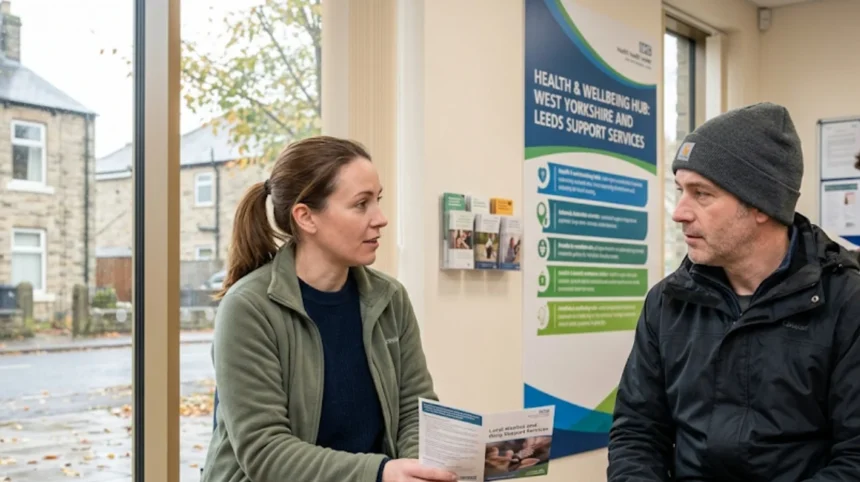
The process of accessing substance misuse interventions requires navigating a structured network of public health provisions, non-profit partnerships, and private medical facilities within the City of Leeds metropolitan borough. Individuals residing in Wetherby, a market town situated within the Leeds local authority boundaries, fall under the statutory jurisdiction of West Yorkshire health authorities. Under the Health and Social Care Act 2012, local authorities maintain the statutory duty to commission comprehensive public health services, which explicitly includes the provision of open-access alcohol and drug treatment systems for all residents.
- What is the primary service for drug and alcohol support in the Wetherby area?
- How do individuals initiate a referral for substance support near Wetherby?
- What clinical and medical interventions are available for local residents?
- What psychosocial and long-term recovery frameworks support the Wetherby community?
- What private residential rehabilitation options exist near Wetherby?
- What specific provisions exist for young people and young adults?
- How does the regional data and legislative framework influence service delivery?
The regional substance misuse treatment framework relies on integrated clinical pathways that bridge primary care providers, such as general practitioners, with specialized community hubs, inpatient detoxification units, and long-term recovery networks. Understanding the structural division between NHS-commissioned community services, voluntary sector alliances, and independent residential clinics is critical for establishing an effective recovery pathway. This framework serves a dual purpose: mitigating acute physical risks associated with substance dependence and providing the psychosocial infrastructure necessary to sustain long-term behavioral change.
What is the primary service for drug and alcohol support in the Wetherby area?
Forward Leeds is the primary integrated drug and alcohol service commissioned by the Leeds City Council to provide free, confidential substance misuse support to adults and young people living across the entire Leeds metropolitan borough, including Wetherby residents.
Forward Leeds operates as the second-largest multi-agency substance misuse partnership in the United Kingdom. The organization delivers early interventions, harm reduction protocols, structured medical treatments, and sustained recovery packages. The service structure consists of a collaborative consortium combining resources from multiple specialized entities. The partnership includes Humankind (operating under the consolidated brand name Waythrough), Barca-Leeds, St Anne’s Community Services, and the Leeds and York Partnership NHS Foundation Trust. This multi-agency configuration ensures that clinical interventions, social care support, and mental health expertise merge into a singular managed care pathway.
The service maintains a wide geographic catchment area that spans urban Leeds alongside outer towns and rural localities, specifically incorporating Farsley, Garforth, Guiseley, Horsforth, Morley, Otley, Pudsey, Rothwell, Yeadon, and Wetherby. Because Wetherby sits within this administrative boundary, residents have a legal right to access the full suite of treatments without direct financial cost. Clinical and administrative operations are distributed across three primary structural hubs within the city, alongside specialized recovery facilities.
The primary operational bases include:
- The City Centre Hub: Located at 74 Kirkgate, Leeds, LS2 7DJ, handling core adult assessments and clinical interventions.
- The Armley Hub: Situated at 3 Armley Court, Armley Road, LS12 2LB, serving the western sectors of the metropolitan area.
- The Seacroft Hub: Located at Irford House, Seacroft Crescent, LS14 6PA, providing localized treatment for eastern sectors.
- 5 WAYS: A dedicated center for sustained recovery and aftercare, located outside the primary clinical hubs to foster long-term community reintegration.
Wetherby residents execute entry into this system via centralized communication channels, utilizing the main adult contact number (0113 887 2477) or the dedicated young people’s line (0113 887 2757) to initiate a formal intake assessment.
How do individuals initiate a referral for substance support near Wetherby?
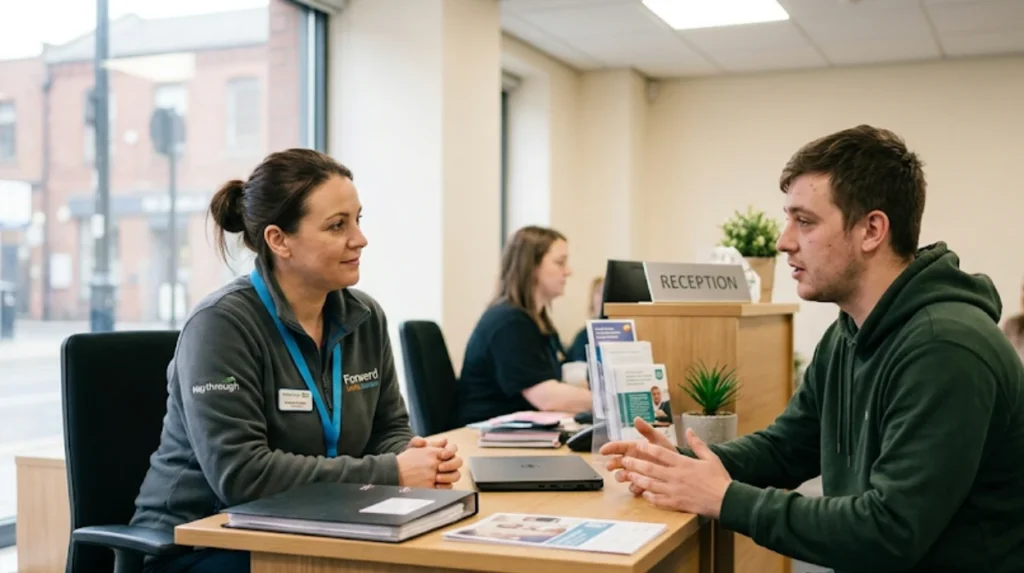
Individuals initiate a referral by contacting Forward Leeds directly via telephone, submitting an online self-referral webform, or obtaining a professional referral from a general practitioner, social worker, housing officer, or criminal justice representative within the West Yorkshire region.
The entry pathway into the Leeds substance misuse treatment network enforces an open-access policy, meaning an individual does not require a formal medical diagnosis or a prior doctor’s letter to secure an appointment. Self-referral represents the most frequent method of entry. A resident performs this action by phoning the central triage team or filling out the secure digital submission form hosted on the official Forward Leeds portal. The digital intake system splits into two distinct pathways: one optimized for adults over the age of 18, and a separate, safeguarded mechanism for young people and young adults up to the age of 24.
Professional referrals occur concurrently when an external statutory or voluntary agent identifies substance dependence during routine interactions. General practitioners at local clinics—such as the Wetherby Health Centre on St James’s Street—regularly utilize direct electronic referral pathways to transfer patients into specialized care. Once the administration receives the referral data, the triage team processes the case details to match the individual with a designated key worker.
The intake process follows a strict linear sequence:
- Initial Screening: A telephone or digital review establishes basic demographic data, the primary substance utilized, usage frequency, and immediate safety indicators.
- Comprehensive Clinical Assessment: The individual meets an assigned caseworker at a designated hub or community satellite location to evaluate physiological dependence, psychological health, and social stability.
- Risk Management Evaluation: The clinician screens for acute medical issues, overdose risks, self-harm vulnerabilities, and safeguarding requirements for dependents.
- Care Plan Formulation: The caseworker and the patient co-produce an individualized treatment plan detailing explicit recovery targets, scheduled interventions, and pharmacological requirements if necessary.
What clinical and medical interventions are available for local residents?
Clinical and medical interventions available include supervised community or residential detoxification, substitute prescribing programs, comprehensive health screenings, blood-borne virus vaccinations, harm reduction provisions, and coordinated dual-diagnosis psychiatric treatment through the Addictions Plus multi-disciplinary team.
Medical management of substance dependence requires precise clinical oversight to control withdrawal syndromes and minimize physiological harm. For individuals exhibiting severe alcohol dependence or opioid use disorders, sudden cessation can induce life-threatening complications, including delirium tremens, grand mal seizures, or severe cardiovascular instability. The Leeds and York Partnership NHS Foundation Trust integrates specialist medical staff directly into the community hubs to deliver safe detoxification protocols. Community detoxification allows patients to undergo managed withdrawal within their own homes, supported by daily clinical check-ins, breathalyzer monitoring, and the targeted administration of tapering medications, such as Chlordiazepoxide for alcohol withdrawal.
When home environments lack the necessary stability or safety metrics, clinicians initiate a pathway to residential detoxification units or specialist inpatient wards. Alongside acute detoxification, substitute prescribing programs form a core component of opioid replacement therapy (ORT). Clinicians prescribe long-acting opioid agonists, specifically Methadone or Buprenorphine, to stabilize brain chemistry, eliminate illicit drug seeking, and reduce the transmission of infectious diseases.
Medical teams operating within the Kirkgate, Armley, and Seacroft hubs provide ongoing healthcare interventions designed to address the broader physical consequences of chronic substance use. These include:
- Blood-Borne Virus (BBV) Screenings: Diagnostic testing for Hepatitis B, Hepatitis C, and Human Immunodeficiency Virus (HIV).
- Immunisation Programs: Direct administration of vaccinations against Hepatitis A and Hepatitis B.
- Naloxone Distribution: Providing take-home intranasal or intramuscular Naloxone kits, alongside training on how to reverse acute opioid overdoses.
- Dual-Diagnosis Management: The Addictions Plus unit deploys mental health professionals, including psychiatrists, psychologists, and non-medical prescribers, to concurrently treat substance dependence and enduring mental illnesses, such as major depressive disorder or schizophrenia.
What psychosocial and long-term recovery frameworks support the Wetherby community?
Psychosocial and long-term recovery frameworks include structured group therapy, one-to-one cognitive behavioral interventions, family support programs, peer mentoring networks, and ongoing access to the 5 WAYS recovery academy for educational and social reintegration.
Stabilizing a patient medically represents only the initial phase of substance misuse rehabilitation; preventing relapse requires extensive psychological restructuring and social support. Psychosocial interventions focus heavily on identifying behavioral triggers, altering deeply ingrained cognitive patterns, and building strong distress tolerance mechanisms. Key workers utilize evidence-based psychological modalities, primarily Motivational Interviewing (MI) and Cognitive Behavioural Therapy (CBT), during regular one-to-one counseling sessions to reinforce a patient’s internal commitment to behavioral modification.
Structured group therapy sessions run daily across the regional hubs, offering peer-led environments where individuals analyze the systemic root causes of addiction. These groups utilize structured curricula, such as the 12-Step facilitation model or Smart Recovery principles, focusing on cognitive restructuring and emotional regulation. Furthermore, because substance misuse impacts wider domestic units, specialized family support workers deliver interventions designed to assist parents, partners, and children affected by a relative’s dependency.
As individuals transition out of the active treatment phase, they gain access to the sustained recovery infrastructure managed via the 5 WAYS facility. This environment operates entirely as an abstinent space, designed to prevent social isolation and bridge the gap between clinical discharge and mainstream societal participation.
The long-term recovery framework at 5 WAYS delivers specific developmental opportunities:
- Peer Mentoring: Matching newly abstinent individuals with mentors who have lived experience of long-term recovery.
- Structured Employability Programs: Providing IT literacy courses, resume building sessions, and direct vocational skills workshops.
- Holistic Wellbeing Classes: Organizing physical fitness sessions, art therapy groups, and stress management seminars.
- Mutual Aid Integration: Facilitating direct pathways into local Alcoholics Anonymous (AA) and Narcotics Anonymous (NA) fellowship groups meeting across West Yorkshire.
What private residential rehabilitation options exist near Wetherby?
Private residential rehabilitation options near Wetherby include independent inpatient treatment clinics located across West Yorkshire and neighboring counties, providing immediate admission, medically managed detoxification, round-the-clock nursing care, and intensive psychotherapeutic residential stays.
While state-funded community services operate effectively for a significant percentage of the population, certain clinical scenarios require complete extraction from the individual’s immediate localized environment. Private residential rehabilitation centers fulfill this requirement by providing inpatient placement options. Unlike NHS-funded residential treatments—which require navigating extensive local authority funding panels and meeting strict prioritization criteria—private clinics allow for rapid admission, frequently within 24 to 48 hours of initial contact.
These facilities operate as fully self-contained medical and therapeutic environments licensed by the Care Quality Commission (CQC). A primary regional example includes Primrose Lodge, a specialized UKAT residential center located within driving distance of the Leeds area, alongside alternative clinics operating throughout Yorkshire and Lancashire. These institutions charge fee-for-service rates, funded either through direct private capital or comprehensive private health insurance policies.
The clinical framework inside a private residential facility typically encompasses a multi-week program, commonly lasting between 14 and 90 days depending on the severity of the pathology. Patients remain on-site continuously, eliminating exposure to regional environmental triggers or illicit supply networks.
The private residential regime consists of:
- Continuous Medical Surveillance: 24-hour nursing teams observe withdrawal symptoms, titrate detox medications, and manage vitals.
- Intensive Daily Therapy: Patients undergo multiple hours of individual therapy, group psychotherapy, and holistic modalities every day.
- Structured Living Environments: Daily schedules strictly regulate waking hours, meals, therapy blocks, and physical exercise to re-establish behavioral routines.
- Integrated Aftercare Packages: Providing structured step-down outpatient plans and weekly group therapy sessions for 12 months post-discharge to support community reintegration.
Explore More Help & Resources
How to get free mental health support near Guiseley
How to find free kids’ clubs and sports in Garforth
What specific provisions exist for young people and young adults?
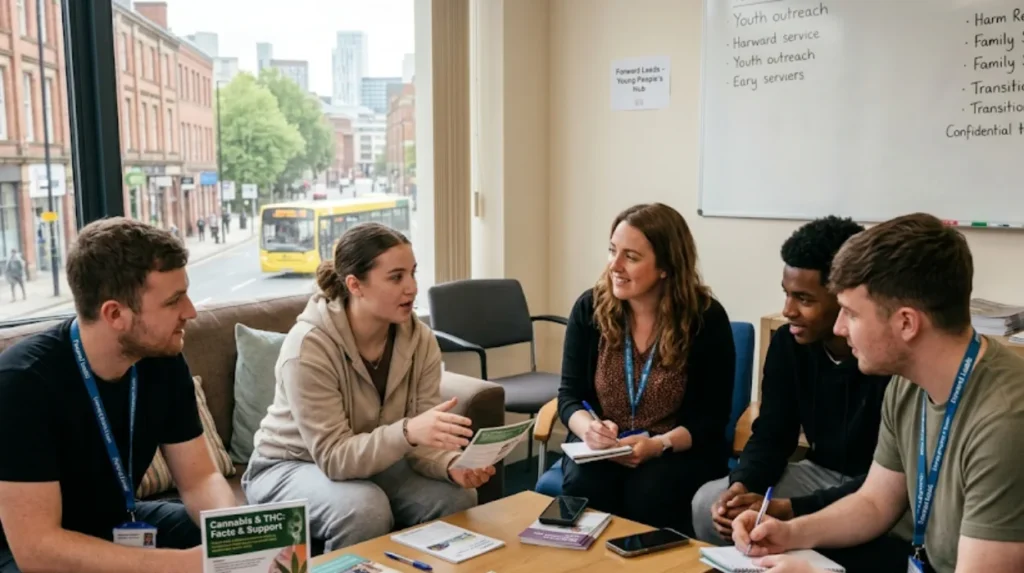
Specific provisions for young people include a dedicated, separate care pathway managed by Forward Leeds young people’s team, offering developmentally appropriate interventions, harm reduction education, family mediation, and school-based outreach across the Leeds municipality.
Substance misuse in adolescents and young adults demands an entirely different clinical approach than adult chronic dependency. The neurobiological profiles, vulnerability factors, and systemic influences surrounding youth substance use require age-segregated spaces and specialized legal frameworks, particularly concerning the Children Act 1989 and the Children Act 2004. Forward Leeds operates a distinct young people’s service specifically tailored for individuals under the age of 18, extending flexible transitional support for young adults up to 24 years of age.
The youth provisions intentionally decouple from the main adult chronic care units to prevent vulnerable minors from interacting with older, severely dependent populations. The service maintains its own direct telephone line (0113 887 2757) and confidential text messaging system (07525 265755) to lower barrier entry for younger demographics who may be reluctant to engage with traditional health services. Practitioners operate via a mobile outreach model, meaning they frequently conduct assessments and therapeutic sessions within neutral community spaces, youth centers, or directly on-site at local schools and colleges.
The intervention framework for young residents prioritizes early identification and risk mitigation before substance use transitions into entrenched physiological dependence. The service focuses heavily on substances most statistically prevalent within youth demographics, notably cannabis, alcohol, and tetrahydrocannabinol (THC) vaporization products.
The youth care model integrates several core elements:
- Developmentally Targetted Harm Reduction: Providing accurate information regarding chemical compositions, legal classifications, and immediate physical risks.
- Systemic Family Interventions: Working collaboratively with parents or legal guardians to repair domestic communication fractures and build supportive home environments.
- Coordinated Education Outreach: Partnering with regional educational institutions to deliver substance awareness modules and training for teaching staff.
- Multi-Agency Safeguarding: Coordinating closely with Leeds Children’s Services and Child and Adolescent Mental Health Services (CAMHS) to manage co-occurring emotional disorders or adverse childhood experiences (ACEs).
How does the regional data and legislative framework influence service delivery?
The regional data and legislative framework mandate local authorities to commission evidence-based substance treatments aligned with the UK Drug Strategy, using National Drug Treatment Monitoring System data to evaluate clinical outcomes and funding allocations.
The deployment of drug and alcohol services across West Yorkshire is governed by strict statutory duties, national clinical guidelines, and epidemiological data patterns. Local funding allocations rely heavily on reporting metrics compiled by the National Drug Treatment Monitoring System (NDTMS). The NDTMS collects anonymized data regarding treatment entry trends, primary substances of misuse, retention rates, and successful completions across the Leeds local authority. This data allows public health commissioners to identify emerging trends, such as shifting patterns in synthetic cannabinoid use or spikes in alcohol-related hospital admissions, and dynamically reallocate resources to areas showing elevated need.
Federally, service delivery conforms strictly to the overarching mandates outlined in the UK Government’s 10-year drug strategy, which focuses on cutting crime, expanding treatment capacity, and improving long-term recovery outcomes. Clinicians delivering treatment must adhere directly to the clinical guidelines published by the National Institute for Health and Care Excellence (NICE) and the Department of Health and Social Care. These guidelines define the precise pharmacological parameters for safe detoxification, prescribing tolerances, and the specific configurations of psychosocial interventions proven to yield statistically valid recovery outcomes.
Furthermore, the integration of these services complies fully with the Health and Care Act 2022, which established Integrated Care Systems (ICS) across England. In Wetherby and the wider Leeds area, this is managed under the West Yorkshire Integrated Care Board (ICB). The ICB ensures that substance misuse services do not operate in geographical or administrative isolation. Instead, they are structurally bonded to acute NHS hospital trusts, primary care networks, emergency services, and mental health providers, creating a unified public health frontline capable of addressing the complex intersections of addiction, physical illness, and socio-economic vulnerability.
What is the main drug and alcohol support service near Wetherby?
Forward Leeds is the main free and confidential drug and alcohol support service for people living in Wetherby and across the Leeds district. It provides assessment, treatment, recovery support, harm reduction, and ongoing care for adults, young people, and families.