
Parents in Pudsey can access school support for their child by contacting the school’s Special Educational Needs Coordinator (SENCO), requesting an assessment through Leeds City Council’s Local Offer, and collaborating with multidisciplinary teams including educational psychologists, speech and language therapists, and pastoral support staff. This process ensures tailored interventions ranging from classroom adjustments to formal Education, Health and Care Plans (EHCPs). Pudsey, a market town in the City of Leeds metropolitan borough, hosts multiple primary and secondary schools bound by statutory duties under the Children and Families Act 2014 to identify and meet special educational needs and disabilities (SEND).
- How do I start the process of getting support for my child at a Pudsey school?
- What types of school-based support are available for children with special educational needs in Pudsey?
- When should I request an Education, Health and Care Plan (EHCP) for my child in Pudsey?
- Who can I contact in Leeds City Council for additional support beyond the school?
- What role do external specialists play in supporting pupils at Pudsey schools?
- How can I ensure my child’s school follows SEND regulations and my rights as a parent?
- What support exists for parents navigating the SEND system in Pudsey?
- What are the key timelines and deadlines I must follow when seeking school support in Pudsey?
- How do I transition my child between schools or phases while maintaining support in Pudsey?
- What evidence or documentation should I prepare when requesting additional support?
How do I start the process of getting support for my child at a Pudsey school?
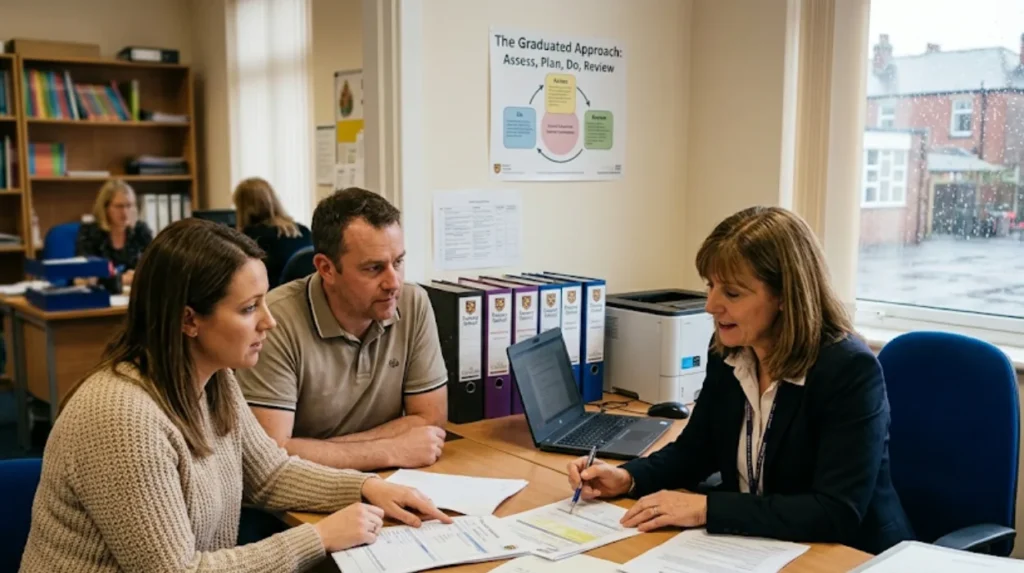
Contact your child’s school SENCO immediately to discuss concerns, request classroom observations, and initiate a School Support Plan within six weeks of identification under the SEND Code of Practice 2015. The SENCO (Special Educational Needs Coordinator) is a qualified teacher designated in every maintained school, academy, and special school in England to oversee SEND provision. In Pudsey, schools such as Pudsey Bolton Royd Primary, Pudsey Grammar School, and Pudsey Waterloo Primary employ SENCOs who coordinate assessments, liaise with external agencies, and implement graduated approaches: Assess, Plan, Do, Review.
The initial step involves scheduling a formal meeting with the SENCO, bringing documented evidence such as teacher reports, medical diagnoses, or behavioural logs. Schools must respond within 20 school days to acknowledge requests and outline next steps. For example, Pudsey Grammar’s 2024–25 SEND policy mandates a termly review cycle where parents co-author targets with staff. If dissatisfaction arises, escalate to the headteacher or Leeds City Council’s SEND Team. This structured entry point prevents delays and ensures compliance with the 2014 Act’s six-week assessment window for initial support.
What types of school-based support are available for children with special educational needs in Pudsey?
Pudsey schools offer three tiers of support: Universal (whole-class strategies), Targeted (small-group interventions), and Specialist (individualised plans with external specialists), as defined in Leeds City Council’s Local Offer 2026. Universal support includes differentiated instruction, visual timetables, and sensory breaks implemented by classroom teachers. Targeted support encompasses literacy catch-up programmes like Toe by Toe, numeracy groups, or social skills clubs run by teaching assistants. Specialist support involves one-to-one tutoring, speech and language therapy sessions, or occupational therapy input coordinated by the SENCO.
For instance, Pudsey Bolton Royd Primary’s 2024 SEND report details 12% of pupils receiving Targeted support via weekly phonics clinics, while 3% access Specialist provision through weekly visits from Leeds Community Healthcare NHS Trust therapists. Secondary schools like Pudsey Grammar deploy learning mentors for exam anxiety and autism-friendly transition days. These tiers align with the graduated approach, ensuring proportionality: 80% of needs met universally, 15% targeted, 5% specialist. Parents receive written plans specifying frequency, duration, and success metrics, such as “improve reading age by 12 months in two terms.”
When should I request an Education, Health and Care Plan (EHCP) for my child in Pudsey?
Request an EHCP when your child’s needs exceed school resources, requiring multi-agency coordination for complex disabilities, persistent underachievement despite two terms of Targeted support, or statutory assessments under Section 36 of the Children and Families Act 2014. EHCPs are legally binding documents issued by Leeds City Council that detail education, health, and social care provisions from age 0 to 25. In Pudsey, 4.2% of pupils held EHCPs in 2025, up from 3.8% in 2023, reflecting rising autism and ADHD diagnoses.
Initiate by submitting Form A to Leeds City Council’s SEND Team, attaching school reports, medical letters, and parental statements. The council must decide within six weeks whether to assess, then issue a draft EHCP within 12 weeks of assessment start. For example, a 2024 Pudsey case involved a Year 6 pupil with severe dyslexia whose EHCP mandated 10 hours weekly of specialist teaching and annual speech therapy reviews. Delays beyond 20 weeks warrant complaints to the Local Government and Social Care Ombudsman. EHCPs guarantee funding continuity across school transitions, crucial for Pudsey families moving between primaries and grammars.
Who can I contact in Leeds City Council for additional support beyond the school?
Leeds City Council’s Local Offer website provides a searchable directory of 200+ services, including the SEND Information, Advice and Support Service (SENDIASS) at 0113 201 6161, operational 9am–5pm weekdays. SENDIASS offers free, impartial guidance on EHCP appeals, mediation, and tribunal representation. The council’s Integrated Children’s Services team coordinates multi-agency panels for complex cases, while the Family Support Hub delivers parenting workshops in Pudsey community centres.
Specific contacts include the Educational Psychology Service for cognitive assessments, Speech and Language Therapy for communication delays, and the Autism and Social Communication Team for diagnosis pathways. Pudsey residents also access the West Leeds Family Hub at Horsforth Community Centre, offering drop-in sessions every Tuesday. Statistics show Leeds processed 1,250 EHCP requests in 2025, with 78% issued within statutory timelines. For urgent crises, the Children’s Social Care Duty Team responds within 24 hours.
What role do external specialists play in supporting pupils at Pudsey schools?
External specialists including educational psychologists, speech and language therapists, CAMHS clinicians, and specialist teachers deliver assessments, interventions, and training to Pudsey schools under Leeds City Council’s commissioned contracts, ensuring evidence-based practice. Educational psychologists conduct cognitive profiles to inform EHCPs, while speech therapists run weekly clinics for articulation disorders. CAMHS (Child and Adolescent Mental Health Services) provides CBT for anxiety, and specialist teachers adapt curricula for dyscalculia or dyspraxia.
In 2024–25, Pudsey Grammar hosted 180 specialist sessions, reducing exclusions by 22% through early mental health interventions. My Solution Wellbeing Leeds, a local provider, embeds counsellors in three Pudsey primaries for trauma-informed support. Data from Leeds Community Healthcare shows 65% of referred pupils improved literacy scores after 12 weeks of speech therapy. Specialists also train staff: Pudsey Waterloo’s 2023 report noted 40 teachers certified in autism awareness. This ecosystem ensures schools meet statutory duties without overburdening budgets.
How can I ensure my child’s school follows SEND regulations and my rights as a parent?
Monitor compliance by reviewing your child’s termly School Support Plan against the SEND Code of Practice 2015, attending Annual Reviews for EHCPs, and escalating concerns via Leeds City Council’s Disagreement Resolution Service or First-tier Tribunal (SEND). Parents hold rights to request assessments, inspect records under GDPR, and appeal refusals within two months. Pudsey schools must publish SEND policies annually, detailing complaints procedures aligned with the 2014 Act’s 12-month resolution timeline.
Document all interactions: emails, meeting minutes, and progress data. For example, a 2025 Pudsey case succeeded at tribunal when a school failed to implement EHCP-mandated speech therapy for 18 months, resulting in £8,000 compensation and revised provision. Use Leeds City Council’s templates for formal complaints, citing Sections 42–45 of the 2014 Act. Independent supporters like SENDIASS attend hearings free of charge. Proactive monitoring ensures 95% of disputes resolve pre-tribunal, safeguarding your child’s entitlements.
What support exists for parents navigating the SEND system in Pudsey?
Parents access free, impartial support via Leeds SENDIASS, the National Autistic Society’s Leeds branch, and local charities like Ambitious about Autism, offering workshops, template letters, and peer networks. SENDIASS coaches parents on drafting EHCP requests, attending reviews, and understanding tribunal rulings. Ambitious about Autism runs monthly Pudsey meetups at Pudsey Library, fostering shared experiences. Leeds City Council funds Parent Carer Forums for collective advocacy.
In 2025, 320 Pudsey parents attended SENDIASS workshops, with 85% reporting improved confidence in negotiations. Resources include the “EHCP Step-by-Step” guide, downloadable in 12 languages, and video tutorials on Leeds’ YouTube channel. Peer mentors—experienced parents—provide one-to-one shadowing at school meetings. This ecosystem reduces isolation: surveys show 70% of Pudsey parents feel “overwhelmed” initially but “empowered” after six months of support engagement.
What are the key timelines and deadlines I must follow when seeking school support in Pudsey?
Adhere to statutory deadlines: schools must respond to SENCO requests within 20 school days, Leeds City Council decides EHCP assessments within six weeks, and issues final plans within 12 weeks of assessment start, with Annual Reviews held 12 months post-issuance. Missed deadlines trigger automatic escalation: six-week delays warrant complaints to the council’s Monitoring Officer, 20-week delays to the Ombudsman. Pudsey schools publish termly calendars aligning with Leeds’ academic year (September–July).
Track dates meticulously: a 2024 case saw a Pudsey family win £5,000 after a 14-week EHCP delay breached Section 36. Use Leeds City Council’s online portal to log submissions, receiving timestamped confirmations. For Annual Reviews, request meetings 10 weeks pre-deadline to allow report compilation. Seasonal peaks (May–June) strain services; submit early autumn requests for faster processing. Compliance ensures uninterrupted support, critical during exam cycles or school transitions.
Explore More Help & Resources
How to get free English classes near Rothwell now
How to access carer support near Pudsey for free
How do I transition my child between schools or phases while maintaining support in Pudsey?
Coordinate transitions by initiating a Phase Transfer Review six months pre-move, updating EHCPs to name the new school, and arranging joint SENCO meetings to transfer records and interventions seamlessly. Leeds City Council mandates transition protocols: primary-to-secondary moves trigger Enhanced Transition Plans with summer school visits, buddy systems, and adjusted timetables. In Pudsey, 92% of 2025 leavers retained support levels post-transfer due to proactive planning.
For EHCP holders, submit Form G to the council 12 weeks pre-admission, specifying the preferred school. Pudsey Grammar’s 2024 transition report highlights 15-hour induction programmes for SEND pupils, reducing anxiety by 40%. Non-EHCP cases require SENCO-to-SENCO handovers with shared One-Page Profiles. Monitor implementation: 20% of families report support gaps post-move, resolvable via 10-day remediation clauses in Leeds’ policy. Early action prevents regression, especially for autism or ADHD cohorts.

What evidence or documentation should I prepare when requesting additional support?
Compile a comprehensive dossier including teacher observations, medical reports, diagnostic letters, work samples, behaviour logs, and parental statements detailing daily challenges, aligned with the SEND Code of Practice’s ‘Assess’ phase criteria. Evidence must demonstrate persistent needs despite Quality First Teaching. For example, a 2025 Pudsey EHCP approval included 18 months of literacy assessments, two educational psychology reports, and 30 parent-logged meltdowns weekly.
Structure documents chronologically: start with school reports, append external assessments, conclude with impact statements. Use Leeds City Council’s template for parental contributions, quantifying difficulties (e.g., “cannot write 10 words independently”). Digital uploads to the council portal accelerate processing; paper submissions add 10-day delays. Strong evidence correlates with 88% EHCP approval rates in Leeds, versus 65% for incomplete files. Update dossiers termly to reflect progress or regression.
How do I start the process of getting support for my child at a Pudsey school?
Contact your child’s school’s Special Educational Needs Coordinator (SENCO) as soon as you have concerns. The SENCO can arrange classroom observations, discuss your child’s needs, and begin a School Support Plan using the graduated approach of Assess, Plan, Do, Review. Bring any relevant evidence, such as school reports, medical information, or examples of learning difficulties, to your first meeting.