

Key Points
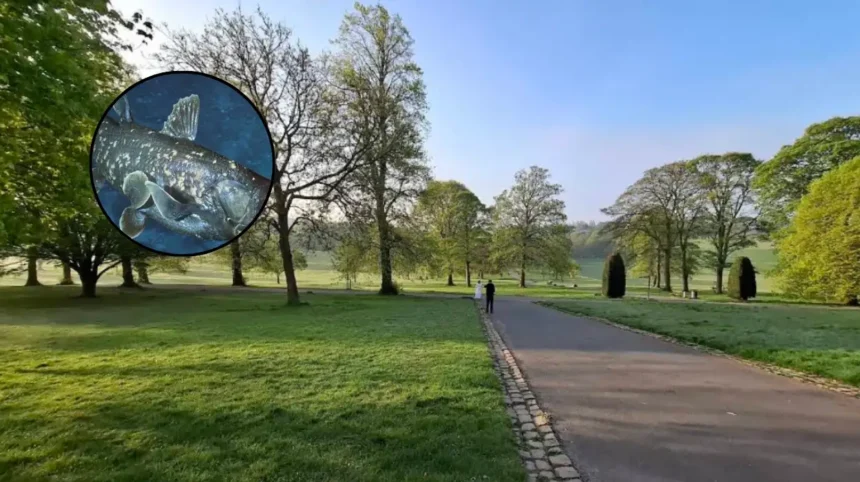
- The fossilised skull bone of a coelacanth, a prehistoric fish, has been unearthed in Roundhay Park, Leeds.
- The specimen is believed to be around 320 million years old and is the oldest example of the species uncovered in the region.
- The discovery was made by Ru Smith of the Yorkshire Geological Society during a geology walk in the park.
- Smith said he found the fossil while splitting open a piece of shale and “knew straight away it was something different and very rare”.
- At the time the fossil formed, the area that is now Roundhay Park lay beneath a vast tropical lagoon.
Roundhay (The Leeds Times) July 20, 2026 – The fossilised remains of a prehistoric fish have been unearthed at a Leeds beauty spot, in a discovery described as the oldest example of its kind uncovered in the region.
- Key Points
- Who found the fossil, and how was the discovery made?
- What is a coelacanth, and why is this fossil important?
- Where was the fossil found, and what was the area like millions of years ago?
- What have experts said about the discovery so far?
- What happens next for the fossil, and will it be displayed publicly?
- Background: How did this development come about?
- Prediction: How could this discovery affect local residents, schools, and visitors?
The skull bone of a coelacanth, found in Roundhay Park, is believed to be around 320 million years old, offering a rare glimpse into an ancient era when the park lay beneath a vast tropical lagoon.
The find was made by Ru Smith, from the Yorkshire Geological Society, who said he made the discovery while splitting open a piece of shale during a geology walk in the park.
Smith told local media he “knew straight away it was something different and very rare”, highlighting the scientific importance of the specimen.
Who found the fossil, and how was the discovery made?
The discovery was made by Ru Smith, a representative of the Yorkshire Geological Society, during an organised geology walk in Roundhay Park.
As reported by local journalists covering the story, Smith stated that he found the fossil while splitting open a piece of shale, a type of fine-grained sedimentary rock often associated with fossil preservation.
“It was something different and very rare,” Smith said, according to initial reports, indicating that the specimen stood out from other geological finds in the area.
The Yorkshire Geological Society, which has long documented the region’s geological history, is expected to play a central role in further analysis and public communication about the find.
What is a coelacanth, and why is this fossil important?
Coelacanths are a group of prehistoric fish that were once thought to be extinct until a living specimen was discovered in the 20th century.
The fossil found in Roundhay Park represents a skull bone from this ancient lineage, dating back approximately 320 million years to a time when the area was submerged under a tropical lagoon.
According to geological records, such lagoons were common in what is now northern England during the Carboniferous period, providing ideal conditions for the preservation of marine life.
The significance of the find lies in its age and rarity. As the oldest example of a coelacanth uncovered in the region, it offers valuable insights into the evolutionary history of the species and the ancient environments of Yorkshire.
Where was the fossil found, and what was the area like millions of years ago?
The fossil was discovered in Roundhay Park, a well-known green space in Leeds that attracts walkers, families, and nature enthusiasts.
At the time the fossil formed, around 320 million years ago, the area that is now Roundhay Park lay beneath a vast tropical lagoon, according to geological interpretations.
Such lagoons were part of a larger network of shallow seas and wetlands that covered much of what is now northern England during the Carboniferous period.
These environments supported a diverse array of marine and semi-aquatic life, including early fish, amphibians, and invertebrates, many of which left behind fossilised remains in the region’s shale and limestone deposits.
What have experts said about the discovery so far?
Ru Smith, who made the discovery, described the find as “something different and very rare”, according to initial reports.
His comments, as cited by local media, suggest that the specimen is not only scientifically significant but also unusual in the context of other fossils found in the area.
The Yorkshire Geological Society, of which Smith is a member, is likely to issue further statements as analysis of the fossil progresses.
No additional expert commentary has been published at this stage, but the discovery is expected to draw attention from palaeontologists and geologists interested in the region’s ancient marine ecosystems.
What happens next for the fossil, and will it be displayed publicly?
As of now, there has been no official announcement regarding the next steps for the fossil or whether it will be put on public display.
Typically, significant fossil finds in the UK are assessed by specialists, catalogued, and, in some cases, donated to museums or educational institutions for further study and exhibition.
Given the rarity and age of the specimen, it is possible that the fossil could be featured in local museums or used in educational outreach by the Yorkshire Geological Society.
However, until formal statements are released by the relevant authorities, the exact future of the fossil remains uncertain.
Background: How did this development come about?
The discovery of the coelacanth fossil in Roundhay Park emerged from a routine geology walk organised by the Yorkshire Geological Society.
Such walks are designed to educate participants about the region’s geological history and often involve examining rock formations for signs of fossils or other interesting features.
During one such walk, Ru Smith noticed a piece of shale that appeared unusual. Upon splitting it open, he found the fossilised skull bone of a coelacanth.
The find was reported to local media, which highlighted its significance as the oldest example of the species uncovered in the region.
The Yorkshire Geological Society, which has long documented the area’s geological heritage, is expected to provide further details as analysis continues.
Prediction: How could this discovery affect local residents, schools, and visitors?
The discovery of a 320-million-year-old coelacanth fossil in Roundhay Park could have several potential effects on local residents, schools, and visitors to Leeds.
For residents, the find may foster a greater sense of pride and connection to the area’s deep natural history, reinforcing the value of local green spaces as sites of scientific interest.
Schools in Leeds and surrounding areas could use the discovery as an educational tool, incorporating it into lessons on geology, palaeontology, and evolutionary biology.
Visitors to Roundhay Park may see increased foot traffic as word of the find spreads, potentially boosting local tourism and interest in guided geological walks.
If the fossil is eventually displayed in a local museum or educational centre, it could become a focal point for community engagement and learning, drawing attention to Leeds’ rich geological heritage.
However, the exact impact will depend on how the fossil is managed, whether it is made accessible to the public, and how effectively its story is communicated to wider audiences.