

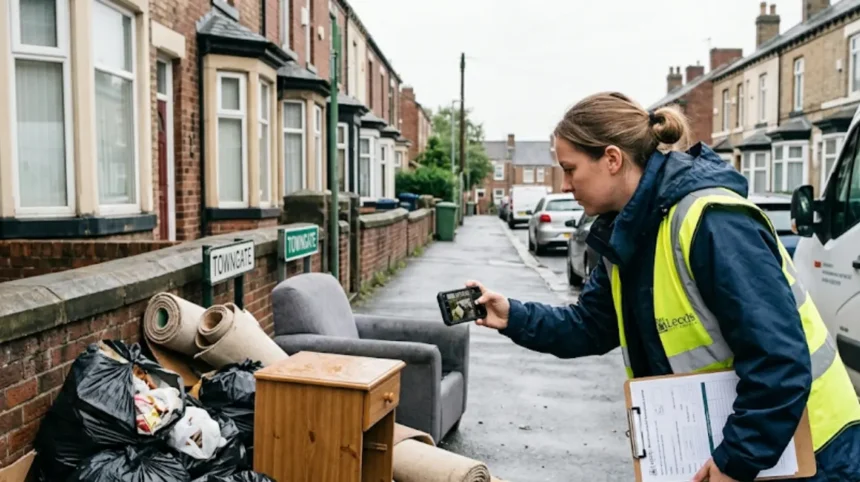
Fly-tipping on Horsforth streets should be reported to Leeds City Council when the waste is on public land such as roads, pavements, alleyways, parks, and council land. Large-scale dumping, hazardous waste, or serious environmental risk should be reported through the Environment Agency route as well.
What is fly-tipping in Horsforth?
Fly-tipping is the illegal dumping of waste on land that is not licensed to receive it. In Horsforth, that includes streets, footpaths, alleyways, parks, and other public spaces. It can involve anything from a single bag of household rubbish to bulky items, garden waste, furniture, or commercial waste.
It is different from ordinary littering because it usually involves larger dumped items or deliberate disposal of waste in the wrong place. Leeds City Council treats it as an environmental and enforcement issue, not just a cleanliness problem.
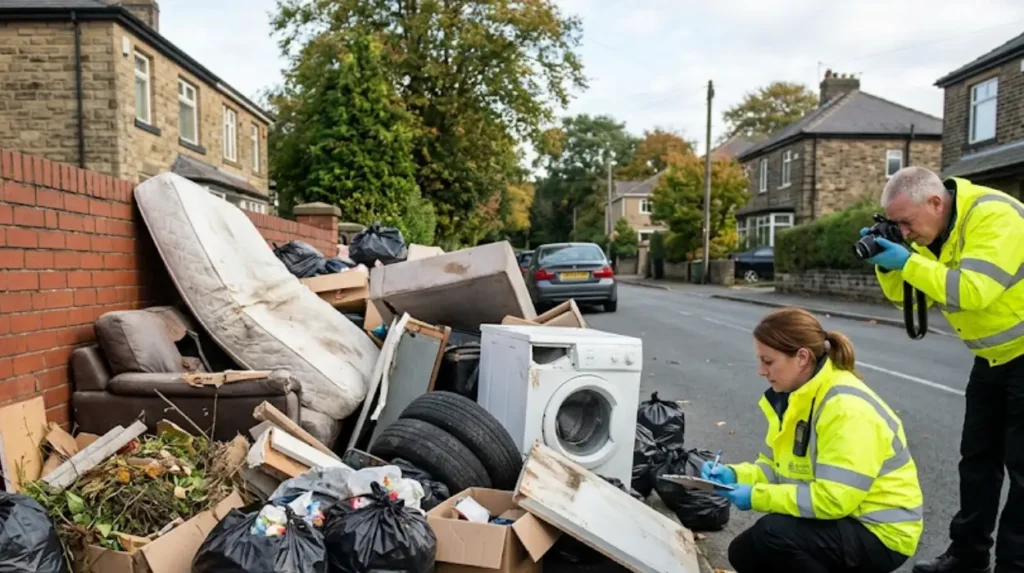
Who should you report fly-tipping to?
Report fly-tipping on public land in Horsforth to Leeds City Council. That is the main route for waste dumped on roads, pavements, public paths, and council-managed land.
If the dumping is large-scale, hazardous, or part of organised waste crime, report it to the Environment Agency. If the incident is happening right now and someone is being put at risk, use urgent reporting routes immediately.
What details should you collect?
A good report should include the exact location, the type of waste, the amount dumped, the date and time it was seen, and any vehicle registration if available. A photo also helps.
If you saw the dumping happen, note any identifying details about the person, vehicle, or business involved. The more specific the information, the easier it is for the council to act.
How do you make the report?
Use Leeds City Council’s fly-tipping reporting process for waste dumped on Horsforth streets. The report should describe where the waste is, what it looks like, and how much has been left.
If the waste is on private land, the process is different. The council may still log the issue, but the landowner usually has responsibility for clearing it unless other enforcement action applies.
What if you know who did it?
Include that information in the report. Leeds City Council can use names, vehicle details, business information, or witness accounts to investigate further.
Anonymous reporting is possible, but named evidence usually gives enforcement officers more to work with. If you want action, the most useful reports are the ones that include clear, verifiable details.
What happens after reporting?
The council can arrange removal of fly-tipped waste from public land. It can also investigate the source of the waste and take enforcement action where evidence is strong.
Penalties can include fines and prosecution. Serious waste crime can lead to much stronger legal consequences, especially when the dumping involves hazardous material or repeated offences.
When is it urgent?
Treat the incident as urgent if the waste blocks the road, contains dangerous material, or is being dumped in real time. Do not approach the people involved if they are still present.
Hazardous loads, asbestos, chemical waste, and large-scale dumping need faster action than a routine street report. In those cases, the risk to people and the environment is higher.
Explore More Help & Resources
How to get a Blue Badge if you live in Headingley
How to get free mental health support near Guiseley
Why this matters in Horsforth
Fly-tipping affects the appearance of the street, creates health and safety issues, and encourages repeat dumping if left in place. A single pile of waste can quickly turn into a regular dumping point.
Quick reporting helps stop that pattern. The faster the council receives the report, the sooner it can remove the waste and assess whether enforcement is needed.
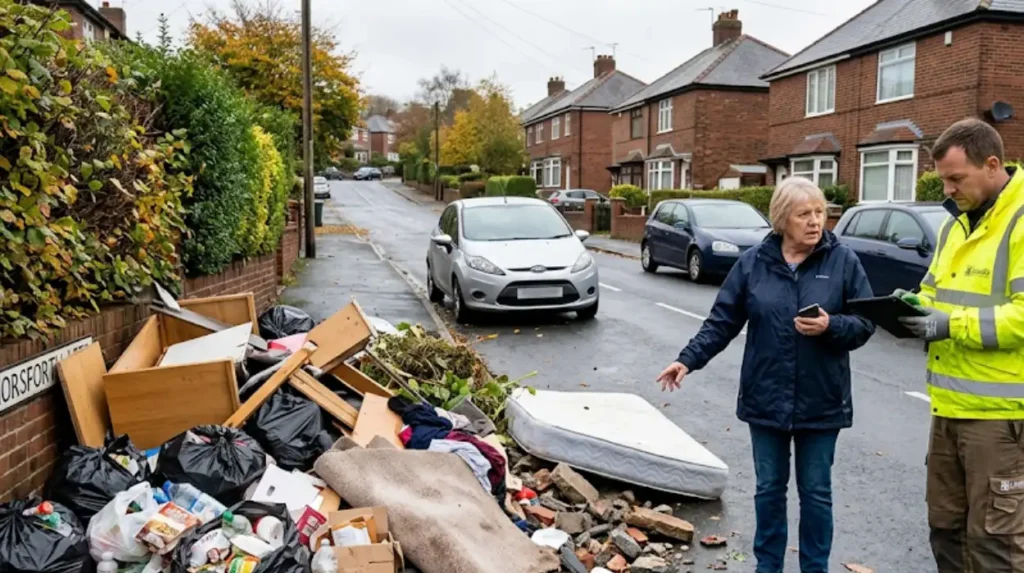
How to reduce repeat dumping
Use licensed waste carriers for your own rubbish removal. Keep receipts and contractor details, because that helps prove proper disposal if questions arise later.
Never leave waste beside bins or on the pavement. Even household rubbish that seems temporary can attract more dumping and create a local hotspot.
Final point
If you see fly-tipping on Horsforth streets, report it promptly and give as much detail as possible. Clear information speeds up removal and improves the chance of enforcement.
How do I report fly-tipping in Horsforth?
Report fly-tipping on public land through Leeds City Council’s fly-tipping reporting service. Include the exact location, a description of the waste, and photographs if it is safe to take them.