

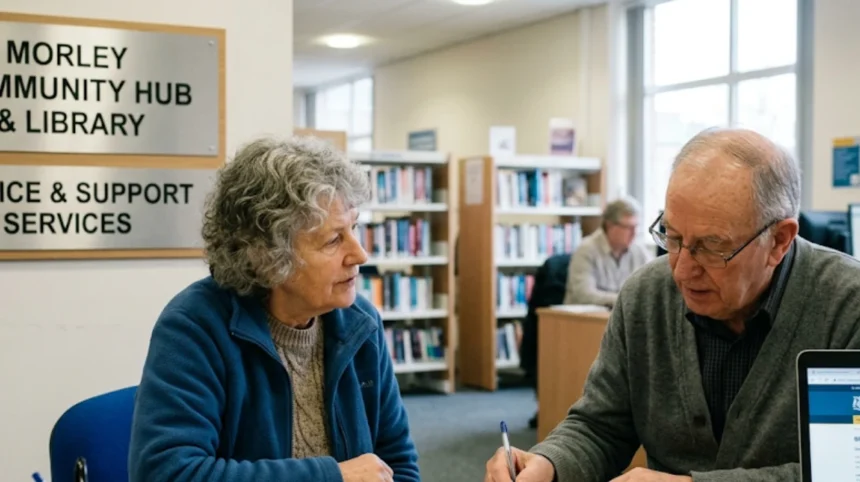
A free Blue Badge assessment in Morley starts with the Leeds City Council application process and local help at Morley Community Hub and Library. The badge is free only for specific eligible groups, while most applicants in England pay a small fee.
- What is a Blue Badge in Morley?
- Who gets a free Blue Badge?
- How does the assessment process work?
- Where can Morley residents get free help?
- What documents do you need?
- How do you apply from Morley?
- What happens if extra assessment is needed?
- What if your application is refused?
- Why does this matter in Morley?
- What should applicants do first?
Blue Badge applications in Leeds follow the national Blue Badge system. Morley residents complete the online form, provide evidence, and use local council services if they need help with documents or internet access.
What is a Blue Badge in Morley?
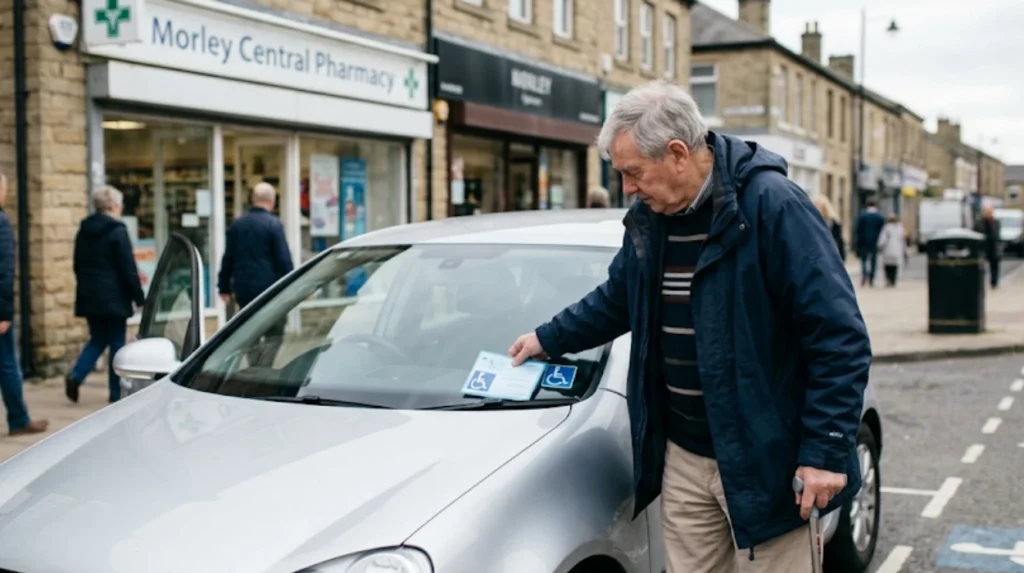
A Blue Badge is a parking permit for disabled people and people with serious mobility difficulties. It allows parking closer to shops, health services, and other destinations.
The scheme works across England and is managed locally by councils. In Leeds, the badge applies to people whose condition affects walking, safety, or day-to-day mobility.
A Blue Badge usually lasts up to 3 years. The badge can help reduce travel strain and make essential journeys easier.
Who gets a free Blue Badge?
A Blue Badge is free for a child under 16, a person with a terminal illness, a person receiving a war pensioner’s mobility supplement, or a person on the Armed Forces Compensation Scheme with a qualifying permanent disability.
Most other applicants in England pay a small fee. In Leeds, the standard charge is low, but it does not apply to the free-badge categories.
This means the badge is not automatically free for all disabled applicants. The fee is waived only for specific eligibility groups.
How does the assessment process work?
The process begins with the online Blue Badge application. The form asks for personal details, address details, photo identification, and evidence of eligibility.
Leeds City Council reviews the application and decides whether the badge can be issued straight away or whether more information is needed. Some cases are approved from documents alone.
If the council needs more detail, it can ask for medical evidence or arrange an assessment. The decision depends on how the condition affects mobility in real life.
Where can Morley residents get free help?
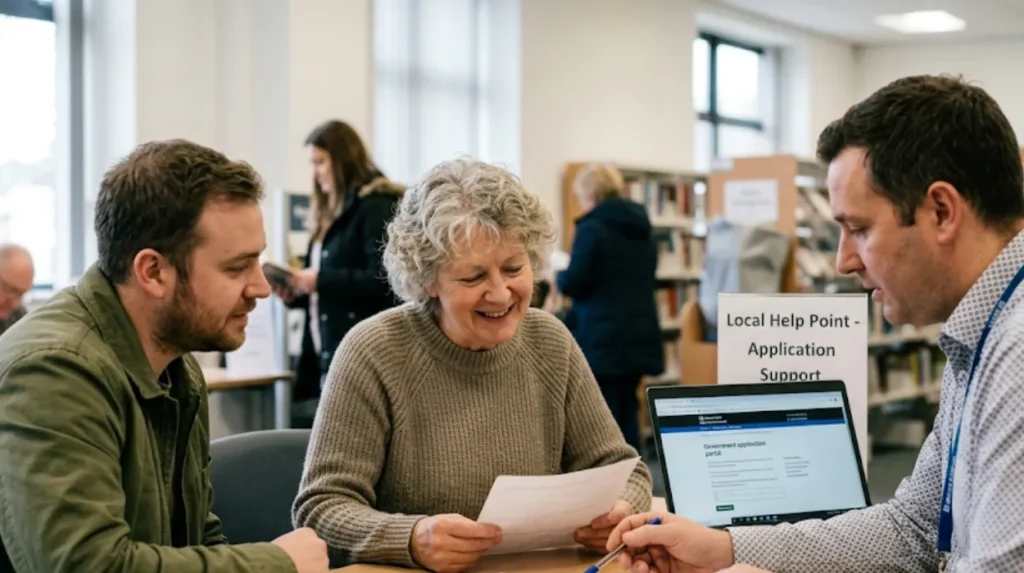
Morley residents can get free help at Morley Community Hub and Library. Staff there can help with forms, scanning documents, and using council services online.
The hub is useful for people who do not have a printer, scanner, or easy access to the internet. It also helps residents who want face-to-face support before submitting the application.
Leeds libraries and community hubs also provide free computer access for Blue Badge applications. This makes the process easier for people who need extra support.
What documents do you need?
You need a recent passport-style photo, proof of identity, proof of address, and any evidence that supports your eligibility.
Useful documents include a passport, driving licence, birth certificate, council tax bill, benefit letter, or medical letter. If you already have a Blue Badge, details of the current badge can also help.
The stronger and clearer the evidence, the easier it is for the council to decide the application. Missing documents can delay the assessment.
How do you apply from Morley?
Start by completing the Blue Badge application online through the official council process. If you need help, visit Morley Community Hub and Library or another Leeds library.
If you qualify for a free badge, choose the option that lets you submit without paying the standard fee. If not, the form usually asks for payment during submission.
The application can take time because it asks about health conditions, mobility limits, and supporting evidence. Preparing everything first makes the process smoother.
What happens if extra assessment is needed?
If Leeds needs more evidence, it can ask for further medical information or a formal assessment. This happens when the documents do not fully show how the condition affects movement.
The council looks at the practical effect of the condition, not just the diagnosis. That is why detailed evidence matters.
A quick response to any council request usually speeds up the decision. Delays happen when documents are missing or unclear.
What if your application is refused?
If the application is refused, Leeds explains the reason. If a fee was paid, it is usually refunded.
You can ask the council to reconsider if important information was missed. A refusal does not mean you can never qualify later.
If the condition changes or worsens, you can apply again with stronger evidence. Keeping copies of all documents helps with any future review.
Why does this matter in Morley?
Morley residents benefit from having a local help point for a process that is handled online. That makes the application more accessible for people who need support with forms or documents.
The council still uses the same national eligibility rules, so local support does not change the criteria. It only makes the process easier to complete.
This is important for people with mobility problems, limited digital access, or health conditions that make travel harder. Local help can remove barriers before the application even reaches the decision stage.
What should applicants do first?
First, check whether the applicant fits a free-badge category or another eligibility route. Then gather the required documents.
After that, use Morley Community Hub and Library if you need help with the form or online access. Finally, submit the application and wait for the council’s decision.
A complete application with strong evidence gives the best chance of a smooth decision. Clear documents and accurate details reduce delays.
Can I get a free Blue Badge in Morley?
Yes, but only certain applicants qualify for a free Blue Badge. These include eligible children under 16, people with a terminal illness, recipients of a War Pensioner’s Mobility Supplement, and eligible members of the Armed Forces Compensation Scheme. Most other successful applicants pay the standard Blue Badge fee.