
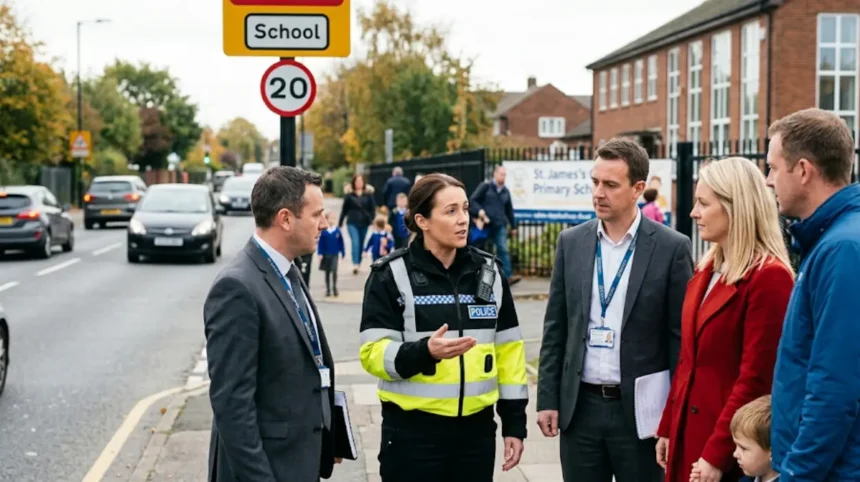
To report speeding traffic near Wetherby schools, contact Leeds City Council for a speed monitoring assessment, and contact West Yorkshire Police for dangerous driving, emergency risk, or evidence-based enforcement reports. Leeds City Council accepts community concerns about speeding, while West Yorkshire Police handles non-emergency driving offences and urgent threats to safety.
- What counts as speeding near a school?
- Who should you report it to?
- How do you report speeding to Leeds City Council?
- How do you report dangerous driving to police?
- What details should your report include?
- What happens after you report it?
- Why does this matter near Wetherby schools?
- What evidence works best?
- What if the road needs more than enforcement?
- How can residents build a stronger case?
- Why this article stays relevant
What counts as speeding near a school?
Speeding near a school is vehicle travel above the posted limit or unsafe driving that creates risk during school journeys. In the Wetherby area, the issue matters most near drop-off times, pick-up times, crossings, and roads used by children on foot, cycle, or scooter. Leeds and West Yorkshire road-safety policy treats excessive speed as a major contributor to severe collisions.
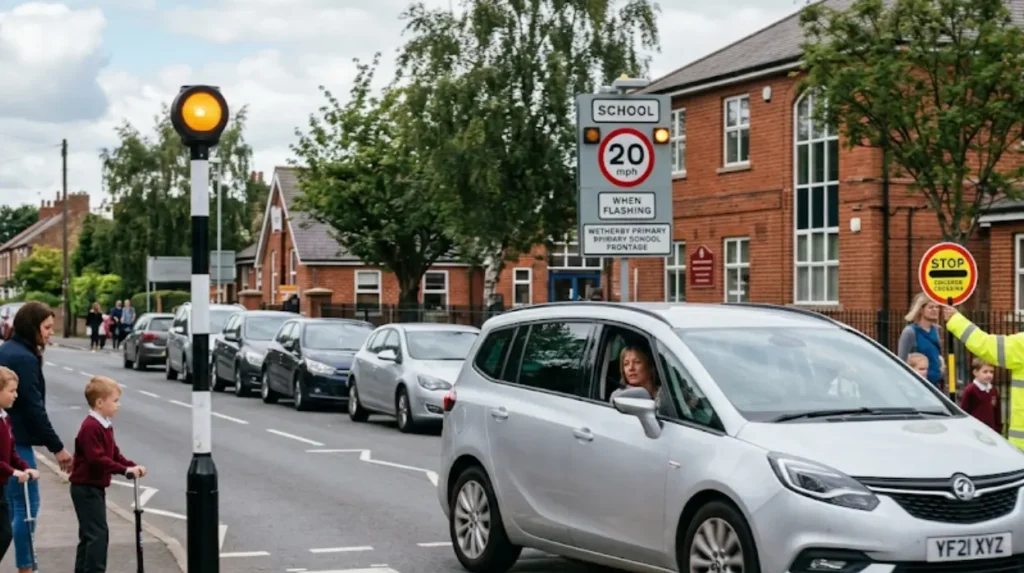
School streets are high-risk environments because pedestrian movement changes quickly at the start and end of the day. Children are less predictable in traffic than adults, and school frontage roads often combine parked cars, crossing movements, and turning vehicles. That combination raises the importance of prompt reporting and accurate location details.
Who should you report it to?
Report site-based speeding concerns to Leeds City Council, and report dangerous driving or immediate danger to West Yorkshire Police. Leeds City Council asks residents to submit sites of concern for a speed monitoring assessment, and West Yorkshire Police handles non-emergency issues through 101 or online reporting routes.
This split matters. A council report is the correct route when the problem is repeated speeding at a fixed location near a school. A police report is the correct route when a driver is behaving dangerously, a collision is developing, or there is a direct threat to life. West Yorkshire guidance also says emergency situations require 999.
How do you report speeding to Leeds City Council?
Use Leeds City Council’s customer contact route or call the council to request a speed monitoring assessment for the school road. Leeds City Council says concerns should be reported on its customer contact portal, by email at general.enquiries@leeds.gov.uk, or by phone on 0113 222 4444.
When you submit the report, include the exact road name, nearest school, time of day, direction of travel, and a clear description of the concern. Good reports explain whether the issue is persistent, seasonal, linked to school run times, or visible near crossings, zig-zag lines, or parking restrictions. The council uses that information to decide whether the site is suitable for a speed monitoring assessment.
A strong report also includes examples. For instance, if vehicles travel fast past a primary school on the approach road every weekday between 8:20 and 8:50, say so. If the concern is on a route used by pupils crossing after clubs, include that detail. Specific patterns help the authority identify evidence of non-compliance.
How do you report dangerous driving to police?
Report dangerous or antisocial driving to West Yorkshire Police through 101, online forms, or 999 in an emergency. West Yorkshire Police says 999 is the correct option where there is an immediate danger to life or a crime in progress, while 101 and online forms cover non-emergency reports.
Police reporting is best for behaviour such as deliberate speeding, aggressive overtaking, red-light running, or a driver putting pupils and parents at direct risk. West Yorkshire Police also accepts dash cam footage of dangerous driving through its submissions process. That evidence becomes more useful when it clearly shows the vehicle, location, time, and behaviour.
If the speeding happens repeatedly but no single incident is dangerous enough for an emergency call, the police route still remains useful. Repeated reports help build an enforcement picture, especially where the same stretch near a school produces complaints from multiple residents.
What details should your report include?
Include the road, school, time, vehicle behaviour, and any evidence. The most effective reports are precise, dated, and location-specific. They identify the school name, the road segment, the direction vehicles travel, and the times when speeding is most common.
Useful details include:
- The exact location, such as the road outside a named school.
- The time pattern, such as morning drop-off or afternoon pick-up.
- The vehicle type, such as cars, vans, motorcycles, or HGVs.
- The behaviour observed, such as acceleration, overtaking, or ignoring crossings.
- The evidence available, such as dash cam footage, photos, or witness notes.
If you have repeated sightings, keep a simple log. Record the date, time, weather, traffic volume, and what happened. This creates a clearer pattern for the council or police than a one-off complaint.
What happens after you report it?
The council can assess the site for speed monitoring, while police can review enforcement options and evidence. West Yorkshire’s road-safety guidance says community concerns can lead to a speed monitoring assessment, and the Safety Camera Partnership can consider community concern sites where traffic data shows speed-limit non-compliance.
A report does not automatically trigger a camera or road change. The response can include monitoring, education, publicity, signage changes, road layout changes, or other enforcement options. West Yorkshire’s guidance says speed cameras are one tool, not always the first response.
That matters for school roads because the fix often depends on the nature of the problem. If the issue is isolated driver behaviour, police enforcement and evidence collection matter more. If the issue is a repeated pattern at one place, the council may assess whether traffic-calming or speed-monitoring action fits the site.
Why does this matter near Wetherby schools?
Speeding near schools creates a direct safety risk for children, parents, and staff, especially at peak travel times. West Yorkshire’s road-safety framework treats excessive and inappropriate speed as one of the “Fatal Five” behaviours linked to fatal collisions.
School areas in and around Wetherby often combine narrow roads, parked cars, walking pupils, and turning traffic. That makes even short bursts of speeding more dangerous than on lower-conflict roads. The risk is not only collision severity but also intimidation, reduced crossing confidence, and poorer walking and cycling conditions for families.
Local reporting also supports long-term safety planning. When residents report a site repeatedly, agencies can identify whether the problem is a one-off complaint or a persistent pattern. That data helps justify targeted action around school travel routes.
What evidence works best?
Dash cam footage, timestamped notes, and repeated observations are the best evidence. West Yorkshire Police specifically accepts dash cam footage of dangerous driving, and that evidence becomes stronger when it shows the road name, registration number, and exact time.
Simple written notes also help. If you record the same vehicle speeding past a school several days in a row, that pattern becomes important. If several parents report the same stretch at the same time of day, that strengthens the case for review. Evidence should stay factual and avoid guesswork.
A short example is enough. “White van, Wetherby Road near the school gate, 8:35 am, overtook queued traffic and accelerated past pedestrians” gives decision-makers much more to work with than a vague complaint about “fast cars.”
What if the road needs more than enforcement?
Some school-speed problems need layout, signage, or traffic-management changes rather than only police action. West Yorkshire guidance says interventions can include education, publicity, signage changes, road-layout changes, and other enforcement options.
That wider approach matters because speeding often follows road design. Wide carriageways, clear sight lines, and long straight sections can encourage faster driving. School-adjacent traffic calming, better crossing points, or clearer warnings can reduce the problem without requiring constant enforcement.
For Wetherby residents, that means the best report is the one that describes the environment as well as the driving. Note whether the road is narrow or wide, whether there is parking near the school, whether children cross at a specific point, and whether the issue happens during term time only.
Explore More Help & Resources
How to find a dentist taking NHS patients in Rothwell
How to report flooding concerns near the Otley riverside
How can residents build a stronger case?
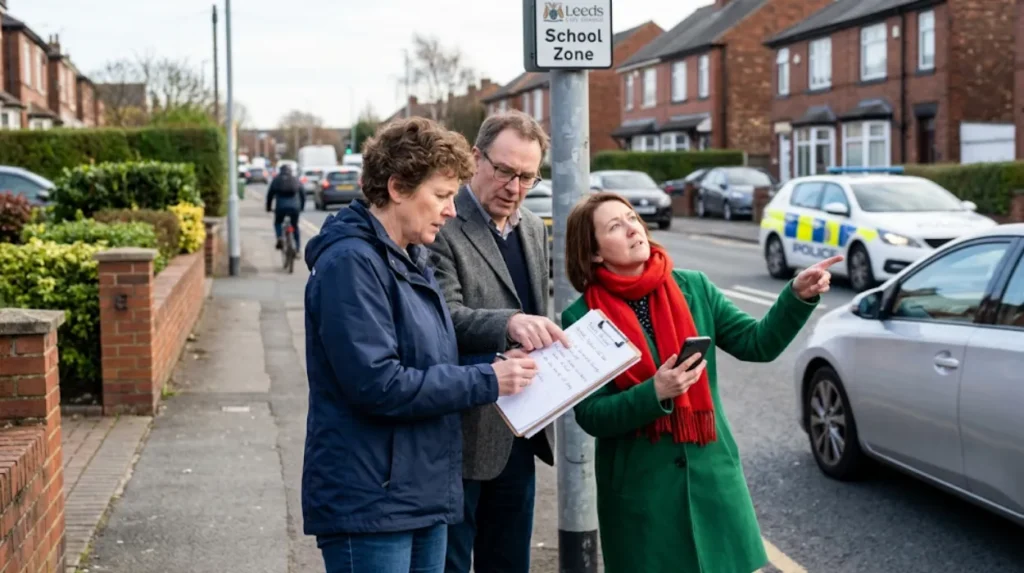
Residents build a stronger case by reporting the same location consistently and using both council and police routes where appropriate. Leeds City Council wants concern sites reported for assessment, while West Yorkshire Police handles dangerous driving, collisions, and dash cam evidence.
A coordinated approach works best:
- Use the council route for a repeated speeding hotspot.
- Use the police route for individual dangerous incidents.
- Keep a date-stamped log of incidents.
- Collect footage only where it is lawful and safe to do so.
- Share the exact school-road location each time.
The more precise the reporting, the easier it is for authorities to verify the issue. That increases the chance of monitoring, enforcement, or physical changes that protect pupils and families.
Why this article stays relevant
The reporting process stays relevant because it reflects current West Yorkshire road-safety policy and Leeds City Council’s active reporting routes. West Yorkshire’s Vision Zero framework places public reporting at the centre of road safety, and Leeds continues to direct community speed concerns into assessment and enforcement channels.
For a Wetherby school road, the core message is simple. Use the council for site concerns, use police for dangerous driving, and document everything clearly. That structure remains the most effective way to turn a complaint into action.
How do I report speeding near schools in Wetherby?
You can report speeding concerns to Leeds City Council for a road safety or speed monitoring assessment, and report dangerous driving or immediate risks to West Yorkshire Police.