
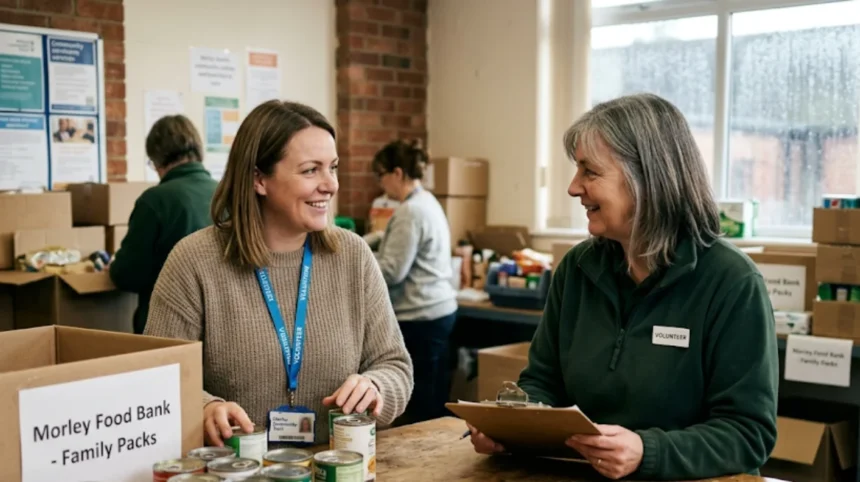
Volunteering at a local charity in Morley means giving time, skills, or practical help to a nonprofit that supports people in the Morley area of Leeds. The process usually starts with choosing a charity, checking its volunteer roles, and applying through the charity or a Leeds volunteering platform.
- What does volunteering at a local charity in Morley involve?
- Why do charities in Morley need volunteers?
- Which charities in Morley offer volunteer roles?
- How do you find the right volunteer role?
- What is the application process?
- What skills do charities look for?
- What checks and training are involved?
- How much time should you give?
- What do you gain from volunteering?
- How does volunteering support Morley long term?
- What should a first-time volunteer do next?
What does volunteering at a local charity in Morley involve?
Volunteering at a local charity in Morley means offering unpaid help to a registered nonprofit that delivers community support, fundraising, retail, or social care services. Typical roles include reception, shop support, lunch club help, event staffing, gardening, administration, and companionship work for local residents.
Morley charities often focus on practical community needs. Some support older residents, while others run shops, fundraising activity, or community-based services. These organisations depend on volunteers to keep daily operations running and to extend their reach across the local area.
A local charity volunteer role usually has a clear purpose and a defined shift pattern. Some roles need one shift a week, while others offer flexible hours that fit around work, study, or caring responsibilities. This structure matters because charities rely on consistent volunteer support to keep services running.
Why do charities in Morley need volunteers?
Charities in Morley need volunteers because unpaid help reduces operating pressure, extends service capacity, and supports daily delivery of community services. Volunteers help charities reach more people, save staff time, and keep local projects practical, affordable, and connected to residents.
Volunteer support is central to many community charities. It allows organisations to run reception desks, serve refreshments, sort donations, assist with events, and support vulnerable people in a personal and reliable way. Without that help, charities often have to cut opening hours, reduce events, or limit support.
Volunteers also strengthen local trust. A Morley charity is more likely to understand local needs when it draws help from residents who know the area, the services, and the people who use them. That local knowledge improves signposting, conversation, and continuity of care, especially for older people and people who need regular social contact.
Which charities in Morley offer volunteer roles?
Morley has several visible volunteering routes, including Morley Elderly Action, Leeds Hospitals Charity roles based in Morley, and city-wide Leeds volunteering platforms that list local opportunities. These routes cover social support, charity retail, stock sorting, community events, and other practical tasks.
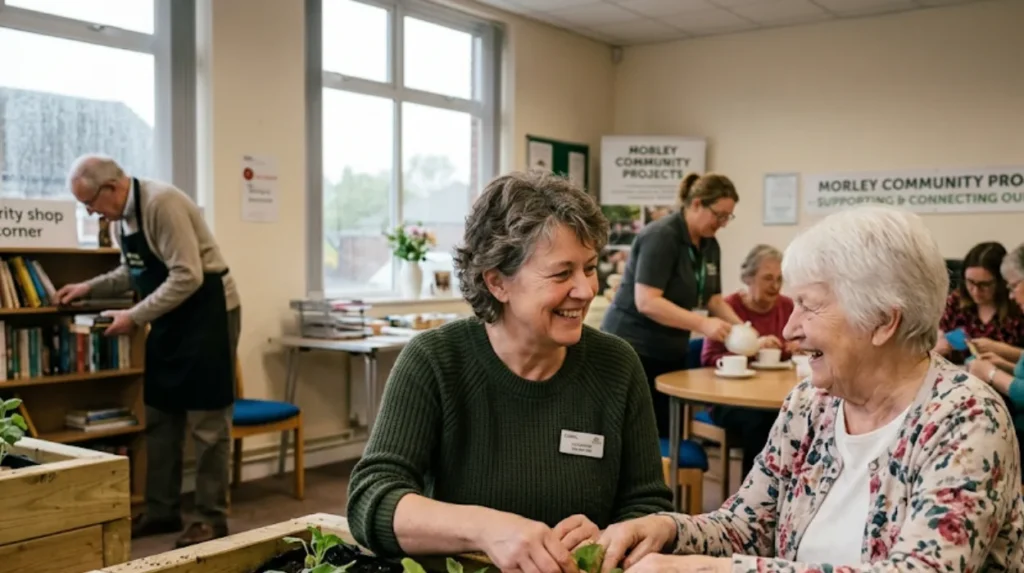
Morley Elderly Action is one of the clearest local options. Its volunteer work includes reception, tearoom help, lunch clubs, and coffee morning support at Morley Town Hall. The charity focuses on helping older people stay independent and connected.
Leeds Hospitals Charity also advertises volunteer opportunities connected to Morley, including shop and stock room roles with flexible weekly hours. Barnardo’s has also listed retail volunteer roles in Morley, showing that charity shops remain a major entry point into volunteering for local residents. For wider options, Leeds volunteering platforms act as city-wide routes into volunteer work.
How do you find the right volunteer role?
The best way to find the right volunteer role is to match the charity’s tasks, time commitment, and location with your availability and strengths. Leeds volunteering platforms and charity websites both provide role descriptions, shift details, and application routes that make comparison straightforward.
Start with the type of work you want to do. Retail roles suit people who like customer service, tidying, or sorting stock. Community support roles suit people who prefer conversation, hospitality, or helping with social activities. Administrative roles suit people who want quieter, structured work with forms, phones, or email.
Then check the time commitment. Some Morley volunteer roles ask for around four hours a week, which shows that many opportunities are part-time and manageable. Others offer flexibility around the volunteer’s schedule, while some need recurring support for events or regular weekly sessions. A clear schedule makes it easier to stay consistent and avoid overcommitting.
What is the application process?
The application process usually involves reading the role description, submitting an online form or enquiry, and then completing any checks, induction, or informal interview required by the charity. Most Leeds charities provide digital application routes and support for volunteers who need guidance.
Leeds volunteering platforms often help people find suitable opportunities and support them into volunteering. Some also provide volunteer profiles and social CV tools, which make it easier to record experience and apply for different roles. This creates a more structured online recruitment process for many opportunities.
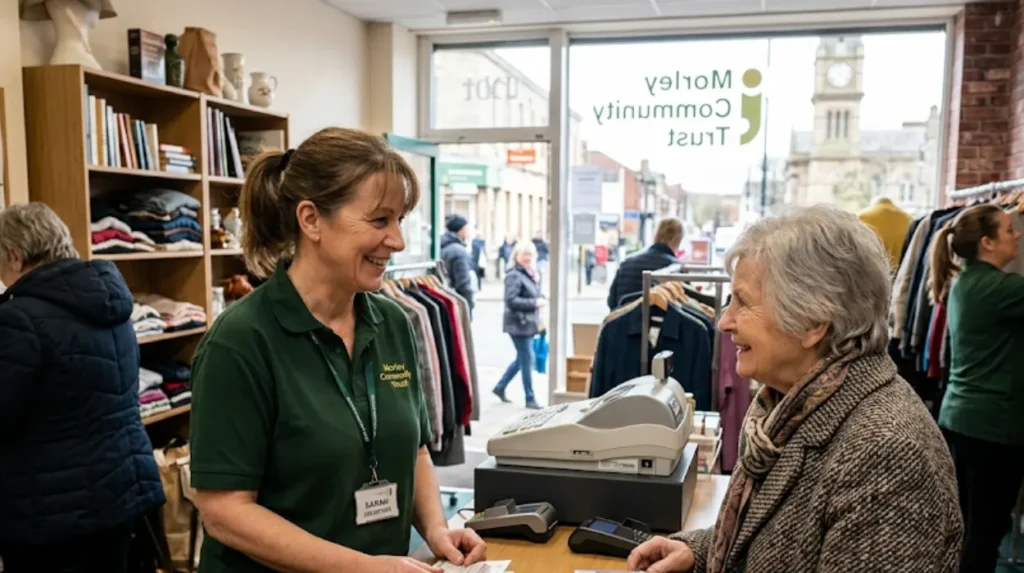
Some roles need simple onboarding, while others need more detail. Charity shop roles often require training in till use, sorting donations, and shop presentation. Community-facing roles can involve reception, tea service, or activity support, which usually means a short introduction to the charity’s routines and safeguarding expectations. The exact steps depend on the role, not the town.
What skills do charities look for?
Charities look for reliability, communication, teamwork, and basic practical skills. Many roles also value empathy, punctuality, and a willingness to follow procedures, especially in services for older people, retail environments, and public-facing community settings.
A charity does not always need specialist experience. Many roles are open to people who want to share skills, learn new ones, or build experience through volunteering. That matters for students, jobseekers, career changers, and retired residents who want to contribute locally.
Different roles require different strengths. Reception work needs clear communication and organisation. Lunch club support needs patience and a friendly manner. Retail roles need tidiness, attention to detail, and confidence with customers. More specialist roles can include fundraising, event support, or digital skills if a charity needs help with promotion or admin.
What checks and training are involved?
Checks and training depend on the role, but many charities provide an induction, basic role training, and safeguarding guidance. Roles involving vulnerable people often need stricter checks and clearer boundaries than simple retail or event support.
Charities working with older people often require volunteers to follow routines, confidentiality rules, and clear guidance on how to respond to concerns. That kind of volunteering can include practical boundaries and short training sessions to make sure everyone understands the charity’s expectations.
In charity retail, training is usually simpler but still important. Volunteers may sort, tag, and put stock onto the shop floor, and may also help on the till after being shown how to do it. This shows that even entry-level roles include structured learning. Training helps volunteers work safely, follow systems, and represent the charity well.
How much time should you give?
The right time commitment is the amount you can keep consistently. Many local charity roles in Morley use weekly or flexible shifts, with some roles asking for around four hours a week and others fitting around the volunteer’s schedule.
Consistency matters more than long hours. A charity benefits more from a volunteer who turns up every week than from someone who overcommits and stops after a short time. Four-hour retail shifts, regular lunch club help, and recurring reception support all show how local charities build services around dependable volunteer patterns.
Short shifts are often enough to make a real contribution. A few hours can cover shop floor support, stock handling, tea service, basic admin, or helping with a community event. For many people in Leeds, that makes volunteering practical alongside work, family life, or study.
Explore More Help & Resources
How to find free kids activities near Wetherby this week
How to get help with money stress and debt in Rothwell
What do you gain from volunteering?
Volunteering gives practical experience, community connection, and a structured way to support local people. Leeds volunteering services also frame it as a route to skills development, a social CV, and broader confidence in public-facing or team-based work.
Volunteers often gain experience that helps with future jobs or training. That can include customer service, teamwork, communication, organisation, and reliability. Some platforms also encourage people to record skills gained in a social CV, which helps when applying for jobs, apprenticeships, or further volunteering.
The personal value is also local and social. Volunteering at Morley charities creates contact with older residents and community workers, while retail volunteering creates day-to-day interaction with customers and colleagues. That experience often strengthens confidence, routine, and awareness of local services.
How does volunteering support Morley long term?
Volunteering supports Morley long term by keeping local charities active, visible, and responsive to community need. It strengthens social support for older residents, keeps charity shops and fundraising working, and helps local services stay rooted in the area.
Local charities often cover many community needs through one organisation. That can include lunch clubs, tea bars, friendship groups, memory support, gardening help, and signposting to other services. Volunteers make those services possible at a scale that paid staff alone often cannot sustain. That creates stability for residents who rely on regular contact and practical support.
Volunteer infrastructure also matters at city level. Leeds has built a formal system for matching people with roles across the city, which makes it easier for Morley residents to find opportunities that fit their lives. For local charities, that means volunteering is part of a wider civic network, not an isolated activity.
What should a first-time volunteer do next?
A first-time volunteer should choose one suitable charity, read the role description carefully, and apply through the charity’s website or a Leeds volunteering platform. A short, regular role is the best starting point because it builds confidence without creating pressure.
A practical first step is to compare local charity roles and find one that matches your time and interests. If you want people-facing work, charity retail or reception is a good start. If you want quieter work, stock room, admin, or practical event support fits better.
The strongest applications are simple and specific. State your availability, explain why the charity interests you, and mention any relevant experience such as retail, admin, hospitality, or community work. Local charities value dependability and clear communication because those qualities keep their services running smoothly.
Volunteering in Morley is easiest when you treat it as a regular commitment to a real local need. One good role, one clear schedule, and one reliable charity relationship create the best long-term result for both the volunteer and the community.
How do I start volunteering at a local charity in Morley?
Start by choosing a charity that matches your interests, reading its volunteer role descriptions, and applying through the charity’s website or a Leeds volunteering platform. Most organisations provide guidance throughout the application process.