

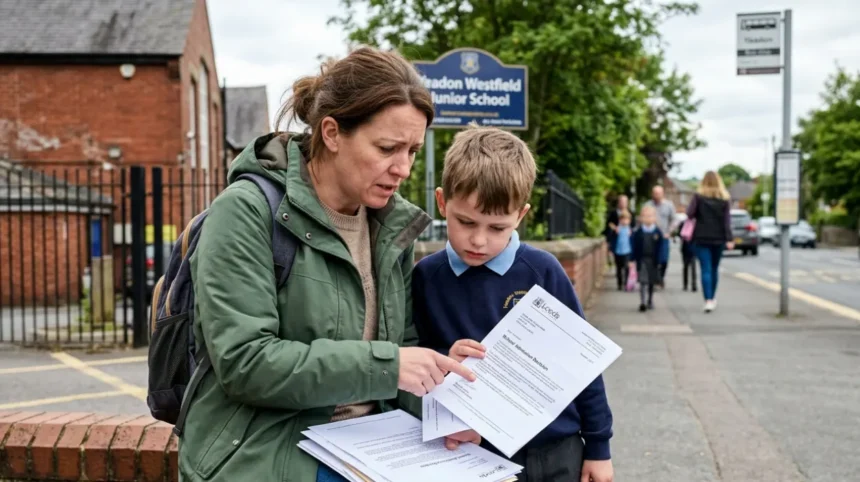
If your child is refused a school place in Yeadon, the next step is to read the decision letter, accept any offered place as a backup, and start the appeal process straight away. In Leeds, school appeals are handled through a formal written appeal followed by an independent hearing, and the refusal letter explains how to do this.
- What does a school place refusal mean?
- What should you do first?
- How does the appeal process work in Leeds?
- What deadlines apply in Leeds?
- What evidence helps an appeal?
- What happens at the appeal hearing?
- What if the appeal is unsuccessful?
- How does Yeadon fit into Leeds admissions?
- What does the law say about fairness?
- What should parents write in the appeal form?
- Why does this matter for families in Yeadon?
- What parents should remember
What does a school place refusal mean?
A refusal means the school admission authority has decided not to offer your child a place under its published admission rules. The decision letter must explain why, set out the appeal route, and give the deadline for challenging the decision through an independent appeal process.
A refusal does not mean the process is finished. In England, parents and carers have the legal right to appeal most school admission decisions, and the appeal must be considered by an independent panel. In Leeds, the council states that appeals are heard in two stages: first in writing, then at a hearing.
Yeadon sits within the Leeds school admissions area, so local families usually deal with Leeds City Council processes for community and voluntary-controlled schools, or with the school itself if it is its own admission authority. The practical result is the same: the refusal letter controls the next steps and the appeal deadline.
What should you do first?
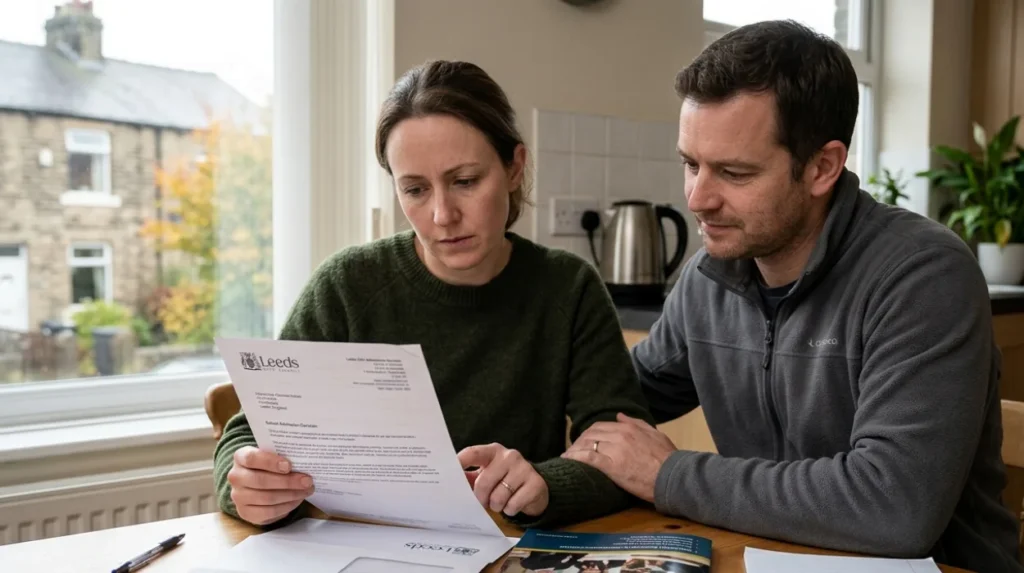
Start by accepting any place already offered, then read the refusal letter carefully, note the appeal deadline, and gather evidence that shows why your child needs the preferred school. This protects your child’s position while you pursue the appeal.
Leeds advises parents to accept the place they have been offered in case the appeal is unsuccessful. This is important because an appeal does not guarantee a better outcome, and refusing a backup place can leave your child without a confirmed school place.
The refusal letter normally tells you why your application was turned down, where to send the appeal, and the deadline for submitting it. If anything in the letter is unclear, the first task is to identify the admission authority and the correct appeal route.
Evidence matters from the start. Typical evidence includes medical reports, educational professional letters, evidence of caring responsibilities, or documents showing exceptional family circumstances. The point is not to list preferences but to show why the preferred school is necessary for your child.
How does the appeal process work in Leeds?
Leeds school appeals start with a written appeal form and continue with a hearing before an independent panel. The panel reviews the refusal, the school’s case, and the parent’s reasons, then decides whether the child should be admitted.
Leeds says appeal hearings are usually scheduled between 9 am and 5 pm, and before the hearing, you receive the appeal papers, including the documents you submitted. The school sends a representative, an independent panel of three people hears the case, and a clerk ensures the process stays fair, legal, and confidential.
The legal framework is set by school admissions rules and the School Admissions Code. GOV.The UK states that the admission authority explains why the application was refused, parents give their reasons, and the panel checks whether the admission criteria were applied properly and complied with the code. If the criteria were not properly followed or if they do not comply with the code, the appeal must be upheld.
In practice, this means the panel does not simply ask whether your family prefers the school. It balances your case against the school’s capacity and the fairness of the admissions process.
What deadlines apply in Leeds?
Deadlines depend on the year group and the intake date. Leeds says that for September 2026 entry, the appeal deadline is 31 March 2026 for Year 7 and 15 May 2026 for Reception. Late appeals are accepted, but they may not be heard before school starts.
These deadlines matter because appeal timetables affect school planning, class sizes, and how quickly a child gets a final place. Leeds also says that if you are not appealing for Reception or Year 7 starting in September, the appeal hearing is held as soon as possible and no more than 30 school days after the appeal is submitted.
This is important for families moving into Yeadon or changing schools at another stage. The process remains available, but timing changes depending on the intake and the type of refusal.
Keep the deadline in writing and submit everything before it expires. Late appeals still exist, but they create delay and increase the risk that the term starts before the hearing happens.
What evidence helps an appeal?
The strongest appeals use clear, relevant evidence that shows exceptional educational, medical, social, or family reasons for the preferred school place. Evidence should be specific, dated, and directly connected to your child’s needs.
An appeal usually becomes stronger when it shows a concrete need rather than general dissatisfaction. Examples include a consultant letter about a medical condition, a psychologist’s report about anxiety or special educational needs, or evidence that travel to another school creates major hardship.
It also helps to explain the impact of refusal in practical terms. For example, if your child depends on a sibling link, a child care arrangement, or a support routine built around the Yeadon area, the panel needs to see why the offered school does not meet the same need.
Use documents that are recent and precise. A short letter from a school professional is often more useful than a long statement without detail.
What happens at the appeal hearing?
At the hearing, the panel considers the school’s case for refusing admission and your case for why your child should be admitted. The panel then decides whether the admissions rules were followed correctly and whether your reasons outweigh the school’s case.
Leeds says appeals happen in two parts: written submissions first, then a hearing. The school sends someone to explain why admitting another pupil would cause difficulty, and the independent panel asks questions before making a decision. GOV.UK confirms that the panel checks whether the admissions criteria were properly followed and whether the process complied with the Admissions Code.
This hearing is formal but not courtroom-style. It is a decision-making meeting with written evidence, questions, and a reasoned outcome. You should focus on facts, dates, and the effect on your child.
Parents often do best when they prepare a short chronology of events, then support it with documents. Keep each point tied to a specific need, such as health, transport, family stability, or educational continuity.
What if the appeal is unsuccessful?
If the appeal fails, your child usually stays on the waiting list if one exists, and you can explore other school places, transport options, or a complaint if the process was handled incorrectly. If the school is oversubscribed, the refusal can stand even after an appeal.
Leeds says parents who do not want to appeal can look at waiting lists, and waiting lists can also remain relevant after an unsuccessful appeal. The Local Government and Social Care Ombudsman says that if you believe the admission authority or appeal panel acted incorrectly, you can complain to the Ombudsman after the appeal stage.
The Ombudsman route is not a second appeal on the merits. It checks whether the process was fair and lawful. That distinction matters because a complaint about procedure is different from a disagreement with the result.
If your child has an Education, Health and Care Plan, the route is different. The Ombudsman says parents unhappy with that school offer must appeal to the First-tier Tribunal (Special Educational Needs and Disability), not the usual school admissions appeal process.
How does Yeadon fit into Leeds admissions?
Yeadon families usually follow Leeds City Council admissions rules because Yeadon is part of the Leeds local authority area. The exact route depends on the type of school, the admission authority, and whether the child is applying for Reception, Year 7, or another year group.
For local parents, the key issue is not just the town name but the school’s status. Community schools and many controlled schools use the council route, while some academies, foundation schools, and voluntary-aided schools manage admissions through their own admission authority under the national code. That changes who handles the refusal and who hears the appeal.
Yeadon families should also think about geography and school place pressure across north-west Leeds. Popular schools often receive more applications than they can admit, which is why published admissions rules and appeal rights exist in the first place. The appeal system gives families a legal route when a preferred school is full.
What does the law say about fairness?
The law requires schools and admission authorities to follow their published criteria and the School Admissions Code. If they do not apply the rules properly or the rules conflict with the code, the appeal can succeed.
This legal point is the backbone of school admissions in England. The appeal panel is not there to rewrite the admissions policy or create an extra place from preference alone. It is there to test fairness, legality, and the strength of your child’s individual case.
That is why wording matters. A statement that says “this school is better” is weak. A statement that says “this school is necessary because of a documented need, sibling link, or specific travel constraint” is much stronger.
Parents should also understand that each refusal is separate. GOV.UK says you must appeal against each rejection separately and can only appeal once against each rejection. That rule matters if a child has been refused more than one school.
What should parents write in the appeal form?
The appeal form should explain the facts, the reasons for the appeal, and the effect of refusal on your child. It should be clear, structured, and focused on evidence that matches the school admissions rules and your child’s circumstances.
Leeds says you need to clearly set out the reasons why your child should have a place at your preferred school. The Leeds admission appeal form also asks parents to set out their grounds for appeal and sign the declaration so the request can be processed.
A strong form usually covers three things: why the child needs the school, what evidence supports that need, and why the offered school does not meet it in the same way. Keep the language factual and specific. State the child’s year group, the date of refusal, and the impact on education, health, transport, or family life.
Avoid unnecessary detail. Appeal panels work with clear arguments, not long narratives without evidence.
Why does this matter for families in Yeadon?
A refused school place affects routine, travel, childcare, and educational continuity, especially where families depend on one local school network. In Yeadon, the appeal system is the main formal route for challenging a refusal and trying to secure a preferred place.
School placement decisions shape daily life. For primary pupils, they affect morning travel and sibling drop-offs. For secondary pupils, they influence bus routes, start times, and access to support networks. That is why the law allows an appeal rather than leaving the decision entirely with the admission authority.
The process also reflects broader pressure on school places. Where schools are oversubscribed, councils must apply fixed criteria fairly and consistently, and families who lose out need a legal route to challenge the result. In Leeds, that route is the written appeal and hearing system.
For Yeadon’s parents, the best approach is practical and timely: protect the backup place, submit the appeal on time, and present the case with evidence. That sequence gives the family the strongest position within the rules.
What parents should remember
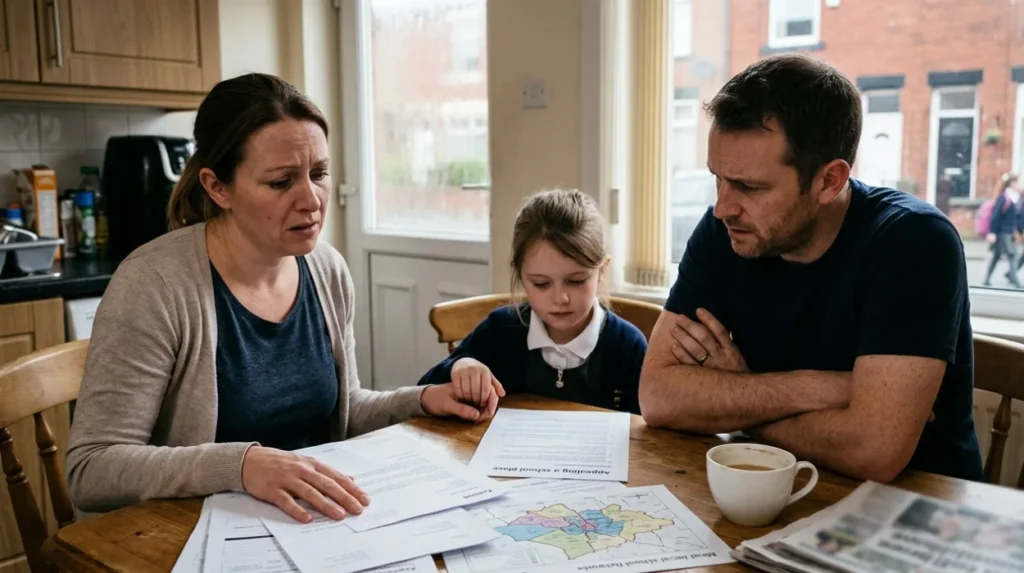
The refusal letter is the starting point, not the end. Accept the backup place, appeal on time, use evidence, and follow the Leeds process carefully because the independent panel decides on fairness, legality, and the strength of the case.
The most important facts are simple. You have a right to appeal most refusals. Leeds uses a two-stage appeal process, deadlines apply, and the panel can uphold the appeal if the admissions rules were not followed properly. If the appeal fails, waiting lists and complaint routes still exist, and EHCP cases use a different tribunal route.
What happens if my child is refused a school place in Yeadon?
You should accept the offered place, then start an appeal through Leeds City Council.