

Key Points
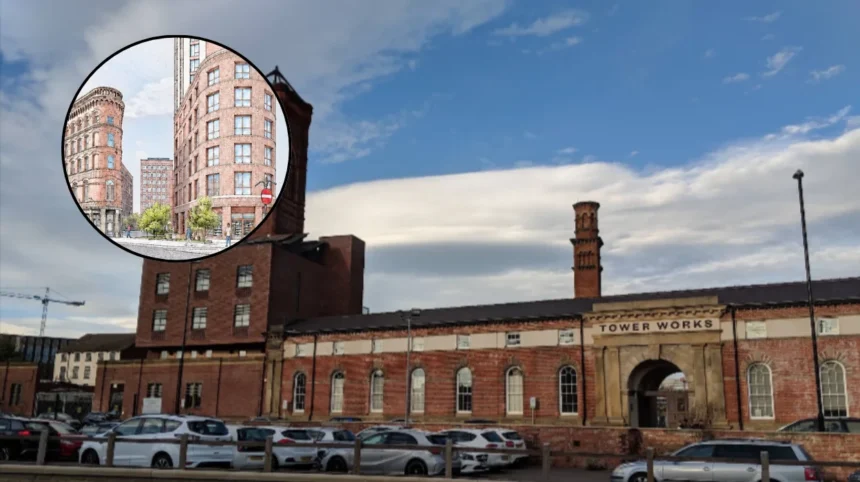
- Property developer Glenbrook has initiated a public consultation process regarding proposals to construct 246 new homes at Meadow Lane in the South Bank area of Leeds.
- The development scheme consists of a 24-storey residential tower alongside an adjoining lower six-storey shoulder building.
- The residential provision will comprise a combination of one-, two-, and three-bedroom apartments, complemented by commercial units located on the ground floor.
- The brownfield location was previously allocated for highways use and sits near landmark features including the David Oluwale Bridge and the Hibiscus Rising sculpture.
- Leeds City Council designated Glenbrook as the preferred developer for the site back in 2024.
- The public consultation window is set to conclude on Wednesday, 23 September 2026, ahead of the formal submission of a planning application.
- The professional design and consultancy team includes Carey Jones Chapman Taylor, ID Planning, Whitley & Partners, Re-for, Hexa, and Abacus Cost Management.
LEEDS (The Leeds Times) September 9, 2026 –As reported by Simon Creasey of BE News, Steven Hugill of Bdaily, and Miran Rahman of TheBusinessDesk, property development company Glenbrook has officially initiated a public consultation process regarding its proposals to construct 246 new residential properties on Meadow Lane, situated within the South Bank regeneration district of Leeds. The proposed blueprint for the brownfield site features a 24-storey residential tower alongside a lower six-storey shoulder building. The mixed-use scheme aims to deliver a range of one-, two-, and three-bedroom apartments, in addition to dedicated commercial space at the ground floor level.
What Are the Key Design Elements of the Meadow Lane Proposals?
The site identified for the development was formerly used for highways infrastructure and is situated at a strategic gateway connecting Leeds city centre with the broader South Bank area. According to coverage by Simon Creasey of BE News, the physical layout has been designed to incorporate new public realm spaces and detailed landscaping.
These elements are intended to improve local pedestrian routes and build better spatial connections with nearby public landmarks, including the David Oluwale Bridge and the Hibiscus Rising sculpture.
As reported by Steven Hugill of Bdaily, the project team assembled by Glenbrook to deliver the design encompasses several specialist firms. Architectural services are being provided by Carey Jones Chapman Taylor, with planning consultancy managed by ID Planning.
Engineering and technical inputs are being handled by Whitley & Partners for mechanical and electrical engineering, Hexa for structural and civil engineering, Re-for for landscape architecture, and Abacus Cost Management overseeing project costs.
What Has Glenbrook Stated Regarding the Strategic Vision for the Site?
In statements highlighted by Simon Creasey of BE News, Michael Watson, development manager at Glenbrook, outlined the strategic objectives driving the proposed scheme. As reported by Simon Creasey of BE News, Michael Watson stated that:
“Meadow Lane is a really exciting opportunity to transform a prominent site which was formally highways use, at an important gateway into Leeds city centre. We’ve worked closely with Leeds City Council and the wider design team to develop a scheme which responds to its surroundings whilst making the most of the opportunity presented by the site.”
Detailing the architectural approach taken for the two main built structures, as reported by Simon Creasey of BE News, Michael Watson explained that:
“The taller element has been carefully considered as part of the emerging city skyline, while the lower shoulder building and its curved form respond more directly to the neighbouring heritage including Leeds Bridge House and the wider character at street level.”
Regarding the integration of the development into the surrounding urban fabric, as reported by Simon Creasey of BE News, Michael Watson added that:
“Alongside delivering 246 new homes, an important part of the proposals is how the development meets the ground and contributes to the wider regeneration already taking place around Meadow Lane and the South Bank. We’re now looking forward to hearing people’s views on the proposals before we finalise and submit our planning application.”
How Did the Scheme Progress to the Consultation Stage?
As reported by Miran Rahman of TheBusinessDesk, Leeds City Council formally designated Glenbrook as the preferred developer for the Meadow Lane site in 2024. Following that selection, the developer engaged in ongoing dialogue with the local authority and its appointed professional advisers to refine the scheme parameters prior to public unveiling.
As noted by Steven Hugill of Bdaily, members of the public and local stakeholders have been invited to submit feedback on the draft designs via a dedicated consultation portal (meadowlane-leeds.com).
The public consultation period will remain open until Wednesday, 23 September 2026, after which Glenbrook intends to finalise the detailed planning application for formal submission to Leeds City Council.
Explore More Local Leeds News
Tremaine Jackson Jailed For Taxi Robbery Leeds 2026
Leeds Dad Wins £1M BOTB House, 2026
Background of the Development
The Meadow Lane site forms part of the broader Leeds South Bank regeneration zone, which represents one of the largest urban renewal initiatives in Europe.
Historically dominated by industrial infrastructure and major road networks, the South Bank has undergone a multi-year transition aimed at expanding the economic footprint of Leeds city centre southwards across the River Aire.
Over the past decade, Leeds City Council has prioritized transforming redundant highway infrastructure and brownfield land in the area into high-density residential developments, parkland, and commercial hubs. The selection of Glenbrook in 2024 as the preferred developer for Meadow Lane marked a key step in reallocating former transport land for mixed-use residential development.
The site’s location adjacent to newly created public infrastructure—such as the David Oluwale Bridge—reflects a ongoing effort by municipal authorities to enhance connectivity and create continuous pedestrian corridors between central Leeds and the South Bank.
Impact on Local Residents and City Stakeholders
The proposed scheme at Meadow Lane stands to impact several key stakeholder groups across the city of Leeds. For local residents and commuters, the development represents a significant visual and physical transformation of a primary southern entry point into the city centre.
The introduction of 246 new residential units will increase housing supply in the city core, while the ground-floor commercial spaces and landscaped public realm are expected to increase footfall and active street frontages in the immediate vicinity.
For local businesses and property owners, the scheme may accelerate ongoing private investment across the South Bank by furthering the transition of former highway land into active residential communities. However, the construction phase may introduce temporary disruptions to local pedestrian routes and traffic flows along Meadow Lane.
Additionally, the addition of a 24-storey structure will alter the immediate skyline, presenting a modern architectural feature alongside established heritage structures like Leeds Bridge House.