
Key Points
- Proposed Conversion: Part of the East Stand at AMT Headingley Stadium, a historic West Yorkshire rugby venue, could be transformed into a state-of-the-art cancer treatment centre.
- Planning Permission: The realization of the project depends on formal planning approval being granted by Leeds City Council.
- Operator and Services: The facility, named the Icon Cancer Centre, will offer advanced healthcare services including radiotherapy, oncology imaging, and advanced CT scanning.
- Site Repurposing: The plans involve retrofitting vacant classroom spaces across the ground, first, and second floors of the stand, which were previously occupied by Leeds Beckett University.
- Strategic Intent: According to submitted planning documents, the project seeks to bring critical medical treatment closer to local residents, addressing an escalating regional demand for accessible cancer diagnosis and care.
- Strategic Advisors: Icon Group has appointed Dame Linda Pollard, former Chair of Leeds Teaching Hospitals NHS Trust, as a Strategic Advisor to guide the integration into the city’s healthcare landscape.
- Accessibility Advantages: The venue benefits from comprehensive public transport infrastructure, located near Headingley and Burley railway stations alongside multiple local bus routes on Kirkstall Lane, Cardigan Road, and Otley Road.
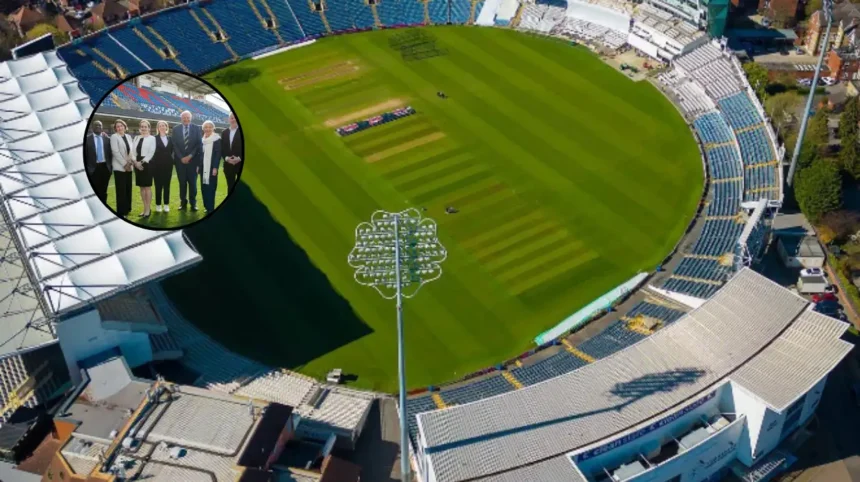
West Yorkshire (The Leeds Times) June 2, 2026 — Part of the East Stand at the home of the Leeds Rhinos could soon be converted into a specialized healthcare facility under newly unveiled proposals submitted to local planners. If Leeds City Council grants planning permission, the vacant sections of the stadium will be repurposed into the Icon Cancer Centre, a facility designed to deliver radiotherapy and oncology imaging to patients across Yorkshire. The proposed development marks a significant shift in the utilization of the iconic sporting venue, integrating advanced medical infrastructure into a site traditionally reserved for elite professional sport and community events.
- Key Points
- What Medical Services Will the New Facility Offer?
- How Will the Centre Impact Regional Cancer Care Demand?
- Why Was the Rugby Stadium Chosen as a Healthcare Location?
- What Do Community Leaders and Corporate Executives Say About the Proposal?
- Background of the Headingley Stadium Healthcare Development
- Prediction: How This Development Can Affect Patients and Families in Yorkshire
- Normalization of Care Environments
What Medical Services Will the New Facility Offer?
The proposed healthcare facility is slated to occupy the ground, first, and second floors of the stadium’s East Stand. The layout involves converting vacant classrooms that were formerly utilized by Leeds Beckett University for educational purposes.
According to the architectural plans and the accompanying planning report, the internal infrastructure will be heavily modified to accommodate specialized clinical spaces.
The facility aims to deliver comprehensive oncology services, including advanced CT scanning and targeted radiotherapy treatments.
By utilizing three floors of the stand, the design ensures separate zoning for diagnostic imaging, patient consultations, and highly specialized radiation therapies, maximizing the footprint previously designated for academic use.
How Will the Centre Impact Regional Cancer Care Demand?
As detailed in the formal planning submission documents, the establishment of the Icon centre is intended to bridge existing gaps in localized healthcare delivery. A planning report submitted to the local authority noted:
“The proposed Icon centre will bring vital treatment closer for people living across Leeds and Yorkshire, helping to address growing demand for accessible cancer diagnosis and care. Investment in the facility will not only improve outcomes for patients but reinforces Leeds’ position at the forefront of medical advancement in the north.”
Official data highlights that a patient is diagnosed with cancer every 17 minutes across the Yorkshire region. While national early-stage diagnosis figures hover around 60 per cent, local infrastructure remains under pressure to deliver swift, localized therapeutic interventions to manage these caseloads effectively.
Why Was the Rugby Stadium Chosen as a Healthcare Location?
The selection of AMT Headingley Stadium rests heavily on its established geographical connectivity and pre-existing transport links. The planning report emphasizes that the site is highly accessible via multiple modes of public transport, minimizing travel burdens for patients undergoing intense treatment regimens.
The stadium sits in close proximity to both Headingley and Burley railway stations, providing direct rail links for individuals traveling from outside the immediate Leeds area. Furthermore, the report outlines the density of the surrounding road network, stating:
“A number of bus routes serve the stadium along Kirkstall Lane and Cardigan Road, with many more services along Otley Road. By increasing access to cancer treatment in a highly accessible location, the proposal would deliver clear social and public health benefits.”
What Do Community Leaders and Corporate Executives Say About the Proposal?
The project has garnered public commentary from corporate stakeholders, community representatives, and local government officials, each outlining their perspective on how the facility integrates into the city’s broader economic and social frameworks.
As published in an official corporate announcement by the medical provider, Icon Group Chief Executive Officer Mark Middleton OAM stated that the proposal directly reflects the company’s corporate philosophy of embedding specialized medical services within pre-existing community networks rather than operating in isolation.
Middleton noted that the project allows the group to insert specialized oncology care into an established ecosystem of health, wellbeing, and sport, making it an organic part of the local fabric.
To facilitate this integration, the provider has secured the services of Dame Linda Pollard, the former Chair of the Leeds Teaching Hospitals NHS Trust, who is acting as a Strategic Advisor for the UK rollout.
As documented by Icon Group’s communications team, Dame Linda Pollard remarked that having spent many years as a healthcare decision-maker in the region, she recognizes the importance of localized care. She added that developments grounded in partnership and local understanding possess the genuine capacity to alter patient experiences for families across Leeds.
From a sporting perspective, the leadership of the rugby league club views the center as a continuation of its off-field community initiatives. Representing the club’s charitable arm, Paul Gorse of the Leeds Rhinos Foundation stated that the organization already actively delivers programmes focused on physical health, mental resilience, and social inclusion. Gorse observed that dedicating physical stadium space to cancer therapies functions as an extension of the club’s civic duties.
Political support has also been signaled at the municipal level. According to statements compiled in the project’s introductory brief, Councillor James Lewis, the Leader of Leeds City Council, welcomed the framework, pointing out that Leeds functions as a top-three global HealthTech hub. Councillor Lewis noted that the city council welcomes the technical expertise brought forward by the Icon Group, suggesting it will strengthen the region’s existing medical sector.
Background of the Headingley Stadium Healthcare Development
The conversion of the East Stand classrooms marks a distinct chapter in the recent structural and operational history of Headingley Stadium.
Historically, the venue has operated under a dual-use framework, hosting both the Leeds Rhinos Rugby League Club and Yorkshire County Cricket Club, while leasing out corporate hospitality and educational spaces to maintain year-round financial viability.
The specific rooms earmarked for the Icon Cancer Centre became vacant following a realignment of estate assets by Leeds Beckett University, which had long utilized the stadium’s stands for its sports science and coaching lecture halls.
This availability coincided with an ongoing national push within the UK healthcare sector to decentralize radiotherapy services.
Reports from advocacy groups such as Radiotherapy UK have frequently highlighted disparities in travel times for cancer patients, showing that individuals in regional pockets often face prolonged commutes for daily treatment sessions.
The stadium project represents an attempt by private healthcare providers to partner with local sporting infrastructure to establish accessible, secondary care hubs outside traditional, congested acute NHS hospital campuses.
Prediction: How This Development Can Affect Patients and Families in Yorkshire
If Leeds City Council grants full planning permission, this development is expected to significantly alter the daily logistics of healthcare consumption for oncology patients and their families throughout West Yorkshire.
For the specific audience of cancer patients, the primary shift will manifest in drastically reduced travel times. Radiotherapy typically demands consecutive daily appointments over several weeks; substituting a trip to a centralized city-centre hospital campus with a highly accessible suburban stadium hub will mitigate the physical exhaustion associated with commuting.
The proximity to Headingley and Burley rail stations means patients from the wider Yorkshire geographic footprint can bypass city-centre traffic entirely.
Normalization of Care Environments
Psychologically, the placement of a clinical facility inside a familiar, community-focused sporting venue could alter the patient experience by removing the clinical anxiety often triggered by large, institutional hospital environments.