Key Points
- Application Refused: Leeds City Council planning officers have formally turned down a proposal for a new digital advertising installation in Horsforth.
- Applicant Details: Media corporation Bauer Media submitted the application to erect a double-sided digital free advertisement display outside 75B New Road Side.
- Applicant’s Argument: Bauer Media maintained that the proposed display unit was carefully designed to fit the local streetscape and complement the character of the area.
- Community Concerns: Objections raised by local residents and Horsforth Town Council highlighted potential light pollution, visual disruption, and driver distraction on a busy route.
- Council Findings: Planning officers concluded that the proposed structure would create over-proliferation and unwanted street clutter near an existing bus stop and permitted outdoor seating area.
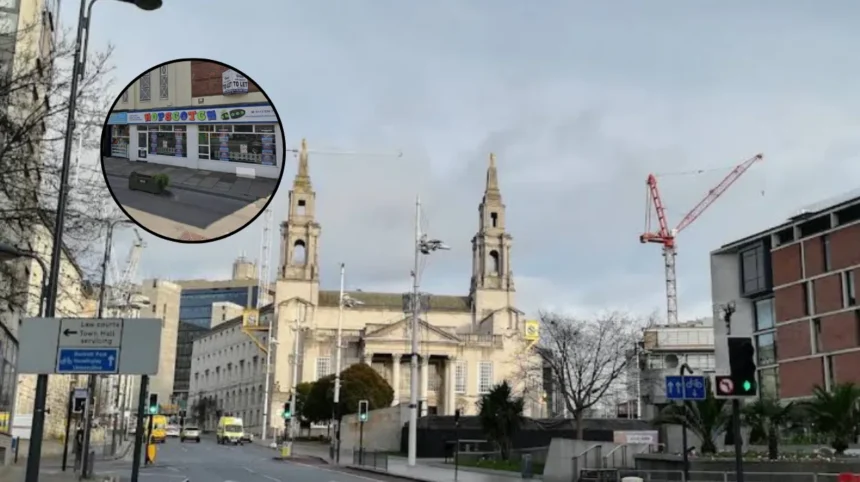
Horsforth (The Leeds Times) September 24, 2026 – As reported by John Plumtree of West Leeds Dispatch, Leeds City Council planners have officially rejected an application by Bauer Media to erect a double-sided digital free advertisement display unit on land situated outside 75B New Road Side in Horsforth. Council planning officers declared that the placement of the digital sign would result in unwanted roadside clutter, negatively impacting both pedestrian safety and the visual quality of the commercial streetscape.
- Key Points
- How Did Bauer Media Defend The Proposed Digital Installation?
- What Concerns Were Raised By Local Residents And Horsforth Town Council?
- What Did The Council Planning Officer’s Official Report Conclude?
- Background Of The Horsforth Planning Development
- Prediction: How This Development Can Affect Local Residents And High Street Businesses
How Did Bauer Media Defend The Proposed Digital Installation?
According to planning documentation cited by John Plumtree of West Leeds Dispatch, applicant Bauer Media maintained that the proposed installation had been sensitively planned. Bauer Media argued that the digital unit was carefully designed to reflect the character of the surrounding area and blend seamlessly into the existing local streetscape without causing disruption to the commercial thoroughfare.
What Concerns Were Raised By Local Residents And Horsforth Town Council?
As outlined in the local authority reporting by John Plumtree of West Leeds Dispatch, two formal letters of objection were lodged by members of the public during the consultation period. The objecting residents stated that the structure was entirely out of keeping with existing shopfronts and street furniture, adding that the illumination from the digital screen would serve as a dangerous distraction for drivers passing through the area.
Concurrently, Horsforth Town Council formally submitted its own objections regarding the cumulative visual impact and potential light pollution affecting nearby households. As recorded by John Plumtree of West Leeds Dispatch, Horsforth Town Council stated in its objection:
“New Road Side is a busy route with a higher than average density of pedestrians and the proposal will be an additional distraction to drivers presenting a road safety risk.”
What Did The Council Planning Officer’s Official Report Conclude?
As detailed by John Plumtree of West Leeds Dispatch, the formal evaluation from the Leeds City Council planning officer highlighted several factors that made the location unsuitable for a new digital structure. The planning officer’s report concluded:
“It is considered that the signage is in an inappropriate location due to the close proximity to the bus stop, extant permission for outdoor seating to the neighbouring commercial unit at No 75B, which is likely to be implemented, and similar digital advertisement units.
“This will result in an over proliferation of this type of signage to the commercial parade which will result in unwanted clutter, which will be detrimental to the visual amenity of the streetscene and highway and pedestrian safety.”
Background Of The Horsforth Planning Development
New Road Side (A65) serves as one of the primary arterial routes linking suburban Leeds to Horsforth and wider West Yorkshire. Over recent years, commercial stretches along the corridor have seen increased demand for modernised street furniture, including digital advertising hoardings, interactive kiosks, and outdoor commercial extensions such as hospitality seating.
Leeds City Council operates under strict spatial planning policies regarding advertising consent. Local planning guidance dictates that new displays must not compromise highway safety, disrupt pedestrian movement, or result in “street clutter”—a condition where an excess of signs, poles, and commercial infrastructure harms the aesthetic quality and accessibility of public thoroughfares. The location outside 75B New Road Side had already been subject to a separate planning approval allowing outdoor customer seating for an adjacent business, creating a complex spatial footprint that council officers deemed incompatible with an additional digital structure.
Prediction: How This Development Can Affect Local Residents And High Street Businesses
This planning refusal reinforces a clear regulatory boundary regarding roadside advertising along the busy New Road Side corridor.
- For Local Residents & Pedestrians: The decision prevents additional light pollution and preserves pavement space near a heavily used bus stop. Pedestrians and local shoppers are likely to experience safer navigation along the pavement without the physical obstruction or visual distraction of an added digital display.
- For Local Motorists: Drivers using the A65 through Horsforth will avoid an extra illuminated focal point, helping maintain driver focus along a section of road known for high traffic volume and frequent pedestrian crossings.
- For Local Businesses & Commercial Applicants: Commercial property owners and media companies seeking to install freestanding digital signage in Horsforth will face stricter scrutiny. Future applicants will likely need to demonstrate that proposed units do not overlap with existing permissions—such as outdoor seating or public transport stops—and must explicitly prove that new structures will not contribute to visual over-saturation.