Key Points
- An independent economic report titled Driving West Yorkshire’s Economy reveals Leeds Bradford Airport (LBA) generates £737 million annually for West Yorkshire and supports over 9,100 regional jobs.
- LBA handled nearly 4.5 million passengers in 2025, with strategic plans to expand capacity to approximately 7 million passengers by the early 2030s.
- Business productivity facilitated by LBA creates £129 million in economic value, while airport-linked tourism generates £75 million and sustains 2,840 local positions.
- Regional residents currently make 9.5 million trips annually through airports outside Yorkshire and the Humber, with nearly half using Manchester Airport.
- LBA leadership and regional stakeholders are demanding urgent action on the proposed LBA Parkway rail station to resolve surface access limitations and unlock wider industrial growth.
- A private investment of more than £200 million is being deployed by LBA to upgrade terminal infrastructure and passenger facilities.
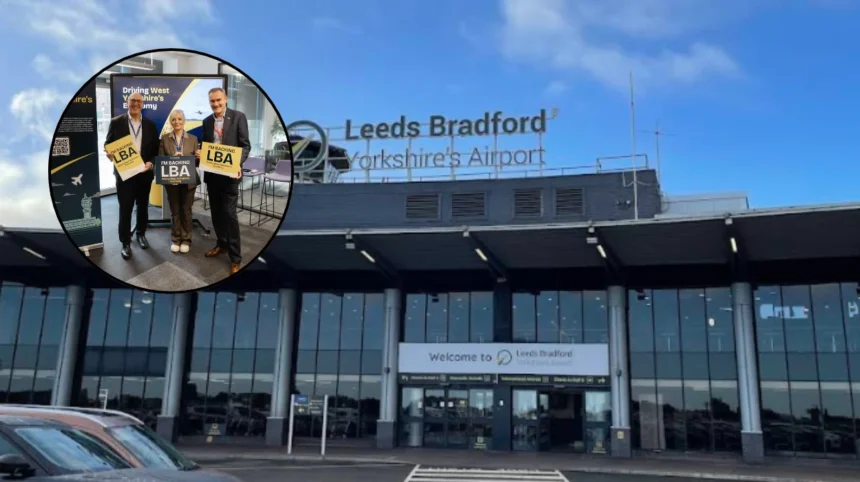
Yeadon (The Leeds Times) November 4, 2026 — Leeds Bradford Airport (LBA) generates approximately £737 million annually for the West Yorkshire economy and sustains more than 9,100 jobs across the region, according to an independent assessment published on November 2, 2026.The comprehensive economic impact evaluation, titled Driving West Yorkshire’s Economy, was formally launched at a regional stakeholder gathering in Leeds. The launch event brought together West Yorkshire Mayor Tracy Brabin, alongside prominent leaders from commercial business, local government, higher education institutions, and the transport sector.
The findings establish the airport as one of Yorkshire’s most vital economic engines, playing a structural role in elevating business productivity, driving inward foreign investment, expanding international trade routes, and promoting inbound regional tourism.
According to figures outlined within the independent report, LBA processed almost 4.5 million passengers throughout 2025. Airport management has outlined explicit development ambitions to expand passenger throughput to approximately 7 million travellers per year by the early 2030s. To accommodate this strategic growth trajectory and elevate overall passenger satisfaction, the airport operator is currently injecting over £200 million of private capital directly into facility modernization and operational infrastructure.
Beyond direct operational employment, the assessment breaks down the broader financial benefits delivered to the surrounding county. Commercial productivity enabled by airport connectivity generates an estimated £129 million in direct economic value and supports approximately 750 high-value jobs across West Yorkshire. Furthermore, visitor spend linked to LBA operations accounts for roughly £75 million in economic output, sustaining 2,840 jobs in the hospitality, leisure, and retail sectors across the county.
However, the assessment highlights significant leakage of economic potential to competing aviation hubs. Travellers residing within Yorkshire and the Humber currently make approximately 9.5 million passenger journeys each year using airports situated outside the region. Nearly 50 per cent of those outbound journeys are processed through Manchester Airport, pointing to substantial untapped regional demand that could be captured locally through enhanced connectivity and expanded flight offerings.
Why Are Regional Leaders Demanding Urgent Action on the LBA Parkway Rail Link?
The report identifies surface access infrastructure as the primary structural challenge and single largest opportunity to unlock further economic capacity at LBA, placing explicit emphasis on the proposed LBA Parkway Station.
According to the analysis, constructing a dedicated rail connection would facilitate environmentally sustainable passenger and staff journeys, relieve local road congestion, and drastically boost connectivity for key commercial clusters across West Yorkshire. The sectors highlighted as primary beneficiaries of enhanced rail access include financial and professional services, digital technology, advanced manufacturing, health and life sciences, and creative industries.
While acknowledging that the proposed Parkway station faces well-documented public sector funding constraints and complex delivery hurdles, the assessment maintains that the strategic rationale for linking the airport directly to the national rail network remains overwhelmingly compelling.
As stated by Vincent Hodder, Chief Executive Officer of Leeds Bradford Airport, the empirical findings confirm the facility’s foundational role within the northern economy:
“This report demonstrates that Leeds Bradford Airport is far more than a transport hub. It is a vital piece of economic infrastructure that supports thousands of jobs, connects Yorkshire businesses to global markets and helps attract investment, visitors and talent into our region.”
“The evidence is clear that improving connectivity to the airport is one of the most important opportunities we have to unlock further economic growth for West Yorkshire and Yorkshire as a whole. That is why we remain unequivocally supportive of the proposed LBA Parkway Station.”
“While we recognise the financial pressures and delivery challenges currently facing major infrastructure projects across the UK, the strategic case for this scheme has never been stronger.”
CEO Vincent Hodder added that establishing the Parkway rail scheme could serve as the primary catalyst to unlock the adjacent North West Leeds Employment Hub. Addressing key decision-makers, Vincent Hodder warned against further procedural stagnation, stating:
“Every year of delay represents a missed opportunity for jobs, investment and growth.”
As stated by Tracy Brabin, Mayor of West Yorkshire, local governance remains committed to supporting the airport’s expansion and infrastructure ambitions:
“Leeds Bradford Airport is West Yorkshire’s gateway to the world, and this report demonstrates the important role it plays in supporting jobs, growing our economy and connecting our businesses and communities.”
“Strengthening connectivity, both within our region and internationally, is essential as we compete on the global stage for trade and investment.”
“We are working hard to realise ambitions for a parkway station to serve the airport and will continue working with all partners to find the best solution to improve access.”
As stated by Phil Ward, Chief Operations Officer at airline carrier Jet2, the airport’s growth is directly tied to long-term commercial success and employment in the region:
“We have been proudly operating from Leeds Bradford Airport since 2003, flying millions of customers on their well-deserved holidays in that time, and our longstanding commitment to the airport and the wider region has never been stronger.”
“As a result of our continued success, we employ thousands of colleagues across the region, providing fantastic careers for local people across a range of highly skilled areas. As this report very clearly demonstrates, the airport is a critical economic asset, and its continued success will deliver positive benefits that are felt right across West Yorkshire and the wider region.”
Explore More Local Leeds News
CR Reynolds Appointed for £1.1m Transformation in Morley Town Centre 2026
Leeds City Council Scraps Parking Charges in Wetherby 2026
Background of the Leeds Bradford Airport Parkway Station and Expansion Project
Leeds Bradford Airport, situated at Yeadon in the City of Leeds metropolitan borough, opened in 1931 as Yeadon Aerodrome and has since grown into the highest-altitude commercial airport in England. Serving the key metropolitan areas of Leeds, Bradford, and the wider Yorkshire region, LBA has historically faced access constraints due to its lack of a direct rail or motorway link, relying heavily on local A-roads and bus feeder services.
To address these longstanding logistical bottlenecks, proposals for a dedicated rail connection—the LBA Parkway Station—were formally introduced into regional transport masterplans during the late 2010s. The plan entails constructing a new railway station on the existing Harrogate line between Horsforth and Guiseley, accompanied by a dedicated park-and-ride facility and a short bus rapid transit link delivering passengers directly to the terminal building.
However, the rail infrastructure initiative has encountered repeated administrative, logistical, and political delays. National inflationary pressures, changing public infrastructure budget priorities across central government, and strict planning scrutiny have hindered rapid capital deployment.
Simultaneously, LBA’s broader physical expansion ambitions—including upgrades to terminal capacity, night flight quota adjustments, and extended apron space—have generated significant debate among local councils, regional environmental groups, and surrounding residential communities regarding carbon emissions, noise impact, and green belt preservation.
Despite these delivery challenges, local government authorities including the West Yorkshire Combined Authority (WYCA) have maintained the LBA Parkway proposal within their long-term strategic transport vision, citing the critical necessity of shifting airport passenger transit away from private vehicles and onto public transport networks.
Prediction: How This Development Will Affect West Yorkshire Businesses, Transport Passengers, and the Regional Workforce
The publication of the Driving West Yorkshire’s Economy report and its unified support from municipal leaders, transport operators, and aviation executives will exert direct structural impacts on several specific regional stakeholder groups:
- Regional Businesses and Professional Services: If airport capacity reaches 7 million passengers by the early 2030s alongside improved rail links, corporate entities across Leeds, Bradford, and Wakefield—particularly within financial, digital, and advanced manufacturing sectors—will experience enhanced international market access. Reduced travel times to European commercial hubs will improve foreign direct investment rates and make West Yorkshire a more competitive alternative to Greater London and Greater Manchester for corporate headquarters.
- Leisure Passengers and Regional Travellers: Resolving surface access challenges and capturing a larger share of the 9.5 million journeys currently lost to out-of-region airports will directly benefit local residents. Travellers will gain access to a broader selection of short-haul and mid-haul direct destinations without incurring the additional travel time, parking costs, and congestion associated with commuting to Manchester Airport via the TransPennine route.
- Local Workforce and Job Seekers: The projected growth trajectory will generate several thousand direct, indirect, and induced employment opportunities across aviation operations, ground logistics, hospitality, engineering, and supply chain management. The development of the adjacent North West Leeds Employment Hub, if unlocked by the Parkway infrastructure, could further diversify the local industrial base and secure long-term skilled employment for the West Yorkshire labor pool.
- Transport Infrastructure Operators and Local Communities: Increased pressure on regional planning bodies and the Department for Transport is likely to result in prioritized funding reviews for the Harrogate rail line and surrounding road networks. For nearby residents in Yeadon, Horsforth, and Rawdon, a successful transition toward parkway rail transit could mitigate localized vehicular traffic, though increased overall passenger numbers will maintain focus on environmental noise and air quality monitoring.